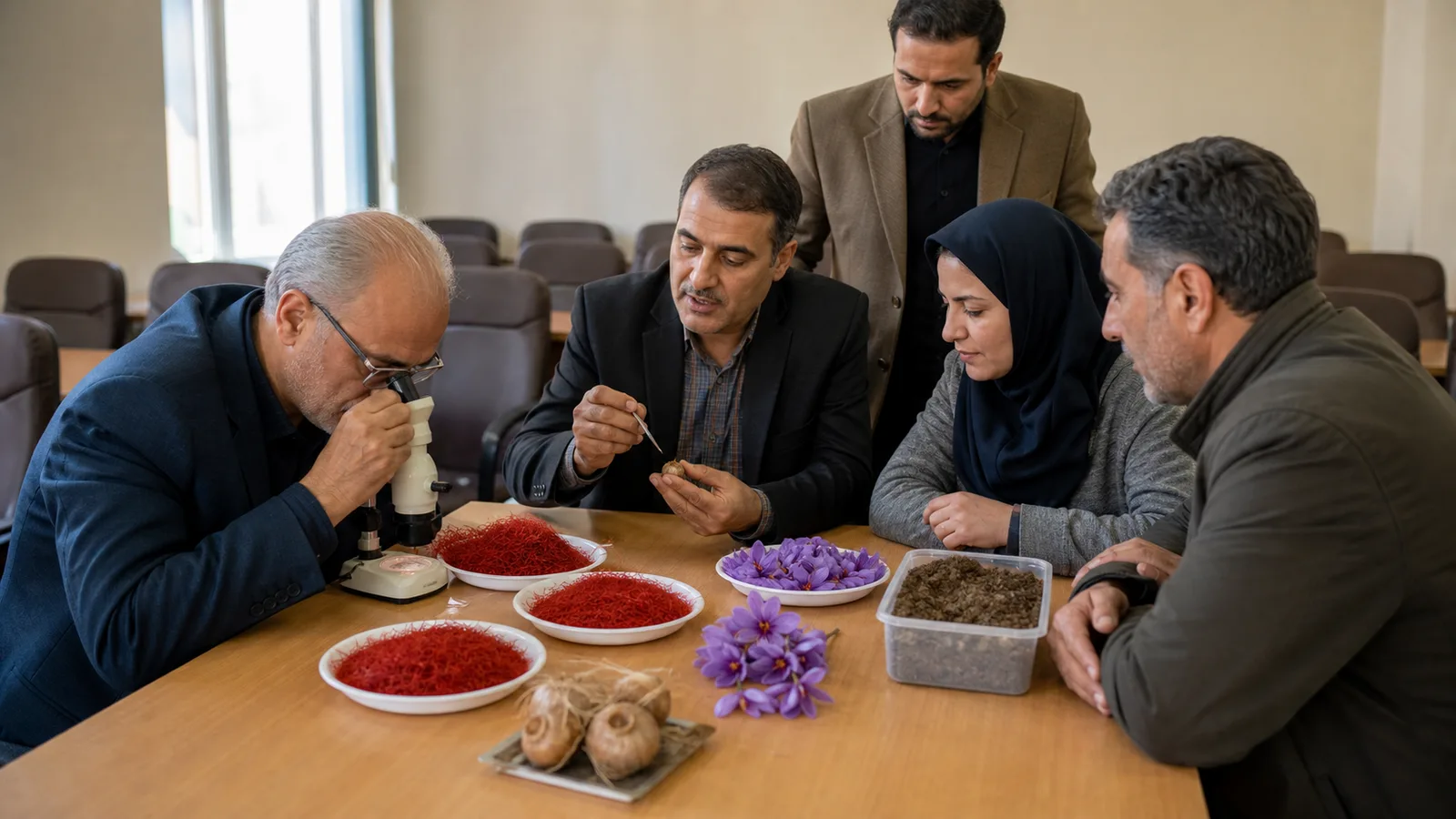
The Fourth National Conference of Saffron opened in Ghaenat, South Khorasan, at a time when growers were dealing with a long drought, limited processing capacity and pressure to sell their crop as a raw product. Held in Qaen on 4 November 2015, the two-day meeting brought researchers, farmers and public officials together to discuss how Ghaenat saffron could earn more value through better production, quality control and trade.
The place name appears in English in several forms, including Qaen, Qayen and Ghaen. Likewise, the wider area may be written as Qaenat or Ghaenat. They refer to the same saffron-producing locality in South Khorasan; this article uses Ghaenat when referring to the conference title and Qaen for the city.
Why the conference was held in Ghaenat
Saffron is closely tied to household income in this dry part of eastern Iran. At the opening, the Qaen governor referred to a 17-year drought and said that agriculture and livestock remained central to local livelihoods. His concern was practical: farmers needed access to finance, and water and agricultural projects required sustained investment.
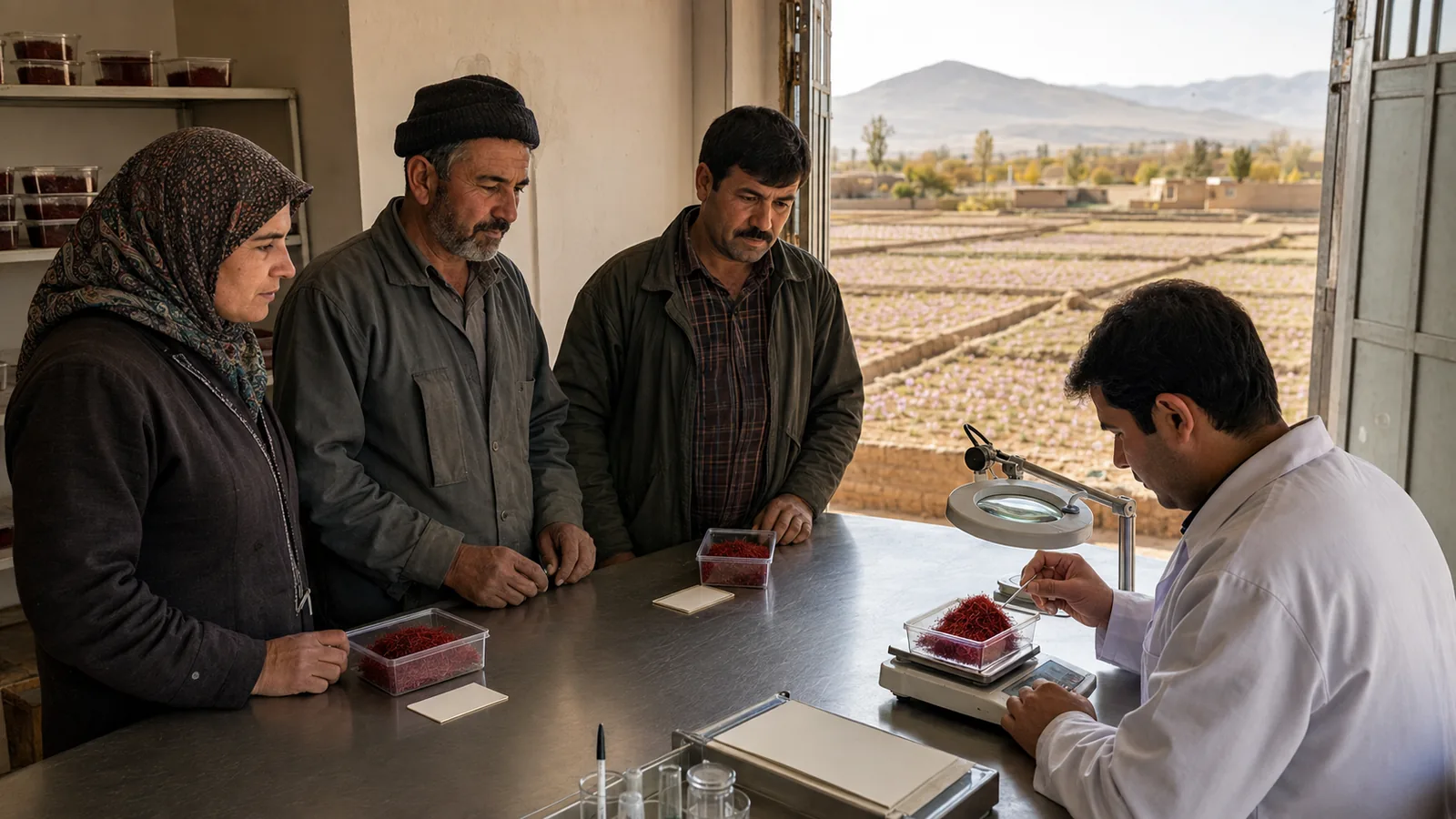
Another problem was what happened after harvest. The region produced a valuable crop, but the lack of local processing and conversion industries meant that many growers had little choice but to sell saffron in raw or lightly processed form. That leaves much of the value associated with grading, testing, packaging, branding and distribution elsewhere in the supply chain.
The conference therefore had a wider purpose than discussing cultivation alone. Its stated objective included supporting the registration of a national brand for Qaenat saffron and bringing scientific advice closer to growers and businesses. The event itself did not guarantee that outcome, but it created a forum in which production, processing and market identity could be considered together.
Research presented at the Fourth National Conference of Saffron
According to the contemporary conference report, 58 papers were accepted. Twenty-four were scheduled for oral presentation and 34 for poster presentation. The programme covered four connected areas:
- plant breeding, agronomy and cultivation;
- processing and conversion industries;
- pharmaceutical and therapeutic research involving saffron; and
- marketing, trade, exports and entrepreneurship.
Workshops addressed saffron fraud, organic production, plant nutrition and the use of meta-analysis software in research. That mix reflected the real shape of the sector. A good harvest matters, but so do authenticity testing, careful post-harvest handling and a market that rewards verified quality.
The reference to therapeutic research should be understood as a description of one conference track, not as proof that saffron treats or cures a disease. Individual health claims still need to be judged against the quality of the underlying clinical evidence.
Traditional planting and harvesting were central concerns
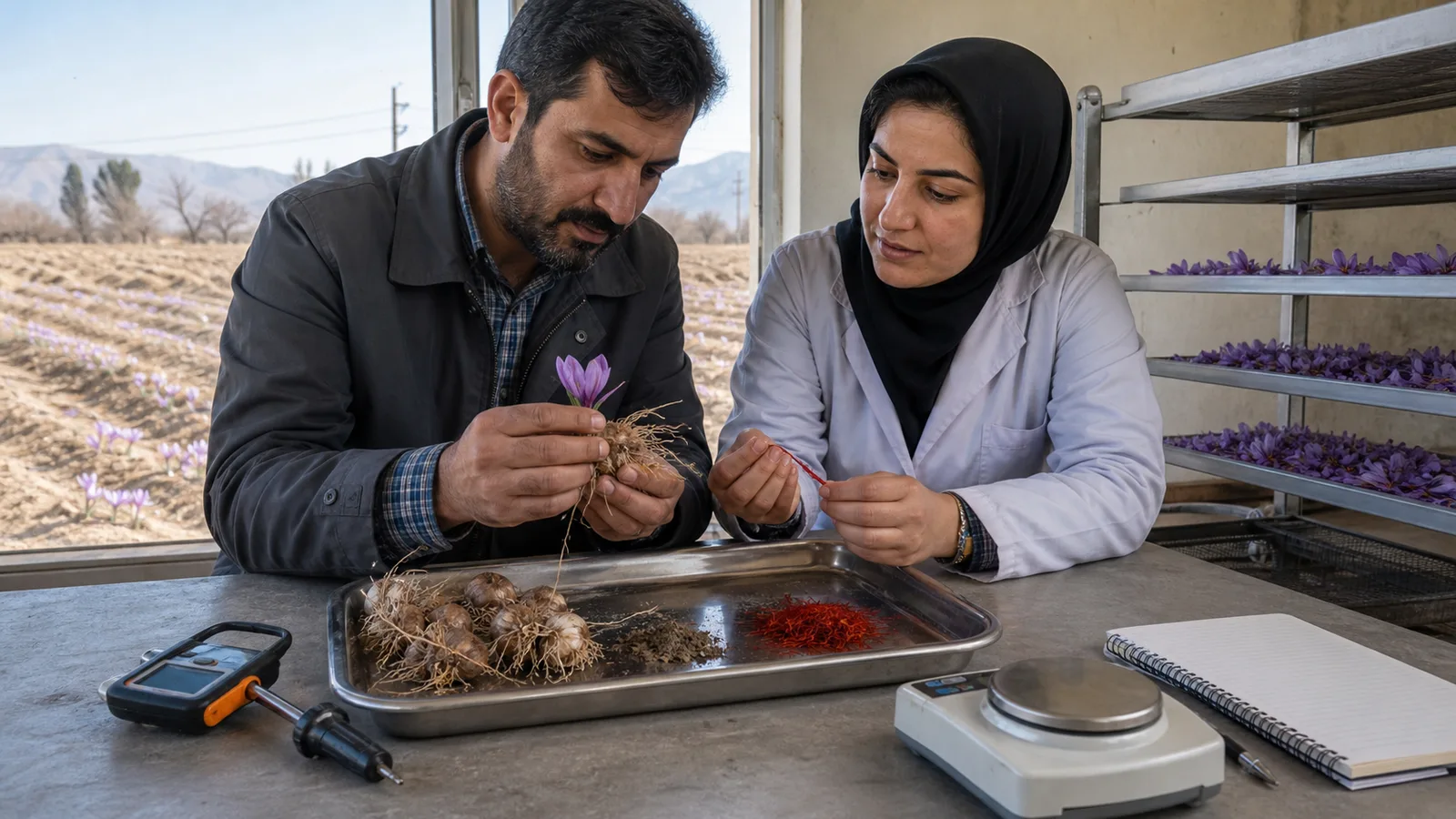
A parliamentary representative at the meeting warned that relying on traditional planting and harvesting methods could gradually weaken Iran’s position in saffron production and export. The point was not that every established practice should be discarded. Growers in Khorasan hold extensive practical knowledge, particularly about local soils, flowering and the narrow harvest window. The challenge is to combine that experience with methods that improve water efficiency, crop health, hygiene and consistency.
Water remains especially important. Saffron is suited to dry climates, but it is not independent of irrigation. The timing and amount of water affect flowering and yield, while repeated drought changes the choices available to farmers. Research from Qaen and other parts of South Khorasan continues to examine irrigation efficiency and the relationship between drought conditions and saffron yield. Our guide to saffron cultivation and growing conditions explains the production cycle in more detail.
Why processing and authenticity matter
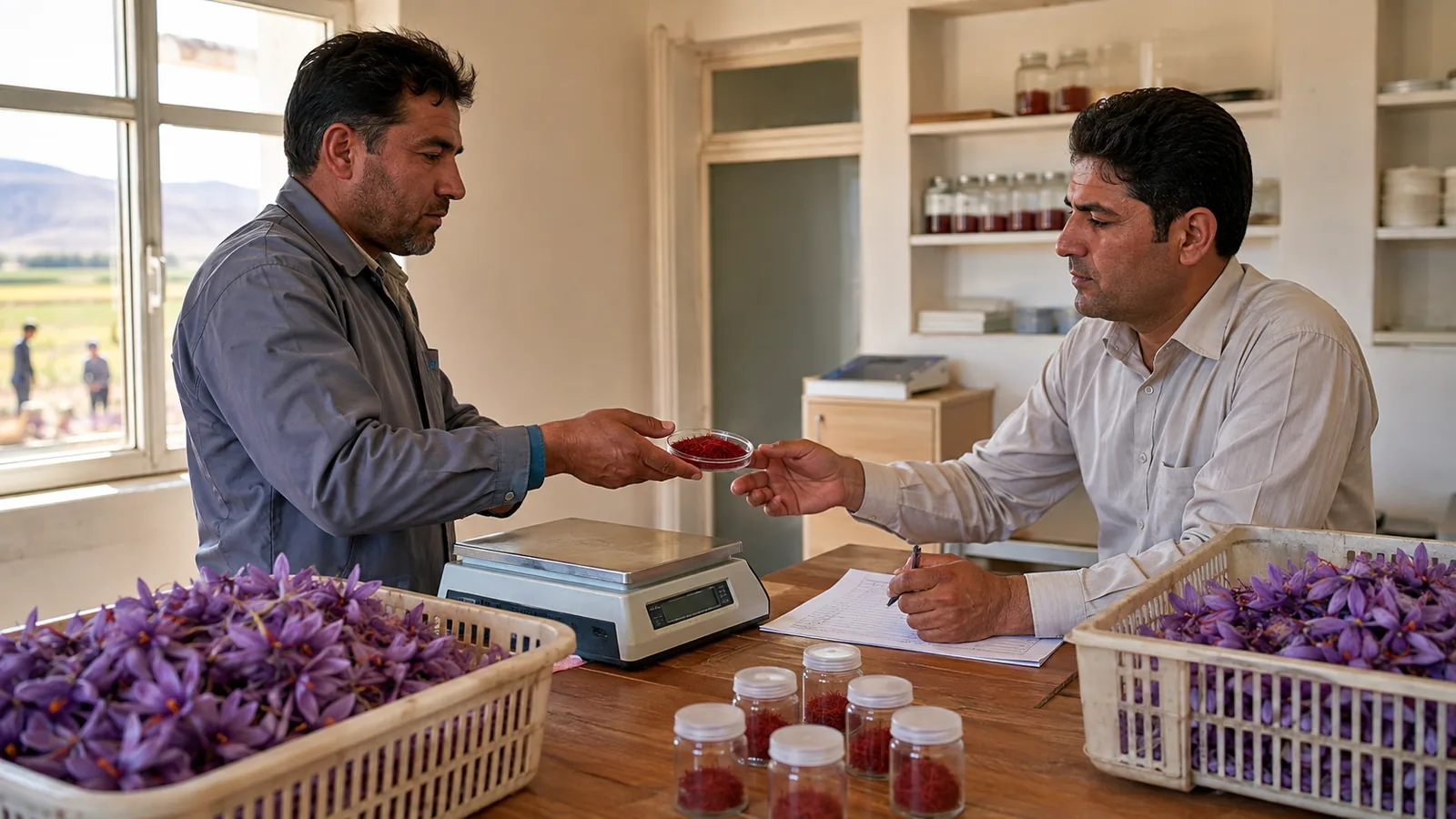
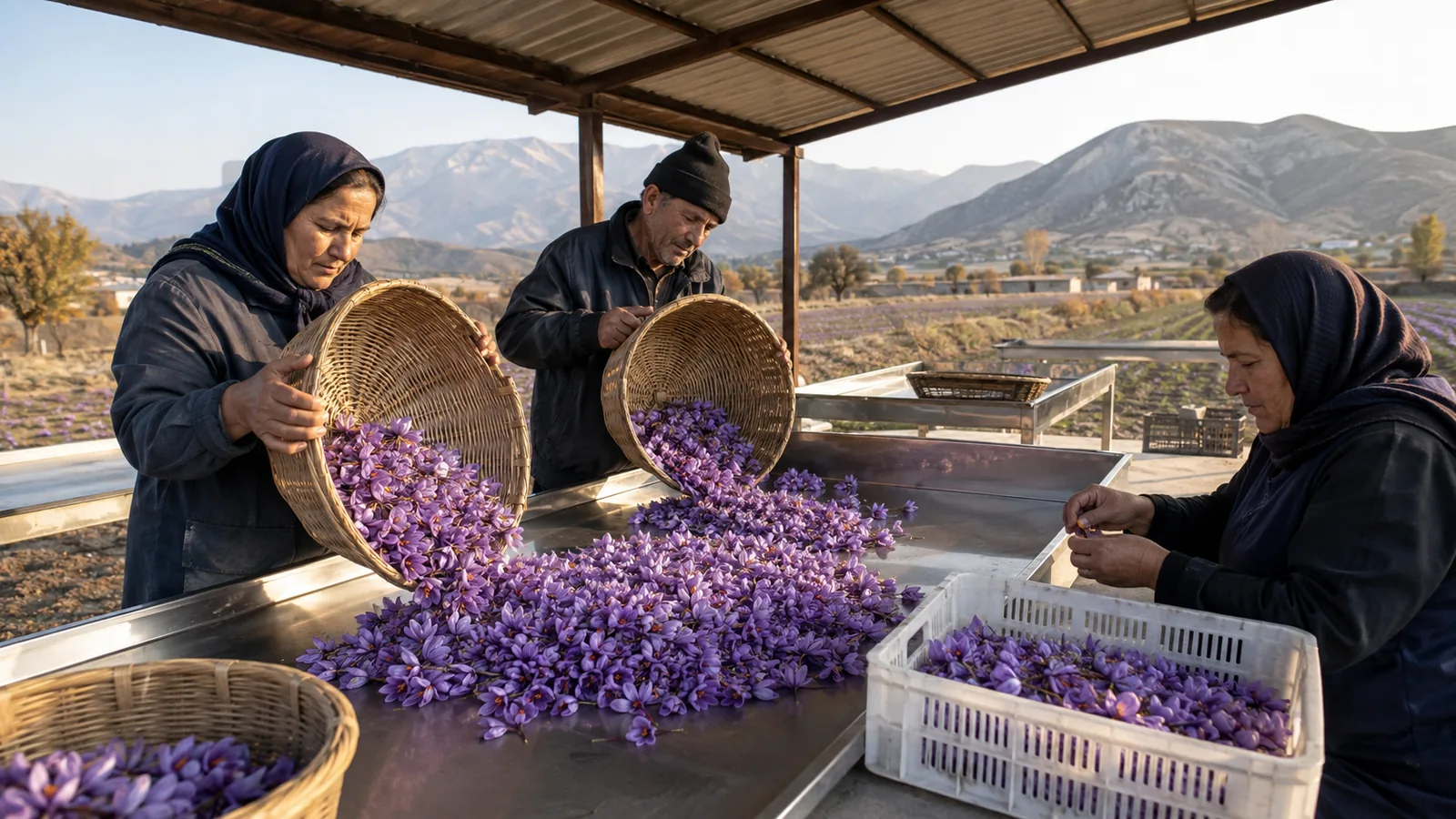
Freshly picked flowers are only the beginning of the process. The stigmas must be separated, dried and stored under controlled conditions. Poor handling can reduce aroma, colour strength and cleanliness. When producers can test and document those qualities, buyers have more reason to distinguish a carefully prepared lot from an anonymous commodity.
This is also where the conference’s concern about raw selling becomes important. Local cleaning, grading, laboratory testing and suitable packaging can keep more skilled work and commercial value in the producing region. Traceability helps a buyer connect the finished saffron to its origin, while reliable authenticity testing protects both growers and customers from adulteration.
These subjects remain current. In 2024 and 2025, the Food and Agriculture Organization of the United Nations reported new work in Iran on saffron authenticity, traceability, post-harvest practice and value-chain development. FAO also noted the limits of relying on a single standard or test method to detect every form of fraud. The practical lesson is to combine documented origin, competent sampling and appropriate laboratory methods rather than treating one certificate as a complete guarantee. For a closer look at the measurable quality criteria, see our explanation of Iranian saffron standards.
What the 2015 meeting tells us today
The Fourth National Conference of Saffron captured a transition that is still unfinished. Ghaenat already had the climate, farming knowledge and reputation associated with saffron, but speakers wanted the region to gain more from what happened after the crop left the field.
Scientific meetings are useful when their recommendations lead to work that growers and processors can use: better access to water and finance, practical cultivation advice, cleaner drying and storage, credible testing, and a recognisable origin in the market. Without that follow-through, papers and presentations alone cannot solve the pressures described at the opening.
For customers, the same chain explains why origin is only one part of choosing saffron. The name Ghaenat carries meaning, but the condition of the threads, the way they were handled and the evidence supporting their quality matter as well. For producers, strengthening those links is how a famous growing region can retain more of the value created by its crop.
Sources and further reading
- Contemporary report on the fourth national saffron conference (Iran Conferences, reporting ISNA South Khorasan, 2015).
- FAO and Iran foster innovation and technology to strengthen the saffron industry (FAO, 2024).
- FAO agreement on saffron authenticity testing methodologies (FAO, 2025).
- FAO workshop on quality integrity in the saffron value chain (FAO, 2025).

![Exporting Saffron to Turkey + Price Guide [Complete 0 to 100]](https://img.rowhanisaffron.com/20260827003933/saffron-export-turkey-quality-inspection.webp)