


An experimental harvest of saffron in Shahin Dej was reported in 2020 after the crop was planted on two hectares near Yousef Kand village and the Zarrineh River.
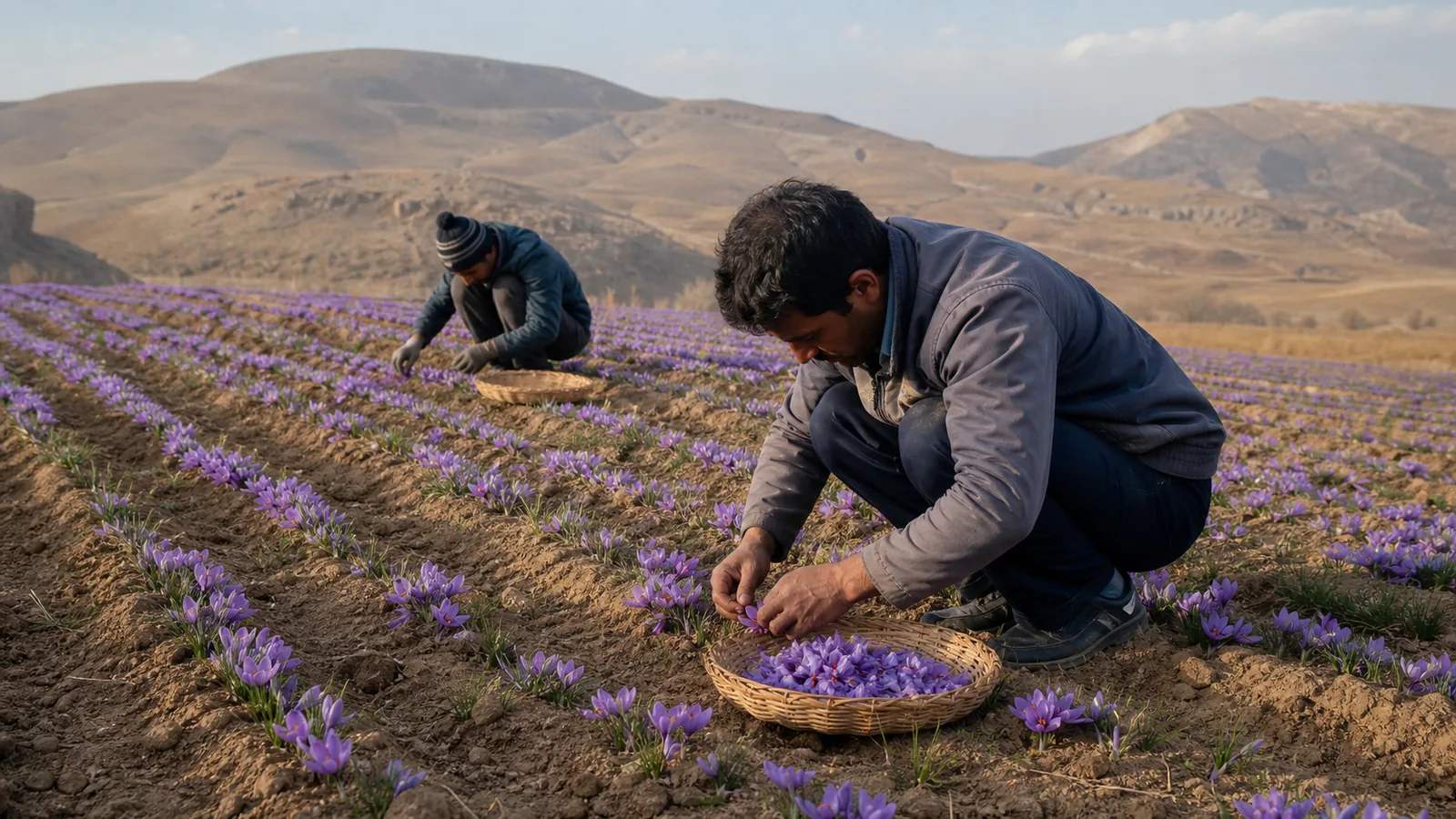
The pilot was described by Saeed Khodaei, director of Shahin Dej’s Agricultural Jihad office. He said it was the city’s first experimental saffron project and that the planted fields had reached harvest successfully.
The first experimental saffron fields in Shahin Dej
According to Khodaei’s account, two hectares were selected for the initial cultivation. The project was intended to test saffron under local conditions before any wider expansion was considered.
The report recorded an average harvest of three kilograms of saffron per hectare from the experimental land. That figure belongs to the reported pilot; it is not a current yield estimate for every saffron field in Shahin Dej.
Where the pilot was planted
Khodaei identified Yousef Kand village and land along the Zarrineh River as the locations used for the two-hectare trial. Keeping those place names with the harvest result gives the original report its local context.
It also shows that the announcement was about specific experimental plots rather than a claim that saffron had already become a large commercial crop throughout the city.
Why saffron was selected for the trial
The project formed part of a proposed change in the area’s cultivation pattern. Khodaei connected the trial with three goals: reducing agricultural water use, helping efforts to revive Lake Urmia, and preserving the profitability of local crops.
In that statement, saffron was being assessed as one possible response to water pressure. The report did not claim that the crop needs no water, nor did it provide a complete water-use comparison with every alternative crop.
What the reported yield means
The stated average of three kilograms per hectare is useful as a record of the first harvest. It should be read with the limits of an experimental result in mind.
Yield can vary with the age and density of the planting, corm condition, soil, irrigation, weather, harvest timing and how the stigmas are separated and dried. A two-hectare pilot can show that harvest is possible, but it cannot by itself define the long-term average for an entire district.
The proposed next step
Khodaei said the local office intended to develop saffron cultivation and production in Shahin Dej over the following years. Any expansion was to be coordinated with the province’s Agricultural Jihad organization.
The wording was a statement of intent, not confirmation of a later programme or a present-day cultivated area. A current assessment would need newer records showing how much land was subsequently planted and how later harvests performed.
Key points from the Shahin Dej report
- Area: two hectares of experimental saffron cultivation.
- Location: Yousef Kand village and land along the Zarrineh River.
- Reported yield: an average of three kilograms per hectare from the pilot harvest.
- Purpose: test a change in cultivation pattern with lower water pressure and continued crop profitability in mind.
- Regional context: Khodaei linked the water-saving objective to efforts to help revive Lake Urmia.
- Future plan: consider expansion in coordination with the provincial agricultural organization.
A dated record of an experimental harvest
The importance of this account is its record of an early saffron trial in Shahin Dej: who announced it, where it took place, why it was attempted and what the first harvest reportedly produced.
Those details have been retained without turning a 2020 pilot into a current production claim. Later acreage, yields or policy outcomes would require more recent official data.

![Exporting Saffron to Turkey + Price Guide [Complete 0 to 100]](https://img.rowhanisaffron.com/20260827003933/saffron-export-turkey-quality-inspection.webp)



