Saffron for Skin Whitening: Does Saffron Lighten Skin?
No good clinical evidence shows that eating saffron whitens skin, controls melanin or permanently changes your natural skin colour. A little saffron can be part of a varied diet, but drinking it in milk or water is not an oral skin-lightening treatment.
“Whitening,” “brightening” and “evening skin tone” are often used as if they mean the same thing. They do not. Natural skin tone is normal. Dark spots, melasma, post-acne marks, irritation and dull-looking dry skin have different causes, so one food cannot sensibly be promised as a solution for all of them.
Why saffron is linked with skin benefits
Saffron contains crocin, crocetin, safranal and other plant compounds often described as antioxidants and studied for anti-inflammatory and antimicrobial activity. Laboratory findings help researchers decide what to investigate next. They do not demonstrate that a few eaten threads reach the skin at a level that fades pigmentation, speeds cell turnover or clears acne.
A review of saffron and skin research describes promising experimental and formulation work, including topical products. It does not establish that regularly eating saffron lightens human skin. The route matters: a cell experiment, a formulated cream and a cup of saffron milk are three different exposures.
What eating saffron can and cannot do
A culinary pinch contributes flavour, colour and small quantities of plant compounds. It can make nutritious food more enjoyable, but it does not supply a complete set of “essential nutrients for skin” by itself. Skin health is influenced by genetics, sun exposure, hormones, medical conditions, smoking, sleep and the overall diet.
There is no demonstrated mechanism by which a normal serving regulates melanin production enough to whiten skin. Melanin helps determine skin, hair and eye colour and contributes to protection from ultraviolet radiation. Trying to suppress it through an untested food routine is neither a realistic nor a necessary wellness goal.
Saffron, kesar and kumkumapoovu are the same spice
People searching for kesar benefits for skin or kumkumapoovu benefits are asking about Crocus sativus. Kesar is a common Indian name for saffron, while official Indian commodity material lists kunkumapoovu as a Malayalam name. A different name does not create different skin-whitening properties.
The defensible benefits of having kesar are culinary: aroma, colour and the pleasure of using a distinctive spice. Broader saffron benefits depend on the exact preparation and clinical evidence; they should not be converted into a promise of a fairer complexion.
Can you drink saffron water every day for skin?
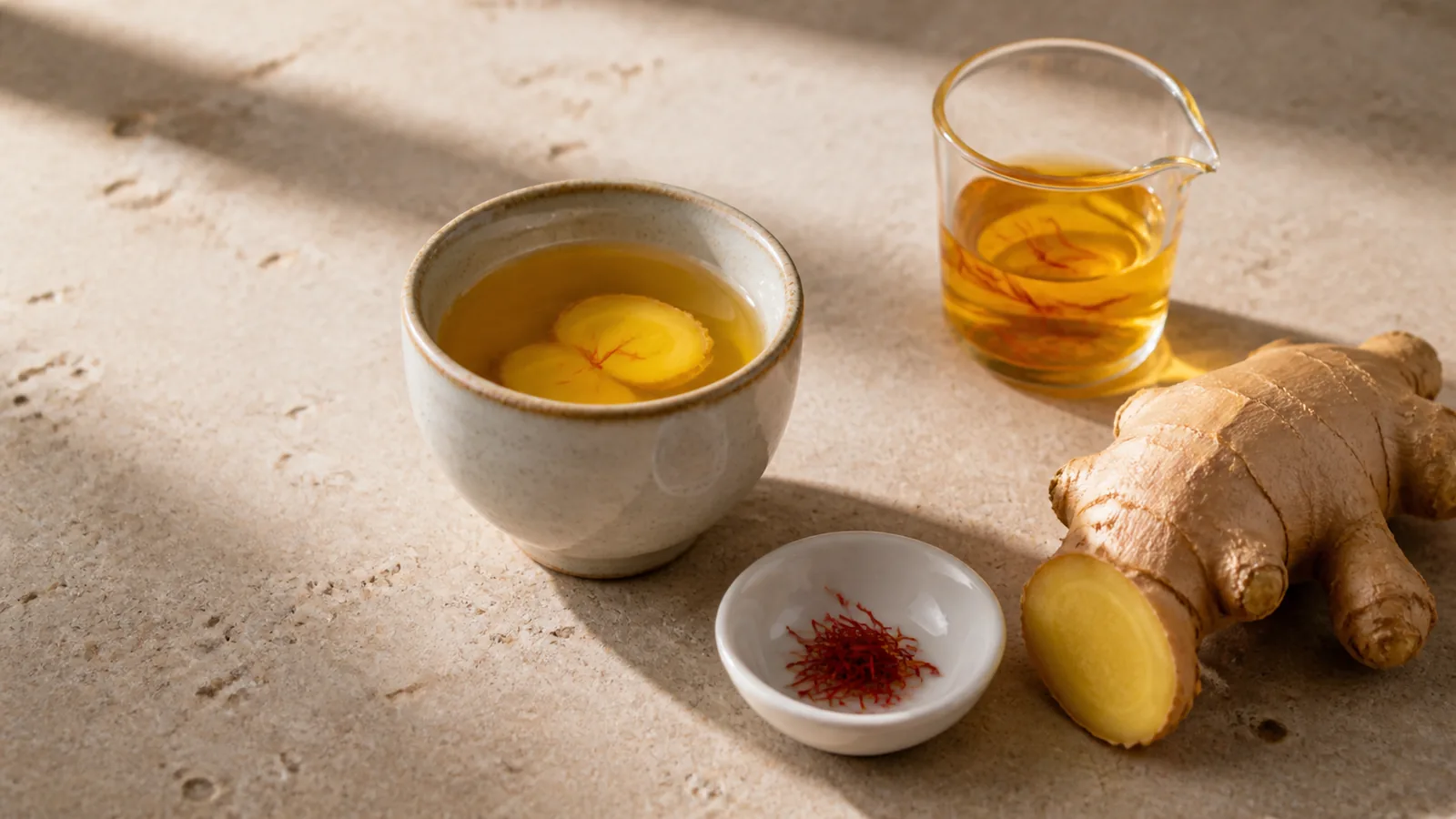
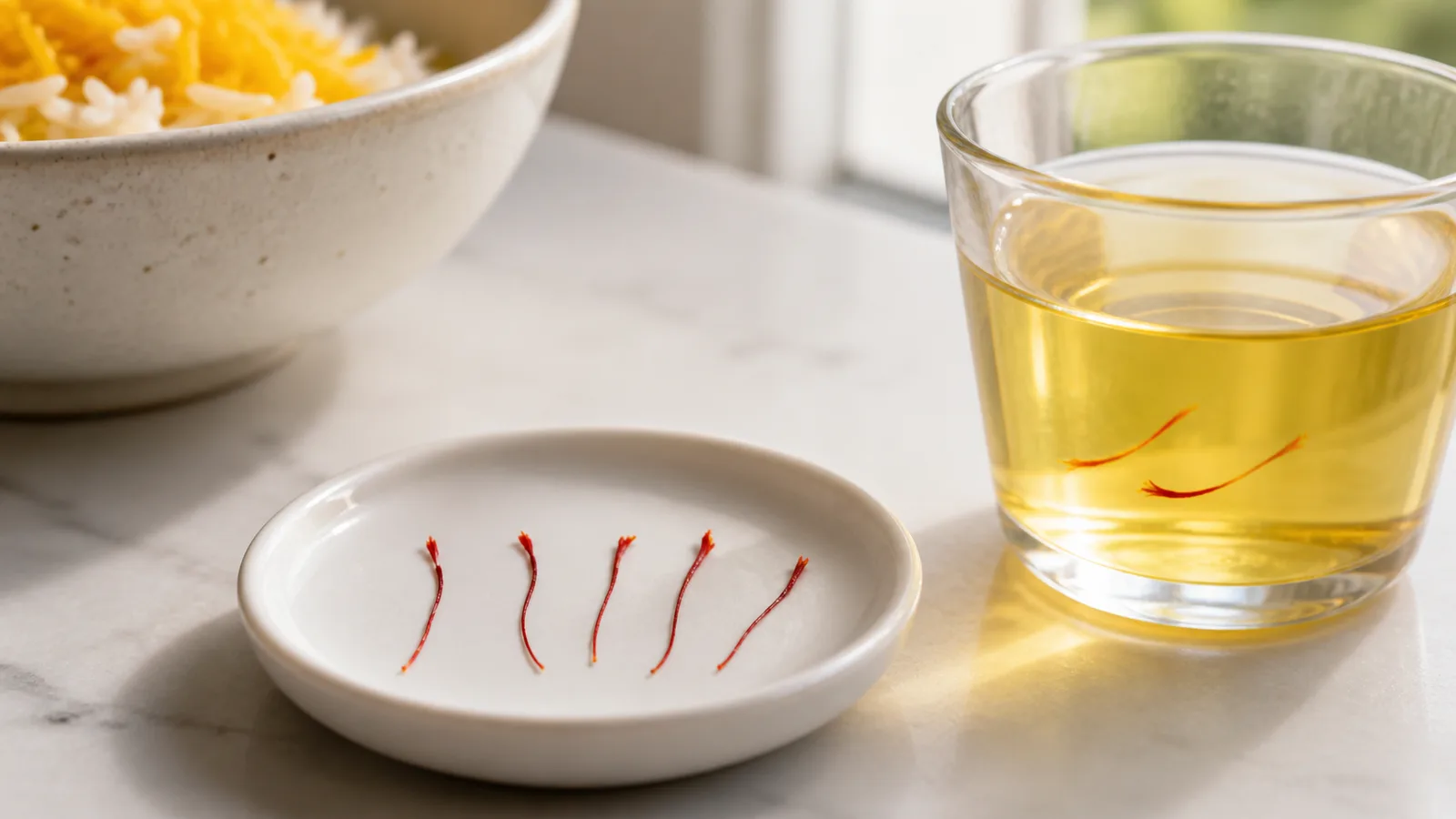
If you are asking, “Can I drink saffron water everyday?”, a lightly infused unsweetened drink is acceptable for many adults who tolerate saffron. Bloom a small culinary pinch in warm water for 10–15 minutes and dilute it to taste. More is not better.
You can also add that infusion to tea or meals, or use warm milk if it suits your diet. Those choices change the flavour and nutrition, not the skin evidence.
It may help you drink an enjoyable caffeine-free beverage, but it is not proven to reduce dark spots, acne, redness or skin irritation. Nightly saffron milk adds the nutrition and calories of the milk; it does not make the whitening claim more plausible.
How to use saffron for skin whitening: do not treat a food as medicine
There is no evidence-based recipe for how to use saffron for skin whitening. Neither eating threads nor making an improvised face mask has been shown to safely change natural skin colour. Be especially wary of mixtures sold with guaranteed “fairness” results.
The US Food and Drug Administration warns that some skin-lightening products contain mercury or non-approved hydroquinone and can cause serious harm. Its skin-lightening product guidance advises checking labels and discussing dark spots with a healthcare professional rather than using an unlabelled or illegally marketed product.
What about saffron oil for the face?
Searches for saffron oil for face, saffron oil for skin and benefits of saffron oil on skin can refer to very different products. One may be a carrier oil infused with threads; another may contain a concentrated fragrance or extract. The name alone tells you nothing reliable about concentration, purity, allergens or whether the product was formulated for facial use.
Do not apply a culinary or unidentified oil to your face because it contains saffron. Oil can feel moisturising by reducing water loss, but that does not mean it treats acne, inflammation or pigmentation. Follow the labelled use of a properly formulated cosmetic, patch-test it as directed, and stop if it causes burning, swelling, itching or a rash.
The FDA also explains that a product claiming to treat disease or change the structure or function of skin may be regulated as a drug, even if it is marketed as a cosmetic. “Natural” and “antioxidant” are not substitutes for evidence or accurate labelling.
What actually helps with dark spots and an uneven tone?
First identify the cause. A mark left by acne is not the same as melasma, a medication reaction or a changing mole. Irritating home treatments can make post-inflammatory hyperpigmentation worse.
The American Academy of Dermatology says treatment begins with sun protection and recommends a tinted, broad-spectrum, water-resistant sunscreen with SPF 30 or higher for people managing dark spots. Treating an underlying condition such as acne also matters.
See a dermatologist if pigmentation is new, changing, persistent or distressing. Seek prompt assessment for a spot that changes size, shape or colour, bleeds, will not heal or otherwise concerns you.
What can honestly be said about saffron benefits for skin?
A balanced diet, adequate sleep, sun protection and a gentle routine can support normal skin function. Saffron can be one enjoyable ingredient in that diet. Claims that it will brighten your complexion, create an even skin tone, improve skin hydration or produce a natural glow go beyond the evidence. It should not displace food with meaningful amounts of protein, essential fats, vitamins and minerals.
If you use concentrated saffron products, speak with a clinician or pharmacist first if you are pregnant, trying to conceive or breastfeeding; take prescription medicines; have a chronic condition; or are preparing for surgery. A supplement and a culinary pinch are not the same exposure.
The practical answer
Does eating saffron whiten skin? No reliable human evidence says it does. Enjoy genuine saffron for its flavour and colour, separate food from topical-product claims, and treat dark spots according to their cause. That is safer and more useful than asking a spice to change a person’s natural complexion.