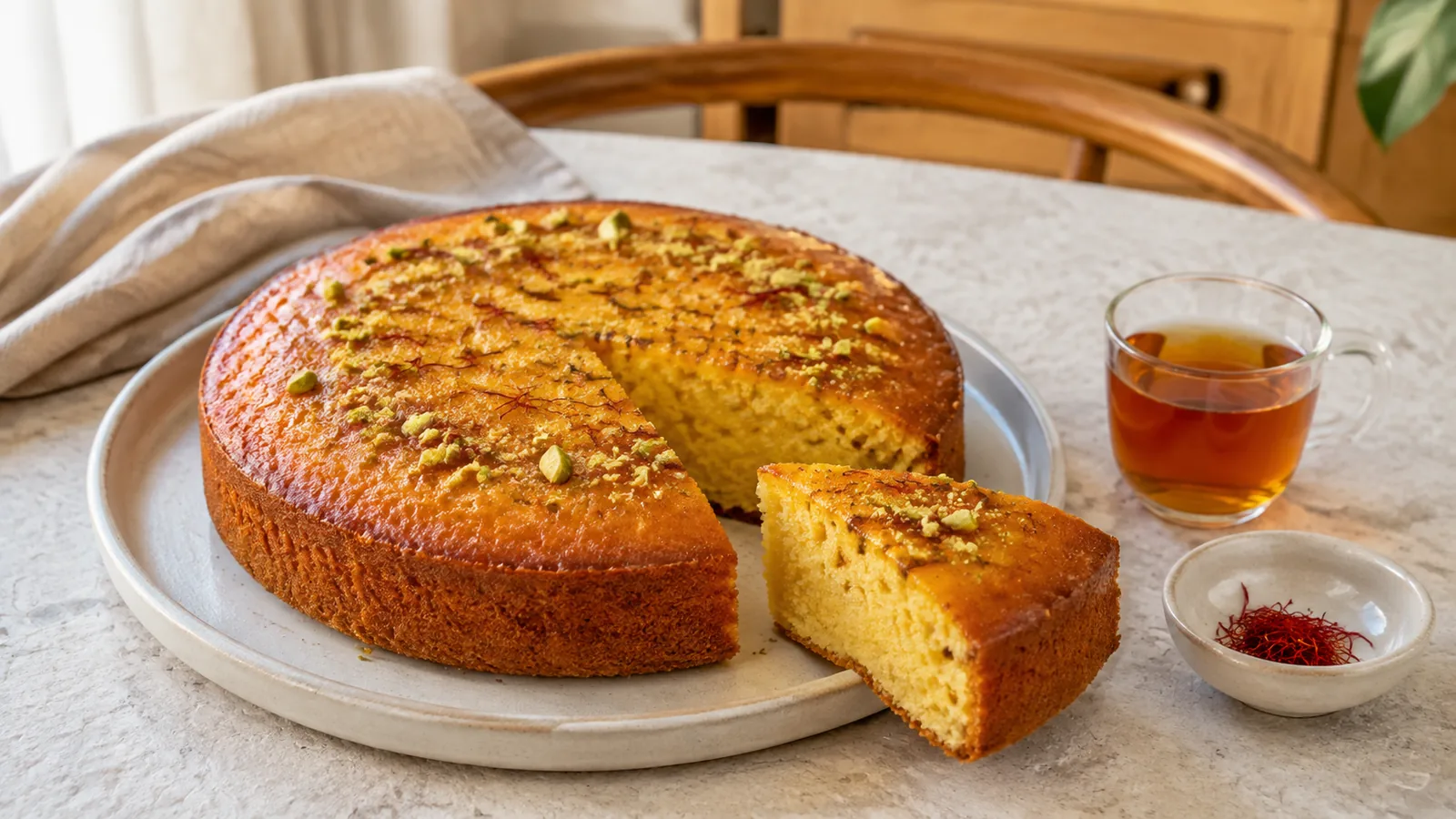
This saffron rosewater cake recipe makes a soft, fragrant sponge with a fine crumb and an optional light syrup. The saffron gives the cake its warm colour; rosewater adds a floral note without turning it perfumed. Serve it plain with tea, or add the syrup when you want a moister celebration cake.
What kind of saffron cake is this?
This is an oil-based homemade cake baked in a 23 cm (9-inch) round tin. Oil keeps the crumb tender after cooling, while beaten eggs provide lift alongside the baking powder. The recipe makes eight to ten slices and takes about 20 minutes to prepare, plus 35 to 42 minutes in the oven.
The syrup is optional. When it is used sparingly, it adds moisture and carries saffron and rosewater through the crumb. Some cooks look for this style as keyk sharbat zaferan, meaning a saffron cake finished with syrup. It should still slice like cake, not sit in a pool of liquid.
Ingredients for saffron and rosewater cake
For the cake
- 1/4 teaspoon saffron threads
- 2 tablespoons warm water
- 210 g (1 3/4 cups) plain or all-purpose flour
- 2 teaspoons baking powder
- 1/4 teaspoon fine salt
- 4 large eggs, at room temperature
- 200 g (1 cup) granulated sugar
- 1/2 teaspoon vanilla extract
- 120 ml (1/2 cup) neutral oil
- 120 ml (1/2 cup) milk, at room temperature
- 1 tablespoon rosewater
For the optional saffron rosewater syrup
- 100 g (1/2 cup) granulated sugar
- 120 ml (1/2 cup) water
- 1/8 teaspoon saffron threads
- 1 tablespoon warm water
- 1 tablespoon rosewater
- 1/4 teaspoon ground cardamom, optional
Use culinary rosewater rather than a cosmetic product. Saffron strength also varies, so start with the measured amount. Dry threads and saffron infusion are easy to confuse, so they are measured separately here to prevent bitterness.
Prepare the saffron and the cake tin
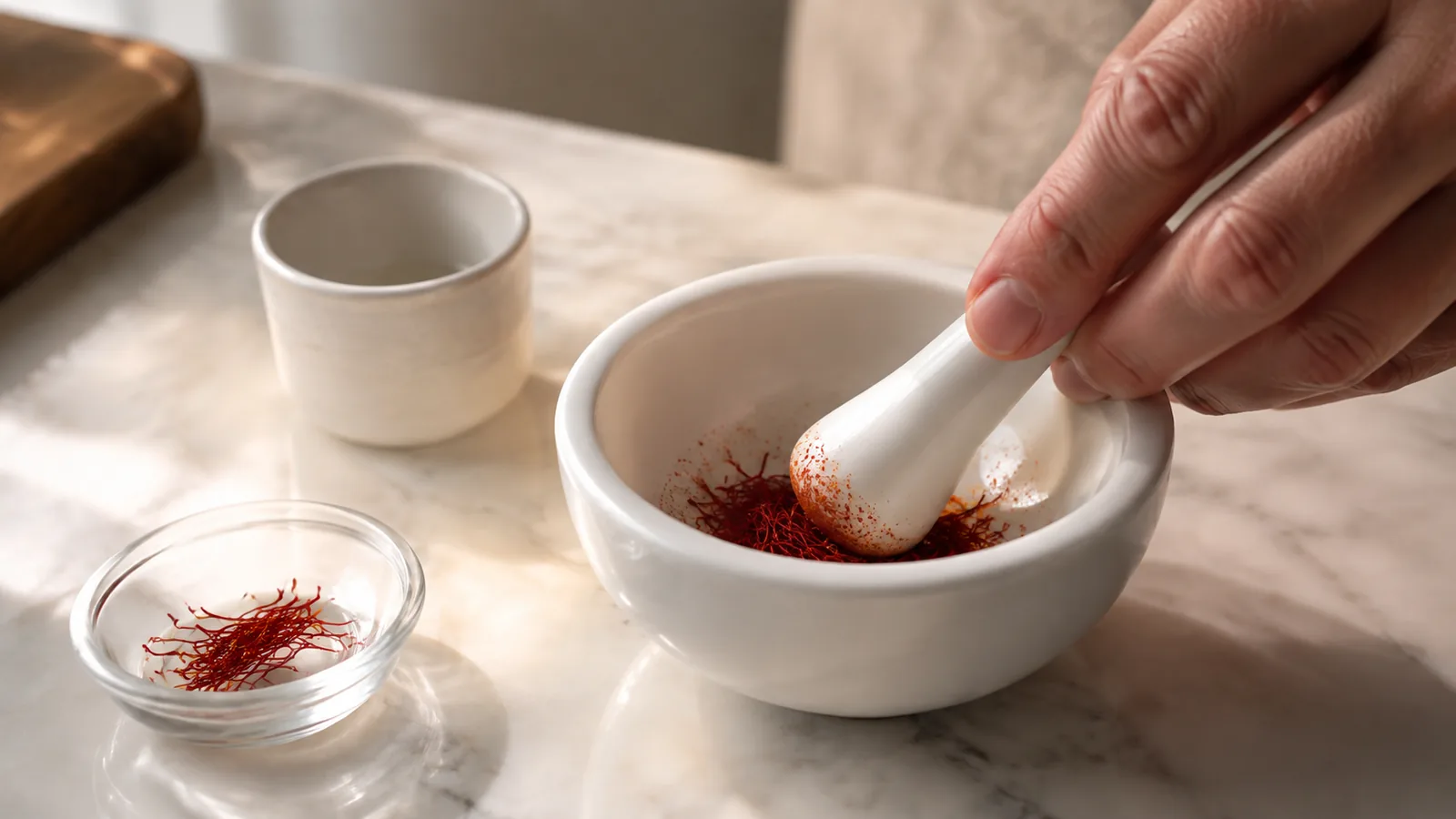
- Lightly crush the saffron for the cake. Cover it with two tablespoons of warm water and leave it for 10 to 15 minutes. The liquid should become aromatic and deep gold. See our guide to brewing saffron if you want a closer look at this step.
- Heat the oven to 175°C (350°F). Grease a 23 cm (9-inch) round cake tin and line its base with baking paper.
- Whisk the flour, baking powder and salt together in a bowl. This distributes the raising agent more reliably than repeatedly sifting the flour.
How to make saffron cake
1. Whip the eggs and sugar
Place the eggs, sugar and vanilla in a large bowl. Beat with an electric mixer on medium-high speed for five to seven minutes. The mixture should look pale, thick and noticeably larger in volume; a ribbon of batter should sit briefly on the surface before disappearing.
This aeration matters, but ten minutes is not a universal target. Mixer power and egg temperature change the timing, so use the appearance of the mixture as your guide.
2. Add the liquids
Reduce the mixer to low. Pour in the oil slowly, followed by the milk, rosewater and saffron infusion. Mix only until the colour is even. Warm milk is unnecessary and can reduce the volume if it is too hot; room-temperature milk combines smoothly without that risk.
3. Fold in the flour
Add the flour mixture in three additions. Fold gently with a wide spatula, scraping from the bottom of the bowl, until no dry pockets remain. Stop as soon as the batter is uniform. Vigorous mixing at this stage develops gluten and knocks out the air beaten into the eggs.
4. Bake
Pour the batter into the prepared tin and level the surface. Bake on the centre rack for 35 to 42 minutes. Avoid opening the door during the first 30 minutes. The cake is ready when the centre springs back lightly and a skewer inserted near the middle comes out clean or with a few moist crumbs.
Leave the cake in the tin for 10 minutes, then turn it onto a rack. If you are serving it without syrup, let it cool completely before slicing.
How to make the rosewater and saffron syrup
- Crush the syrup saffron, cover it with one tablespoon of warm water and leave it to infuse while the cake bakes.
- Put the sugar and half cup of water in a small saucepan. Warm gently, stirring until the sugar dissolves.
- Bring to a quiet simmer for three minutes. Remove from the heat, then stir in the saffron infusion, rosewater and cardamom if using.
- Let the syrup cool for five minutes. While the cake is still warm, prick its surface lightly with a skewer and spoon over about one-third cup of syrup in stages. Wait for each addition to absorb before deciding whether the cake needs more.
There is no need for half a cup of rosewater or cardamom essence. Those amounts overwhelm the cake. A restrained syrup keeps the saffron cake moist while allowing the butter-free sponge and floral notes to remain clear.
How to prevent a dense or bitter cake
- Measure flour accurately. If using cups, spoon flour into the cup and level it rather than packing it down.
- Use room-temperature eggs and milk. They combine more readily and help the whipped egg mixture retain volume.
- Fold only until combined. A few deliberate turns are better than extended mixing.
- Keep rosewater restrained. It should support the saffron, not cover it.
- Do not add whipped cream before baking. If you want cream, apply it only after the cake is completely cool and refrigerate the finished cake.
- Add syrup gradually. You can always add another spoonful, but an oversoaked cake cannot be made dry again.
Serving ideas
Dust the cooled cake lightly with icing sugar, or scatter a small amount of chopped unsalted pistachio over the syrup-glazed surface. Orange zest works well when you want a brighter flavour. Fresh berries are best served alongside rather than baked into this batter, where their juice can change the texture.
For an afternoon plate, serve a modest slice with black tea or lightly brewed saffron tea. If you prefer a tangier crumb and no syrup, try our saffron yoghurt cake. For chilled choices to accompany a larger dessert table, see these easy saffron desserts.
Storage
Once completely cool, keep the plain cake in an airtight container at room temperature for up to two days. A syruped cake is best refrigerated in a covered container and brought towards room temperature before serving. Refrigerate any cake topped with whipped cream immediately.
The most dependable result comes from measured saffron, properly aerated eggs and a light hand with both flour and syrup. Follow those three points and this homemade saffron rosewater cake will stay fragrant, tender and easy to slice.