


Cultivation of saffron is an opportunity for Kojoor section of Mazandaran, particularly on suitable upland fields that are no longer being farmed. It is not a universal answer for abandoned land: Kojoor’s rainfall, drainage, temperature, labour and access to buyers have to be tested together.
How the Kojoor saffron trial began
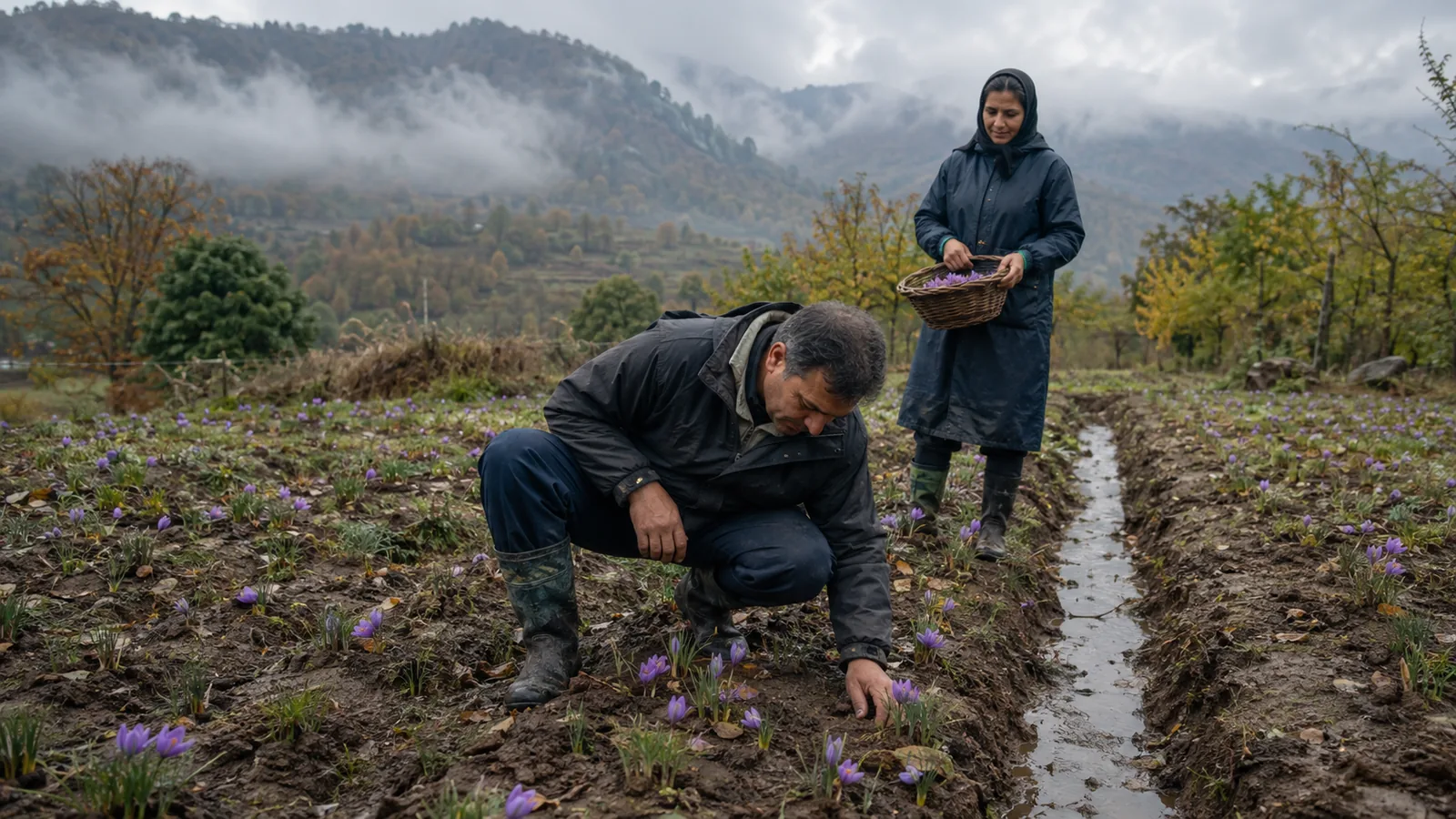
Bahman Bali Lashkak, a farmer from Kojoor, said the saffron corms for his planting came from Tonekabon. He viewed the crop as a new cultivation pattern that could help revive local agriculture.
His account is valuable because it connects a field trial with Kojoor’s wider land-use concerns. It does not provide the plot size, corm grade, planting year, dry yield or laboratory results, so it should be read as one grower’s proposal rather than proof that every part of the district is suitable.
Why Kojoor’s upland setting matters
Mazandaran is often associated with a humid Caspian climate, but its mountain districts vary sharply by elevation and exposure. Saffron needs its own plot-level assessment in Kojoor, especially where prolonged wetness or poorly drained soil could damage corms and complicate harvest.
An official report on mountain saffron fields in Behshahr, Mazandaran recorded 31 hectares, 104 growers and a stated average of three kilograms of dry saffron per hectare. It supports the idea that selected Mazandaran uplands can grow saffron, not the broader claim that all regional land will perform the same way.
Planting and flowering need local timing
Bali Lashkak placed saffron planting between spring and August and described flowering from late summer into autumn. The exact schedule depends on corm dormancy, local soil temperature, elevation and the production system. In Mazandaran’s mountain conditions, farmers should follow a locally tested window rather than a calendar copied from a warmer province.
The grower also said suitable soil and low rainfall could allow several harvests. Saffron normally has one flowering season, but flowers emerge in waves and are picked repeatedly during that short period. “Several harvests” is best understood as several picking rounds, not several independent crops in one year.
Rain during flowering can create pressure
The account warned that rain in the flowering season could damage the yield process. Persistent wet weather can delay access, soil flowers, complicate picking and increase the need for careful drying. A single shower does not automatically destroy a crop, and actual effects depend on timing, drainage and how quickly flowers are handled.
For Kojoor, field records should include rainfall and wet days during bloom, flowers picked, dry recovery and rejected material. That evidence shows whether rain is a recurring commercial constraint or simply an occasional inconvenience.
What the proposed greenhouse was meant to do
Bali Lashkak discussed protection from continuous rainfall while keeping conditions close to the region’s natural air rather than relying on artificial heating or cooling. A simple shelter and a controlled greenhouse are not the same system, however, and either can change temperature, humidity, airflow and disease risk.
A review indexed in the FAO AGRIS database on field and controlled-environment saffron explains that soil, precipitation, location, temperature, corm size, density, irrigation and post-harvest handling all affect production. Cover should therefore be tested against an uncovered local control before anyone assumes it improves yield or quality.
Abandoned farmland and villa construction
The farmer said many agricultural plots in Kojoor had been left barren or sold for villa construction, which he described as painful. He saw saffron as one possible reason to put suitable land back into production.
A crop cannot reverse land conversion by itself. The field must still be legally available, accessible, well drained and large enough to justify planting and harvest work. Farmers also need confidence that they can sell a clean, traceable product at a price that covers several seasons of cost.
Jobs, income and village migration
Bali Lashkak linked past migration from Kojoor villages with the absence of stable work and adequate income. He argued that saffron sales could enter the livelihood basket of rural families and give abandoned agriculture a new chapter.
That is an objective, not a guaranteed result. Saffron brings concentrated demand for flower picking and stigma separation, while much of the remaining work is seasonal. A livelihood assessment should count paid workdays, who receives the income, production costs, sale price and whether buyers return.
Training matters more than encouragement alone
The original report called for agricultural authorities to educate and encourage growers. Practical training should begin before corms are purchased. It needs to cover field selection, soil and water testing, healthy corms, planting depth and density, drainage, weed and disease monitoring, harvest hygiene, drying, storage and lot records.
A small demonstration field can answer Kojoor-specific questions at lower risk. Results should be compared by field age and stated as dry saffron per measured bearing area, alongside labour and market data.
When saffron is genuinely an opportunity for Kojoor
Saffron fits the district when a particular plot offers the right drainage and seasonal conditions, and when a grower has enough labour and a route to market. The Tonekabon corm story, rain concern, proposed protection and village-income goal all belong in that decision.
Kojoor’s opportunity is therefore best approached as careful local development rather than a blanket replacement crop. Test the land, record the harvest, verify quality and expand only where the evidence supports it.

![Exporting Saffron to Turkey + Price Guide [Complete 0 to 100]](https://img.rowhanisaffron.com/20260827003933/saffron-export-turkey-quality-inspection.webp)



