


Cultivation of 12 hectares of saffron in Kermanshah province was announced during an early local expansion programme led by Kermanshah city’s Agricultural Jihad office. The report also looked back to an 18-kilogram crop from six hectares, but it did not name its calendar or crop year.
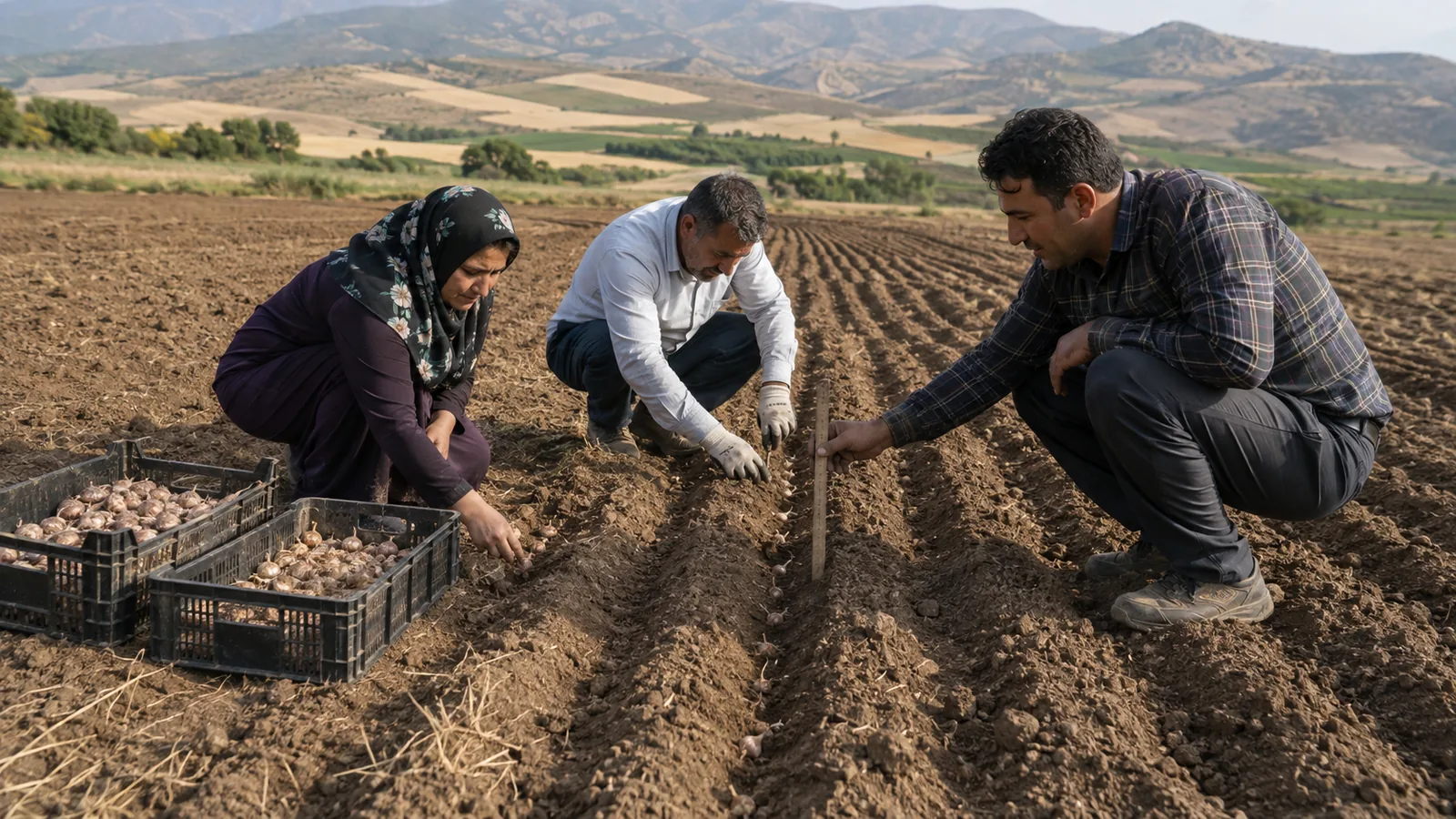
What the 12-hectare Kermanshah report described
Engineer Reza Zarei, identified as director of Kermanshah Agricultural Jihad, said more than 12 hectares had been planted with saffron in the city that year. The purpose was to broaden local agriculture and encourage more farmers in the area to consider the crop.
The wording shifts between Kermanshah city and Kermanshah province. The named districts sit within the local programme, while the comparison with the previous harvest is described at provincial level. The 12 hectares should therefore be kept as the area covered by that announcement, not assumed to be a complete modern provincial total.
Where the new saffron fields were located
Zarei named Kuzran, Alhyar Khani, Mahidasht, Bilvar and Chaghanarges as the principal cultivation areas. The source did not divide the 12 hectares among them or state how many farms participated.
That missing split matters when assessing performance. Different elevations, soils, water sources and planting dates can produce different results even within one county. A useful follow-up would give productive hectares and dry-stigma yield for each locality.
The earlier six hectares yielded about 18 kilograms
The report said saffron cultivation had begun in Kermanshah province a few years earlier and that about 18 kilograms had been harvested from six hectares in the preceding year. Dividing those figures gives an implied average of 3 kilograms per hectare.
That calculation is internally consistent, but the announcement does not state whether all six hectares were mature, how the crop was dried or whether 18 kilograms was a final measured total. It is a historical reference point, not a guaranteed yield for the new 12 hectares.
Fifty million rials per hectare supported corm purchases
Zarei said farmers received 50 million rials for each cultivated hectare from organizational credits to cover part of the cost of preparing or purchasing saffron “onions,” meaning corms. The amount, programme rules and currency value belong to the unnamed year of the report.
A support payment can lower the cost of establishment, but it does not by itself ensure a healthy field. Corm source, inspection, size grade, freedom from rot and mechanical damage, storage and planting depth all influence the result. Any current applicant would need the present programme terms rather than this historical amount.
Climate was expected to support quality
The announcement predicted good-quality saffron because of Kermanshah city’s climate. It later stated that experiments had shown saffron produced in the province to be of very high quality.
Those conclusions lack the sampling locations, harvest years, drying conditions, laboratory method and measured crocin, picrocrocin, safranal or moisture results. A later provincial report similarly described Kermanshah saffron as competitive after laboratory assessment; the dated Kermanshah cultivation report provides that context but still does not publish the test data.
Quality must be measured batch by batch
Province of origin does not guarantee the grade of an individual batch. Field conditions influence the raw stigmas, while picking speed, clean separation, drying temperature and time, storage moisture and light exposure affect the finished spice.
The internationally adopted Codex standard defines requirements and test-related quality categories for dried saffron. Using the official Codex standards register is more reliable than describing all saffron from a region as uniformly “very high quality.”
Water saving was part of the local case
Zarei said saffron cultivation could support farmers’ economic prosperity, contribute to sustainable agriculture and save water. Saffron can fit regions seeking higher value from limited irrigation, but the comparison depends on what crop it replaces and on the whole-season water balance.
New corms still need suitable moisture for establishment, and poorly timed irrigation can reduce flowering or waste water. A defensible water-saving claim compares measured irrigation, rainfall, productive yield and net return with a realistic local alternative.
Economic benefit is not automatic
Saffron’s high value per unit weight is attractive, yet gross selling price is not profit. Establishment corms, land preparation, irrigation, weeds, rodents, repeated hand picking, stigma separation, drying, packaging, finance and marketing all carry costs.
A 12-hectare expansion also needs enough workers and drying capacity for peak flowering. If flowers wait too long before separation, field success can turn into post-harvest loss.
Later figures show how quickly the baseline changed
A dated 2020 provincial report placed Kermanshah’s saffron area at 422 hectares, including 120 hectares added that year. It recorded 1,700 kilograms of production, said most output came from 302 hectares and gave an average of 4 kilograms per hectare. Readers can compare those later numbers in the 2020 Kermanshah production report.
That expansion is precisely why the earlier 12-hectare statement needs a date label. It documents a local starting phase; it is not the province’s present cultivated area.
What a follow-up should report
To evaluate the programme, a later record should identify the crop year, number of participating farms, location and productive status of each hectare, corm source, establishment losses, irrigation, flower and dry-stigma yields, quality test results and the actual use of financial support.
Reporting the 12 newly cultivated hectares separately from the older six also prevents planted area from being mistaken for harvested area. Young fields may not contribute a mature commercial yield immediately.
How to read this Kermanshah milestone
The source preserves an early development picture: more than 12 hectares cultivated across Kuzran, Alhyar Khani, Mahidasht, Bilvar and Chaghanarges; 50 million rials per hectare towards corm costs; an earlier 18-kilogram harvest from six hectares; and expectations of quality, income and water benefits.
All of those points remain useful when kept in their historical frame. The acreage, support amount and quality statements should not be converted into current facts, while later provincial reporting demonstrates that Kermanshah’s saffron sector soon operated on a much larger scale.

![Exporting Saffron to Turkey + Price Guide [Complete 0 to 100]](https://img.rowhanisaffron.com/20260827003933/saffron-export-turkey-quality-inspection.webp)



