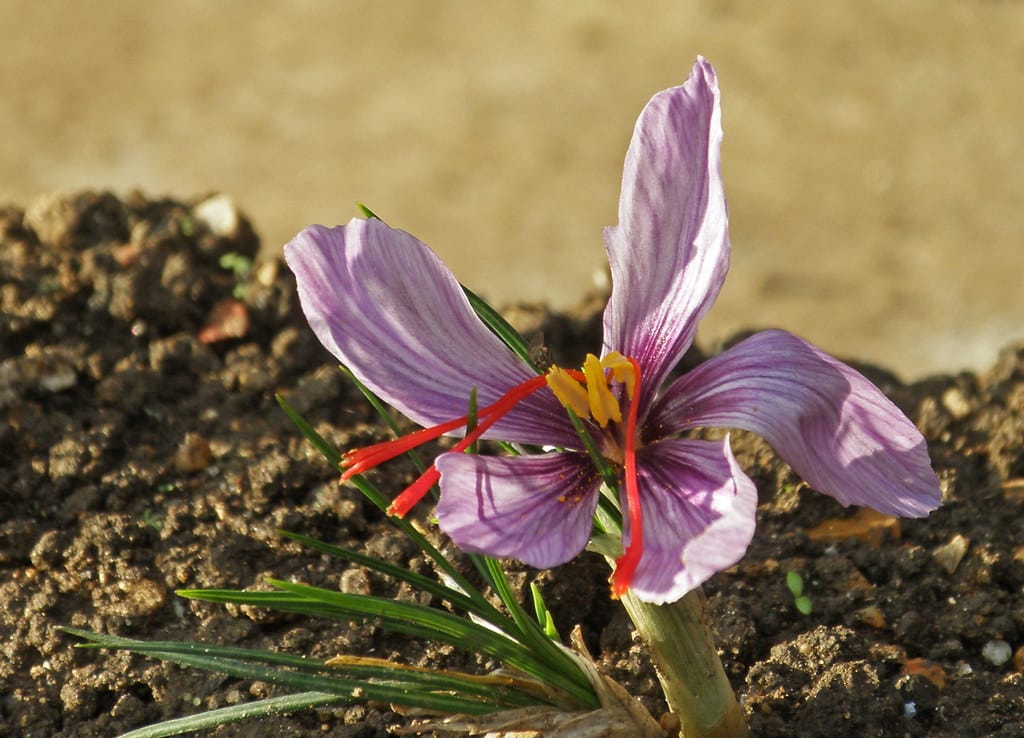
Chinese saffron will not be a problem for Iran
The Director General of the Agricultural Products and Food Industries Export Coordination Office of the Trade Development Organization, in response to the statements of saffron producers that if Chinese saffron bears fruit, should recite the Fatiha of Iranian saffron, said: We do not know such an issue is a threat to Iran.
Mahmoud Bazari stated: Regarding saffron and the difficulties that may exist in the way of exporting this product to countries such as India, it should be said that countries such as India and China consider their own conditions and cases in tariff discussions like ours and as We try to support domestic products with appropriate policies, and they do the same.
He stated: Of course, saffron is a special issue that currently about 96 to 97% of the absolute capacity of the world belongs to Iran; Thus, Iran is the first exporter of saffron and this situation is not easy to eliminate.
The Director General of the Agricultural Products and Food Industries Export Coordination Office of the Trade Development Organization continued: Now there is an atmosphere in which some markets are limited by the presence of Iranian traders, and in some cases Afghanistan plays the role of an intermediary. Of course, it is natural that production in different fields is a kind of right for all countries that have the conditions and possibility, but in any case, we are the first export in the production of saffron with a share of over 95% of the market.
Bazari stated: Regarding the management of global markets, various issues should be considered. We also pay enough attention to the importance of the private sector in this area, and we hope that the role of intermediaries will be reduced by lifting export restrictions to some countries, such as Saudi Arabia.
Regarding Chinese saffron and the damage it may cause to the Iranian saffron market, he said: China may enter this field, but considering the general conditions, entering this field may not have much advantage for a country like China. At the same time, the market in this country is so large that even if the product that is currently cultivated by this country doubles, there is no need to worry.
Director General of the Agricultural Products and Food Industries Export Coordination Office of the Trade Development Organization added: In any case, in the agricultural sector, some of our products such as pistachios and saffron have conditions that only 20 to 30% of their production is sufficient for domestic consumption and most of these products are spent on imports. In these areas, we are the first and second largest producers in the world, respectively, and we have very good capacity and markets.
In the end, Bazari mentioned some agricultural items such as pistachios, dates, raisins, fruits and vegetables, animal and aquatic products, medicinal plants and tea as the main export items of the agricultural sector and said: Iran is in a good position in the export of medicinal plants. has it.

![Exporting Saffron to Turkey + Price Guide [Complete 0 to 100]](https://img.rowhanisaffron.com/20260303111347/f1-372.webp)