


Beginning of saffron harvest from 10 hectares in Varamin city was the development reported by the local agricultural authority. Mohsen Banaian, then director of Varamin Agricultural Jihad, said flower picking had started across the city’s saffron fields.
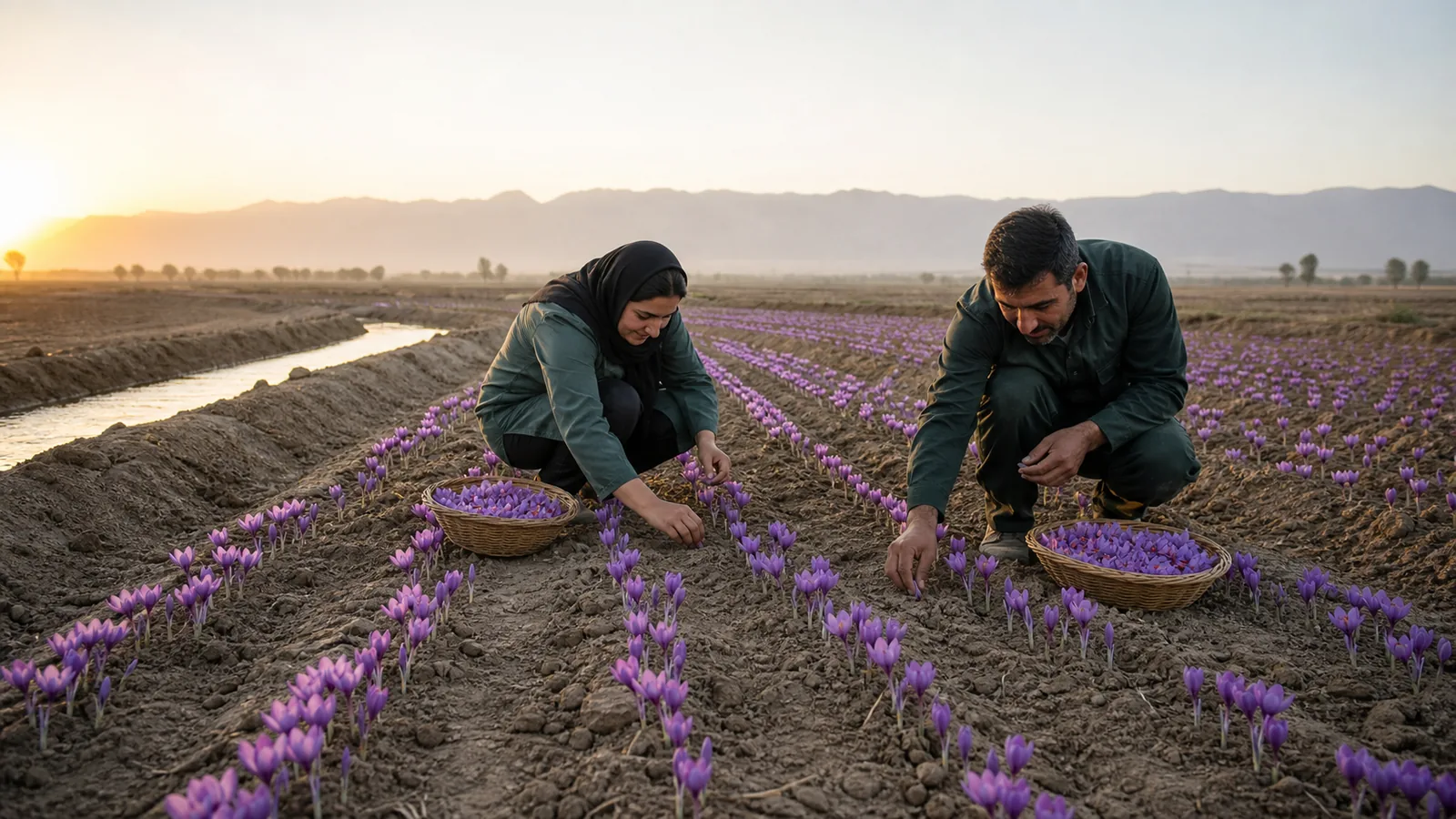
The saffron area had grown from 6 to 10 hectares
Banaian placed the previous crop year’s cultivated area at 6 hectares. Reaching 10 hectares meant that the local saffron footprint had expanded by 4 hectares, or about 67 percent.
The report described the start of harvesting, not a final season total. Its figures establish how much land was under saffron at that point, but they do not say how many kilograms were ultimately dried and marketed.
Varamin’s reported average was 3 kilograms per hectare
The city-level average was given as 3 kilograms of dried saffron per hectare. If all 10 hectares had been productive and achieved that average, the implied crop would have been about 30 kilograms. That is a conditional calculation, not a published harvest result.
An earlier official Agricultural Information Network report recorded more than 5 hectares in 2017, with 20–25 kilograms harvested annually and an average of 4–5 kilograms per hectare. The different averages belong to different periods; field age, water, weather and measurement can all affect the comparison.
Saffron was an established but small local crop
Banaian described saffron cultivation as part of Varamin’s agricultural history. He also regarded the area’s climate and fertile soil as suitable for the crop. Those are statements from the local authority rather than a soil survey covering every farm.
The acreage remained modest beside Varamin’s larger agricultural sector. Development was on the Agricultural Jihad management’s agenda, following local research and measures intended to expand cultivation.
Water limits shaped the expansion plan
Agricultural water was identified as one of the city’s main development constraints. Officials saw saffron as worth greater attention because it can have relatively low seasonal water demand and can add value for growers.
That does not make saffron a no-water crop. Establishment and flowering still depend on appropriate irrigation timing, drainage, temperature, soil conditions and healthy corms. The report did not provide a water-use comparison with Varamin’s other crops.
Local packaging matched the small production scale
The report said a government guaranteed-purchase arrangement for saffron was on the agenda at the time. It also explained that Varamin’s output was small enough to be packaged within the city and offered directly to the market by producers.
This describes the route to market then; it is not confirmation that the same purchase programme or local packaging arrangements operate today. No buyer, purchase price, brand, packer or sold quantity was named.
Only part of Varamin’s agricultural land was cultivated
The source presented Varamin as having more than 80,000 hectares of arable land, while only 38,000 hectares were being used for crops and orchards because of limits on available water. On those reported figures, the cultivated share was under half of the potential area.
The original English sentence omitted the unit after “80,000 arable lands.” Hectares is the contextually consistent reading, but the figure remains an attributed historical estimate rather than a new land survey.
What this Varamin harvest report establishes
The durable facts are narrow but useful: saffron flower harvesting had begun on 10 hectares, up from 6 hectares in the prior crop year, and the reported city average was 3 kilograms of dried saffron per hectare. Local officials linked further expansion to climate, soil, water constraints and added value.
The account does not supply a final crop total or current acreage. Keeping that distinction protects the real meaning of the report while showing why a small saffron sector attracted attention in Varamin’s water-constrained farm economy.

![Exporting Saffron to Turkey + Price Guide [Complete 0 to 100]](https://img.rowhanisaffron.com/20260827003933/saffron-export-turkey-quality-inspection.webp)



