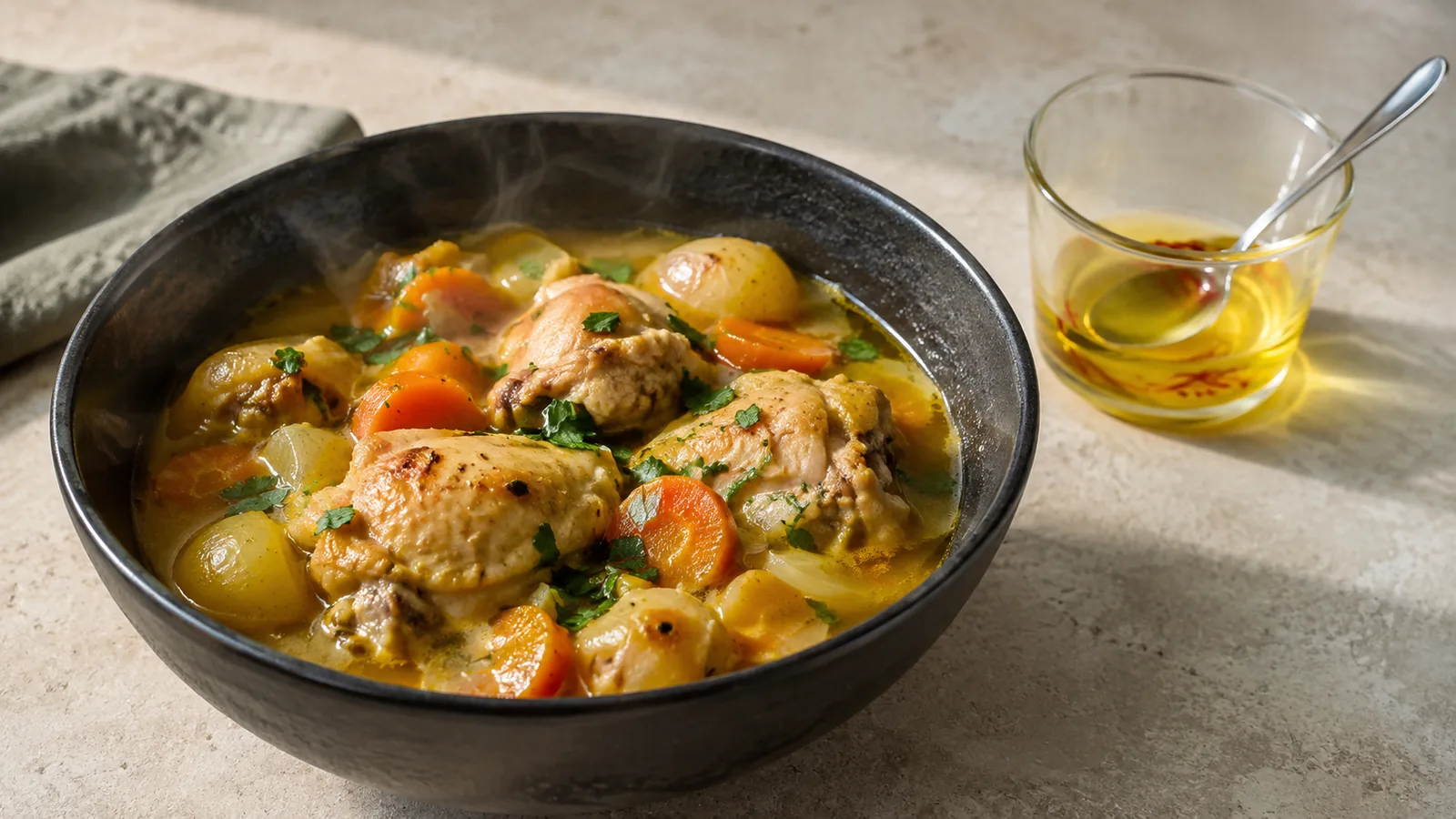
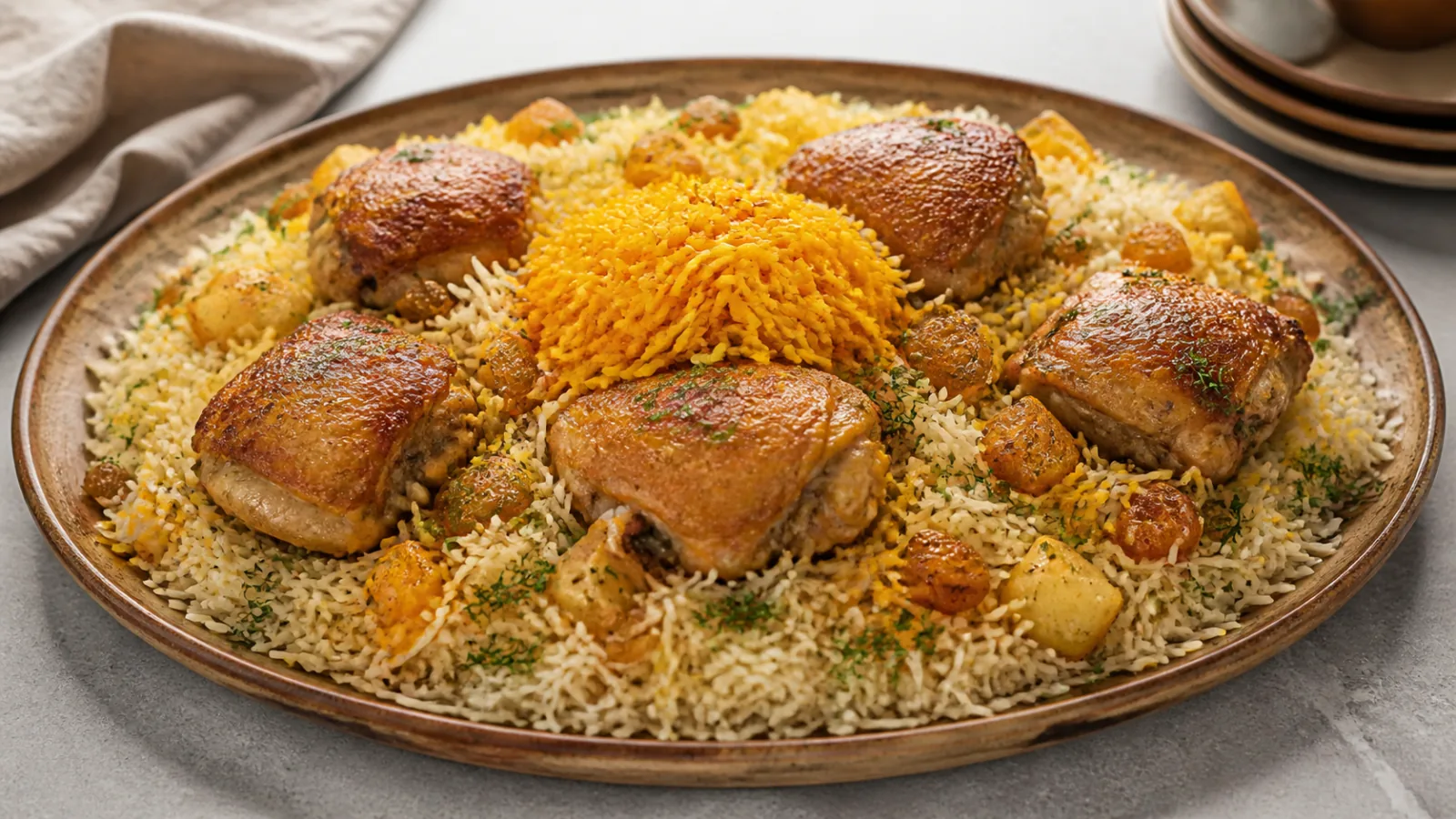
This Kermanshahian saffron rice with potato recipe combines basmati rice, crisp-edged potato cubes, dill, saffron chicken and lightly sautéed raisins. The result is a complete rice dish with savoury spice, a little sweetness and several distinct textures.
The older archive called it an “Apples Plo Kermanshahi Saffron Recipe.” That wording is a translation error: the ingredient is potato, or sib zamini, not apple. The URL and historic focus phrase are retained, but the recipe below makes the intended potato rice clear.
Kermanshahian Saffron Rice With Potato Recipe
Serves: 6
Preparation: 30 minutes, plus rice soaking
Cooking: about 1 hour
Ingredients
- 800 g–1 kg chicken pieces, preferably bone-in thighs
- 1 medium onion, chopped
- 3 cups basmati rice
- 2 medium potatoes, peeled and cut into 1 cm cubes
- 100 g fresh dill, finely chopped, or 3 tablespoons dried dill
- 1/4 teaspoon saffron threads, finely ground
- 50 g butter
- 1/3 cup raisins
- 1/2 teaspoon ground cumin, plus more to taste
- 1/2 teaspoon ground turmeric
- Fine salt and black pepper
- Neutral oil, for browning and frying
Prepare the Rice and Chicken
- Rinse the basmati several times until the water is nearly clear. Cover with cool salted water and soak for one to two hours, then drain.
- Season the chicken with salt and pepper and refrigerate for 30 minutes.
- Put the chopped onion in a saucepan with two cups of water and 1/4 teaspoon turmeric. Bring to a simmer, add the chicken and cover. Cook gently for 25–30 minutes.
- Lift the chicken onto a rack or plate and allow the surface moisture to evaporate. Reserve the cooking liquid.
- Heat a little oil in a frying pan. Brown the chicken on both sides, then set it aside. It will finish heating over the rice.
Chicken size varies, so use a thermometer rather than time alone: the thickest piece must reach 74°C (165°F), the safe minimum stated for poultry by the USDA Food Safety and Inspection Service.
Fry the Potatoes
Wipe out the frying pan and add enough oil to coat its base. Fry the potato cubes over medium-high heat until pale gold at the edges but not fully soft, about six to eight minutes. Transfer them to a paper-lined plate and season lightly with salt.
Partially frying the potatoes matters. Raw cubes may stay firm after the rice has steamed, while deeply fried cubes can break apart when folded through the pot.
Cook and Steam the Rice
- Measure the reserved chicken liquid and add enough water to make 4 1/2 cups. Pour it into a heavy pot with the butter, remaining turmeric and one teaspoon salt. Bring to a boil.
- Add the drained rice. Cook over medium-high heat, stirring once or twice, until most of the liquid has been absorbed and steam holes appear on the surface.
- Fold in the fried potatoes, dill and cumin with a light hand. Place the browned chicken pieces on top.
- Wrap the lid in a clean kitchen towel, cover tightly and reduce the heat to its lowest setting. Steam for about 30 minutes.
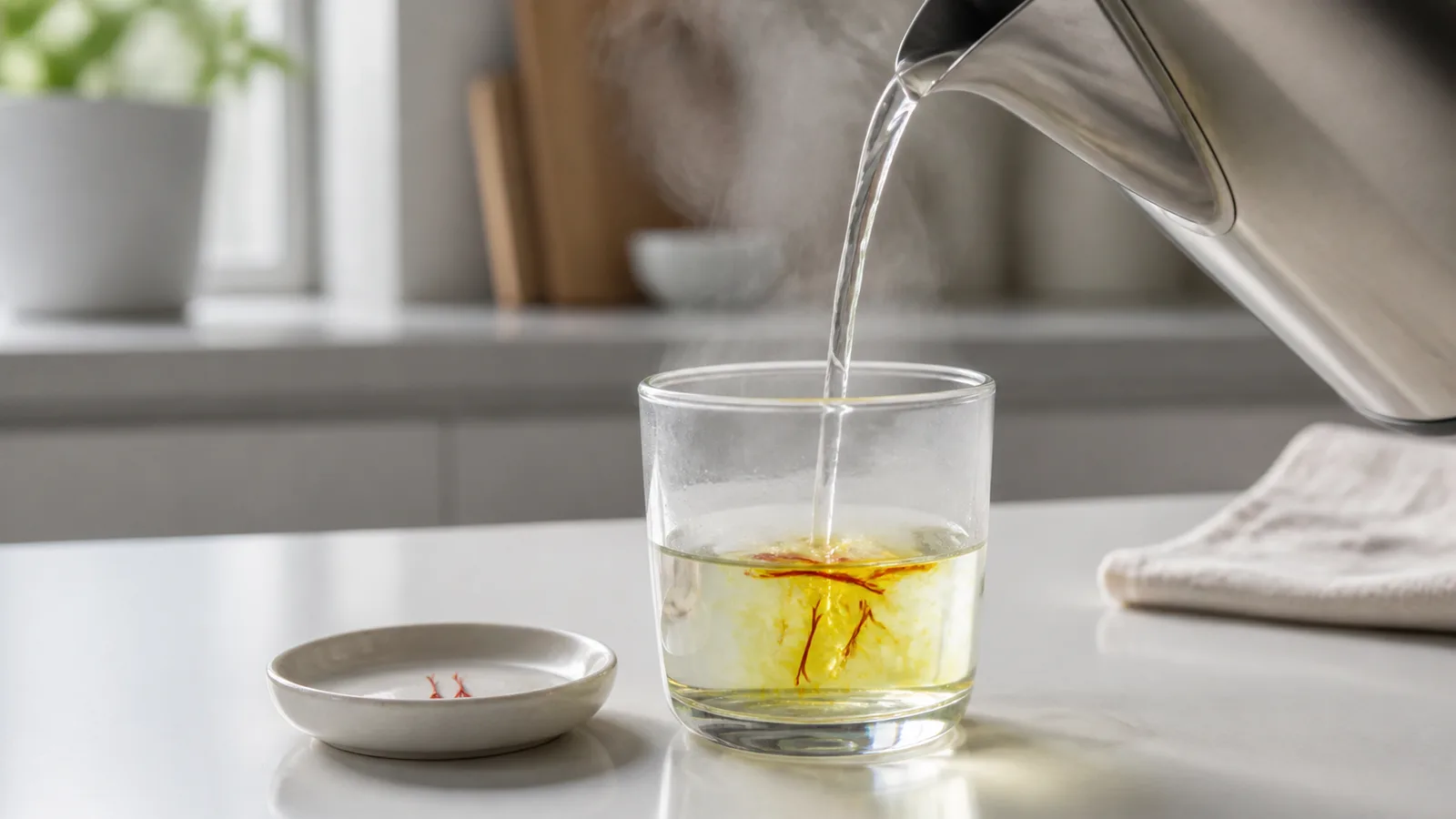
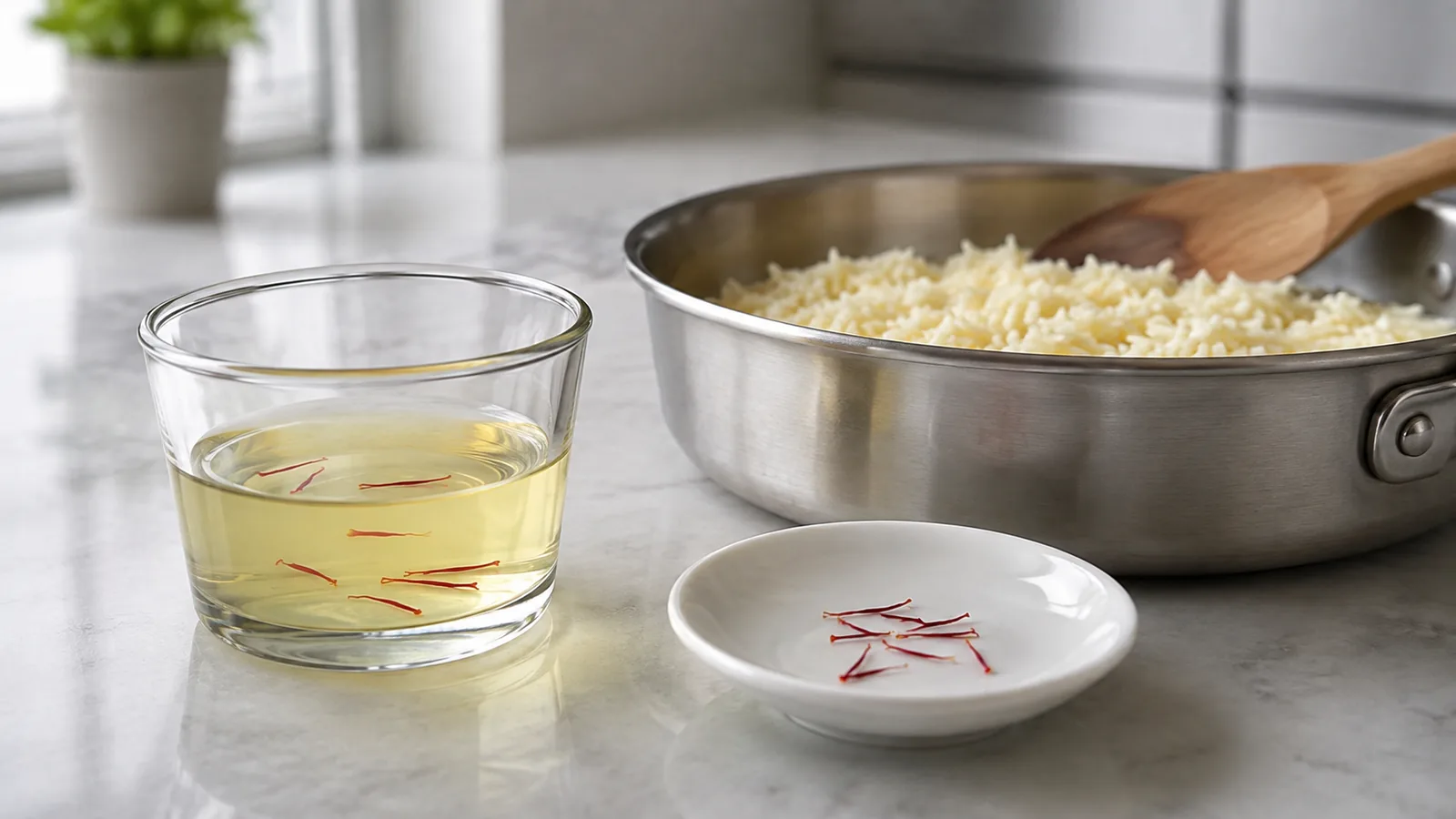
While the rice cooks, infuse the ground saffron in two tablespoons of hot water. The method in our guide to brewing saffron for rice helps produce even colour and aroma.
Prepare the Raisins and Saffron Rice
Rinse the raisins and pat them dry. Warm a teaspoon of oil in a small pan over low heat and toss the raisins for about one minute, just until they swell. Remove them before they darken or become tough.
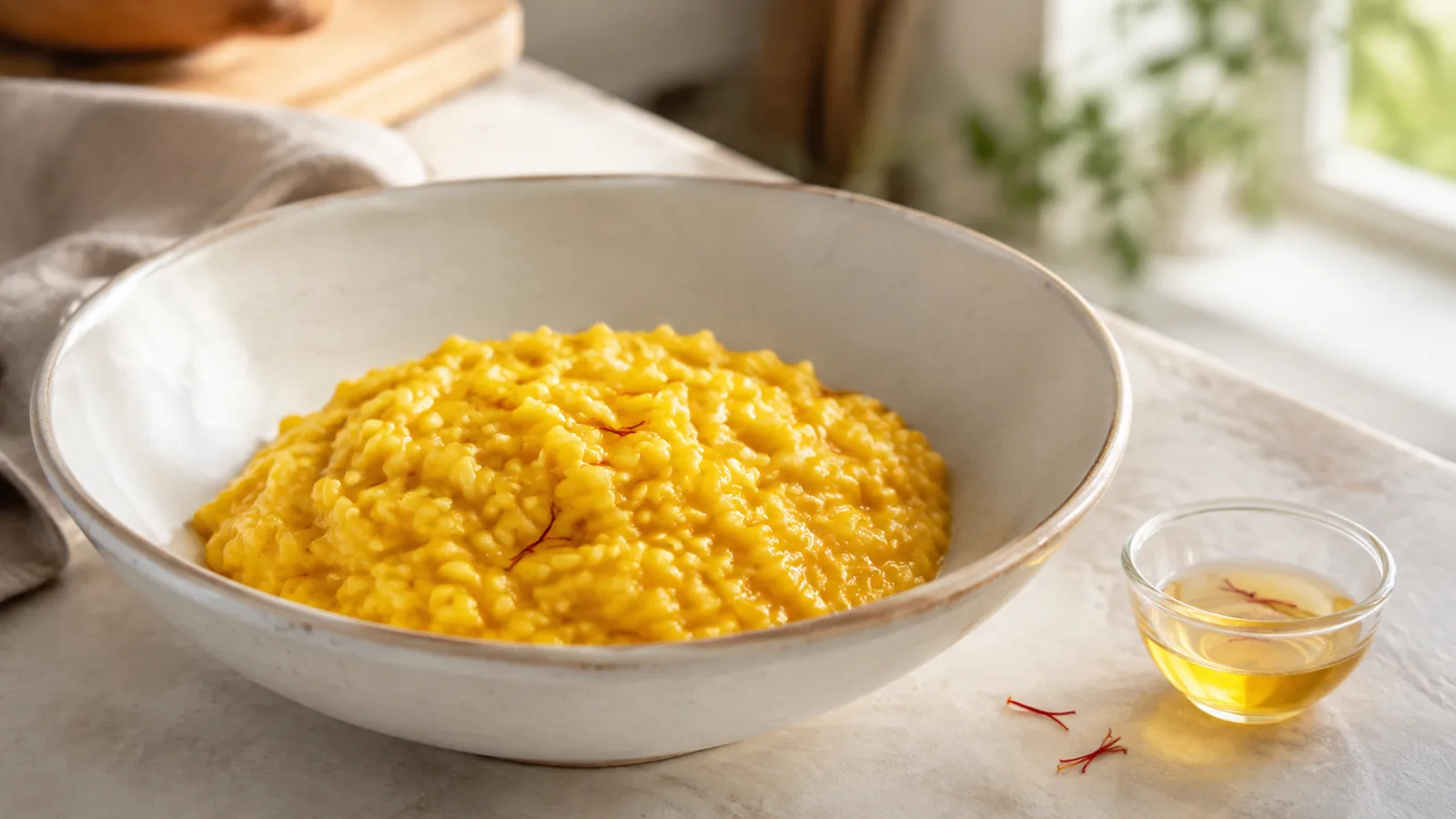
When the rice is ready, move the chicken to a warm plate. Spoon about one cup of rice into a bowl and gently mix it with the saffron infusion. Fluff the remaining rice and potato mixture onto a platter, arrange the chicken over it, then add the saffron rice and raisins. Finish with a small pinch of cumin and fresh dill if available.
Serving and Storage
Serve with plain yoghurt, pickled vegetables or a cucumber-and-herb salad. These cool, acidic sides balance the butter, fried potato and sweet raisins without covering the saffron.
Refrigerate leftovers within two hours in shallow covered containers and use within three days. Reheat the rice and chicken until piping hot throughout, adding a spoonful of water before covering so the grains do not dry out.