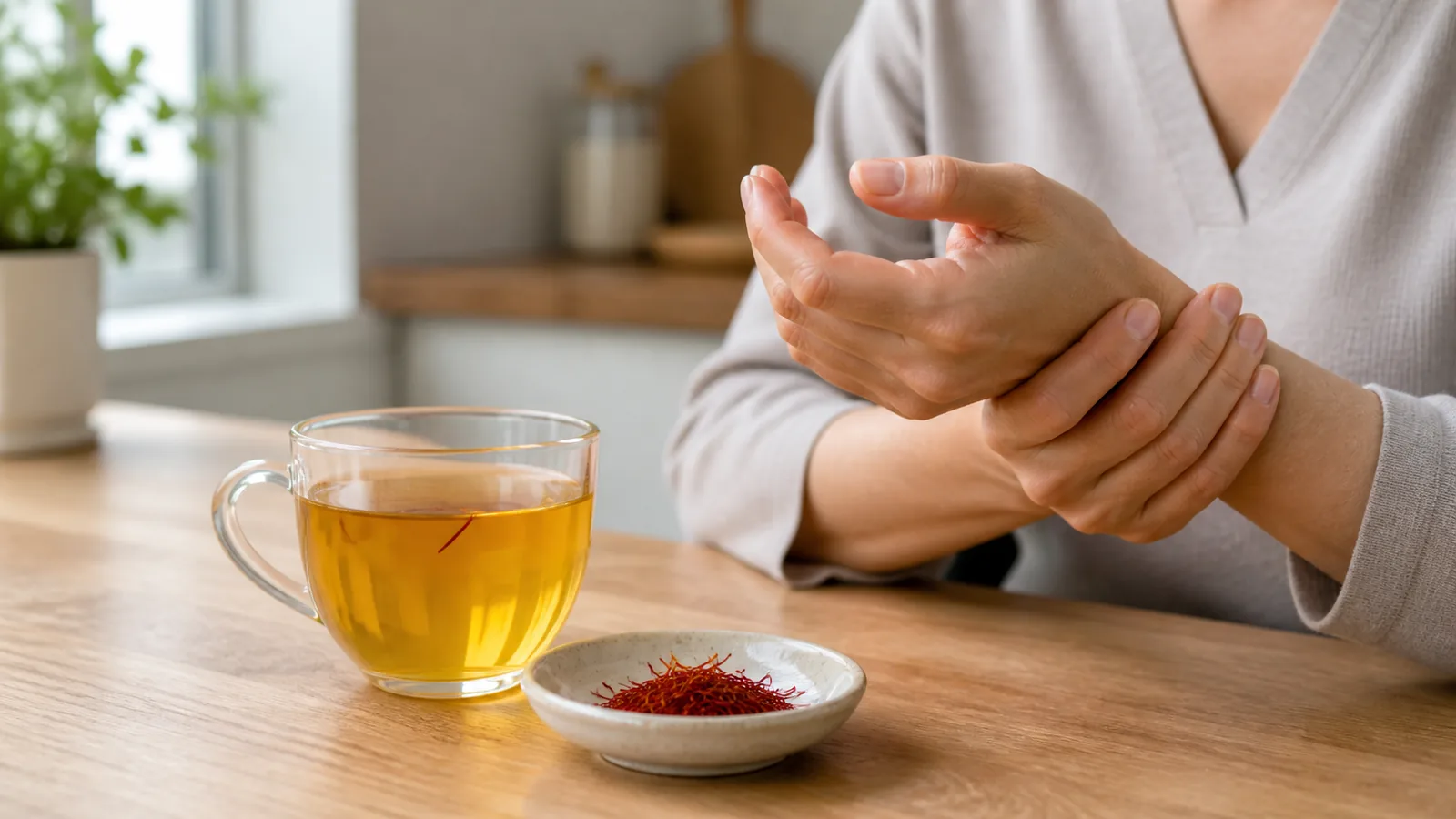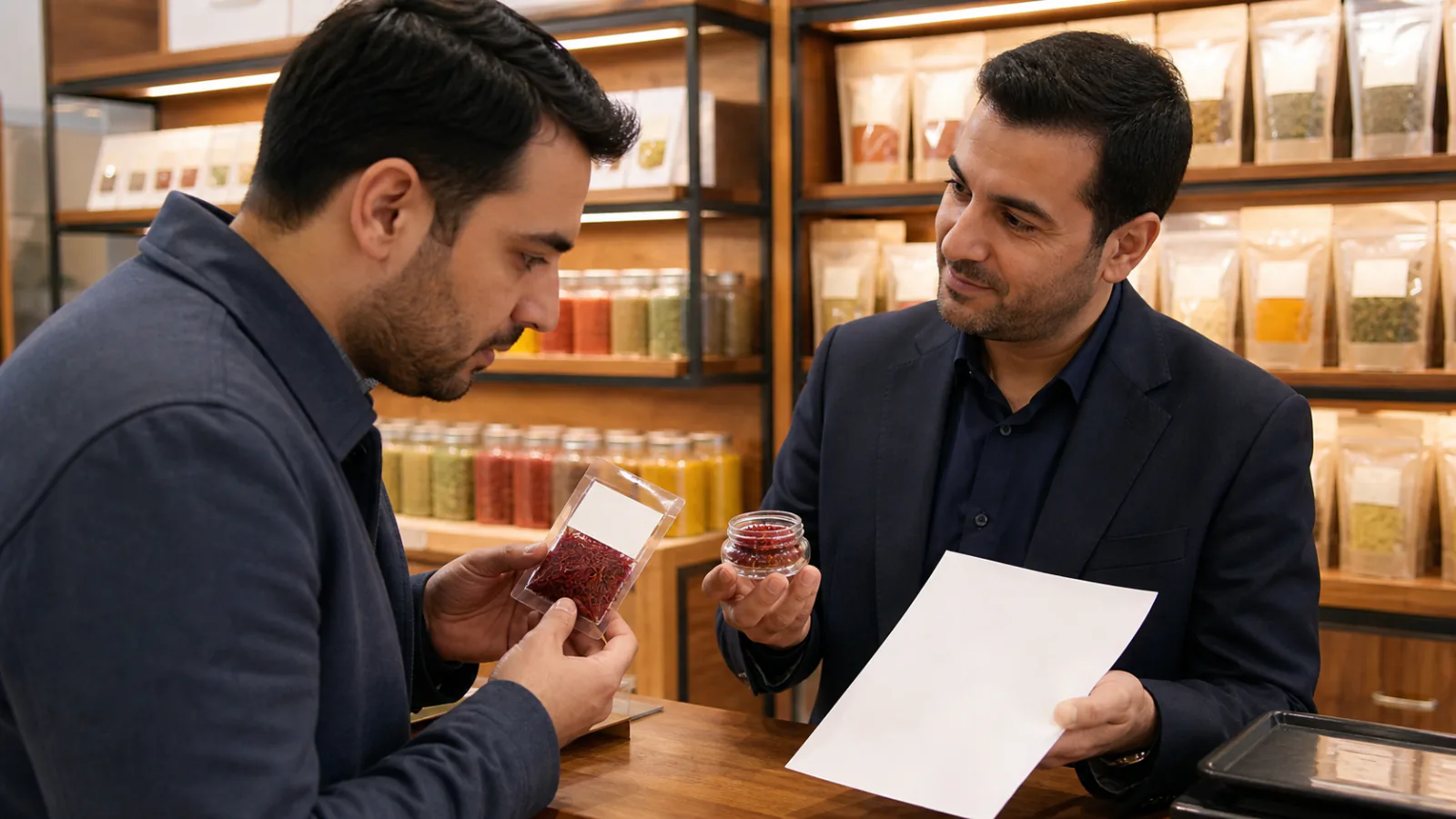
Persian saffron is called “red gold” because a tiny, labour-intensive harvest carries high value. That same value attracts substitution, added moisture and false claims. A report from Iran’s red-gold market therefore has to ask more than whether saffron looks red: who packed it, which lot it came from, and what evidence supports its purity and quality?
The original report on this page interviewed shoppers and traders around the Imam Reza shrine in Mashhad. Some trusted familiar merchants; others preferred branded packages. Officials discussed shop inspections, seizures and a possible restriction on bulk sales. Those historical comments show a real tension, but they do not make every shrine-area shop safe or every bulk seller dishonest.
A Report From Iran’s Red Gold: Buying Original Saffron in Mashhad
Why Mashhad matters to the Persian saffron trade
Mashhad is the commercial centre of Khorasan Razavi, one of Iran’s principal saffron-producing provinces. Flowers are grown and processed across the wider region, while wholesalers, packers, laboratories and retailers operate in and around the city. Visitors naturally associate its markets with Persian saffron.
Location is context, not proof of origin. Saffron sold in Mashhad may come from different farms and provinces, may have passed through several traders, or may be a blend of lots. The phrase original saffron Mashhad should lead to evidence about the product, not a claim that proximity to a landmark authenticates it.
Why “red gold” is vulnerable to fraud
Each Crocus sativus flower produces only three stigmas, which are separated and dried. The combination of manual work, low yield and high price makes small changes profitable to a dishonest seller. Fraud can include unrelated coloured plant material, artificial dye, excess yellow style, added oil or sugar, high moisture, exhausted threads or mislabelled powder.
A 2025 review of saffron adulteration and detection describes the problem as technically varied. No single home trick can detect every substitution. Sophisticated fraud may require microscopy, spectroscopy, chromatography or DNA-based analysis.
Bulk versus packaged saffron
The old report contained opposing views. One customer trusted established sellers around the shrine and preferred bulk saffron because a problem could be pursued with the merchant. Another felt more comfortable buying an Iran saffron brand from a department store. The report then quoted a blunt claim that “bulk saffron is fraud.” None of those positions is universally correct.
Bulk threads let a buyer see form and general condition, but an open container can lose lot identity and be exposed to handling, moisture or substitution. A sealed pack protects the product only if the packer is identifiable and the label is accurate. Attractive branding cannot transform a weak or adulterated lot into good saffron.
For most consumers, a small sealed package from a traceable supplier is the easier risk to manage. A bulk purchase can still be legitimate when the seller provides an invoice, lot details, packing at purchase and meaningful test evidence.
What a useful package should tell you
- the product name and form—filaments, cut filaments or powder;
- net weight in a recognised unit;
- packer or responsible business and contact route;
- lot or batch identifier;
- packing or best-before information;
- country or region claim stated precisely;
- storage instructions and intact tamper evidence; and
- a test report or specification that can be linked to that lot.
A QR code is useful only if it resolves to stable, verifiable information. A decorative certificate, generic laboratory image or “100% pure” slogan without lot linkage is marketing.
What the threads can tell you—and what they cannot
Genuine stigma threads often have a narrow lower section and a broader, trumpet-like end. Their aroma is complex rather than simply sweet, and a few threads release golden colour gradually in water. These observations can reveal an obvious mismatch, but variety, cutting, drying and storage influence appearance.
Instant red dye, identical plastic-looking strands or a sugary coating are warning signs. Passing a water test is not proof. Colour may be added cleverly, and genuine low-quality saffron can still look convincing.
How laboratory standards help
ISO 3632-1:2025 specifies requirements for dried saffron in filament, cut-filament and powder forms. The related test framework can assess characteristics connected to colour, flavour, aroma, moisture and extraneous matter. Results must identify the sample and current standard; “ISO saffron” is incomplete on its own.
FAO’s 2025 partnership with Mashhad University of Medical Sciences is developing stronger authenticity testing and post-harvest guidance. FAO notes that routine ISO tests do not always capture subtle quality differences or sophisticated adulteration. The initiative adds chemical fingerprinting of crocin, picrocrocin and safranal to practical value-chain controls.
Shop inspection protects the market but does not replace buyer evidence
The earlier news report said Mashhad market and enforcement personnel conducted continuing inspections, collected suspect products and referred violations. It also described a proposed administrative plan concerning bulk sales. Those statements belong to the date of that report; they are not proof of today’s schedule, jurisdiction or completed rule.
Enforcement can remove obvious violations and discourage unsafe practice. It cannot test every package before every sale. Traceability, representative sampling and complaint handling remain essential between inspections.
How to buy Persian saffron in Mashhad
- Choose the form deliberately. Intact threads are easier for a consumer to inspect than powder.
- Buy a modest amount. A very large bargain increases the cost of a mistake.
- Check the responsible seller. Keep the shop name, invoice and contact details.
- Read the package. Match lot, weight, dates and origin claim before paying.
- Ask what was tested. A report should refer to the same lot, not merely the brand.
- Compare price realistically. An implausibly low price needs an explanation.
- Protect it after purchase. Keep the closed container dry, cool and away from light and strong odours.
What an Iran saffron brand should stand for
A credible brand reduces uncertainty. It consistently connects a named business to sourcing, lot control, processing, testing, packaging and complaint resolution. It does not ask the customer to accept purity based on heritage imagery or a location keyword.
Original Persian saffron deserves the reputation attached to “red gold,” but reputation is preserved through evidence. In Mashhad or anywhere else, the safest purchase is the one whose identity and quality can still be traced after the package leaves the shop.