


Nine hectares of Meybod farms were planted with saffron, including six hectares in the Sadrabad Nodooshan area, according to a local agricultural report published in 2020.
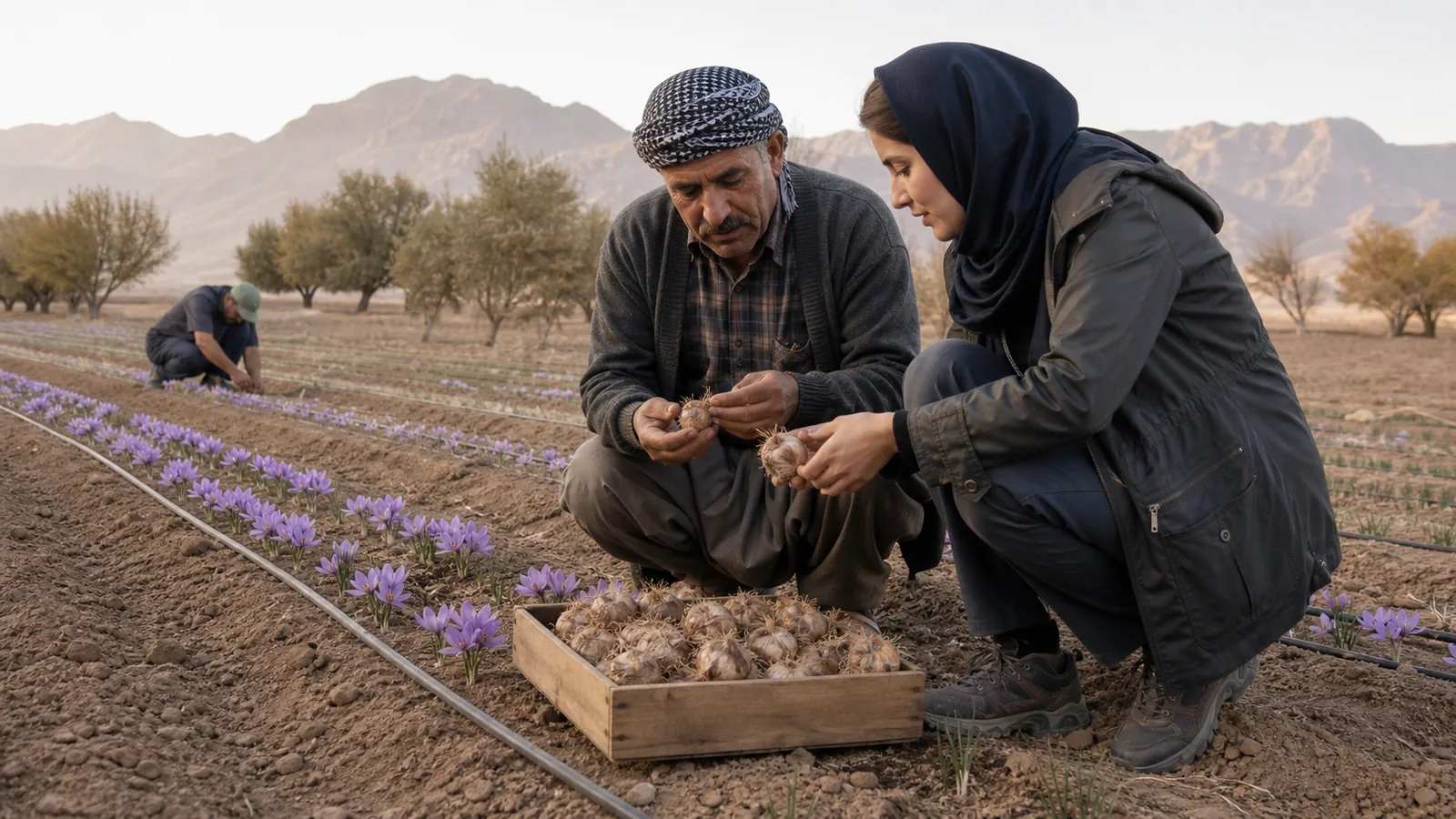
Sadr Pourkousari, then director of Meybod’s Agricultural Jihad office, presented saffron as a lower-water alternative to crops such as alfalfa, watermelon and melon. He also described the local crop calendar, the productive life of a saffron field and the practical problems growers faced when buying planting corms.
Why Meybod was expanding saffron cultivation
Pourkousari said nine hectares in Meybod had been allocated to saffron. The aim was to increase the area devoted to crops with lower irrigation demand in a region where water use is an important farming constraint.
His comparison was with water-demanding crops already familiar to local agriculture, particularly alfalfa, watermelon and melon. The proposal was not that saffron needs no water, but that it could offer another option within Meybod’s crop planning.
Six hectares in Sadrabad Nodooshan
Of the nine hectares reported across Meybod, six were in Sadrabad Nodooshan. Pourkousari said this part of the county had more suitable climatic conditions for saffron and described the crop produced there as high quality.
The report did not publish laboratory results or a grading method for that quality assessment. It is therefore retained as the local official’s evaluation rather than treated as an independent product specification.
How the local production cycle was described
Pourkousari described a saffron field as remaining productive for about five years, with output reaching its peak from the third year. He also said the crop required irrigation only two or three times a year and that its main labour demand came at harvest.
Those statements summarize the local programme as it was presented. Actual irrigation and labour needs depend on soil, rainfall, field age, planting density and management, so the figures should not replace a field-specific cultivation plan.
Planting and harvest dates in the report
The stated planting window ran from September to early October. Harvesting was expected in the first half of November.
Pourkousari linked Sadrabad Nodooshan’s expansion to favourable weather and expected that year’s harvest to be higher than the previous year’s. Because the article did not provide the later harvest result, the forecast remains a forecast rather than a confirmed increase.
The cost and supply of saffron corms
The report used the translated term “saffron onions,” but the planting material is more accurately called saffron corms. Pourkousari said their price had risen by 30 percent compared with the preceding year.
Growers also faced difficulties bringing corms from other cities. He mentioned quarantine and plant-health concerns, as well as the role of intermediaries and brokers in the local agricultural market.
These details matter because a cultivation target is only part of the story. The price, health and traceable origin of corms can affect whether farmers are able to establish a field successfully.
What the nine-hectare report established
- Nine hectares of Meybod farmland were reported under saffron cultivation.
- Six hectares were located in Sadrabad Nodooshan.
- About five years was the productive field period described by the local official.
- The third year was identified as the beginning of peak production.
- Two to three irrigations a year was the programme’s stated water schedule.
- A 30 percent increase was reported in the cost of saffron corms compared with the previous year.
A historical view of saffron farming in Meybod
The 2020 report shows why saffron appealed to local planners: lower irrigation demand than several competing crops, a suitable pocket of climate in Sadrabad Nodooshan and the possibility of maintaining a field over several seasons.
It also records the limits facing growers. Corm prices, plant-health checks, transport from other cities and market intermediaries all sat behind the simple headline figure of nine hectares.

![Exporting Saffron to Turkey + Price Guide [Complete 0 to 100]](https://img.rowhanisaffron.com/20260827003933/saffron-export-turkey-quality-inspection.webp)



