These 6 Easy Methods to Dry Saffron range from a controlled home oven to specialist freeze-drying. For most small harvests, a single loose layer at 50–60°C is the practical choice; direct sun and uncontrolled heaters carry avoidable quality and contamination risks.
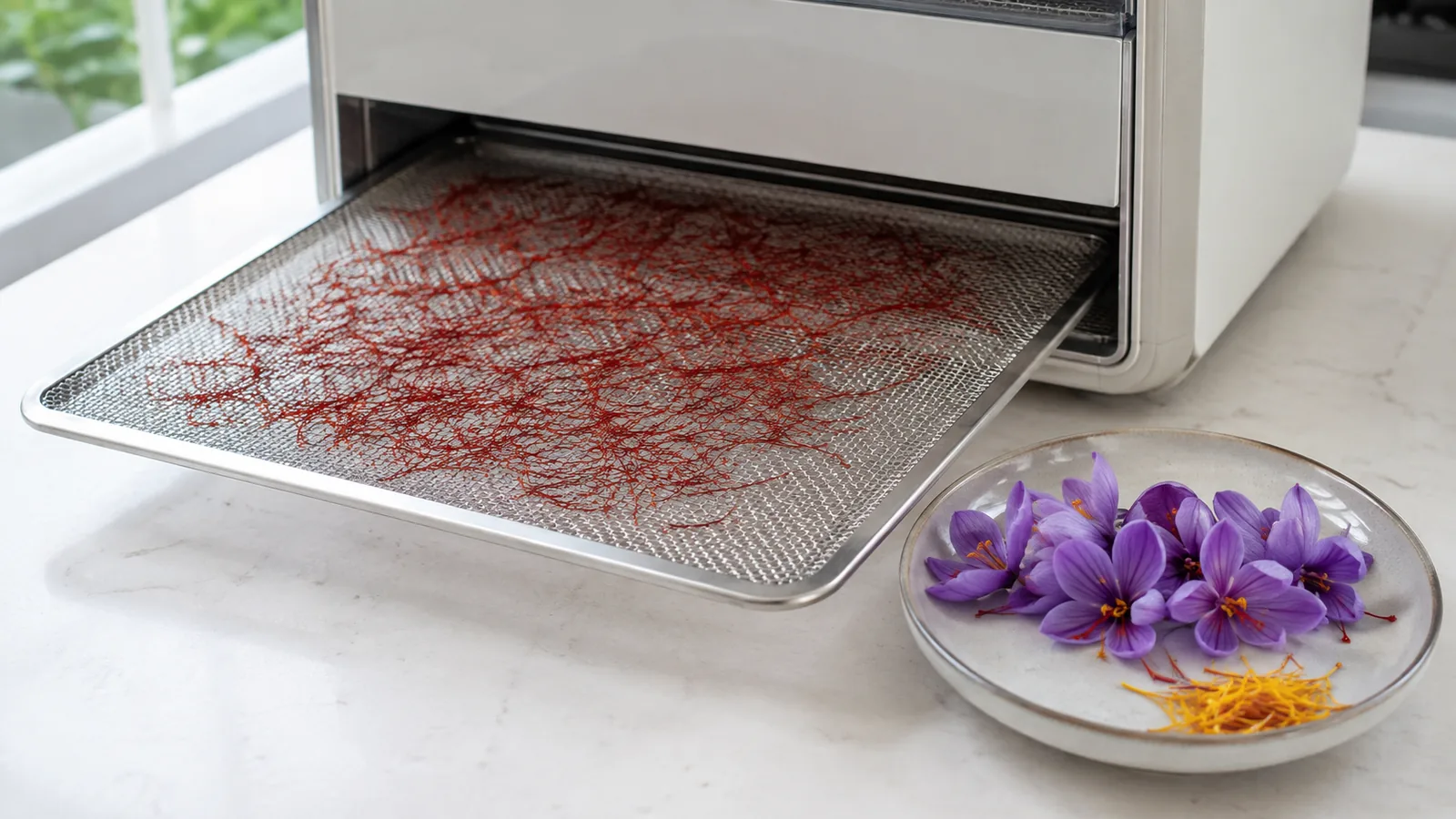
What part of the saffron flower is dried?
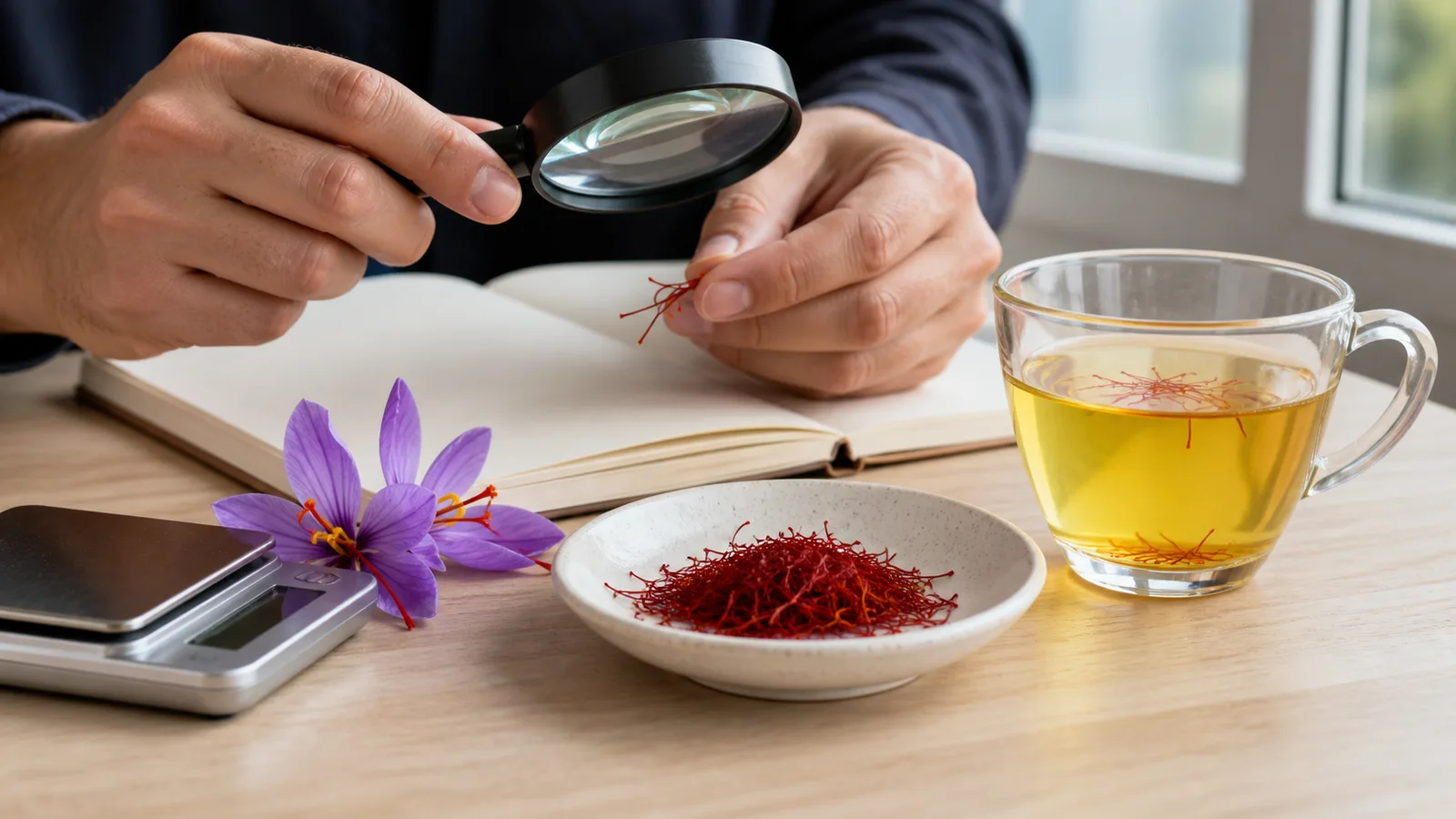
A saffron flower has purple petals, yellow stamens and a red stigma divided into three branches. Culinary saffron comes from those red stigmas. Separate them promptly after harvest, handling the threads with clean, dry hands or tweezers.
Petals can also be dried for non-spice uses, but they are not saffron threads and should be kept in a separate tray and container. Their drying behaviour and intended use are different.
Why the saffron drying process matters
Fresh stigmas contain too much water for stable storage. Drying changes their aroma as well as removing moisture, which is why temperature, airflow, load depth and time interact. Research comparing methods shows that there is no single temperature that automatically maximises every compound.
A University of Vermont saffron drying guide describes home oven trials at roughly 55°C, 77°C and 100°C. A peer-reviewed comparison of drying methods also reports viable electric-oven treatments around 50–70°C with different times. This guide uses the gentler range because it is easier to control in a domestic oven.
How to dry saffron stigmas: preparation
People asking how saffron is produced or how to harvest saffron often focus on picking, but separation and dehydration are just as important. Drying is not the same as sterilizing saffron: clean handling reduces contamination, while a home drying cycle should not be presented as a validated kill step.
- Harvest open flowers on a dry day, preferably in the morning after surface moisture has gone.
- Separate red stigmas from petals and yellow stamens as soon as practical.
- Remove visible debris without washing the stigmas. Added water makes drying slower and less even.
- Spread threads in one loose layer. Do not build the 2 cm-deep oven layer suggested in the older article; trapped threads dry unevenly.
- Use clean food-contact mesh, baking paper or a shallow tray reserved for food.
Method 1: Electric oven drying
For anyone asking how to dry saffron threads with ordinary kitchen equipment, this is the most repeatable starting point. The safest saffron drying temperature is not one universal number, but a controlled low range paired with a single layer and frequent checks.
Heat a fan oven to 50–60°C. Verify the temperature with an oven thermometer because many domestic ovens fluctuate at low settings. Spread the stigmas in a single loose layer on baking paper or a fine stainless-steel mesh.
Dry for about 30–60 minutes, checking every 10 minutes and rotating the tray once. At 50°C, the process often takes longer; near 60°C it may finish closer to 30–45 minutes. The threads should feel dry and light, retain their red colour and break rather than bend when fully cool.
Leave the door slightly ajar only if the appliance manufacturer permits it. Otherwise use the fan setting and open the door briefly during checks to release moisture.
Method 2: Food dehydrator
A dehydrator offers steadier low heat and airflow than many ovens. Arrange threads on a fine mesh liner so they cannot fall through the tray. Set 45–50°C and begin checking after 60 minutes.
Small loads may finish in 1–2 hours; dense or humid loads take longer. Rotate trays if the appliance heats unevenly. Avoid strong fan settings that can blow lightweight dried threads into the machine.
Method 3: Spanish-style gentle heat over a sieve
Traditional Spanish drying uses heat beneath a sieve or mesh rather than direct contact with a hot surface. At home, place a food-safe metal sieve or fine mesh above a very low, controlled heat source, keeping the threads well away from flame.
Aim for about 50–60°C at the thread level. Turn or gently redistribute the stigmas every 10–15 minutes and expect roughly 30–60 minutes. The previous 65°C/15–20-minute shelf-transfer advice is a possible hotter protocol, but temperature at the saffron—not the heater dial—must be known.
Method 4: Room-temperature air drying
Air drying saffron is possible in a clean, dry, low-humidity room. Spread the stigmas on breathable food-safe paper or fine mesh, cover loosely with clean mesh against dust and insects, and keep them out of direct light.
Turn them once or twice a day. Depending on humidity and airflow, drying may take several days. This is less controlled than warm drying and should not be used in a damp room. If threads remain soft, smell musty or show any visible mould, discard them.
Method 5: Microwave drying
Microwave drying is fast but difficult to control with a tiny valuable batch. Arrange a very small single layer between microwave-safe paper sheets. Use the lowest power in 5–10-second bursts, checking after every burst and allowing heat to equalise.
Stop while the threads are dry but still red. Hot spots can scorch them in seconds, so this is not the best way to dry saffron for a first attempt. Never use metal mesh or foil in a microwave.
Method 6: Freeze-drying
Freeze-drying can preserve structure and colour well, but it requires dedicated equipment and a validated cycle. It is included because it is a real modern dehydration method, not because a household freezer can perform it. Freezing stigmas and then leaving them in an ordinary freezer is not freeze-drying.
Growers with access to a food-grade freeze dryer should follow the equipment maker’s load and endpoint instructions. For everyone else, a controlled oven or dehydrator is more repeatable.
Why direct sunlight is not the recommended method
The old guidance advised sunlight drying for 8–12 days. That exposes a valuable food product to variable heat, light, dust, insects and overnight humidity for too long. Some producing regions have historically used sun or shade drying, but a short, controlled process is safer and more repeatable at home.
If no heated equipment is available, choose clean indoor air drying away from direct sunlight rather than an exposed outdoor surface.
Why an uncontrolled room heater is risky
Putting cloth directly over or close to a heater creates uneven temperatures and a fire hazard. It can also introduce dust and household odours. The sieve method is acceptable only when the distance, temperature and food-contact surface are controlled and the equipment is attended throughout.
How do you know saffron is dry?
Commercial processors can measure moisture; home growers usually rely on weight and feel. Properly dried saffron is dramatically lighter than fresh stigma, feels dry rather than leathery and becomes brittle after cooling. Weighing the tray before and during drying gives a better signal than colour alone: when repeated short drying intervals no longer reduce the cooled weight, the batch is near its endpoint.
Do not test a hot thread and immediately seal the jar. Warm material can feel crisp while carrying residual moisture, and trapped warmth can create condensation.
Drying saffron petals
Separate petals from the red stigmas. Spread them loosely on mesh in a dark, ventilated room or use a dehydrator at 35–45°C. Petals contain much more bulk and should not be piled. Dry until papery, then store separately and label them clearly as petals.
Conditioning and storing dried saffron
Cool the dried threads completely for 30–60 minutes in a clean, dry place. Transfer them to a small airtight glass container, filling it enough to limit excess air without crushing the threads. Label the harvest and drying date.
Keep the sealed container in a cool, dark, dry cupboard away from steam and strong odours. Do not refrigerate an opened jar repeatedly; temperature changes can introduce condensation. Allow the aroma to settle for several weeks before making a final judgement of the batch.
Choosing the best way to dry saffron at home
Use an electric oven when you can verify low temperature, a dehydrator when you want steady airflow, or indoor air drying only in reliably dry conditions. Microwave treatment is a last-resort small-batch method; freeze-drying belongs to specialist equipment.
Whichever of these dehydration methods you choose, record the fresh weight, temperature, time and final cooled weight. That simple log makes the next harvest more consistent than copying a fixed time from a different room, crop or appliance.