


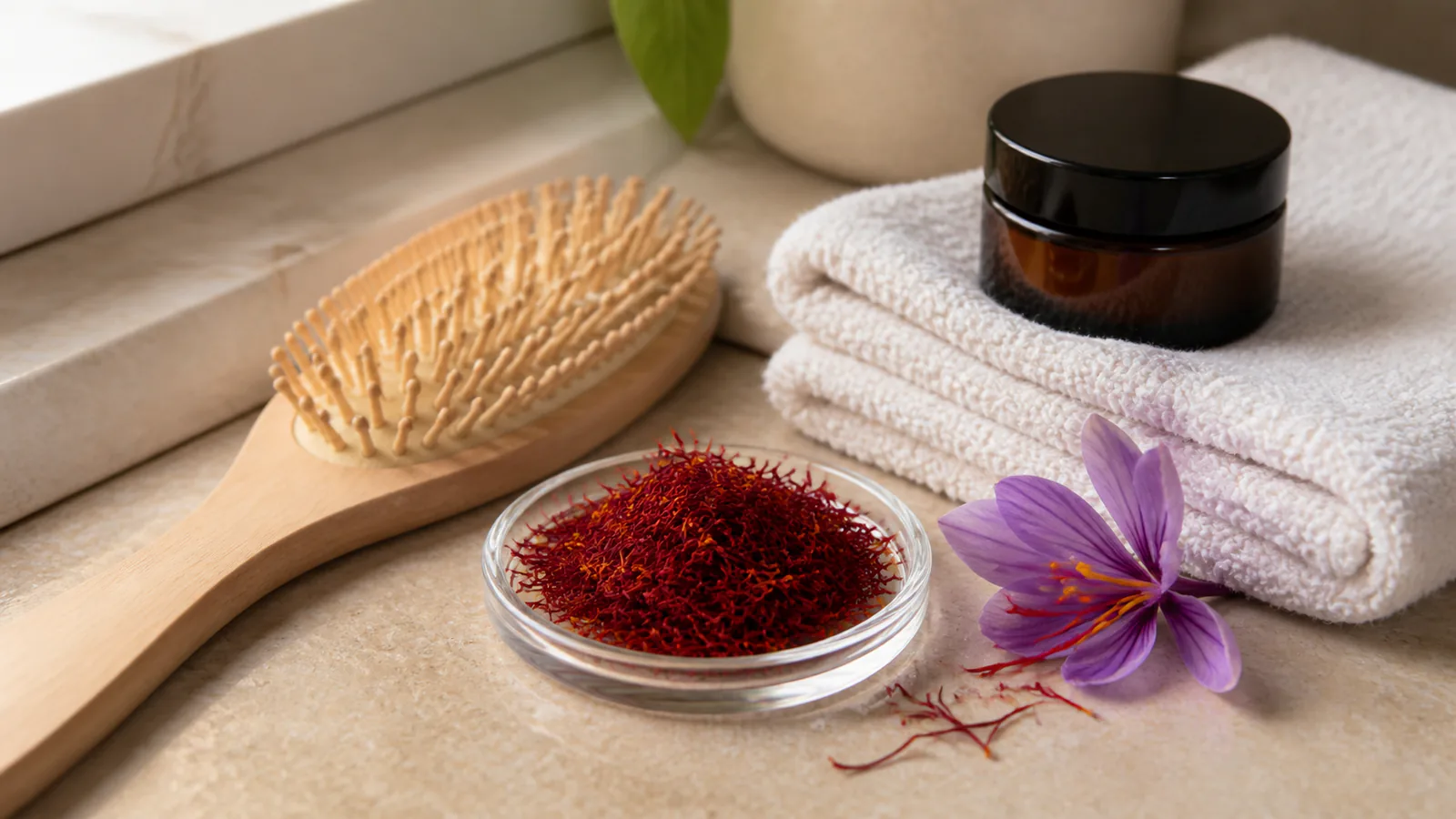
The benefits of saffron are most credible when we separate food, traditional use and clinical research. The spice contributes aroma, colour and pleasure to food. Its crocin, crocetin, picrocrocin and safranal compounds are also being studied, with the clearest human evidence currently centred on mood and a smaller body of research on several other outcomes. Claims that saffron grows hair, clears acne, prevents cancer or replaces medical treatment are not established.
This guide revisits 31 commonly repeated benefits of saffron for skin, hair and health. Some are reasonable culinary or cosmetic uses. Some have early evidence. Others need a firm reality check.
What saffron is and why it attracts so many claims
Saffron is the dried stigma of Crocus sativus. Each flower supplies only three red stigmas, and harvesting and separating them is delicate work. That labour, together with the small yield from each flower, explains much of the spice’s value.
Crocin mainly contributes colour, picrocrocin contributes bitterness and safranal is central to the aroma. These compounds show antioxidant and other biological activity in laboratory studies. That makes saffron scientifically interesting, but a laboratory mechanism is not the same as a demonstrated benefit in people.
A broad evidence map of saffron meta-analyses found promising results in several areas while also finding shortcomings in the quality of the reviews. The sensible reading is promising, not proven for everything.
Saffron benefits for hair: what is actually known
1. Hair-growth claims
Saffron for hair growth is a popular search, but convincing human clinical evidence that culinary saffron or a homemade scalp mixture regrows hair is lacking. Sudden, patchy or persistent shedding can have hormonal, nutritional, autoimmune or medication-related causes. A dermatologist can investigate the cause instead of leaving it to a spice treatment.
2. A traditional scalp-care ritual
Some traditions combine soaked saffron with milk or licorice and massage it into the scalp. The massage may feel pleasant, but the mixture should be treated as a cosmetic ritual rather than an alopecia treatment. Patch-test first, keep food mixtures away from broken skin and stop if irritation develops.
3. Hair colour and shine
Saffron releases a strong golden colour in water. It may temporarily tint very light material, including pale hair, but it is not a predictable hair dye and has not been shown to change hair structure. Anyone seeking a reliable colour result should use a product formulated and tested for hair.
Saffron for skin: tradition, formulation and limits
4. Antioxidant compounds
Crocin, crocetin and safranal can act as antioxidants in experimental systems. This helps explain interest in saffron-derived cosmetic ingredients. It does not prove that rubbing kitchen saffron on the face will prevent ageing or treat a skin disorder.
5. Saffron in formulated cosmetics
Small studies have examined creams or lotions containing standardised saffron extracts. A review of safranal, saffron and photo-ageing research describes encouraging laboratory work and very small topical studies. Formulation matters: a tested cream cannot be assumed equivalent to crushed threads mixed at home.
6. “Glowing” skin
A short rinse made with a few soaked threads can leave a temporary warm tint. That visual effect is not the same as changing skin health or melanin production. Use a patch test and avoid promising permanent brightening.
7. Milk-and-saffron masks
Milk, saffron and sandalwood masks appear in traditional beauty routines. They have not been established as acne, pigmentation or eczema treatments. Dairy, fragrance and plant powders can irritate sensitive skin, so a simple, fragrance-free product is the safer option when the skin barrier is already inflamed.
8. Basil-and-saffron masks
A paste of basil leaves and saffron is another folk preparation. There is no good clinical evidence that it clears acne. Persistent acne deserves evidence-based care because delay can increase scarring.
9. Moisturising
An early lotion study found that the lotion base, rather than saffron itself, accounted for the measured moisturising effect. This is a useful reminder that the entire cosmetic formula matters more than a fashionable ingredient.
10. Sun protection
Laboratory testing suggests saffron extracts can absorb some ultraviolet light, but homemade saffron mixtures do not have a tested SPF and should never replace broad-spectrum sunscreen, protective clothing or shade. The original experiment was conducted on prepared formulations, not on ordinary saffron water.
11. Blemishes and complexion
Small exploratory studies have looked at pigmentation and redness. The samples and methods are not strong enough to promise clear skin or a “rosy complexion.” Anyone with a changing patch, persistent redness or unexplained pigmentation should seek clinical assessment.
Benefits of saffron supported by human research
12. Mood research
Mood is the best-studied area in this list. Meta-analyses of small clinical trials have reported improvement in depressive or anxiety symptoms with standardised saffron preparations. A 2024 meta-analysis comparing saffron with SSRIs found no significant difference in symptom change across the included trials, but the authors still called for larger, more diverse studies. This does not make saffron a do-it-yourself substitute for antidepressants, diagnosis or crisis care.
13. Sleep and calm
Clinical studies have also explored standardised extracts for sleep and stress-related outcomes. Results are encouraging but products, doses and participants vary. A fragrant cup of saffron tea can be calming as a ritual; that is different from treating an anxiety or sleep disorder.
14. Premenstrual symptoms
Several small studies have investigated saffron preparations for premenstrual symptoms. The evidence is preliminary and does not explain heavy bleeding, severe pelvic pain or a newly irregular cycle. Those symptoms need medical assessment.
15. Sexual function and fertility research
Small trials have explored sexual function, including in people taking antidepressants. Fertility findings are limited and inconsistent, and saffron is not a proven infertility treatment. A fertility problem calls for evaluation of both partners rather than a supplement chosen from a general benefits list.
16. Cognitive research
Saffron and crocin have been studied for cognition and neurological conditions. Reviews describe promising signals, but trials tend to be small and use controlled extracts. Saffron does not prevent or cure Alzheimer’s disease, and memory changes should be assessed by a clinician.
Health claims that need careful language
17. Heart and circulation
Research has examined blood pressure, lipids and other cardiovascular markers, with mixed results across preparations and populations. The amount of potassium or other minerals in a culinary pinch is too small to treat blood pressure or an abnormal heart rhythm. Prescribed cardiovascular care should not be replaced.
18. Blood sugar and metabolism
Some controlled studies report changes in metabolic markers, while others do not. This is an active research area, not grounds for adjusting diabetes medication. Saffron used to flavour an otherwise balanced meal is the ordinary food context.
19. Cancer research
Crocin, crocetin and other saffron compounds have shown activity in cells and animals. Human evidence does not establish saffron as a cancer preventive or treatment. Laboratory antiproliferative activity must not be translated into a promise to patients.
20. Inflammation
Biomarker studies and experimental research support interest in anti-inflammatory mechanisms. They do not show that saffron can diagnose or treat arthritis, asthma or another inflammatory disease.
21. Pain
Saffron tea has a history as a comforting drink during menstruation and other minor discomfort. Persistent, severe or unexplained pain needs a cause and an appropriate treatment; “natural painkiller” is too strong a description.
22. Digestion
Saffron’s aroma can make food more appealing, and warm saffron drinks have a traditional digestive role. Evidence does not establish them as treatment for ulcers, liver disease, nausea or muscle spasms.
23. “Detox”
Saffron does not cleanse toxins from the body. The liver, kidneys, lungs and digestive system carry out that work. A colourful spice can make a nutritious meal enjoyable, but it does not create a special detox pathway.
24. Colds and immunity
A warm drink may soothe someone with a cold. It does not shorten the infection or guarantee protection. The tiny culinary quantity of saffron is not a meaningful source of vitamin C and should not be marketed as an immune shield.
25. Energy and fatigue
Saffron is not a stimulant. Enjoying its aroma may lift the experience of a drink or meal, but ongoing fatigue can reflect sleep problems, anaemia, thyroid disease, infection, medication effects or many other causes.
26. Iron and haemoglobin
Food-composition tables may show iron per 100 grams of saffron, yet nobody eats anything close to that quantity. A pinch supplies too little to treat iron deficiency or anaemia.
27. Muscle and cell health
Saffron compounds are studied in cell and animal models, but broad statements about “repairing cells” or preserving muscle overstate the evidence. Protein, resistance activity and an adequate overall diet matter far more to muscle health.
28. Oral health and toothache
Traditional saffron-and-honey preparations are not dental treatment. Honey also contains sugar. Toothache, swelling, bleeding gums or a sore that does not heal needs a dentist, not a spice rinse.
29. Asthma and breathing
Experimental studies do not make saffron a rescue or controller medicine for asthma. Breathing difficulty can become an emergency; prescribed inhalers and a clinician’s action plan matter.
30. Pregnancy
Normal culinary use and concentrated supplements are not interchangeable. Pregnancy is not the time to self-prescribe high-dose herbal products, particularly where traditional sources describe uterine effects. The FDA advises pregnant women to discuss supplements with a healthcare professional.
31. General wellness
The most dependable everyday benefit is also the least dramatic: a small amount of authentic saffron can make rice, soups, drinks and desserts aromatic and appealing. That pleasure can belong in a varied diet without turning the spice into a cure-all.
How to use saffron sensibly
- For food, use a small pinch and follow a trusted recipe.
- For skin, choose a properly formulated product, patch-test it and stop if irritation occurs.
- Do not use kitchen mixtures on broken skin or near the eyes.
- Do not replace sunscreen, prescribed medicine, dental care or mental-health care with saffron.
- Discuss concentrated extracts with a doctor or pharmacist, especially during pregnancy, before surgery or when taking medication.
A 2026 systematic review of human adverse-event data found saffron generally well tolerated but documented mainly gastrointestinal effects and advised clinical monitoring for higher-dose or prolonged medicinal use. The US Food and Drug Administration likewise warns that supplements can interact with medicines and are not approved for safety and effectiveness before sale. “Natural” is not the same as risk-free.
The honest conclusion
Saffron earns its reputation through flavour, colour, culture and a growing body of research. Its strongest case is not a list of miraculous cures. It is a valued food with interesting compounds, promising but still developing clinical evidence, and a limited role in carefully formulated cosmetics. For saffron hair benefits in particular, there is not yet good evidence of regrowth. Clear limits make the genuine benefits easier to trust.

![Exporting Saffron to Turkey + Price Guide [Complete 0 to 100]](https://img.rowhanisaffron.com/20260827003933/saffron-export-turkey-quality-inspection.webp)



