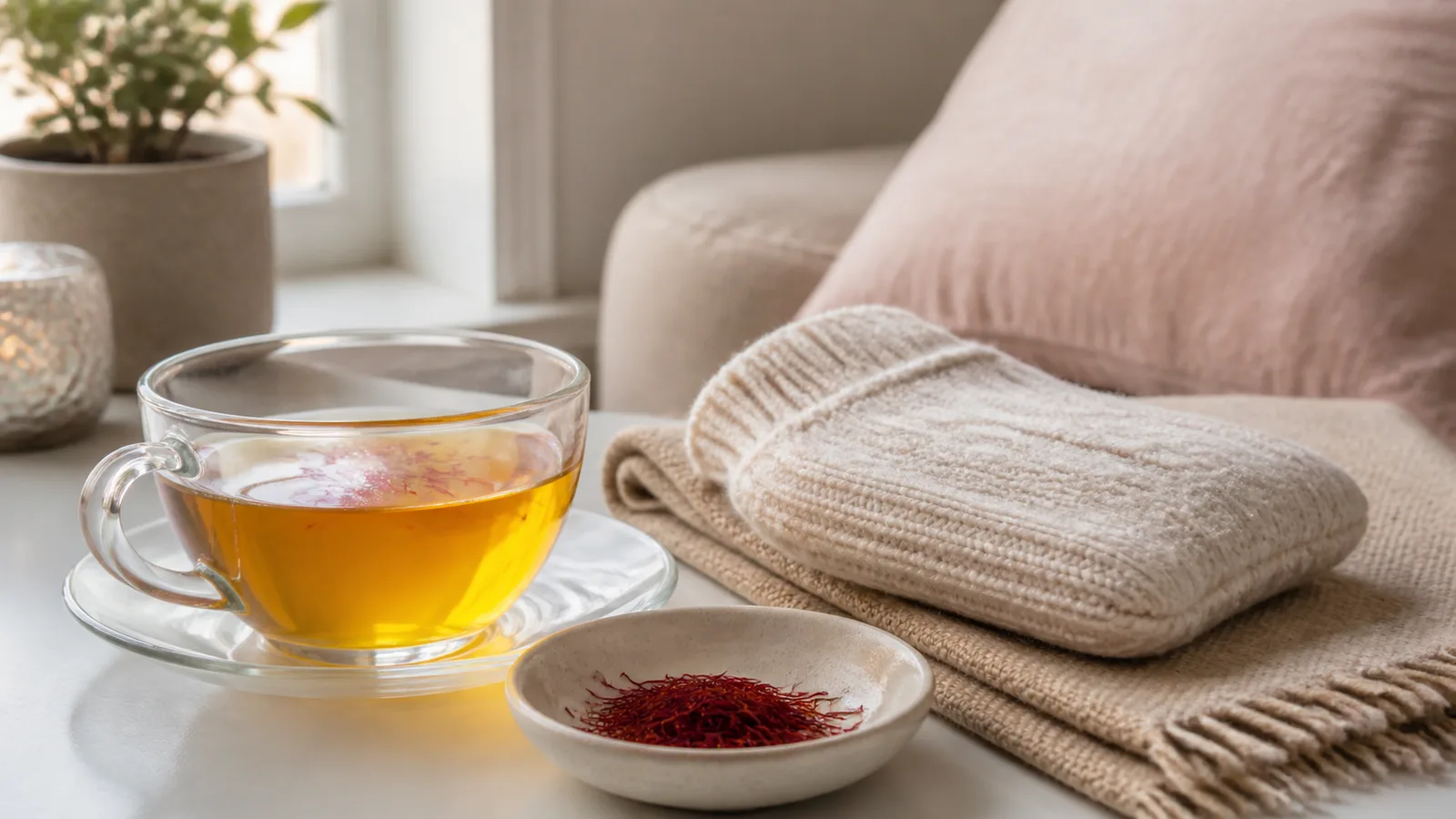
Saffron has promising but still limited clinical evidence for reducing overall premenstrual syndrome symptoms and menstrual pain. A 2026 systematic review and meta-analysis found favorable pooled effects for PMS and dysmenorrhea. The underlying trials used measured saffron preparations, however, so they do not prove that a few threads in tea will relieve cramps, bloating, mood swings, or fatigue.
Saffron for PMS relief should be considered a possible complementary option to discuss with a clinician, not a proven hormone-balancing remedy or replacement for established care. Severe mood symptoms, disabling pain, or a change in the usual pattern deserves assessment.
What counts as PMS?
Premenstrual syndrome is a recurring pattern of physical or emotional symptoms in the days or weeks before a period that improves after menstruation begins. Common symptoms include irritability, anxiety, low mood, poor concentration, sleep or appetite changes, breast tenderness, bloating, headache, swelling, and fatigue.
Period cramps are called dysmenorrhea. They can occur with PMS but are not the same condition. Premenstrual dysphoric disorder (PMDD) is a more severe mood-related disorder that interferes substantially with daily life. Correctly identifying the pattern matters before choosing treatment.
What research says about saffron for PMS relief
A 2008 double-blind randomized trial enrolled women aged 20 to 45 with regular cycles and at least six months of PMS symptoms. Participants received either a saffron capsule totaling 30 mg per day or placebo for two menstrual cycles. Symptom scores favored saffron, but this was one relatively small trial and the authors called for further research.
A later randomized trial studied a measured saffron regimen, fluoxetine, and placebo in people diagnosed with PMDD. Results on one symptom scale favored saffron over placebo, while another assessment did not show a significant difference among groups. That result does not make saffron interchangeable with an antidepressant.
The 2026 meta-analysis pooled randomized trials and reported favorable effects for both PMS and dysmenorrhea. It strengthens the signal, but it does not establish the best formulation, long-term safety, or whether culinary saffron produces the same outcome.
Which PMS symptoms might improve?
Mood swings, irritability, and anxiety
Some trials measured overall symptom scores that include emotional symptoms. Separate saffron research also explores mood. It is not accurate to say crocin and safranal simply “balance emotions” or boost serotonin on demand.
Track mood symptoms across cycles. Severe depression, panic, rage, loss of functioning, or thoughts of self-harm need prompt professional support. Saffron should not delay care for PMDD or another mental-health condition.
Cramps, headaches, and physical discomfort
The meta-analysis reported an average improvement in dysmenorrhea, but results do not prove immediate pain relief from saffron tea. Menstrual pain can also have causes such as endometriosis, fibroids, adenomyosis, or infection.
Anti-inflammatory medicines can help some people, but they are not suitable for everyone. Heat, gentle activity, sleep, and clinician-guided treatment may also be useful. New, severe, or progressively worsening pain should be evaluated.
Bloating and digestive symptoms
Evidence does not show that saffron specifically removes PMS bloating or digestive discomfort. A supplement can itself cause nausea or other gastrointestinal effects. Note whether salt, alcohol, meal size, constipation, or another factor changes your symptoms.
Fatigue and sleep
PMS can involve tiredness or sleep disturbance, but saffron is not a stimulant and should not be promised as an energy treatment. Separate short trials have studied sleep outcomes; they do not show that saffron tea corrects PMS fatigue.
Does saffron balance hormones?
There is no basis for saying that a small amount of saffron “balances hormones” or regulates them throughout the month. PMS is not diagnosed by a single hormone test, and symptom relief in a trial does not establish a hormone-correcting mechanism.
In other words, saffron has not been shown to provide hormone regulation, and adding it to a daily routine does not make that claim more reliable.
Claims about hormone balance are especially risky when symptoms could reflect pregnancy, perimenopause, thyroid disease, polycystic ovary syndrome, or another condition. Get an appropriate evaluation rather than self-treating a presumed imbalance.
How to use saffron: food, tea, or supplement?
Culinary saffron
A small pinch can flavor rice, soup, vegetables, yogurt, or a smoothie. This is food use, not a therapeutic dose. Adding saffron to a meal has not been shown to reproduce the results of a measured capsule.
Saffron tea
For a light drink, crush 6 to 10 threads, cover with 240 ml (1 cup) of hot water, and steep for 8 to 10 minutes. It may be a calming ritual, but even small amounts should not be described as maintaining hormonal balance or reliably easing PMS.
Saffron supplements
Do not copy the 30 mg/day used in an early trial without clinical advice. A research dose belongs to a specific extract, participant group, schedule, and monitoring plan. Retail capsules differ in composition and quality.
Ask a physician or pharmacist about pregnancy possibility, breastfeeding, medicines, bleeding risk, low blood pressure, mood treatment, and other conditions. Do not stop an antidepressant, hormonal treatment, or pain medicine to try saffron.
Track symptoms before judging an effect
Keep a daily symptom record for at least two menstrual cycles. Note timing, severity, bleeding, pain, sleep, mood, appetite, bowel symptoms, medicine, and any supplement used. A diary helps distinguish a recurring premenstrual pattern from symptoms occurring throughout the month.
Change one thing at a time. If several supplements and routines start together, neither you nor a clinician can tell what helped or caused a reaction.
Established approaches to PMS
Regular aerobic activity, adequate sleep, stress reduction, and a balanced diet may help mild symptoms. Depending on severity and the dominant symptoms, a clinician may discuss cognitive behavioral therapy, antidepressants, hormonal contraception, pain relief, or other targeted care.
These treatments have their own benefits and risks. The right plan is based on symptoms, medical history, pregnancy goals, and personal preference—not on the assumption that natural is automatically safer.
When to seek care
See a healthcare professional if symptoms affect work, school, relationships, sleep, normal activity, or quality of life; lifestyle changes have not helped; pain is new or severe; bleeding is unusually heavy; symptoms occur outside the premenstrual phase; or you suspect PMDD.
Seek urgent help for fainting, severe bleeding, possible pregnancy with significant pain, or thoughts of self-harm. A supplement is not appropriate crisis care.
The balanced conclusion is that saffron for PMS relief has more human evidence than many saffron health claims, and the new pooled analysis is encouraging. It is still not accurate to promise that saffron balances hormones, cures PMS, or makes every period comfortable. Treat it as an option to evaluate carefully alongside proven care.