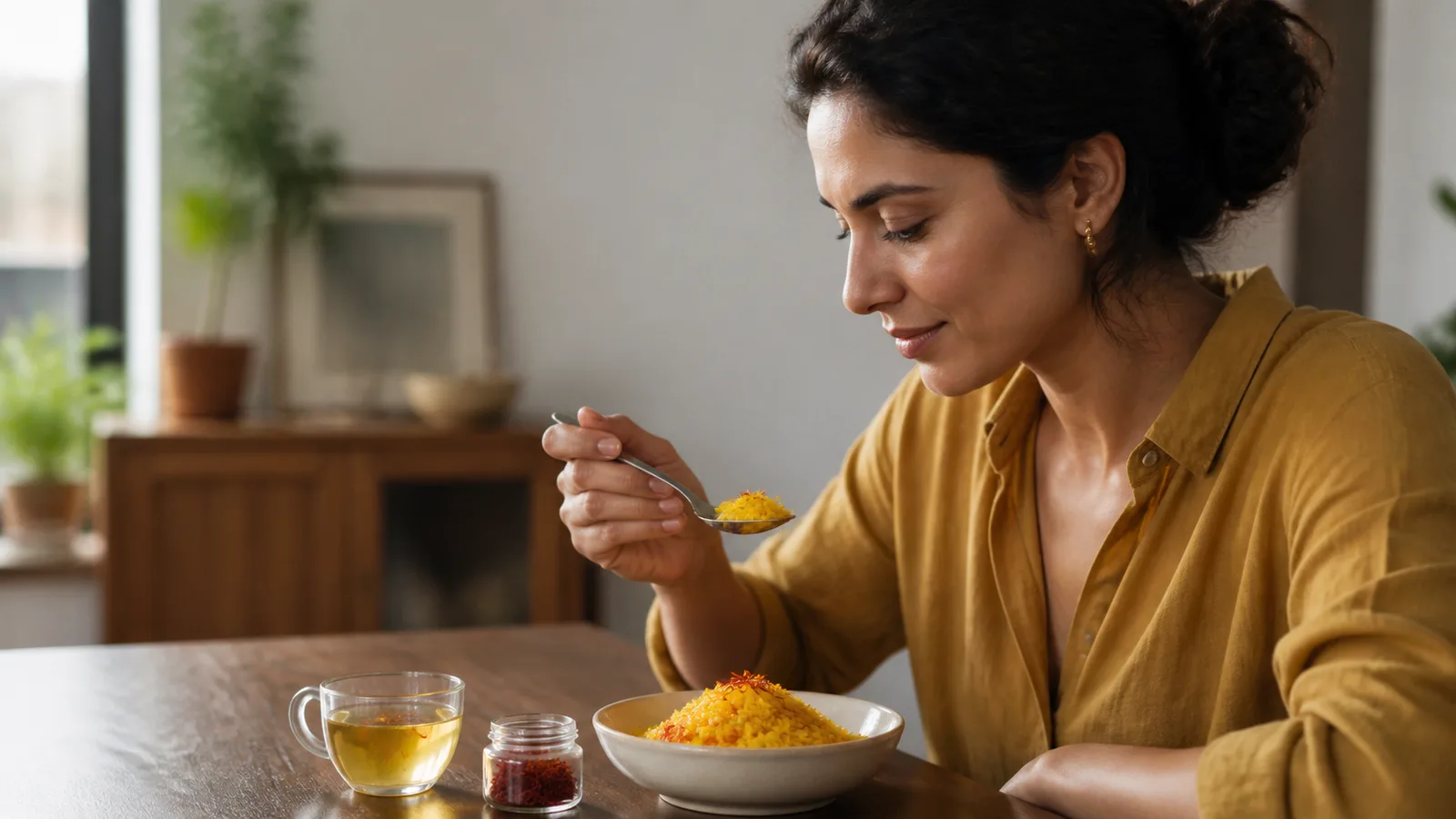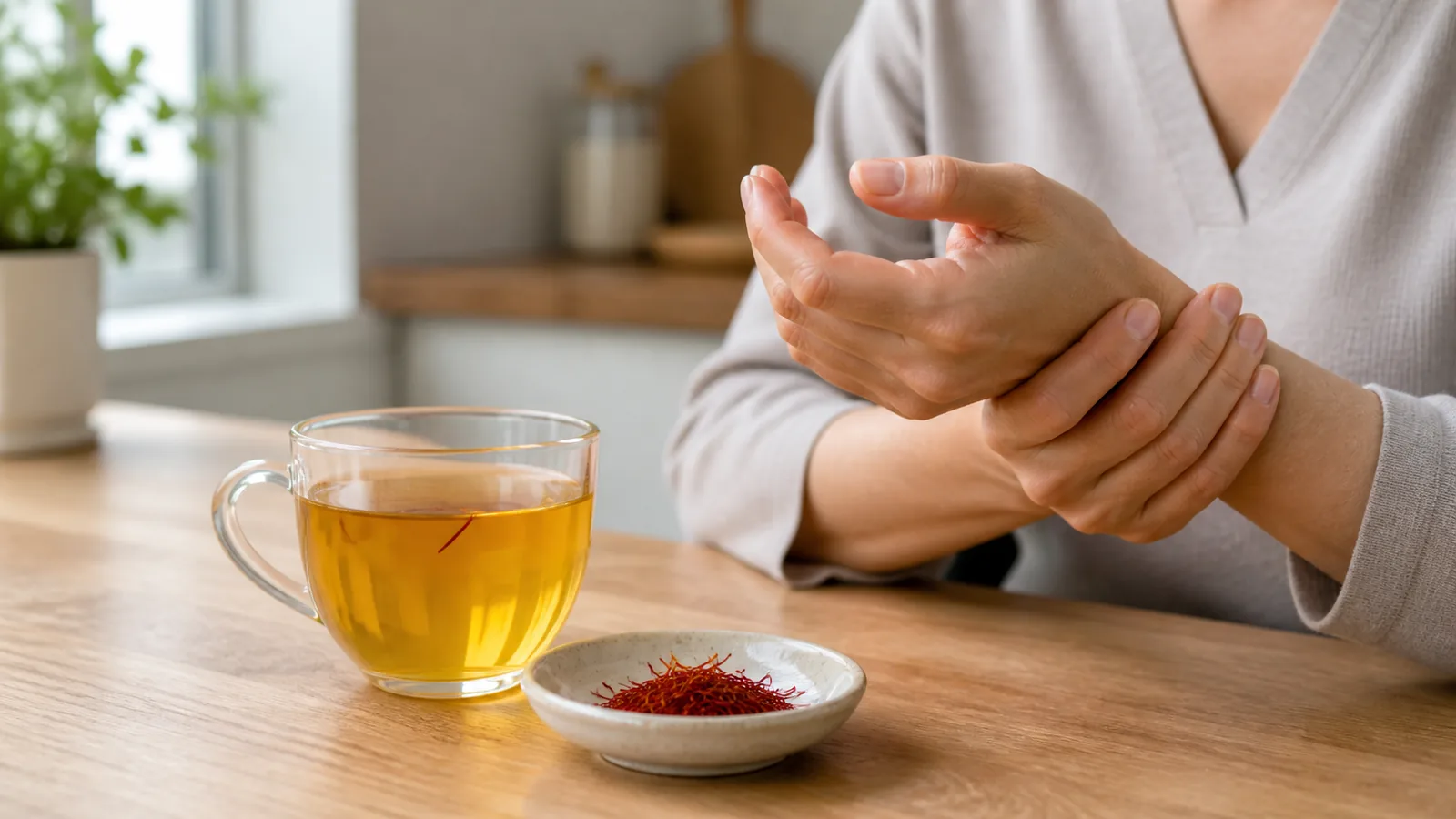
Saffron can be used in a child’s food in small culinary amounts, but its health benefits for children are not well established. Most saffron research involves adults, and studies of young people have tested specific extracts for specific conditions—not ordinary saffron tea as a general health drink.
That distinction matters. A few threads used to colour a family rice dish are not the same as a concentrated capsule, and neither should be treated as medicine without a paediatrician’s advice. This article looks at saffron for children from digestion and immunity to mood, eyes and the common question: can kids drink saffron tea?
Parents searching for saffron benefits for kids are often asking two separate questions: can kids have saffron in food, and can kids take saffron as a supplement? The first is about a spice in a meal. The second is a dose intended to change health, with a different evidence and safety burden.
Benefits of saffron consumption for children
Saffron gives food a golden colour and distinctive aroma through compounds including crocins and safranal. It can introduce a child to the flavours of Persian, Middle Eastern and South Asian cooking. That culinary and cultural value is the clearest benefit.
Claims about better digestion, stronger bones, immunity, clear skin or disease treatment require a higher standard of evidence. Children are not small adults: their bodies, diets and medicine doses differ, and many herbal products have never been adequately tested in younger age groups. The US National Center for Complementary and Integrative Health notes that many supplements have not been tested in children and may differ in quality or interact with medicines.
Saffron and digestion
Warm saffron milk and saffron tea have a place in home tradition, but paediatric trials have not shown that they treat stomach pain, constipation, diarrhoea or indigestion. If a lightly flavoured drink feels comforting, the warmth and fluid may be doing more practical work than the spice.
Repeated pain, vomiting, blood in stool, a swollen abdomen, poor growth or a major change in bowel habits needs medical assessment. Diarrhoea can dehydrate infants and young children quickly; it should not be managed by experimenting with a stronger saffron drink.
Saffron for eye health
Crocin and related carotenoids have attracted eye research, but the best-known human work does not involve children. A small trial of saffron and retinal flicker sensitivity studied adults with early age-related macular degeneration. It cannot show that saffron improves normal childhood vision or treats conjunctivitis.
Never put saffron tea, rosewater, honey or a homemade paste in or around a child’s eye. Redness, pain, discharge, injury, light sensitivity or a change in vision should be assessed by an appropriate health professional.
Saffron and bone health
Saffron is not an established way to strengthen children’s bones or improve calcium absorption. A child builds bone through adequate food, including appropriate sources of calcium and vitamin D, together with movement and weight-bearing play. A paediatrician or dietitian can help when diet is restricted or growth is a concern.
A pinch of saffron can make milk or yoghurt appealing, but the nutrients come mainly from the food carrying it. Saffron should not be described as a calcium supplement.
Saffron and immune health
Laboratory studies of saffron compounds do not prove that saffron “boosts” a child’s immune system. There is no good evidence that saffron tea prevents colds, coughs or other childhood infections. The American Academy of Pediatrics advises that most healthy children obtain what they need from a varied diet and that supplements do not replace nutrition, sleep, activity or recommended vaccination.
A persistent cough, fever in a young infant, difficult or noisy breathing, blue lips, unusual sleepiness or signs of dehydration require prompt medical advice. A home spice drink must not delay care.
Saffron and anxiety in children
This is one area with a small amount of direct youth research. In an eight-week randomised trial, 80 young people aged 12–16 with mild-to-moderate anxiety or depressive symptoms received either placebo tablets or a standardised saffron extract. Adolescent self-reports favoured the extract on several measures, but parent reports were inconsistent, 68 participants completed the study, and the authors noted limits including the short duration, one dose and non-clinical sample.
That early signal does not establish saffron tea as anxiety treatment, does not apply automatically to toddlers, and should not be used to copy the trial dose at home. Anxiety that affects school, sleep, eating, relationships or daily life deserves a proper assessment. A child already using medicine should not receive a saffron supplement without the prescriber knowing.
Saffron for skin care
Children’s skin can react to fragrance, plant material and other ingredients in homemade mixtures. Saffron is not a treatment for eczema, infection, acne or an unexplained rash, and applying it to broken skin or near the eyes adds avoidable risk.
If saffron is used in an ordinary food and a child develops hives, swelling, wheezing or repeated vomiting, stop the food and seek urgent advice appropriate to the reaction. Persistent redness, pain, oozing or fever also needs assessment rather than another topical mixture.
Can kids drink saffron tea?
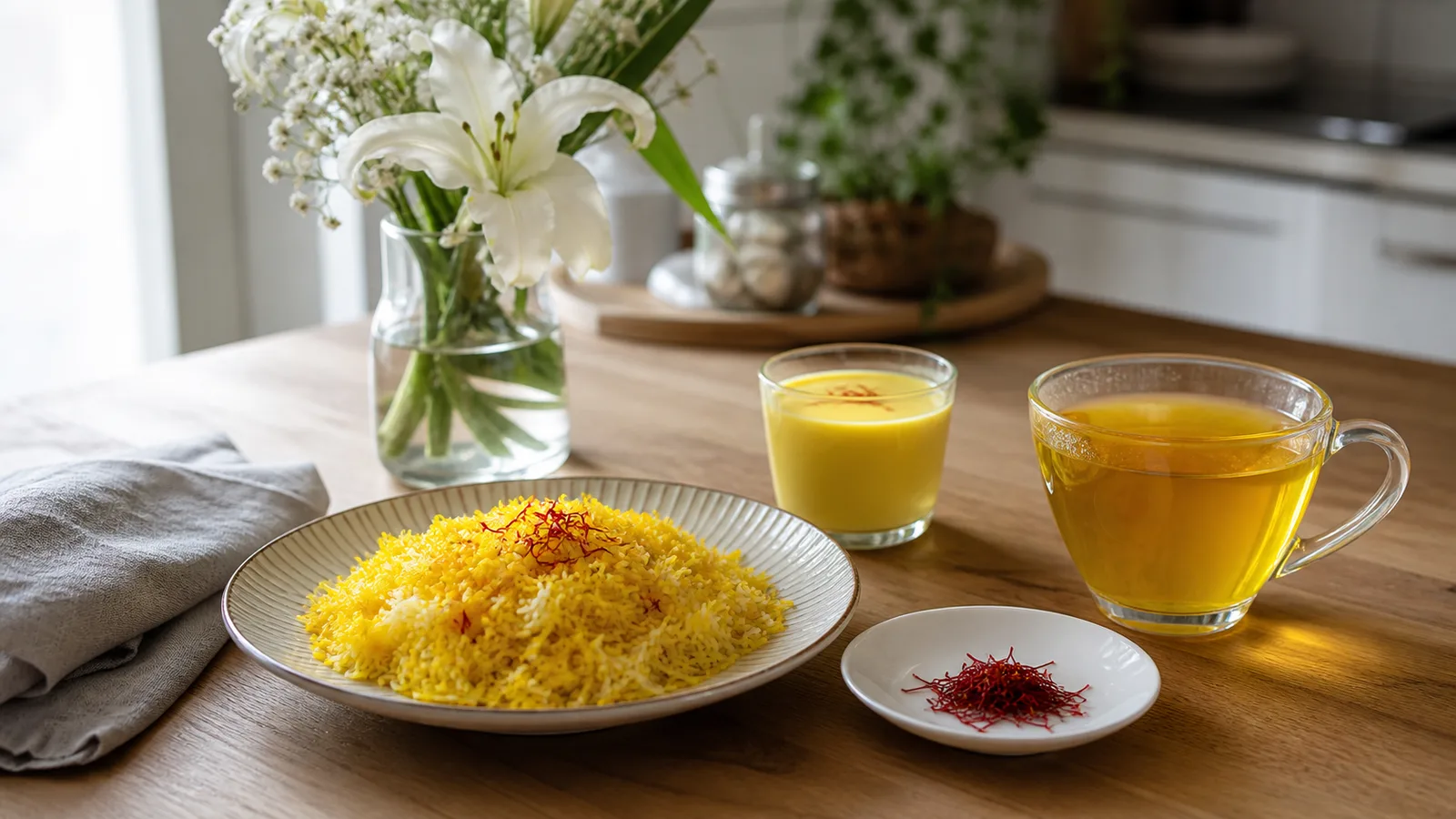
There is no established paediatric dose for saffron tea. For a healthy older child who already eats family foods, an occasional drink lightly flavoured from the family recipe is very different from a strong infusion given as a remedy. Keep the amount culinary, do not use extract powder or capsules to make the drink, and ask the child’s paediatrician first when there is a health condition, regular medicine or a history of food reactions.
Tea should not displace the drinks and foods a young child needs. For babies aged 6–12 months, the CDC identifies breast milk or infant formula as the main drinks, with small amounts of water; its infant and toddler feeding guidance is a better starting point than a herbal tea routine.
Can kids have saffron milk?
If milk is already suitable for the child, a tiny amount of saffron can be used for flavour and colour. It does not turn the milk into medicine or create proven “saffron milk benefits for kids.” Use pasteurised milk appropriate to the child’s age and needs, avoid a heavily sweetened recipe, and consider every ingredient rather than only the spice.
Never add honey for a baby under 12 months
Some saffron drinks are sweetened with honey. The CDC says not to give honey before 12 months because it can cause infant botulism. This rule applies even when honey is mixed into water, milk, tea or food.
Is saffron good for toddlers?
A toddler can encounter saffron as one flavour in normal family food once that child is eating the ingredients and textures in the dish. There is no demonstrated need to add it for growth, bones, immunity or brain development, and there is no standard “saffron for a 3 year old” dose.
Saffron for babies needs more caution than saffron in an older child’s shared meal. For infants and toddlers, keep the priorities simple: age-appropriate food, low added sugar, safe textures and the drinks recommended for that stage. Ask the child’s clinician before creating a daily saffron routine or giving a product sold with health claims.
What about saffron supplements for kids?
Giving saffron to kids through a standardised extract is not interchangeable with using spice threads in food. Concentration, ingredients and contaminants vary between products, and a label saying “natural” or “for kids” is not proof that saffron is safe for kids in that form. Keep all supplements out of children’s reach.
A clinician considering a supplement needs the product name, ingredient list, strength, proposed dose, reason for use, other medicines and the child’s age and weight. Do not stop prescribed treatment or substitute saffron for care based on a single small trial.
How to use saffron in a child’s food
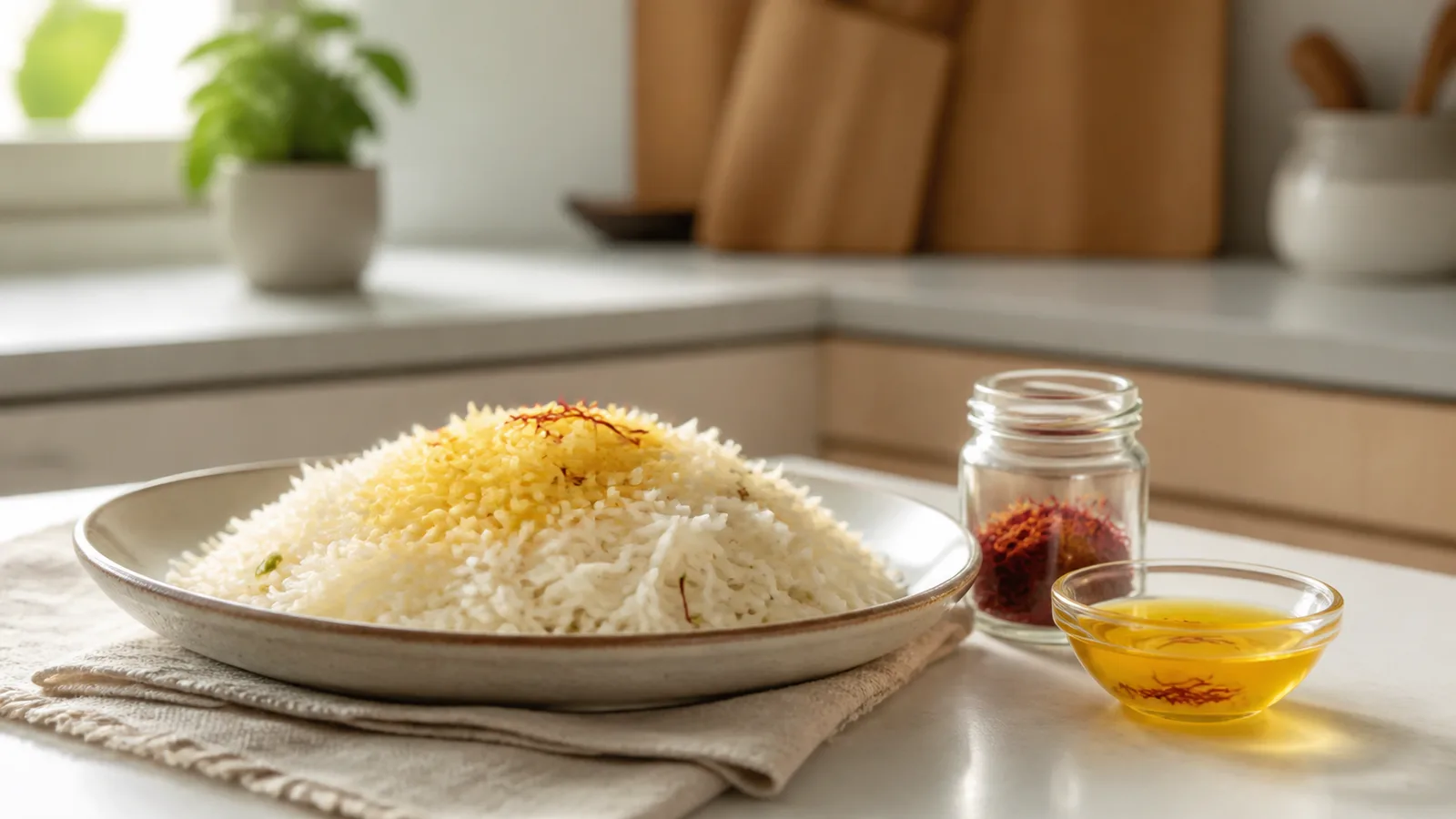
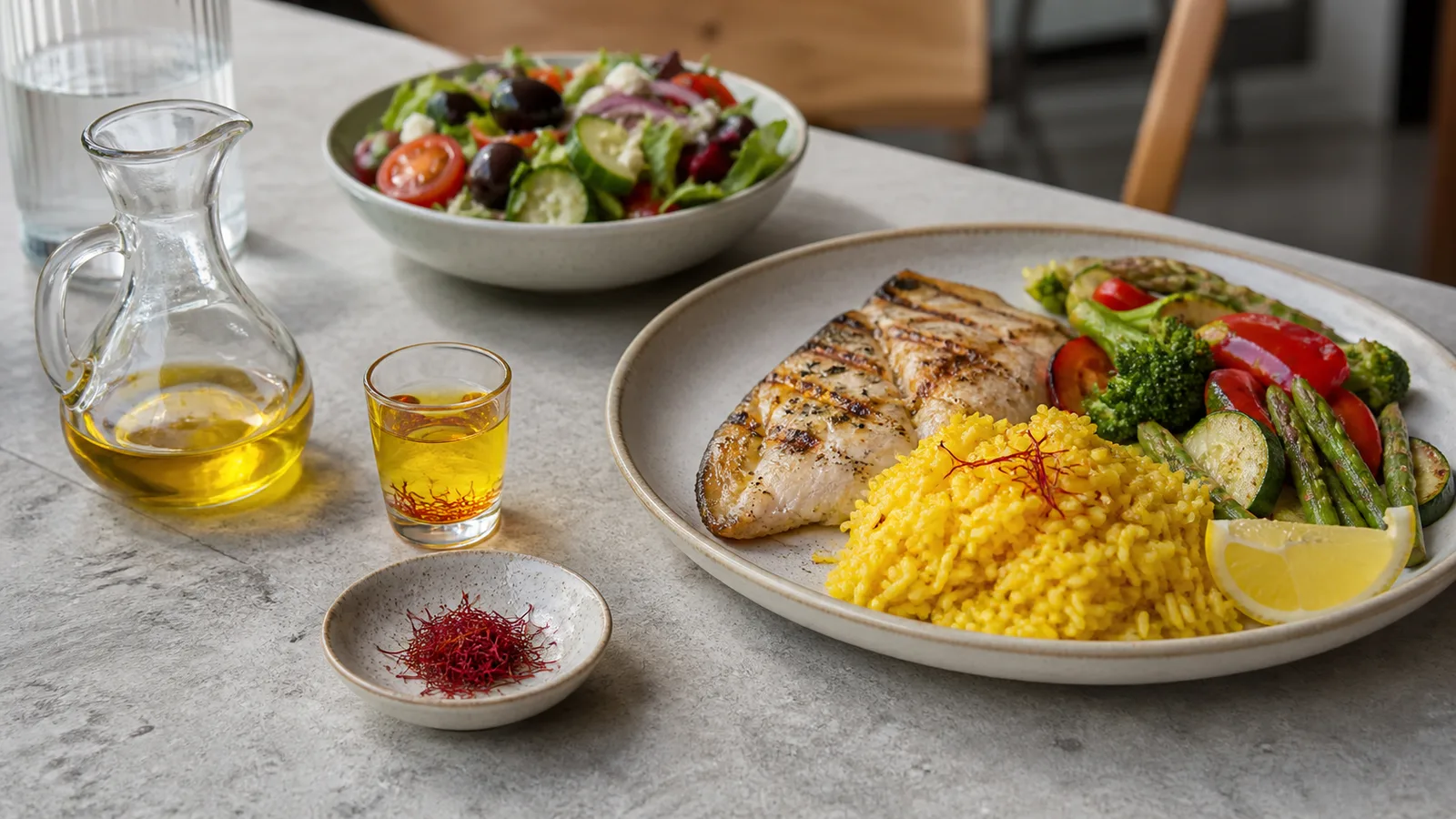
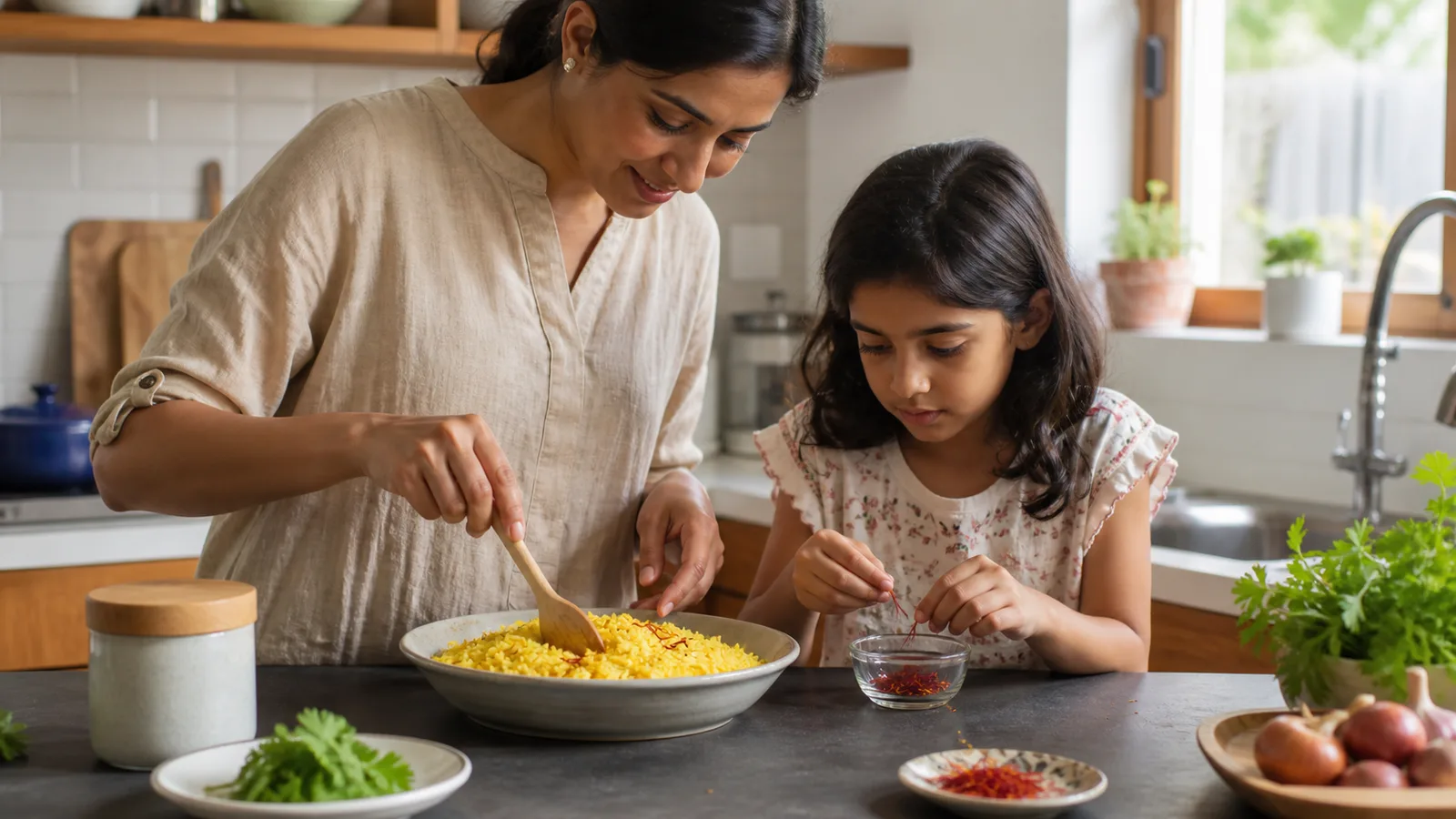
When saffron is simply part of cooking, start with the family dish rather than a concentrated individual serving. Crush a few genuine threads for the whole recipe, bloom them in warm water, and stir the liquid into rice, soup, yoghurt or another familiar food. The aim is gentle flavour and even colour, not a medicinal dose.
Use a reputable food supplier, store the threads dry and airtight, and avoid products with unexplained powders or colouring. Introduce one unfamiliar ingredient at a time when that makes reactions easier to identify. If the child dislikes the taste, there is no nutritional reason to insist.
A careful answer on saffron for children
Saffron can be an enjoyable culinary flavour for children who are ready for the food in which it is served. The current evidence does not support promises that it will treat digestive problems, improve vision or bones, boost immunity, clear skin or manage anxiety on its own.
The position-7 question “can kids drink saffron tea?” needs an equally clear answer: there is no established child dose, so keep saffron culinary rather than medicinal and involve a paediatrician before using a tea or supplement as a health product. For an infant, follow age-specific feeding advice and never add honey before 12 months.