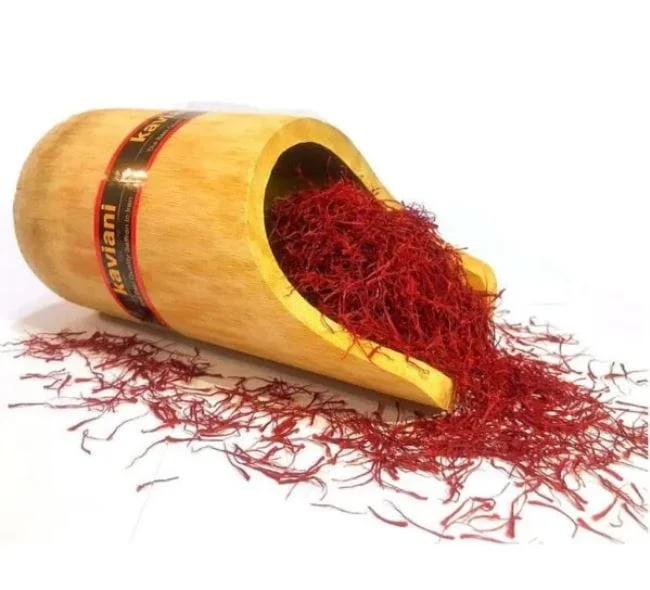
Calls to support the production of saffron and silk in Torbat-e Heydarieh came from an earlier statement about jobs, prices and unfinished local projects. Abolghasem Khosravi Sahlabadi, then representing Torbat-e Heydarieh, Zaveh and Mahvelat in Iran’s Islamic Consultative Assembly, argued that neglecting these two rural industries would damage the provincial economy.
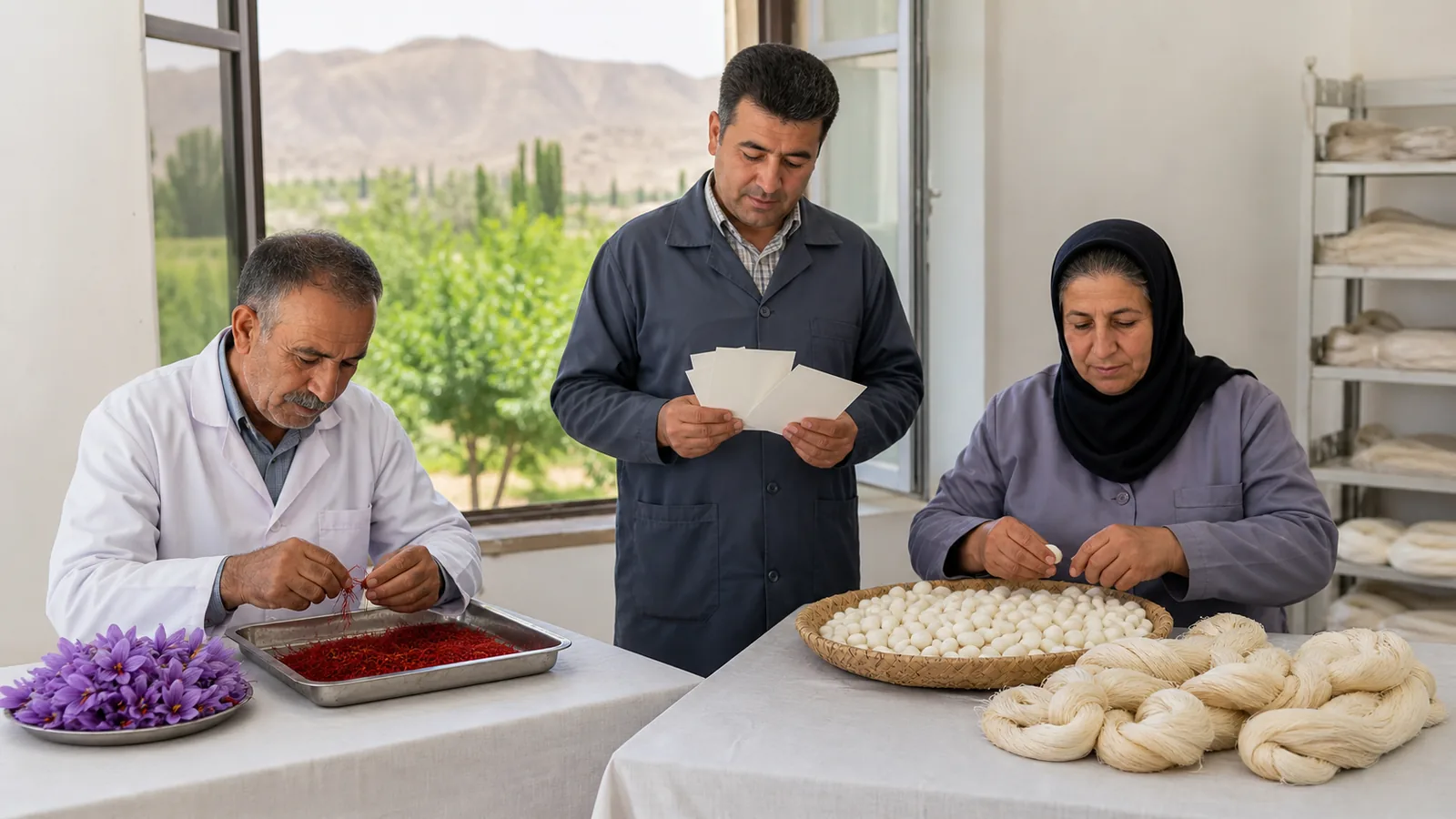
What Khosravi Sahlabadi asked the government to support
The statement placed saffron and silk within a wider economic programme. Khosravi Sahlabadi referred to election pledges about controlling inflation, creating employment and responding to legitimate public demands. The language also invoked the period’s “economic epic” slogan and leadership priorities.
Those political references identify the time and setting of the statement; they are not a description of current government policy. Its durable point is more practical: production support matters only when it reaches the farms, workshops, processors and routes through which local goods become reliable income.
Why saffron and silk belong in the same local discussion
Saffron and sericulture are very different activities. One begins with a corm and a short autumn flower harvest; the other depends on mulberry leaves, silkworm rearing and careful handling of cocoons. Yet both can connect household labour, specialized knowledge and a product whose value depends heavily on quality after the farm stage.
That makes them relevant to the same development question. Support should strengthen a functioning chain, not stop at announcing more production.
Torbat-e Heydarieh’s saffron base
An official UNIDO assessment of saffron villages around Torbat-e Heydarieh documented the area’s extensive cultivation, many small fields and thousands of growers. Its figures are historical, but they show why the crop occupies such a prominent place in local economic debate.
The area is often promoted as a world saffron capital. That phrase is a regional identity or marketing claim rather than a formally awarded global rank. More useful than the label is the underlying concentration of farms, labour and saffron knowledge.
Sericulture is a chain, not just a cocoon
Silk production relies on healthy mulberry trees, suitable silkworm eggs, clean rearing space, temperature and hygiene management, timely cocoon collection and access to buyers or reeling capacity. Weakness at any link can reduce the value reaching the producer.
Research is part of that support. A Torbat-e Heydarieh study of mulberry varieties and silkworm performance tested a concrete production question and recommended one variety for developing local sericulture. A study does not solve marketing or finance, but it illustrates the kind of locally tested advice that growers can use.
What “support for production” should mean for saffron
For saffron growers, support can start with sound planting material, soil and water assessment, field training and realistic harvest planning. After flowers are picked, clean separation, controlled drying, lot identity and protective packaging determine whether good farm work becomes good finished saffron.
Market design matters as well. A study of the Torbat-e Heydarieh saffron distribution network gathered information from producers, wholesalers and retailers to model a better route through the market. That evidence supports looking beyond production volume to the way value and information move between participants.
What support should mean for silk
Sericulture support should be equally specific. Producers need dependable access to inputs, practical rearing guidance, disease prevention, clean equipment and a buyer path known before the cocoon cycle begins. Training must match local housing, climate and labour conditions rather than assume every household operates at the same scale.
Where reeling or further processing happens outside the district, transport and purchase terms affect local returns. Where processing can be done locally at reliable quality, it may retain more work in the area. Either model needs evidence on demand and capacity before public money is committed.
Employment claims need more than production targets
Khosravi Sahlabadi linked his appeal to unemployment and job creation. Saffron and silk both use skilled seasonal labour, but a larger output target does not automatically create secure or well-paid work. The number of workdays, timing, wages, processing location and continuity of buyer demand determine the employment result.
A good programme would therefore measure who gains paid work and for how long, not only hectares, cocoon boxes or kilograms produced.
High prices and producer income are not the same measure
The statement also referred to high prices. A high retail price can coexist with weak farm income when labour, input, finance and marketing costs rise or when producers sell before the product reaches its most valuable form. Any intervention should separate the consumer price, wholesale price and producer’s net return.
Transparent grading and payment terms help both sectors. Growers need to understand what quality a buyer is paying for, when payment will arrive and what deductions may apply.
The reference to unfinished contracts and projects
Khosravi Sahlabadi described closures or stoppages affecting contracts and construction projects. The translated source did not name the contracts, identify their legal status or say which projects directly served saffron or silk. Those details cannot be reconstructed safely.
The general lesson is that infrastructure should be tied to a defined need. A laboratory, drying centre, cocoon facility or market building is useful only if it has trained staff, operating funds, maintenance and enough demand to remain active.
Shahid Modarres Airport and the transport argument
The representative also called Shahid Modarres Airport in Mahvelat a provincial priority and said it had not received fair attention. That was his position at the time, not a verified statement about the airport’s present status or current transport policy.
Transport can matter for high-value goods, but an airport alone does not create a market. Shipment volume, scheduling, handling, documentation, cost and destination demand have to support the route. For many domestic movements, dependable road logistics may remain just as important.
Quality and identity protect local value
Both saffron and silk lose local value when origin becomes invisible or quality varies without explanation. Lot records, honest specifications and recognizable producer or processor identities make it easier for buyers to return to a reliable source.
That does not require every small farm to build a separate brand. Cooperatives, processors and regional systems can provide shared testing, documentation and market access while keeping producer identity traceable.
Torbat-e Heydarieh’s geographical profile needs context
The original article described Torbat-e Heydarieh as a city in Khorasan Razavi, about 145 kilometres south of Mashhad, 1,005 kilometres from Tehran and 1,333 metres above sea level. It also gave an area of roughly 24,000 square kilometres.
The elevation is consistent with later field research, while published distance and area figures vary according to route, date and whether older city, county or surrounding administrative boundaries were used. The 24,000-square-kilometre number should therefore be read as part of the historical profile, not as a current boundary measurement.
How a support programme should be evaluated
Useful evaluation begins with a baseline. For saffron, that can include participating farms, dry yield, rejected lots, processing time, quality results and the producer’s net return. For silk, it can include active rearers, cocoon yield and grade, losses, payment timing and how much processing occurs locally.
The programme should also report its costs, who received services and whether benefits continued after a season. That makes “support” something the public can examine rather than a slogan that cannot be tested.
Turning the appeal into practical local value
The call to support saffron and silk production in Torbat-e Heydarieh reflected real concern about employment, prices and regional investment. Its strongest interpretation is not unlimited subsidy or a promise that every project will succeed.
It is a case for connected work: locally tested production advice, careful processing, transparent trade, dependable infrastructure and records that show whether producers actually benefit. When those pieces reinforce one another, saffron and silk can carry more of their value through the region instead of losing it between the farm and the final buyer.

![Exporting Saffron to Turkey + Price Guide [Complete 0 to 100]](https://img.rowhanisaffron.com/20260827003933/saffron-export-turkey-quality-inspection.webp)