


The reduction of saffron growers in Aligudarz was described in a 2021 local report that compared an original 30 hectares of cultivation with 18 hectares still under saffron.
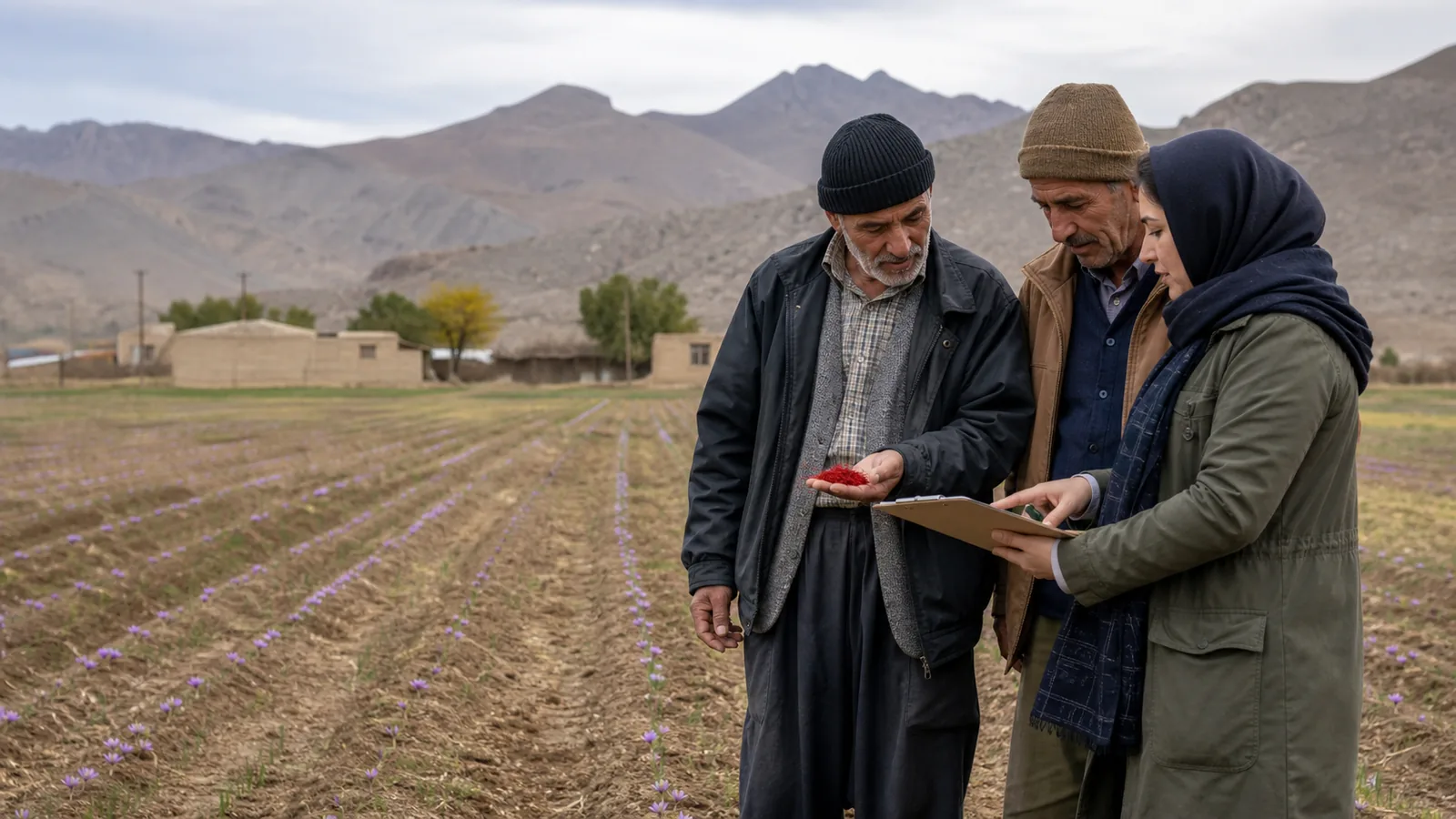
Hamidreza Gholami, then director of the Aligudarz Agricultural Jihad office, said cultivation had begun in 2014 but some farmers had not continued. The account did not publish a grower count or identify one single cause, so the clearest measured change is the 12-hectare reduction in cultivated area.
From 30 hectares of saffron to 18
Gholami placed the start of organized saffron cultivation in Aligudarz in 2014. At its earlier extent, the crop covered 30 hectares.
By the time of his later statement, the area was 18 hectares. That is a decline of 12 hectares, or 40 percent, from the reported starting area. He said several factors had combined to cause some growers to leave, but the article did not name those factors.
What the report says about grower numbers
The headline refers to a reduction in saffron growers, while the numerical evidence concerns hectares. The report confirms that some farmers stopped and that cultivated area fell; it does not provide the number of growers before or after.
Keeping that distinction avoids turning an area change into an invented headcount. It also leaves open the possibility that remaining farms differed in size.
Reported production of 170 kg
Gholami reported total production of 170 kilograms from Aligudarz’s 18 hectares. He noted that saffron fields are perennial and that output varies, which is consistent with different fields being at different stages of their productive cycle.
The article did not provide farm-level yields, field ages or a measured quality table. The 170 kg figure is therefore best retained as the official’s total for that reporting period rather than converted into a promise for other growers.
Why Gholami still saw potential in Aligudarz
Despite the contraction, Gholami said Aligudarz’s climate could produce good-quality saffron. He also referred to a plan to expand cultivation again.
His argument was that the crop itself had not failed as a local possibility. The challenge was to create conditions that made continued cultivation worthwhile for farmers.
The proposal for an Aligudarz saffron brand
Gholami believed selling the crop under an Aligudarz identity could help. A local brand, in his view, would make the product more recognizable and could encourage renewed participation in saffron production.
The report did not describe a registered brand, certification system, packaging standard or sales agreement. It records the proposal, not the completion of a branding programme.
Training as part of rebuilding cultivation
Agricultural education was the other part of Gholami’s response. He said training programmes had an important role in promoting a crop and that programmes had already been carried out locally.
For a perennial crop, continuity matters: farmers need to understand field establishment, seasonal care, harvest labour and post-harvest handling before the later production years arrive. The original account did not specify the curriculum or number of participants, so those details remain unknown.
What the Aligudarz figures establish
- 2014: the reported start of saffron cultivation in Aligudarz.
- 30 hectares: the earlier cultivated area.
- 18 hectares: the area reported at the time of Gholami’s statement.
- 12 hectares: the reduction between the two area figures.
- 170 kilograms: the total saffron production reported for the remaining area.
A historical account of contraction and recovery plans
The article records both sides of Aligudarz’s saffron story. Cultivated area had fallen and some growers had stopped, yet the local agricultural office still saw potential in the climate, product quality, training and a recognizable regional identity.
These are dated figures from the 2021 report. A current assessment would need newer data on hectares, grower numbers, production and whether the proposed expansion and branding work went ahead.

![Exporting Saffron to Turkey + Price Guide [Complete 0 to 100]](https://img.rowhanisaffron.com/20260827003933/saffron-export-turkey-quality-inspection.webp)



