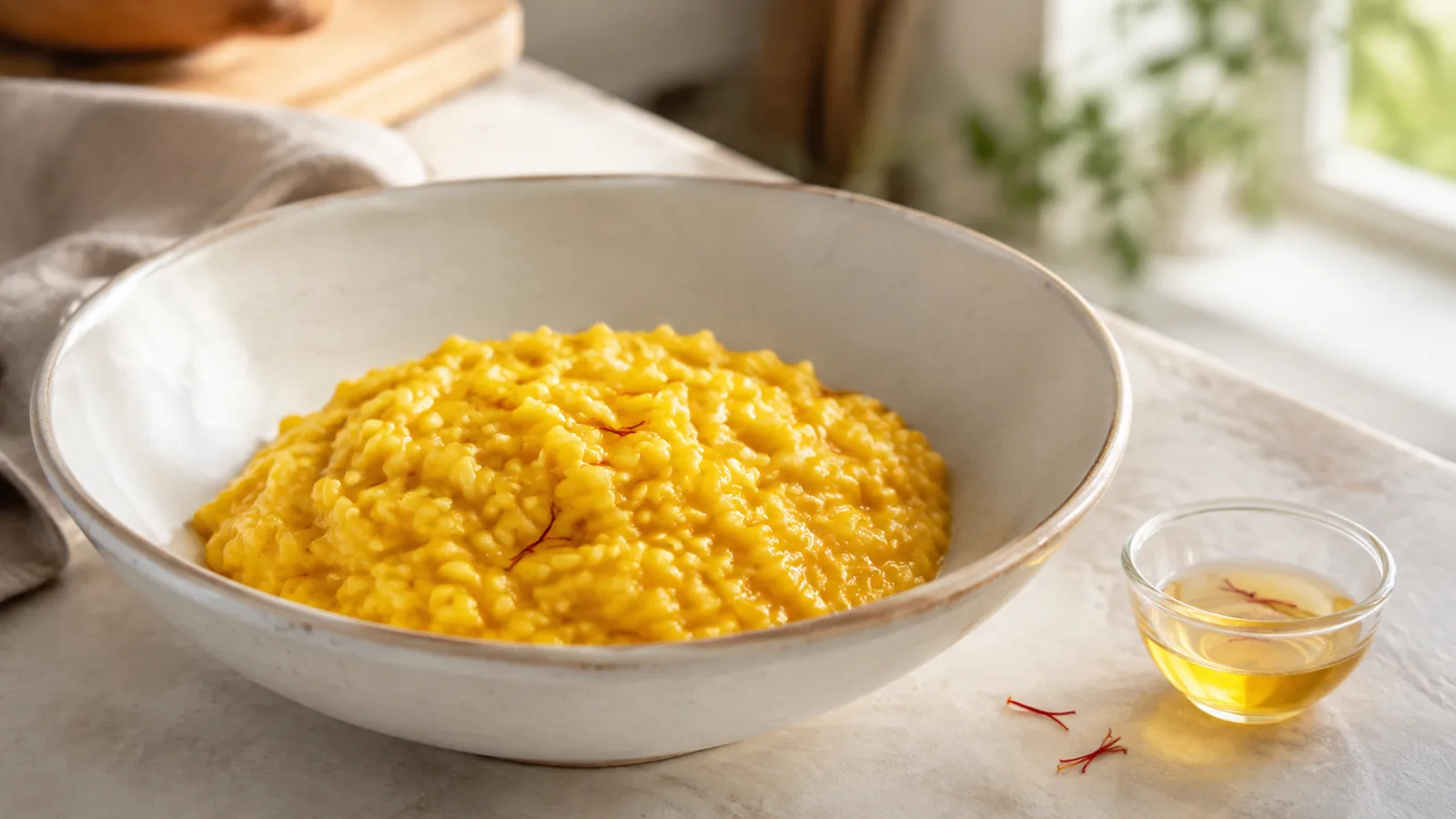
Lari Muscat is the familiar English search name for masghati Lari, a translucent saffron-and-rosewater sweet associated with Lar in Fars Province. It asks for patience rather than complicated technique: low heat and steady stirring turn a simple starch mixture into a glossy, elastic confection that can be cut into neat pieces.
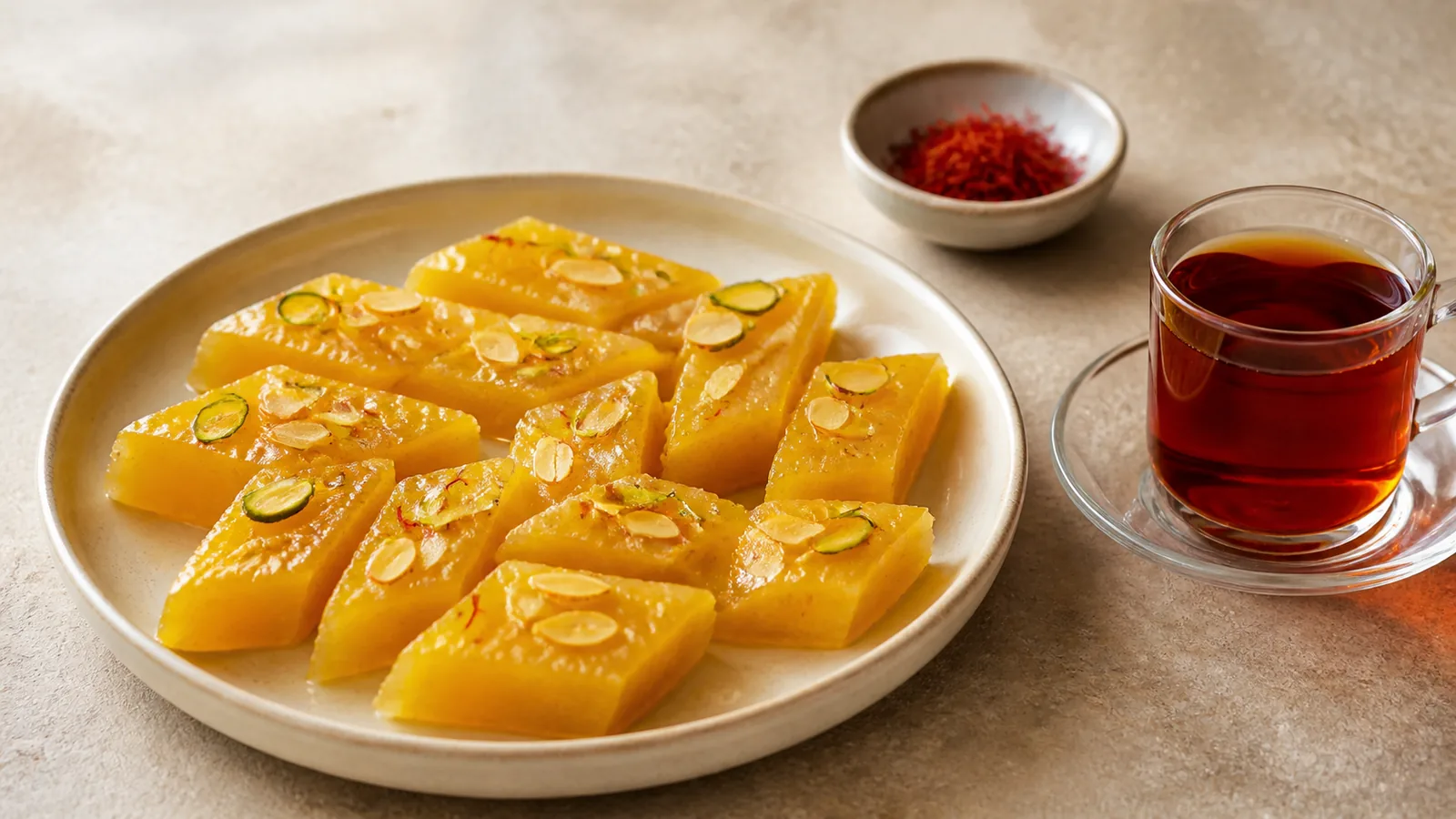
Lari Muscat ingredients
- 1 cup wheat starch (often sold as wheat-flower starch)
- 3 cups granulated sugar
- 6 cups cold water, divided
- 1 cup rosewater
- ⅓ cup neutral oil or melted butter
- 2 to 3 tablespoons strongly brewed saffron, or enough for a warm golden colour
- ¼ teaspoon food-grade citric acid, or 1 tablespoon fresh lemon juice
- ½ teaspoon ground cardamom, optional
- Sliced pistachios or almonds, dried barberries, or desiccated coconut for finishing
This quantity fills one medium rectangular dish. The exact cooking time depends on the width of the pan and the strength of the heat, so judge the sweet by its texture as well as the clock.
How to make Masghati Lari with saffron
1. Prepare the saffron and starch
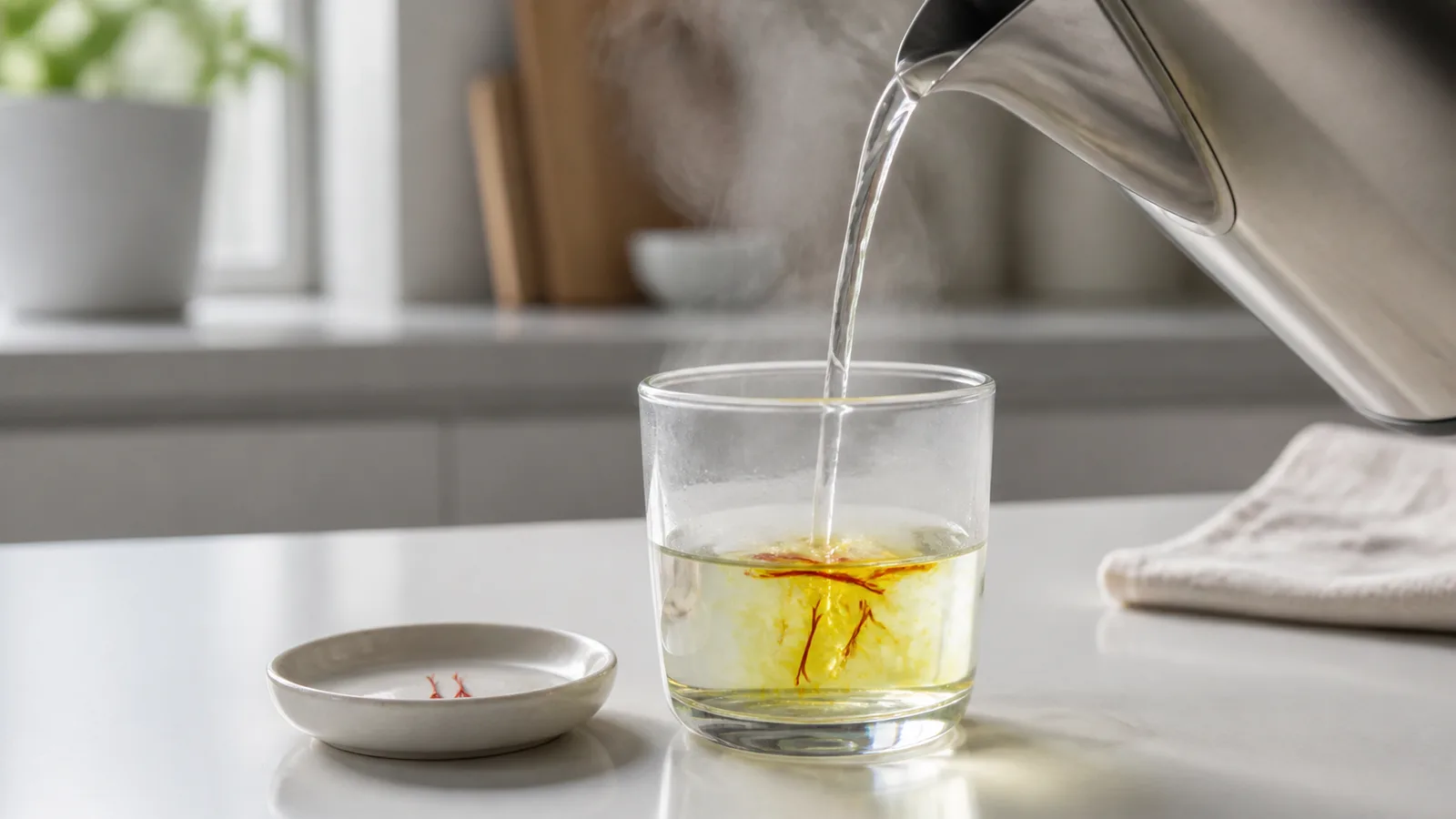
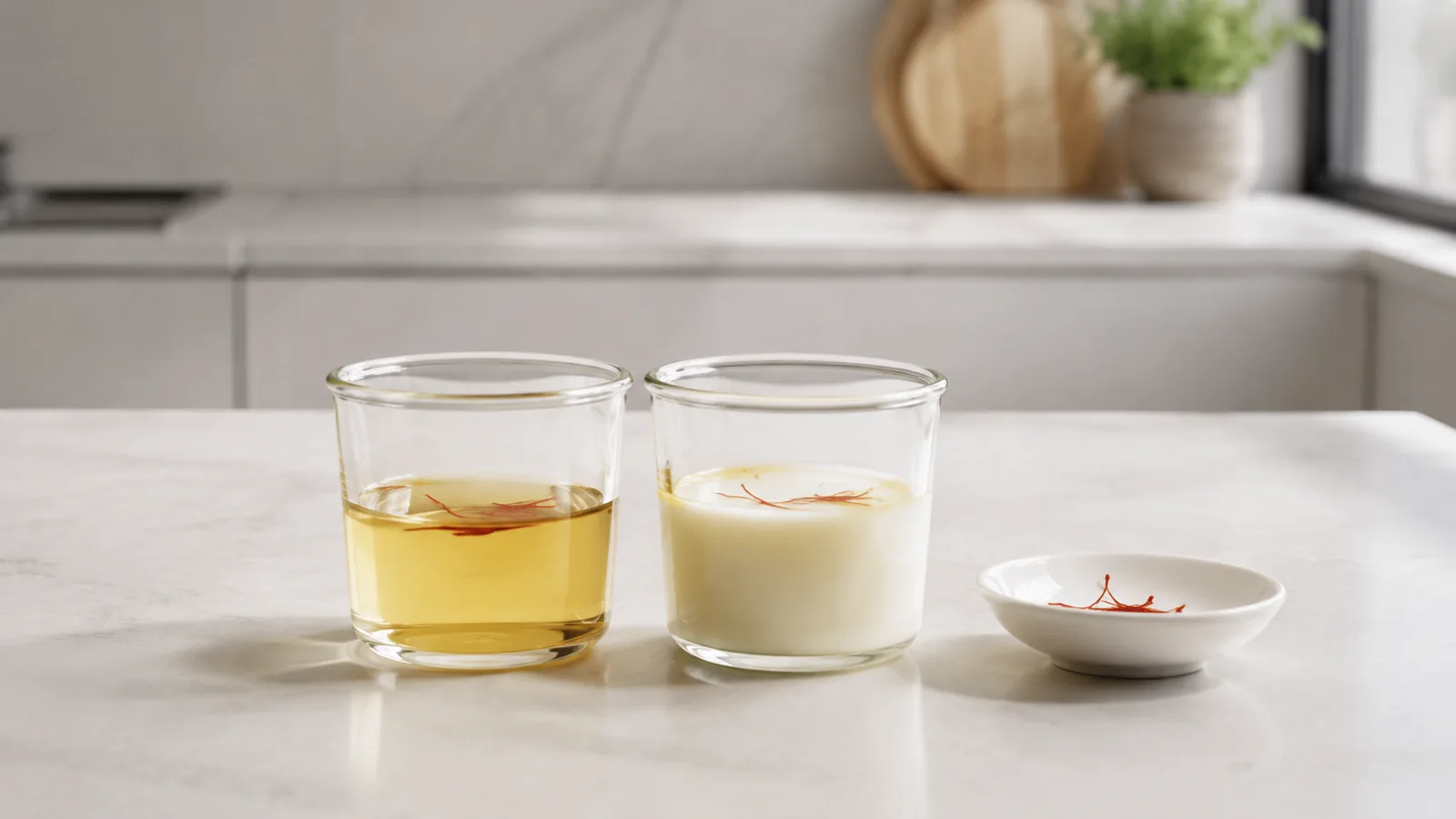
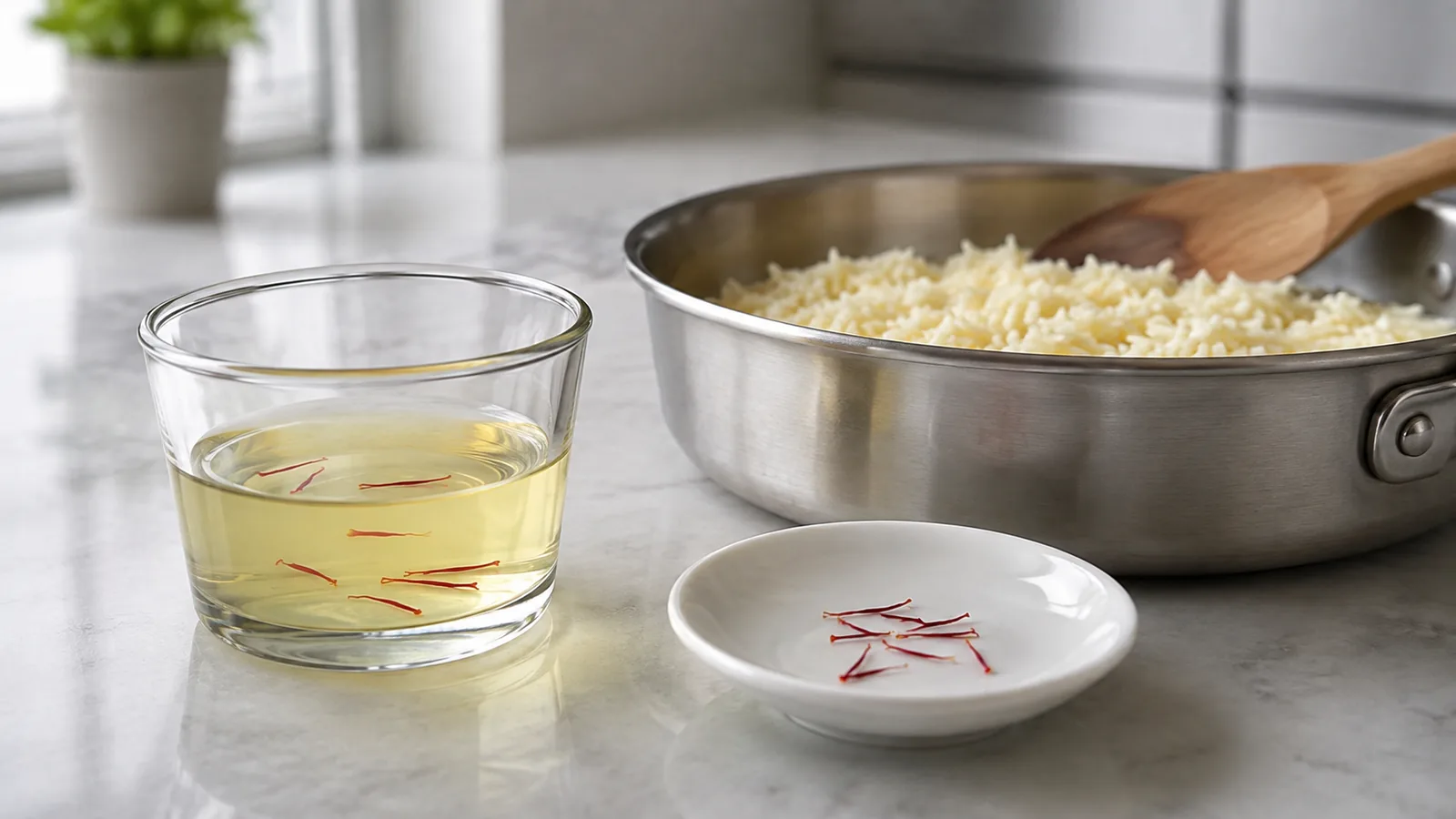
Brew the ground saffron in a small amount of hot water and set it aside. In a bowl, whisk the starch with 2 cups of the cold water until no dry pockets remain. Pass it through a fine sieve into a heavy, wide saucepan; this small step prevents lumps later.
2. Dissolve the sugar gently
Add the remaining 4 cups of water and the sugar to the pan. Stir over low heat until the sugar has dissolved and the liquid is smooth. There is no need to brown the sugar. Caramelising it would make the finished sweet darker and adding water to very hot caramel can cause dangerous splashing.
3. Cook until the raw starch taste disappears
Keep the pan over low heat and stir steadily with a wooden spoon or a heatproof spatula, reaching across the base and into the corners. The mixture will first look cloudy, then thicken and become increasingly translucent. Do not turn up the heat to hurry it along; starch catches easily and a scorched base will affect the whole batch.
4. Add the saffron and fat gradually
Once the mixture has thickened, stir in the brewed saffron and citric acid or lemon juice. Add the oil or melted butter a spoonful at a time, allowing each addition to disappear before adding the next. Continue cooking and stirring. For a genuinely elastic Lari-style result, this can take 2 to 3 hours on very low heat.
Add the rosewater and optional cardamom toward the end so their fragrance stays clear. The mixture may loosen briefly; keep stirring until it gathers again, looks glossy and begins to pull cleanly from the sides of the pan.
5. Set and cut
Lightly grease a shallow tray or individual metal moulds. Spoon in the hot masghati, smooth the surface with a lightly oiled spoon and add your chosen nuts or garnish. Leave it at room temperature until completely cool and firm, usually about 3 hours, before cutting it into diamonds or rectangles.
How to recognise the right texture
Well-cooked Lari Muscat should be glossy, transparent and softly elastic—not runny, chalky or rubbery. If it is opaque and tastes floury, it needs more time over gentle heat. If oil pools around it, the fat was added too quickly or the mixture has not yet absorbed it; keep stirring over low heat.
For softer spoon portions, stop when the mixture holds a trail from the spatula but still settles slowly. For cleanly cut pieces, cook until it forms a cohesive mass and releases from the pan. A wide pan shortens evaporation time, but it also makes the base easier to miss, so stir across the entire surface.
Serving and storing the sweet
Serve small pieces with tea, either plain or finished with pistachios, almonds, coconut or a few dried barberries. Nuts can also be folded through just before the sweet goes into its mould. Butter gives a rounder flavour, while neutral oil keeps the saffron and rosewater more prominent.
Keep the finished sweet covered so the surface does not dry out. In a cool room it is best eaten within a day; for longer storage, refrigerate it in an airtight container and let the portions lose their chill before serving. Because rosewater strengths vary, taste cautiously and avoid adding extra until the mixture has cooked down.