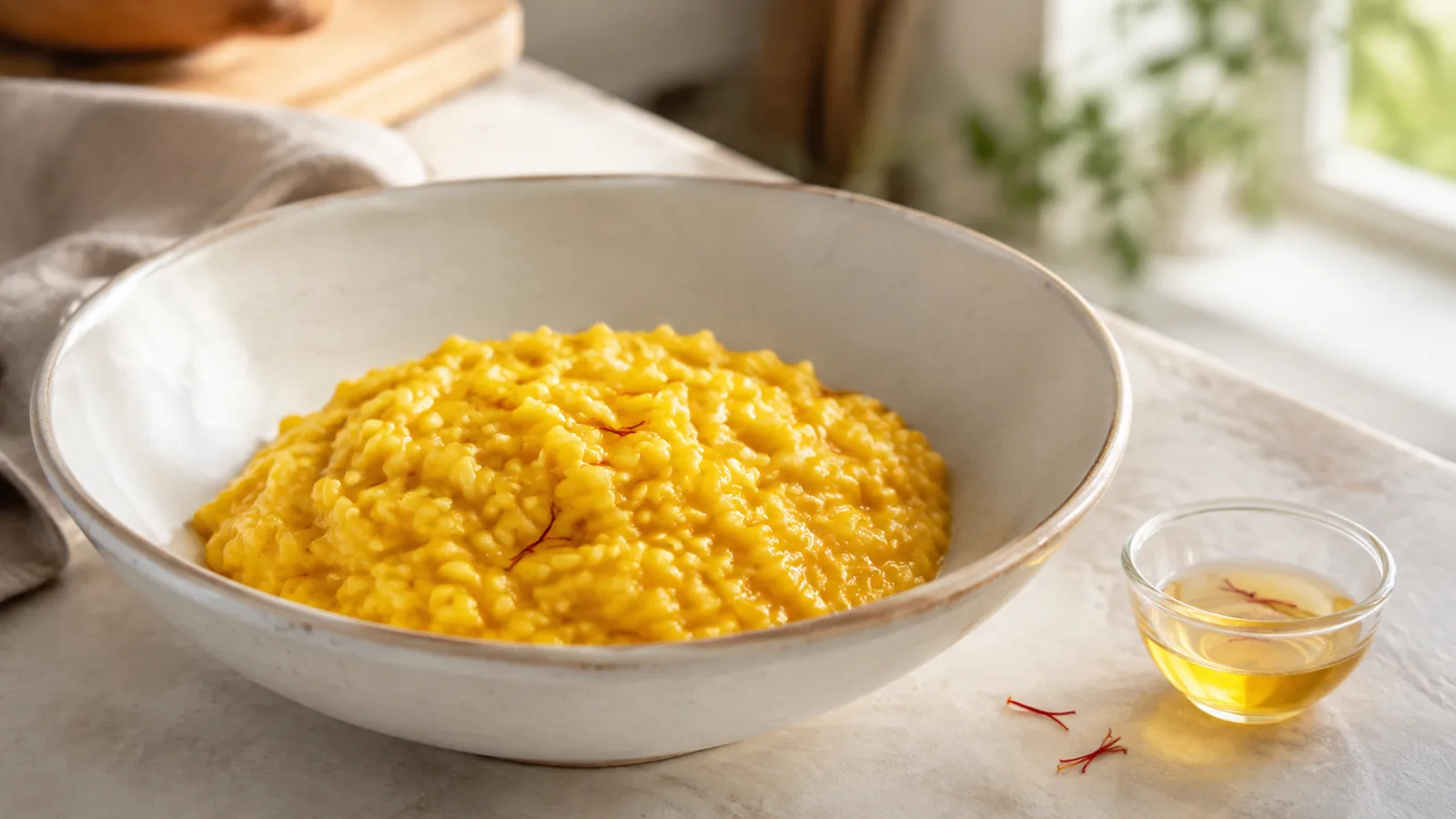
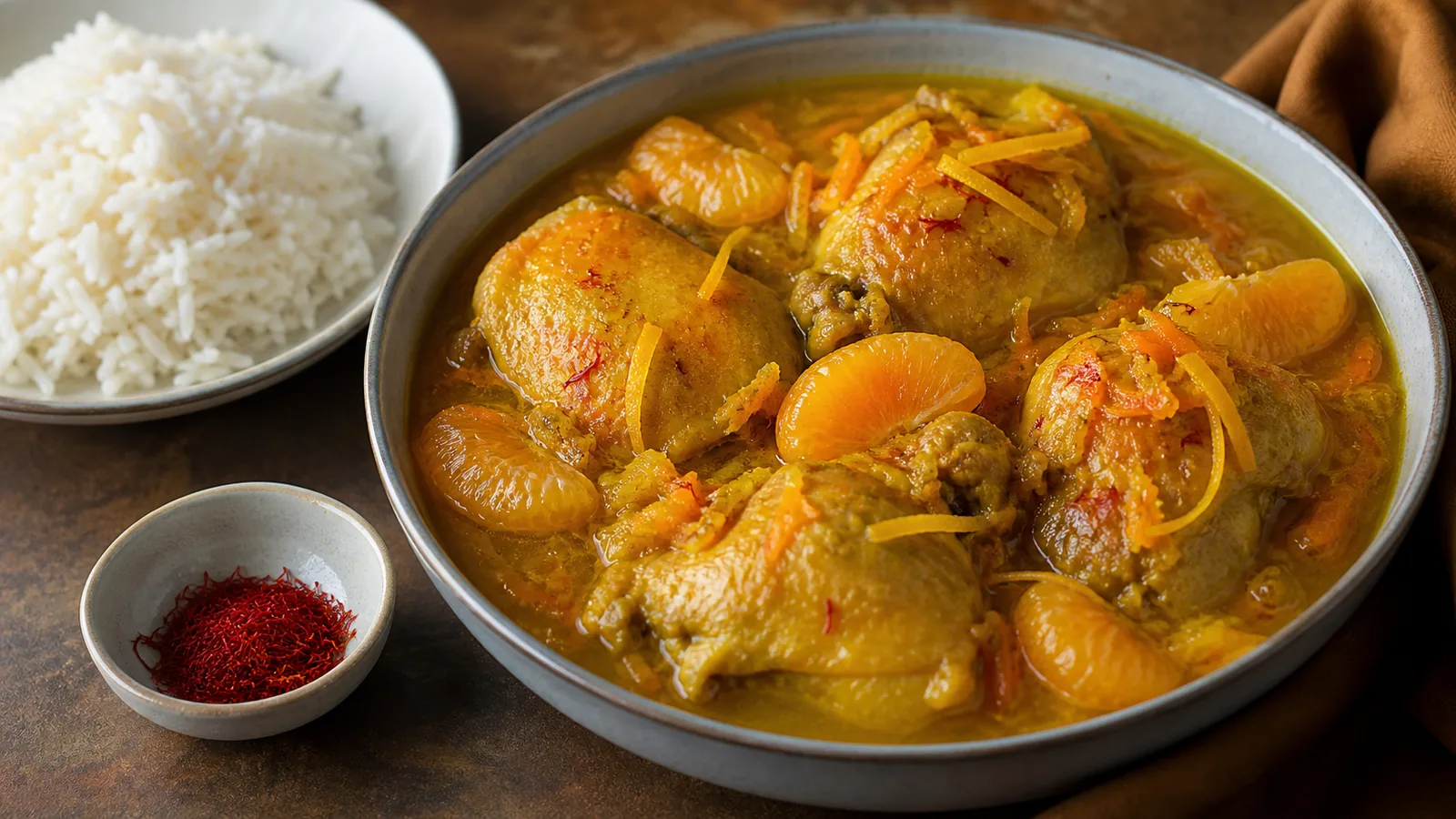
This recipe for cooking tangerine stew with Iranian saffron pairs chicken and carrots with fresh tangerine segments, fragrant peel and a lightly thickened sweet-and-sour saffron sauce.
The citrus is added late so its aroma stays clear. Preparing the peel carefully is important: the orange surface is fragrant, while too much white pith can make an entire pot unpleasantly bitter.
Ingredients for tangerine stew
- 4 chicken pieces
- 4 medium carrots
- 5 tangerines
- 2 tablespoons lemon juice
- 1 tablespoon plain flour
- 1 tablespoon sugar
- 1 cup thin tangerine-peel strips, prepared to reduce bitterness
- 1 teaspoon concentrated brewed saffron
- 1 medium onion
- Oil and salt, as needed
- 3 cups water
- Plain rice, for serving
The stated cup of peel gives a pronounced citrus flavour. Measure the thin orange strips loosely rather than packing them down, and remove as much white pith as practical.
Prepare the tangerine peel and segments
Wash and dry the tangerines before peeling. Use a vegetable peeler or sharp knife to remove thin strips of the coloured skin, leaving the thick white pith behind. Cut the strips into fine slivers.
The old method says to prepare the peel while the chicken cooks but does not explain how to control bitterness. Put the strips in a small pan of water, bring to a brief boil, drain and taste one after it cools. Repeat with fresh water if it remains strongly bitter, then drain well.
Remove the remaining peel and pith from the fruit. Separate the tangerines into neat segments, removing seeds and any loose tough membrane without crushing the flesh. Keep the segments aside for the final cooking stage.
Brown the onion and chicken
Finely chop the onion. Warm a little oil in a heavy pot over medium heat and fry the onion until soft and lightly golden.
Add the 4 chicken pieces and turn them until the surfaces lose their raw colour. This is a browning stage, not the complete cook.
Fry the carrots separately
Peel and grate the 4 carrots. Warm a little oil in a separate frying pan and cook the carrots for a few minutes, stirring until they soften slightly.
Add the fried carrots to the chicken pot. Pour in the 3 cups water and bring to a boil. Lower the heat, cover partly and simmer until the chicken is well on its way to tender.
Toast the flour
Wipe out the carrot pan or use a clean small frying pan. Add a modest amount of oil and the tablespoon flour. Stir over low-to-medium heat until the flour turns light golden and no longer smells raw.
Whisk in a ladleful of hot liquid from the stew to make a smooth slurry. Pour this back into the pot gradually while stirring. This method keeps the flour from forming dry lumps.
Add the tangerine peel
Add the drained tangerine-peel strips and some salt after the flour has dispersed. Stir well and let the sauce return to a gentle simmer.
The flour should give the liquid light body, not turn it into a paste. If it becomes too thick before the chicken is ready, loosen it with a small amount of hot water.
Finish with tangerine, lemon and saffron
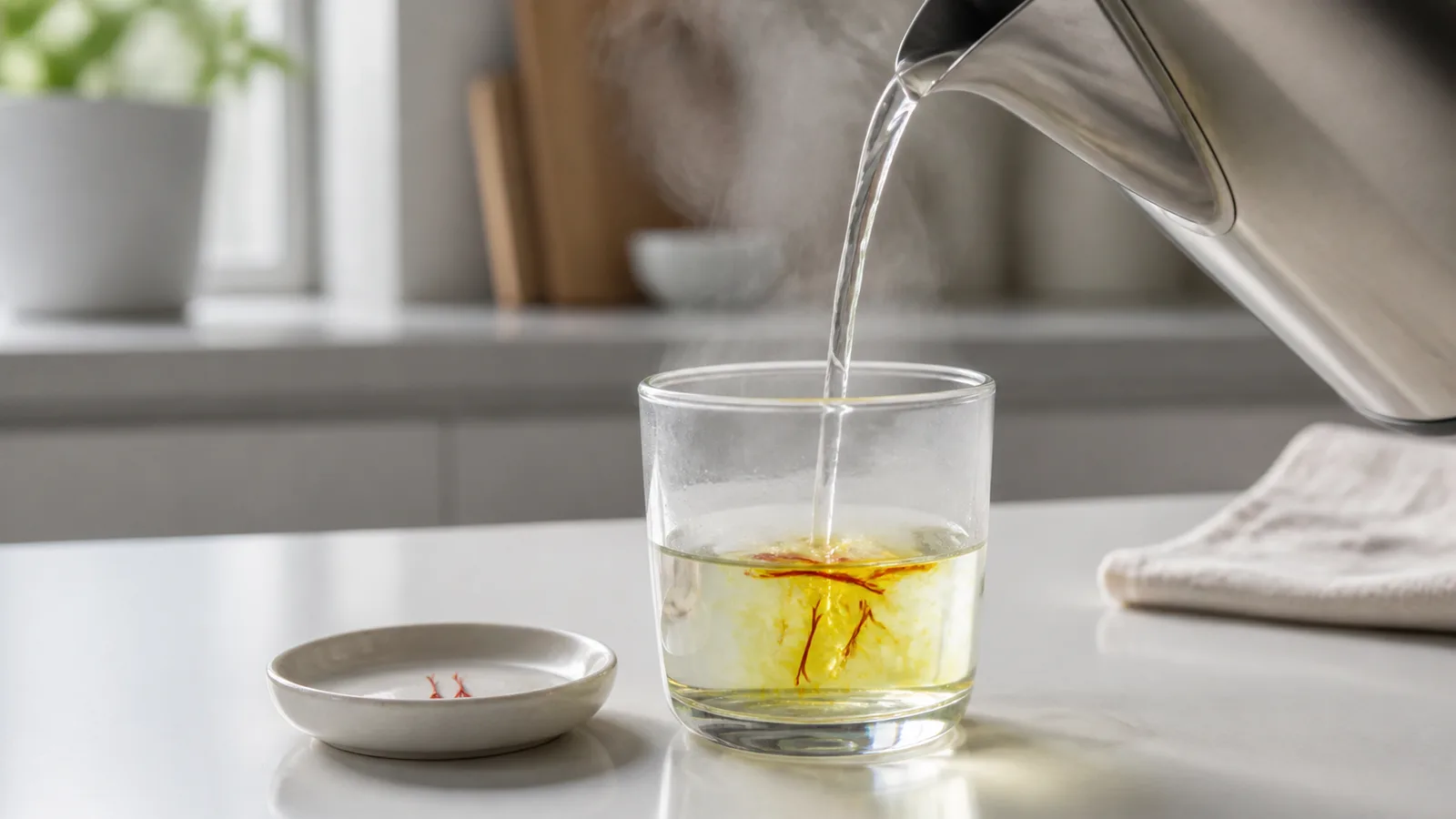
Add the prepared tangerine segments, 2 tablespoons lemon juice, 1 tablespoon sugar and 1 teaspoon brewed saffron.
Simmer over low heat for another 30 minutes, stirring gently so the citrus pieces are not crushed. Leave the lid slightly open if the sauce needs to reduce.
Taste near the end. Tangerines vary in sweetness and peel varies in bitterness, so the original sugar and lemon measures are a starting balance. Let them dissolve and cook before making any small adjustment.
Check the chicken and sauce
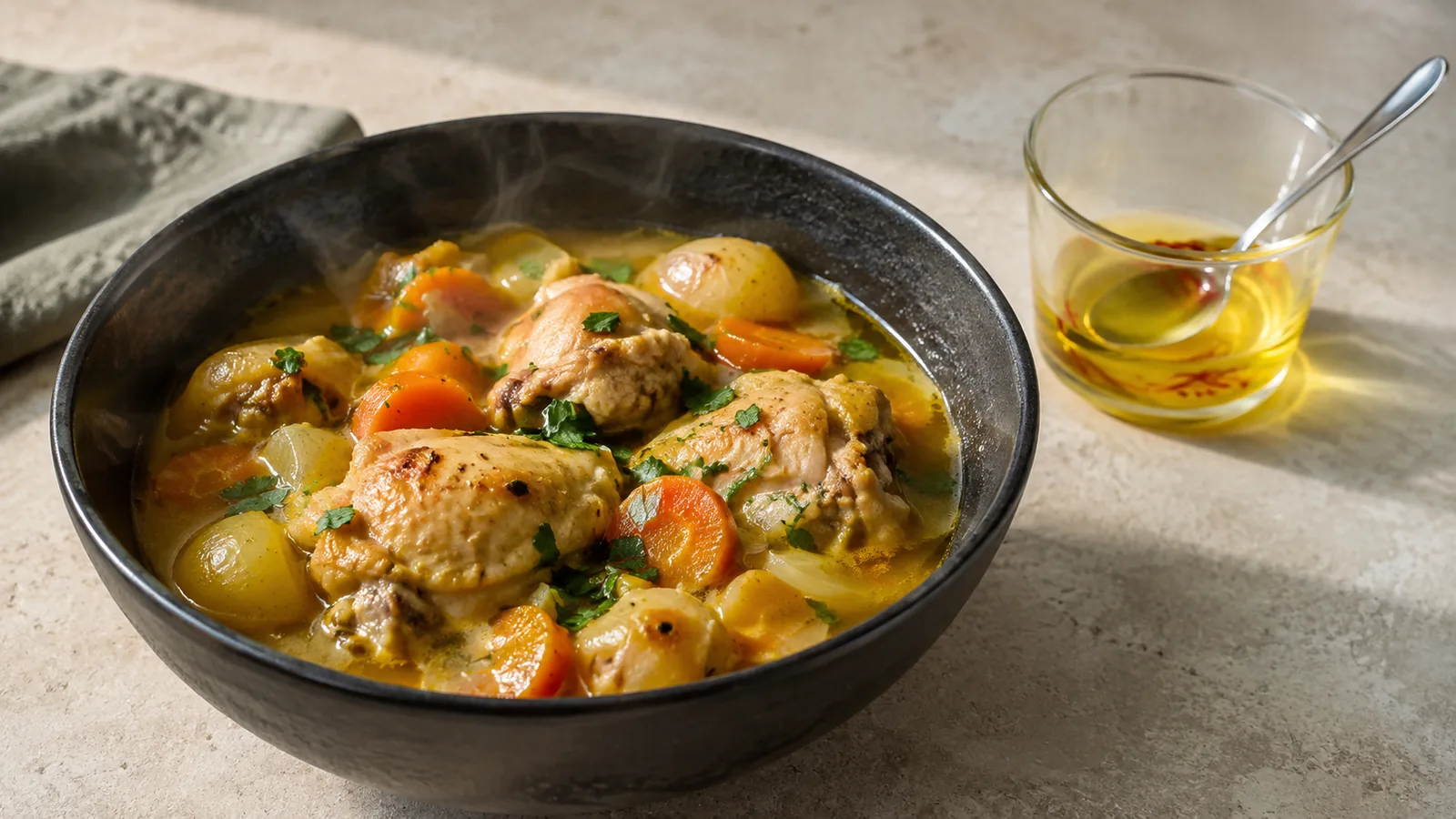
The sauce should coat the chicken lightly, with visible carrot and peel strands and a few intact tangerine segments. It should taste bright and savoury rather than like a sweet fruit sauce.
Check the thickest chicken piece before serving. The USDA safe minimum temperature chart lists 165°F (74°C) for all poultry. Colour and a 30-minute final simmer are not substitutes for measuring the centre.
Serve tangerine stew with rice
Transfer the stew to a warm bowl and serve with plain rice. Arrange a few intact citrus segments on top, but keep most of them in the sauce so their flavour is distributed.
A successful tangerine stew has tender chicken, a gently thickened saffron sauce and citrus that remains aromatic without harsh pith bitterness.
Three details that keep the citrus balanced
- Trim the white pith. The thin coloured zest provides the cleanest aroma.
- Blanch and taste the peel. Repeat only as needed rather than guessing at its bitterness.
- Add the fruit late and stir gently. This protects the segments and fresh tangerine character.