


Khagineh Tabrizi is a saffron-syruped sweet omelette or pan cake from northwestern Iran. This filled khagineh recipe cooks without an oven: a tender egg-and-yogurt batter encloses walnuts, pistachios, cinnamon and cardamom, then absorbs cool saffron syrup while it is still hot.
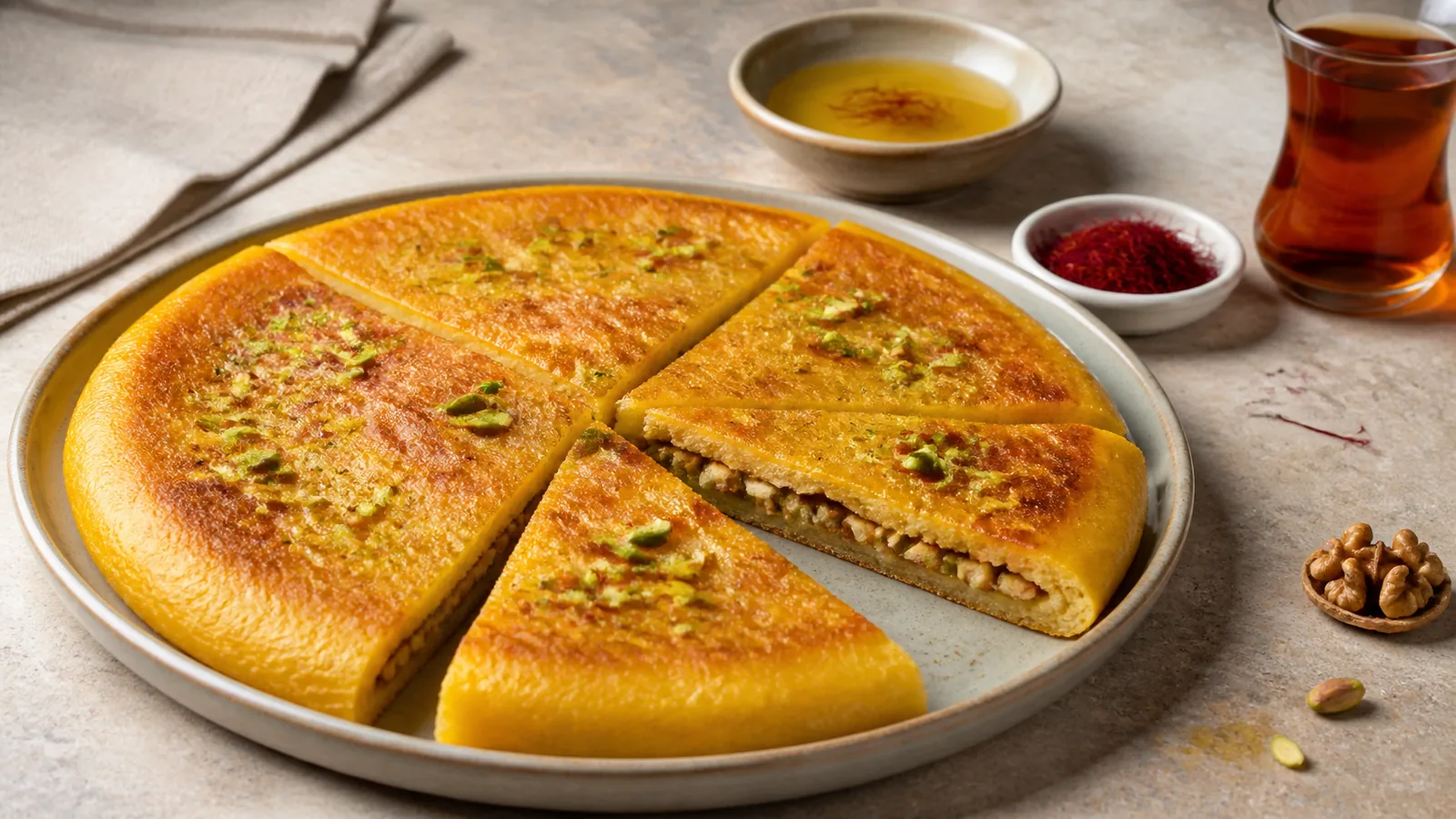
Khagineh with nuts: ingredients
For the saffron syrup
- 1 cup granulated sugar
- 1 cup water
- 1 green cardamom pod, lightly crushed
- 2 tablespoons concentrated brewed saffron
- Up to ½ cup rosewater, optional
For the khagineh batter
- 4 large eggs, at room temperature
- 6 tablespoons plain flour
- 6 tablespoons thick, mild yogurt
- 1 teaspoon baking powder
- 1 tablespoon neutral oil, plus more for the pan
- ½ teaspoon vanilla extract
- 1 tablespoon concentrated brewed saffron, optional
For the nut filling
- ½ cup chopped walnuts
- ½ cup chopped pistachios
- 1 tablespoon ground cinnamon
- 1 teaspoon ground cardamom
Prepare and cool the syrup
Put the water, sugar and cardamom pod in a small saucepan. Warm over medium heat, stirring only until the sugar dissolves. Let it simmer gently for 8 to 10 minutes, then add the brewed saffron and optional rosewater during the final minute.
Remove the pan from the heat and leave the syrup to cool completely. It should be fragrant and pourable, not thick like candy. You may not need every drop; the finished khagineh should be moist but still hold clean slices.
Make the khagineh batter
Whisk the eggs until foamy and slightly lighter. Add the yogurt, oil, vanilla and optional saffron and whisk just until even. Sift the flour and baking powder together, then fold them into the eggs. Stop when no flour pockets remain; vigorous mixing knocks out the air that keeps khagineh light.
In a separate bowl, mix the walnuts, pistachios, cinnamon and cardamom. Chop the nuts small enough for tidy slices but leave a little texture.
Cook khagineh Tabrizi without an oven
1. Set the bottom layer
Lightly oil a good non-stick pan about 24 to 25 cm wide and place it over low heat. Pour in half the batter, cover and cook until the top has lost most of its wet shine but is still tacky enough to hold the filling. This usually takes 4 to 6 minutes.
2. Add the nuts
Scatter the nut mixture evenly, leaving a 1 cm border around the edge. Pour the remaining batter over it and spread gently so the nuts are covered. Replace the lid and continue over low heat until the top is set and the underside is golden, about 7 to 10 minutes.
3. Turn it safely
Slide the khagineh onto a lightly oiled flat plate. Invert the pan over the plate, hold both firmly and turn them together so the uncooked side returns to the pan. If that feels awkward, cut it into quarters and turn each piece with a wide spatula. Cook uncovered for another 4 to 6 minutes, until the second side is golden and the centre feels set.
4. Add the cool saffron syrup
Turn off the heat. Pour the cool syrup over the hot khagineh in 2 or 3 additions, pausing so each one can soak in. Start with roughly two-thirds of the syrup and add more only if the surface absorbs it without pooling.
Rest the dessert for 10 to 15 minutes, then transfer it to a serving plate and cut it into diamonds or wedges. Finish with extra pistachios or walnuts if desired.
Why khagineh may break or turn dense
If the first layer cooks completely before the filling goes in, the two halves may separate. Add the nuts while the surface is just set and slightly tacky. A batter that spreads like water can leak around the filling; a batter stiff with excess flour produces a dry, bready result.
Keep the heat low so the centre cooks before the outside becomes dark. A thin pan or high flame creates a burnt base and a raw middle. If your pan is much smaller than 24 cm, halve the recipe or expect a longer covered cooking time.
Oven option
Heat the oven to 180°C (350°F). Oil a 24 cm round tin, pour in half the batter and bake only until lightly set, about 6 to 8 minutes. Add the nut layer and remaining batter, then bake for about 15 minutes more, or until the centre is set and the top is pale gold. Pour the cool syrup over the hot khagineh in stages.
Serve khagineh warm or at room temperature, especially during Ramadan or with tea. Refrigerate leftovers in a covered container and use within 3 days; bring portions back toward room temperature before serving so the saffron and cardamom are more aromatic.

![Exporting Saffron to Turkey + Price Guide [Complete 0 to 100]](https://img.rowhanisaffron.com/20260827003933/saffron-export-turkey-quality-inspection.webp)



