Nazkhatun appears in more than one form in northern Iranian cooking. This recipe is the substantial Gilani stew variation: meat simmered with smoky eggplant, fresh mint, parsley and garlic. It is different from the better-known meatless eggplant condiment that shares the Naz Khatun name.
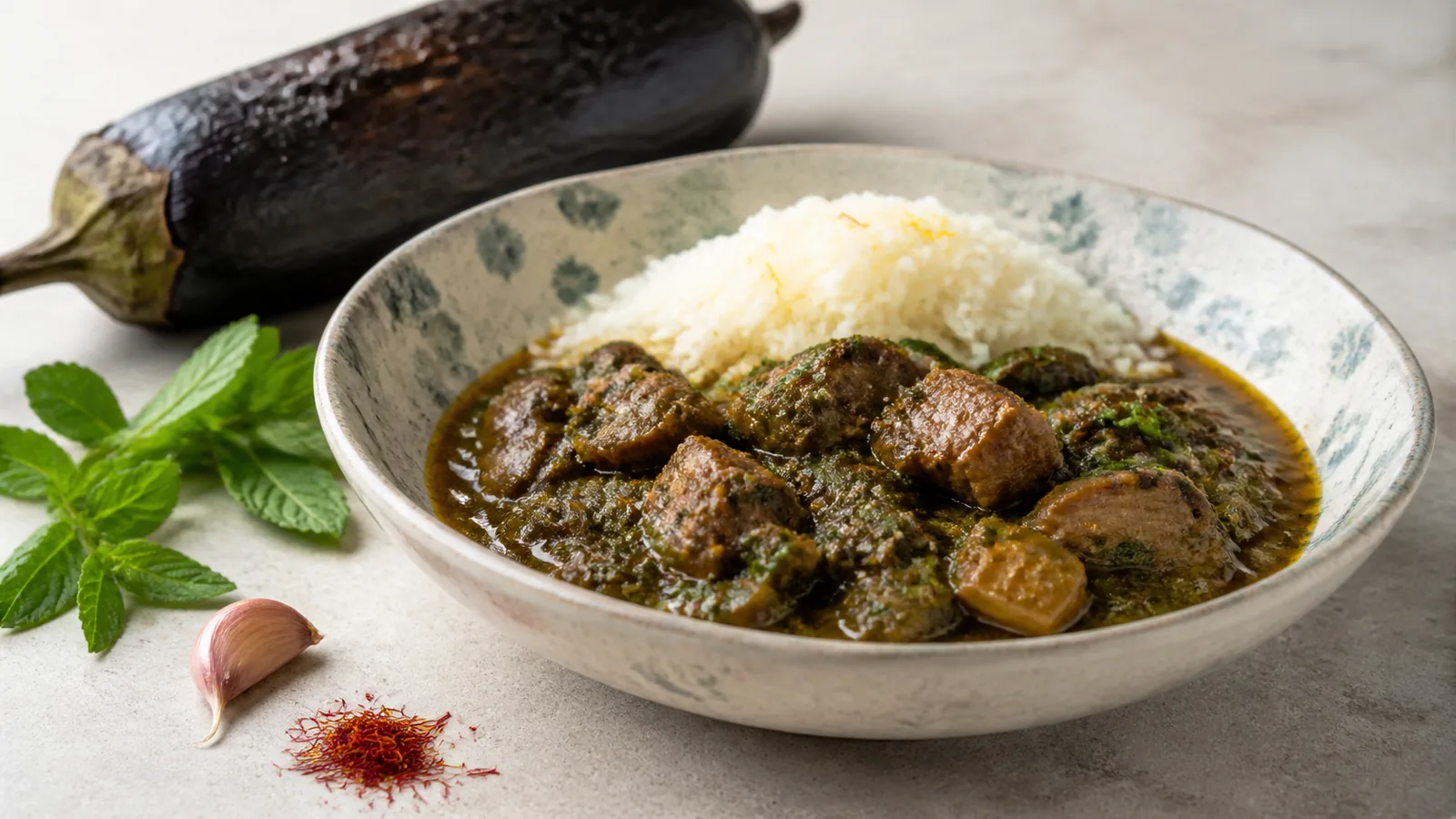
The quantities make a large family-style pot. Grilling the eggplants is worth the extra attention because their smoke carries through the sauce and gives this Gilani food its defining character.
Ingredients
- 1 kg boneless, trimmed stewing meat, cut into pieces
- 10 medium eggplants
- 750 g mixed fresh mint and parsley, finely chopped
- 4 garlic cloves, finely chopped or crushed
- 1 onion, quartered
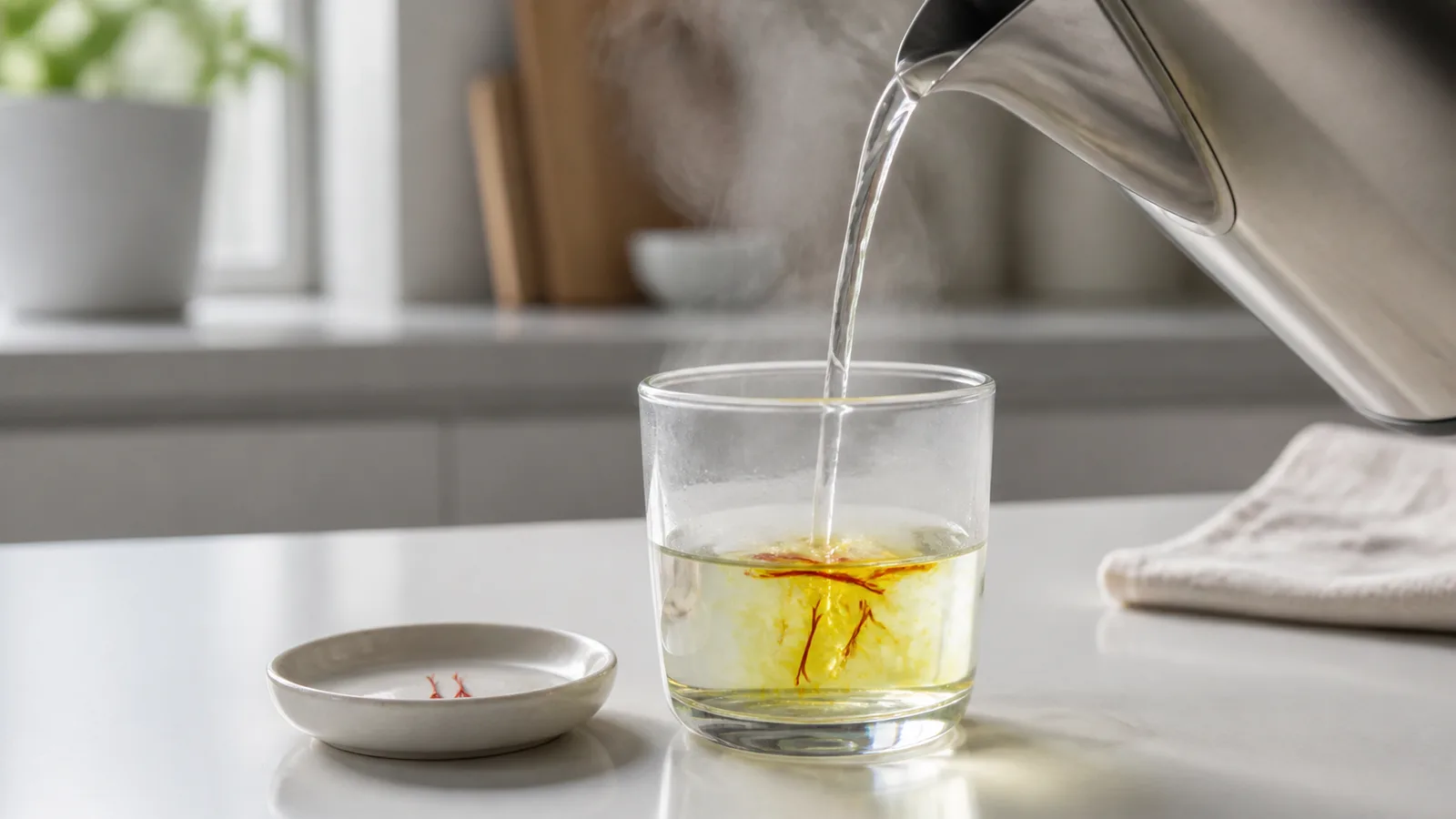
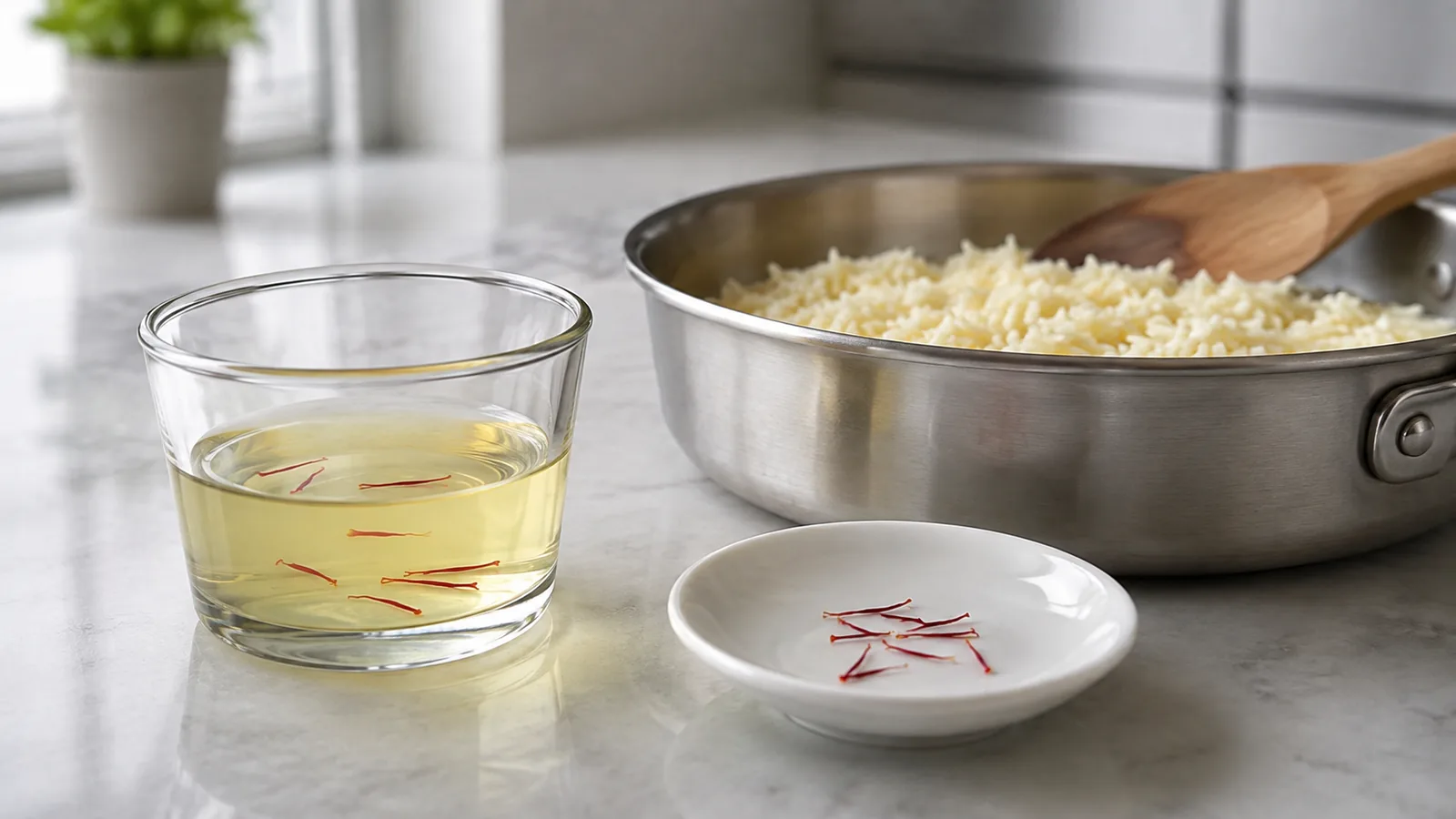
- 1/2 teaspoon saffron threads, brewed in a little hot water (optional)
- Salt and black pepper, to taste
- Neutral oil, as needed
- Up to 1/2 cup hot water, only if needed
Cook the meat
Put the meat and onion in a heavy saucepan and add enough water to cover them. Bring to a simmer, skim the surface if necessary, then cook gently until the meat is tender. Add salt later in the cooking time and top up with hot water only when needed.
Once the meat is ready, remove the onion if it has not broken down. Keep the meat in its reduced cooking liquid; that broth will form the base of the stew.
Grill and peel the eggplants
Wash and dry the whole eggplants, then prick each one a few times. Grill them over a gas flame, under a hot grill or on an outdoor grill, turning until the skin is charred and the centre is completely soft. Set them in a covered bowl for a few minutes, then peel when cool enough to handle.
Avoid rinsing the peeled flesh under running water because that washes away flavour and can make it watery. Instead, use damp fingers or a small knife to remove stubborn pieces of skin. Let the flesh drain briefly, then chop or mash it to a rough purée.
Build the Nazkhatun stew
- Warm a little oil in a frying pan. Add the chopped mint and parsley and cook over medium-low heat until their raw aroma softens. Do not let the herbs blacken.
- Add the mashed grilled eggplant to the cooked meat and broth. Stir in the fried herbs.
- Simmer gently until the flavours come together and the stew has a spoonable consistency. If it becomes too thick before the eggplant is fully incorporated, add up to 1/2 cup of hot water.
- Stir in the garlic near the end, then season with salt and black pepper. Add the brewed saffron if using and simmer for a few more minutes.
Nazkhatun, Naz Khatoon or Naz Khatun?
Nazkhatun, Naz Khatoon and Naz Khatun are English spellings used for the same Persian name. The name can refer to different eggplant preparations, however. If you expected a cold, meatless dish sharpened with sour juice, that is another common northern version; the recipe here is explicitly a warm meat-and-herb stew.
Useful notes before serving
- Use garlic according to taste, but add it late so it stays fragrant. Garlic powder can work in a pinch, though fresh garlic suits the dish better.
- The saffron is an optional variation rather than an essential part of the traditional base. Turmeric may be used instead, but it produces a different flavour.
- If direct-flame grilling is not practical, roast the eggplants at high heat until collapsed. Frying is possible, but the finished stew will be richer and less smoky.
- Let the stew rest off the heat for 10 minutes before serving so the eggplant thickens the broth naturally.
Serve the Nazkhatun stew warm with rice or flatbread. Its best texture is soft and cohesive, with tender meat pieces still distinct and enough sauce to carry the herbs and roasted eggplant.