Apricot marmalade is at its best when it still tastes unmistakably of ripe apricots. In this version, saffron and rosewater sit quietly behind the fruit rather than covering it, while a little gelatin gives the finished spread a smooth, spoonable texture.
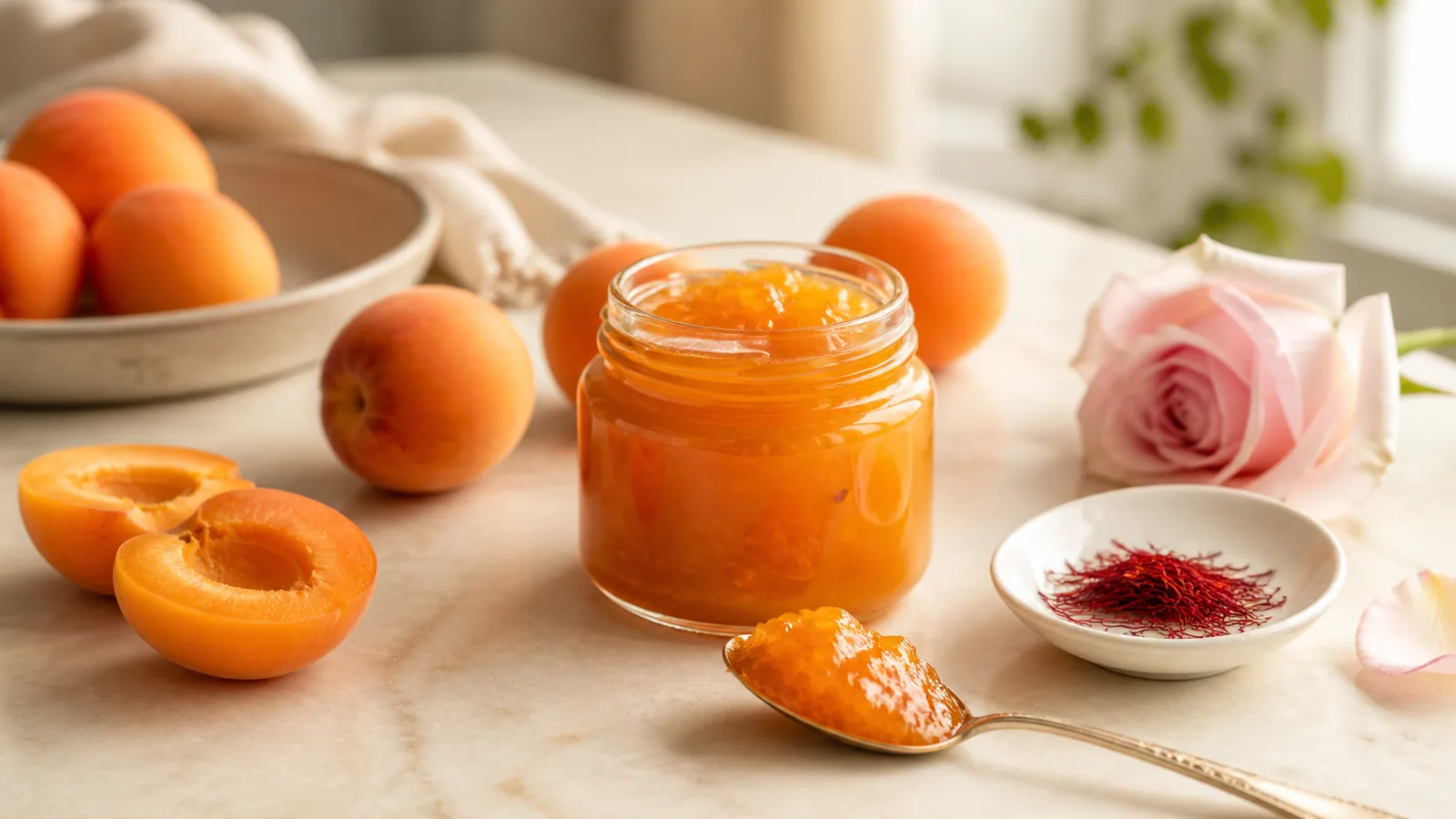
Ingredients for apricot marmalade
- 1 kg ripe apricots
- 1 kg sugar
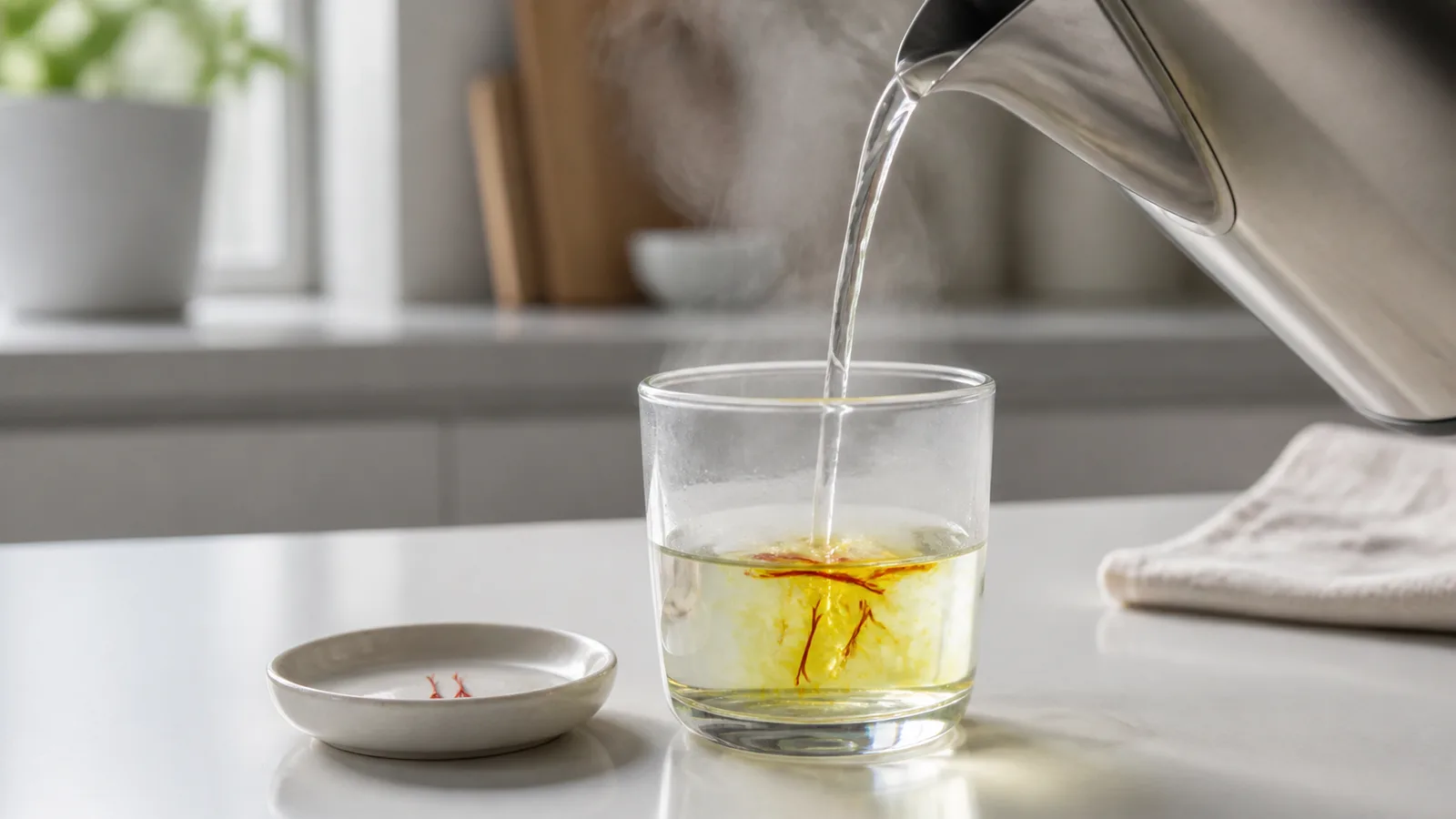
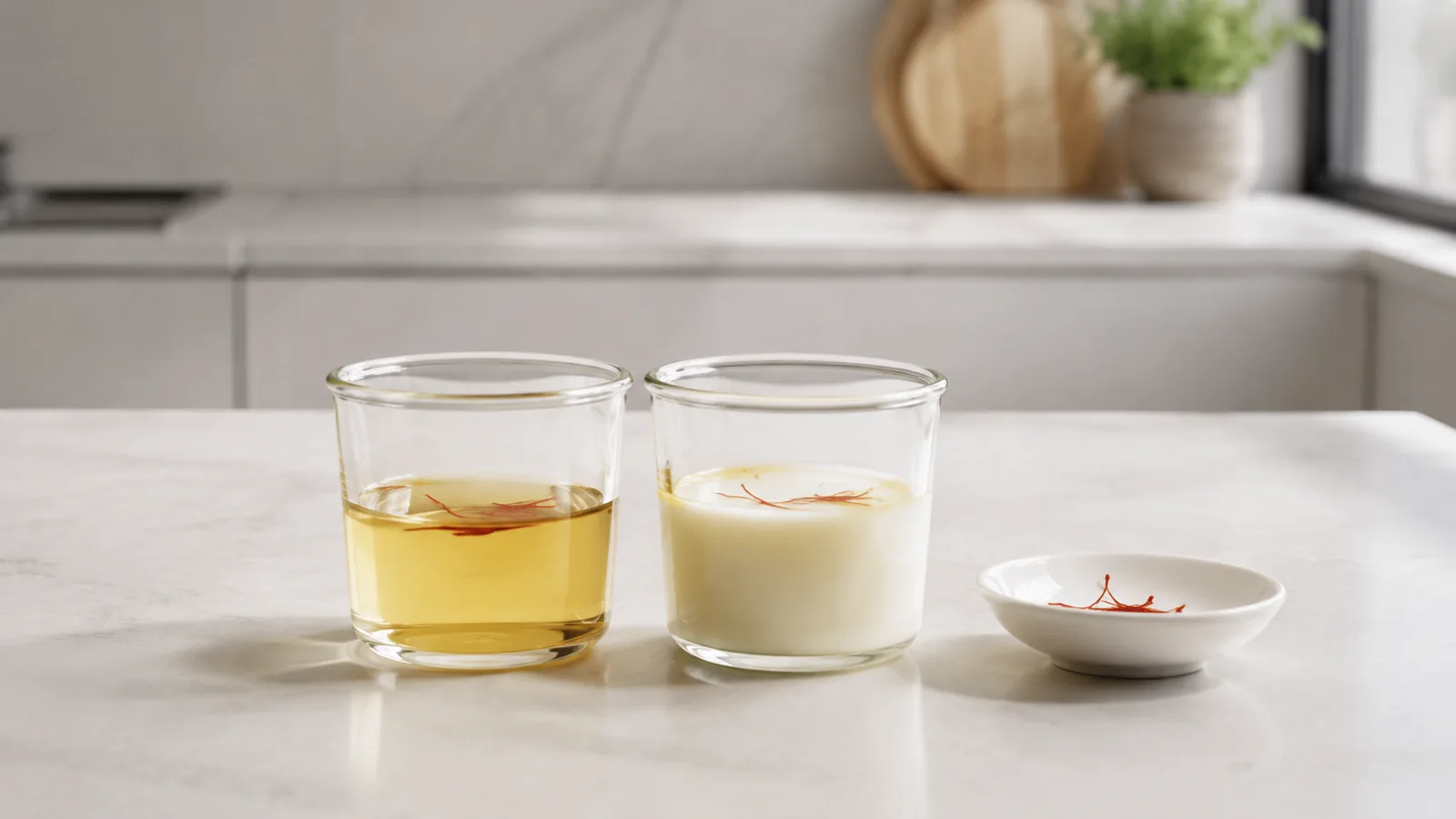
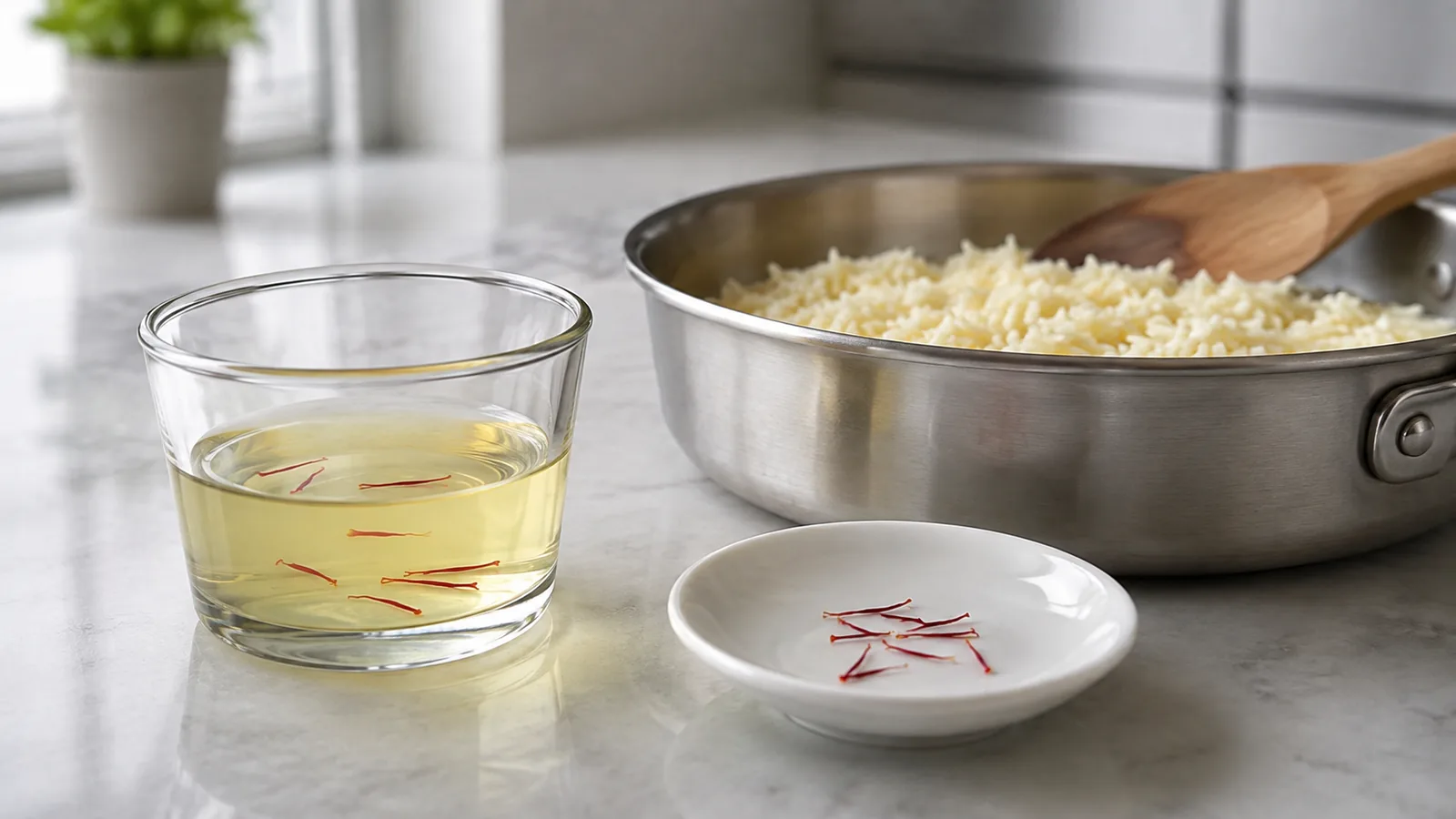
- 2 tablespoons brewed saffron
- 1 tablespoon gelatin powder
- 1 tablespoon fresh lemon juice
- 1 tablespoon rosewater
This recipe is intended as a refrigerated fruit spread. Have clean, dry jars ready before you begin, but do not treat the method below as a tested shelf-stable canning process.
How to make apricot marmalade
Prepare the fruit
Wash the apricots, cut them in half and remove the stones. Choose fruit that is ripe and fragrant but not fermented or badly bruised. Pulse the halves briefly in a food processor. You are looking for a coarse, juicy pulp with a little texture, not a completely liquid purée.
Cook the apricots and sugar
Put the crushed apricots and sugar in a wide, heavy-based saucepan. Stir them together, then place the pan over low to medium heat. As the fruit releases its juice, stir more frequently so the sugar dissolves evenly and nothing catches on the base.
Bring the mixture to a gentle simmer. Avoid an aggressive boil: it can scorch the fruit, darken its fresh colour and make the finished marmalade excessively stiff. Continue cooking until the apricots have softened and the mixture has visibly thickened. Depending on the pan, heat and water content of the fruit, the full preparation and cooking time will be about one hour.
Add the saffron, gelatin and rosewater
Stir the brewed saffron into the thickened apricot mixture. In a small heatproof bowl, sprinkle the gelatin over a little cool water and allow it to bloom according to the packet directions. Set the bowl over gently steaming water and stir until the gelatin is completely dissolved; the bowl should not touch the water below.
Add the lemon juice to the saucepan, stir well and remove the pan from the heat. Mix in the dissolved gelatin and rosewater. Adding the rosewater at the end helps preserve its aroma, while the lemon keeps the sweetness from tasting flat.
How to judge the consistency
The marmalade will be softer while hot and will thicken further as it cools, especially because it contains gelatin. Before removing it from the heat, place a small spoonful on a chilled plate and let it stand for a minute. It should move slowly when the plate is tilted but should not set like a firm jelly. If it is still very runny, return the pan to gentle heat for a few minutes and test again.
Remember that gelatin strength varies by brand. Follow the blooming instructions on your packet and do not add extra powder before the marmalade has cooled enough for you to assess the final set.
Cooling and storage
Let the marmalade cool briefly, then spoon it into clean jars without touching the inside of the lids. Once the jars have cooled, close them and refrigerate. Because this is a refrigerator recipe rather than a validated canning formula, keep it chilled and discard it if you notice mould, fermentation, an unusual smell or pressure beneath the lid.
Ways to serve it
Serve saffron apricot marmalade with toast, warm bread or plain yoghurt. Its soft set also makes it useful between cake layers, over cheesecake or inside a tart. If you plan to use it as a pastry filling, cook it just until it is thick enough to hold its place after cooling; overcooking will mute the apricot flavour.
The balance is easy to adjust at the table rather than in the pan. A rich dessert needs only a thin layer, while breakfast toast can take a more generous spoonful. Either way, the apricot should remain the first flavour you notice, followed by the warm scent of saffron and a light trace of rosewater.