


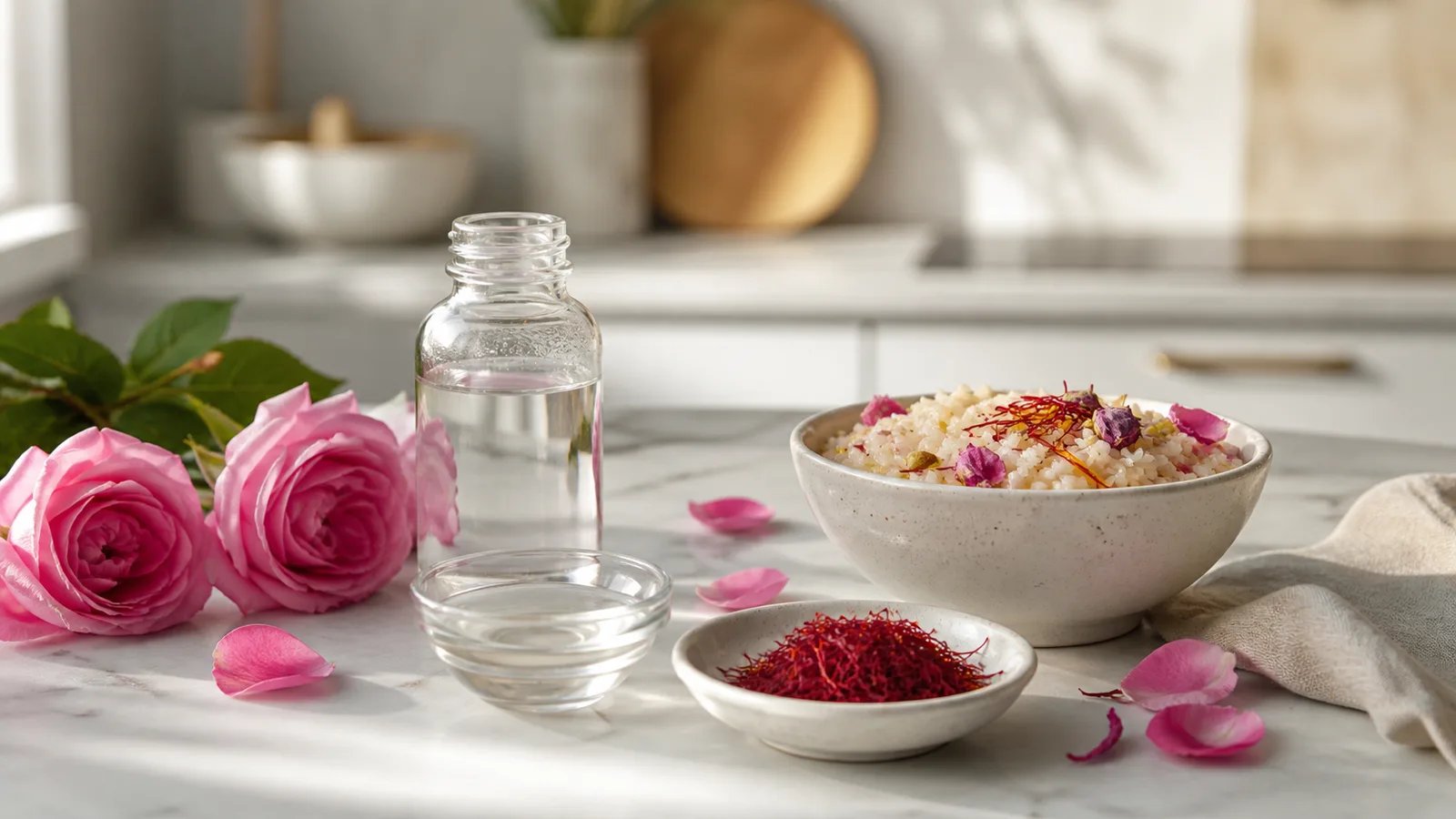
Saffron and rose water have shared a place in Persian kitchens for generations. Saffron brings a warm colour and a complex hay-and-honey aroma to rice, drinks and desserts. Rose water, traditionally distilled from Damask rose petals, contributes a floral note that can quickly become overpowering if too much is used. Both are best understood first as concentrated food ingredients.
The older version of this article called the pairing “saffron and roseback.” Roseback is not the ingredient’s English name; it was a translation error for golab, meaning rose water. The article also presented a long list of traditional health claims as instructions. Some of those ideas have been studied, but the evidence does not justify treating rose water or saffron as a remedy for heart disease, seizures, jaundice, wounds or eye problems.
What rose water is
Culinary rose water is an aromatic distillate, commonly associated with Rosa damascena, known in Iran as gol-e Mohammadi or Damask rose. It is not the same product as rose essential oil. The two differ in concentration, composition and intended use. A bottle sold as a food flavouring should not be treated as a medicine, an eye wash or a wound-care product.
In cooking, a small amount of rose water can lift saffron rice pudding, ice cream, baklava, syrups and cool drinks. Add it gradually and taste between additions. The aim is a clean floral aroma, not a perfume-like finish. Check that the product is labelled food grade and follow its storage and use-by instructions.
What research says about Damask rose
Human research has examined rose preparations for anxiety, stress, sleep and pain. The preparation matters: trials may use inhaled aroma, rose oil, capsules or other standardised products rather than ordinary grocery-store rose water. A systematic review of Rosa damascena for anxiety, depression and stress found encouraging results in some studies, but rated the overall evidence from very low to moderate and called for better randomised trials. Reviews of pain and aromatherapy research reach a similarly cautious conclusion: possible benefit is not proof that every rose product works for every symptom.
That distinction changes how the older claims should be read. Smelling Damask rose was traditionally recommended for relaxation and for headaches blamed on noise or polluted air. Modern aromatherapy findings make this a research question, not a dependable headache treatment. A pleasant aroma may feel calming, but a severe, sudden or recurring headache needs an appropriate medical assessment.
Rose remedies in the old article: tradition versus evidence
The previous text said rose water could prevent vomiting, disperse blood clots or “bloody phlegm,” strengthen the heart, and help people with heart disease. It also proposed rose-petal jam during recovery from weakness or fainting. These are historical or traditional-use claims, not established treatments. Rose water cannot replace urgent care for chest pain, breathing difficulty, coughing blood or fainting, and a food preserve does not address the cause of unexplained weakness.
Other preparations in the old text belonged to the same traditional framework:
- Golghand, a paste or preserve of rose petals and sugar, was described as a strong laxative.
- Rose petals stirred into a daily yoghurt drink, or doogh, were recommended for digestion.
- A mixture made by heating equal quantities—100 grams each—of fresh petals and sesame or olive oil was proposed for stomach inflammation and topical pain.
- Rose decoction was recommended for swollen eyes and for washing wounds.
- Gargling rose water and vinegar was proposed for bad breath that the article attributed to “bile in the stomach,” especially when paired with a bitter mouth, low appetite or yellow eyes.
These descriptions are retained so the record is clear, not as recipes to follow. Evidence for the specific mixtures, amounts and conditions was not supplied. Persistent bad breath is more commonly evaluated through oral hygiene, dental problems, dry mouth, tonsillitis, reflux and other recognised causes; it cannot be diagnosed as “bile” from a taste in the mouth. Yellowing of the skin or whites of the eyes is jaundice and can signal a serious condition, so it warrants urgent medical advice rather than a rose-water gargle.
Food-grade rose water must never be put into the eyes or used to wash an open wound. The US Food and Drug Administration notes that products applied to the eyes bypass some of the body’s natural defences and must be sterile to reduce infection risk. A culinary bottle does not meet the manufacturing and labelling requirements of a sterile ophthalmic product.
Traditional claims made for saffron
The old article described saffron as “warm and dry” in the vocabulary of traditional Persian medicine. It associated saffron with energy, sexual vitality, the heart, stomach and other “vital organs.” It also claimed saffron was anticonvulsant, cleaned the kidneys and bladder, balanced the sympathetic and parasympathetic nerves, and relieved pain in surface organs. None of those broad statements should be used as a diagnosis or treatment instruction.
Research on standardised saffron extracts has explored mood and several other outcomes. Reviews find signals worth studying, especially in mental-health research, while also noting differences in extract, dose, study size and quality. Those trials do not establish that culinary saffron treats toothache, seizure disorders, kidney or bladder disease, autonomic-nerve problems or sexual dysfunction. People receiving treatment for any of those conditions should not replace it with saffron.
The earlier page advised rinsing a painful tooth with saffron infusion and then swallowing a little, and suggested taking saffron every morning for a week for a “phlegmatic temperament.” No clinical evidence was given for either regimen. Tooth pain commonly needs dental care, and seizure symptoms require medical evaluation. Repeating an old dosage instruction would create risk without adding useful culinary information.
Can too much saffron be harmful?
Yes. The fact that saffron is a spice does not make concentrated or supplemental amounts automatically safe. The old article warned that excess saffron could cause a stroke. That specific cause-and-effect statement was unsupported and is not repeated as fact, but its broader warning against high intake was sensible. Toxicology and clinical-safety reviews distinguish normal food use from concentrated therapeutic dosing and advise caution with high amounts, long-term supplementation, medicines and vulnerable groups.
For cooking, use only the small quantity a recipe needs. Supplements and extracts are a different exposure. Anyone who is pregnant, has a medical condition, takes prescription medicine or is considering saffron for a symptom should discuss the product with a qualified clinician or pharmacist. An article about food cannot determine individual interactions or a safe treatment dose.
How to use saffron and rose water in food
For a balanced culinary pairing, crush a small pinch of genuine saffron threads and let them bloom in a little warm water. Stir the liquid into rice, a milk pudding or another suitable dish. Add food-grade rose water separately, a few drops or a small splash at a time, because its aroma is more noticeable than its volume suggests.
The combination works especially well when the rest of the recipe is restrained. Cardamom, pistachio, almond, milk and rice can support the two aromas, but there is no need to use all of them together. Saffron should remain warm and slightly earthy; rose water should appear as a light floral note.
Buying and storing rose water and saffron
Choose rose water from a food producer whose label gives the ingredients, batch or lot information, production or expiry date and storage directions. The old article reasonably advised checking production details and a health or manufacturing permit, but “pasteurised” or officially packaged does not turn culinary rose water into a treatment product. Keep the bottle closed and store it as the maker directs.
Buy saffron as intact deep-red threads from a traceable seller when possible. Packaging, origin and batch information help more than an extravagant health promise. The threads should smell characteristically floral, hay-like and slightly bitter, without a musty odour. Keep them dry, protected from light and sealed away from strong-smelling foods. Our guide to recognising authentic saffron explains the practical purchase checks in more detail.
The useful conclusion
Saffron and rose water deserve their place together in the kitchen. Their aromas are concentrated, so careful sourcing and a light hand matter. Research into Damask rose and saffron is active, but it does not validate the old page’s remedies for clots, heart conditions, jaundice, eye swelling, wounds, seizures, toothache or organ “cleansing.” Keeping culinary use separate from medical claims makes the pair more useful—and much safer to discuss.
Sources reviewed: systematic reviews of Damask rose for anxiety, depression and stress, clinical efficacy and safety of Rosa damascena, and human evidence on rose oil; reviews of saffron clinical evidence, saffron efficacy and safety, and saffron toxicology; the FDA’s eye-product safety guidance; and NHS guidance on jaundice and bad breath. All accessed 25 August 2026.

![Exporting Saffron to Turkey + Price Guide [Complete 0 to 100]](https://img.rowhanisaffron.com/20260827003933/saffron-export-turkey-quality-inspection.webp)



