


The “profit of 625 billion saffron” was not a documented net profit. It was a period estimate of the gross value of more than 250 tonnes of Iranian saffron: 625 billion tomans, not US dollars. The distinction changes the meaning of the whole report. Gross crop value is the price of output before production, labour, processing, finance and selling costs are deducted.
Where the 625 billion figure came from
The underlying Iranian report said the country produced more than 250 tonnes of saffron a year, valued at more than 625 billion tomans, and exported the spice to 46 countries. Dividing 625 billion tomans by 250,000 kilograms gives an implied average value of about 2.5 million tomans per kilogram for the period.
That arithmetic explains why the English page’s “USD 625 billion” cannot be right. It was a translation error in the currency unit. It also explains why the word profit in the title is too strong. The calculation estimates production value; it does not subtract the grower’s corm, irrigation, manure, labour, harvest, drying or finance costs.
The original title and URL are retained because they identify the existing page. Within the article, the number is described accurately as a dated gross-value estimate.
Iran’s position in the period report
The source presented Iran as the leading producer and trader of saffron. It said Persian saffron reached 46 countries and described the crop as an important non-oil export. The broader point still has support: FAO describes Iran as producing more than 90% of the world’s saffron, although annual output and trade shares change.
The 2016 page also named Afghanistan, China and Spain as other “poles” in the world market. Those countries do not play identical roles. Afghanistan is a producer; China is a producer and major market; Spain has long been an importer, packer and re-exporter as well as a smaller producer. Lumping them together hides where value is created.
Iran’s scale does not guarantee that the origin receives every later margin. Testing, sorting, packaging, branding, distribution and customer access can add value after the saffron leaves the farm or the country.
The threats described in 2016
The report linked Iran’s position to several risks: smuggling of dried Iranian saffron through Afghanistan, movement of Iranian saffron corms, Chinese price competition, water scarcity, costly export conditions and fluctuating domestic prices. The surviving English translation garbled some of these ideas, but the underlying concerns are recognisable.
They need to be kept separate:
- Corm movement can transfer planting capacity and bypass phytosanitary controls.
- Undocumented dried-saffron trade can obscure origin and official export statistics.
- Price competition affects buyers’ choices but does not by itself establish dumping in the legal sense.
- Water scarcity affects field resilience and production planning even though saffron is suited to dry regions.
- Bulk export may leave more packaging and brand value to companies closer to the consumer.
The original phrase about “Chinese dumping” should not be treated as a confirmed trade-law finding. Dumping has a specific meaning and requires evidence comparing export prices with normal value, followed by an authorised investigation. No such finding was supplied on the page.
Why the World Bank figures do not measure saffron profit
A long paragraph in the original article quoted World Bank industrial-growth statistics: an average 5.5% over a 20-year period ending in 2013, a 17.9% high in 1996, and negative growth of 9.1% in 1995, 8.3% in 1998, 9.2% in 2012 and 4.6% in 2013. These figures were used as a backdrop for Iran’s reliance on non-oil industries.
They are not saffron statistics. Industry or manufacturing value-added growth describes a broad part of the national economy and depends on the indicator selected. It cannot establish the volume, gross value or profitability of one agricultural crop. The World Bank’s current data page should be consulted for the latest series and revisions, but those macro figures should remain separate from saffron accounts.
The second currency error: 4.9 to 6 million
The page attributed a period market range to a deputy chair of the National Saffron Council: at least 4.9 million and at most 6 million per kilogram. The English translation again labelled those figures as dollars. They were period Iranian prices expressed in tomans, not millions of US dollars.
The report connected this range with a recession in the saffron market, stored low-cost inventory and speculation. It alleged that some holders bought cheaply, waited for a price movement and then sold at prices they could influence. Without dated transaction records, the page cannot show how much stock was held, who held it or whether any actor controlled the market. Those points remain attributed concerns.
Nor should the 4.9-to-6-million range be converted into a current price. Iran’s currency values and saffron market have changed too much for a 2016 nominal figure to guide a purchase today.
Gross value, margin and profit are different numbers
A clear saffron account uses three separate measures:
- Gross production value: dry weight multiplied by the farm-gate or stated reference price.
- Marketing margin: the difference between prices at two stages, before the later participant’s costs are deducted.
- Net profit: revenue minus all costs attributable to producing or selling the lot.
The 625 billion tomans belongs to the first category. Calling it profit exaggerates what growers or the industry retained. A country can report a large gross crop value while individual farms face high labour costs and exporters face finance, compliance and market-access expenses.
How to measure Iranian saffron value properly
A current calculation should name the year, currency and source, then connect:
- harvested dry weight and grade;
- average farm-gate price rather than an isolated offer;
- production and post-harvest costs;
- official export weight and customs value;
- the difference between Iranian exports and foreign re-exports;
- processing, laboratory, packaging and logistics costs; and
- the exchange rate used for any international comparison.
UN Comtrade or national customs data can help with declared trade value and weight. They do not reveal farm profit, unrecorded trade or the final retail margin. Farm surveys and company accounts are needed for those questions.
Protecting more of the value at origin
The original article feared that neglect would weaken saffron and leave Iran more dependent on oil exports. The practical response is not to repeat an inflated dollar figure. It is to make Iranian saffron easier to verify and buy on its merits.
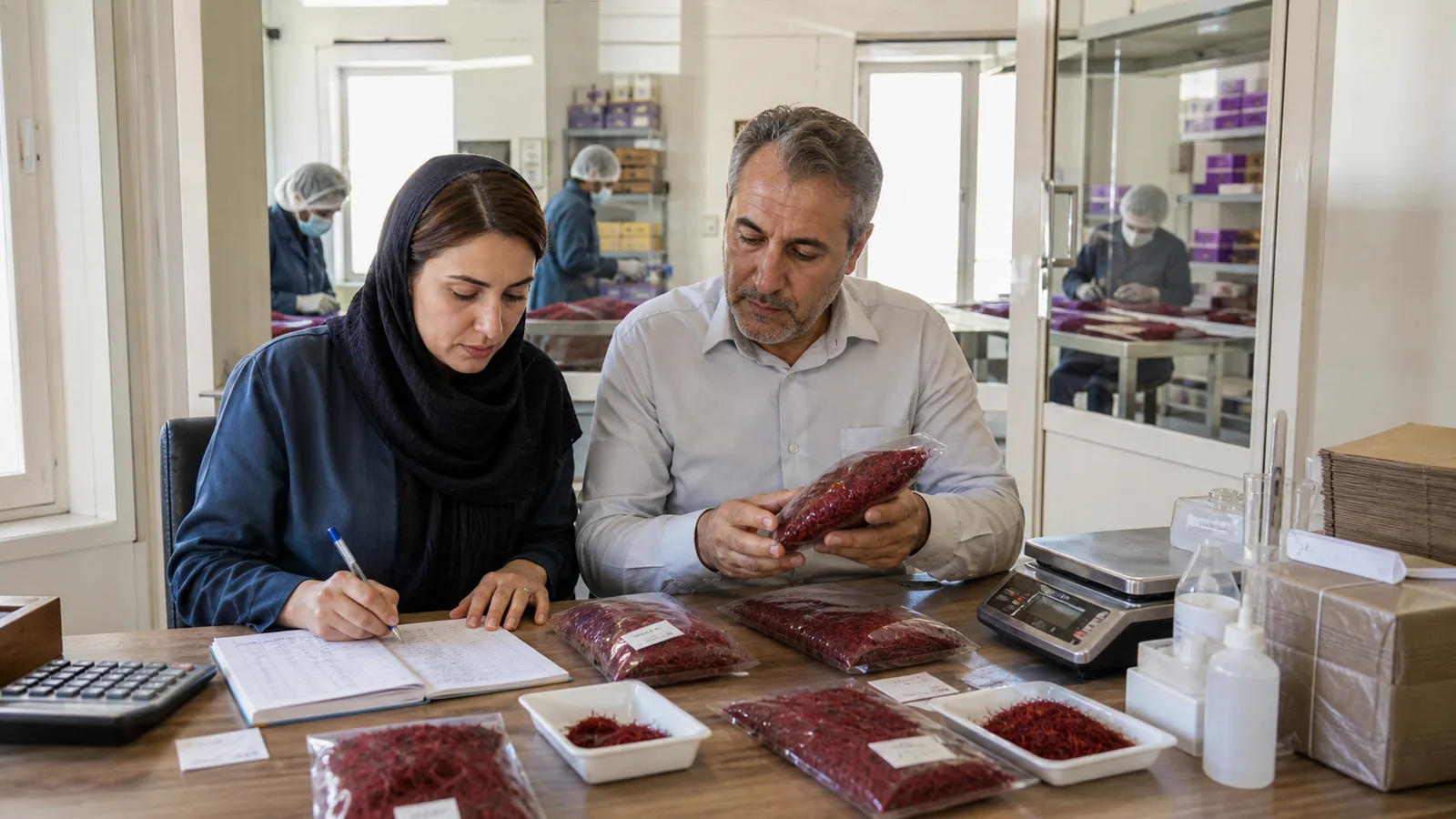
FAO’s current Iran work focuses on authenticity, traceability, quality integrity and innovation. For growers and exporters, that means clean corm systems, documented lots, consistent drying, recognised testing, clear origin evidence and products designed for real customer needs. Reliable data also matters: an accurately stated 625 billion tomans is more credible than a spectacular but impossible USD 625 billion.
Iran’s production scale remains a major advantage. The lasting commercial question is how much value is retained by farms and Iranian businesses after genuine costs, not how large the gross number looks in a headline.
Sources reviewed: the archived Iranian report citing ISNA for the 250-tonne, 625-billion-toman and 46-country figures; FAO’s Iran saffron work; UN Comtrade; and the World Bank manufacturing value-added series. All historical prices and production statements are dated rather than presented as current market data.

![Exporting Saffron to Turkey + Price Guide [Complete 0 to 100]](https://img.rowhanisaffron.com/20260827003933/saffron-export-turkey-quality-inspection.webp)



