


The prediction of harvesting 36 kg of saffron from Khuzestan farms was made in a 2020 provincial report covering 35 hectares in Izeh, Baghmalek, Behbahan and Shushtar.
Mohammad Ghasemi Nejad, deputy for crop-production improvement at the Khuzestan Agricultural Jihad organization, announced the forecast as harvesting began. His statement described an expected result, not a final measured harvest.
The 36 kg saffron forecast
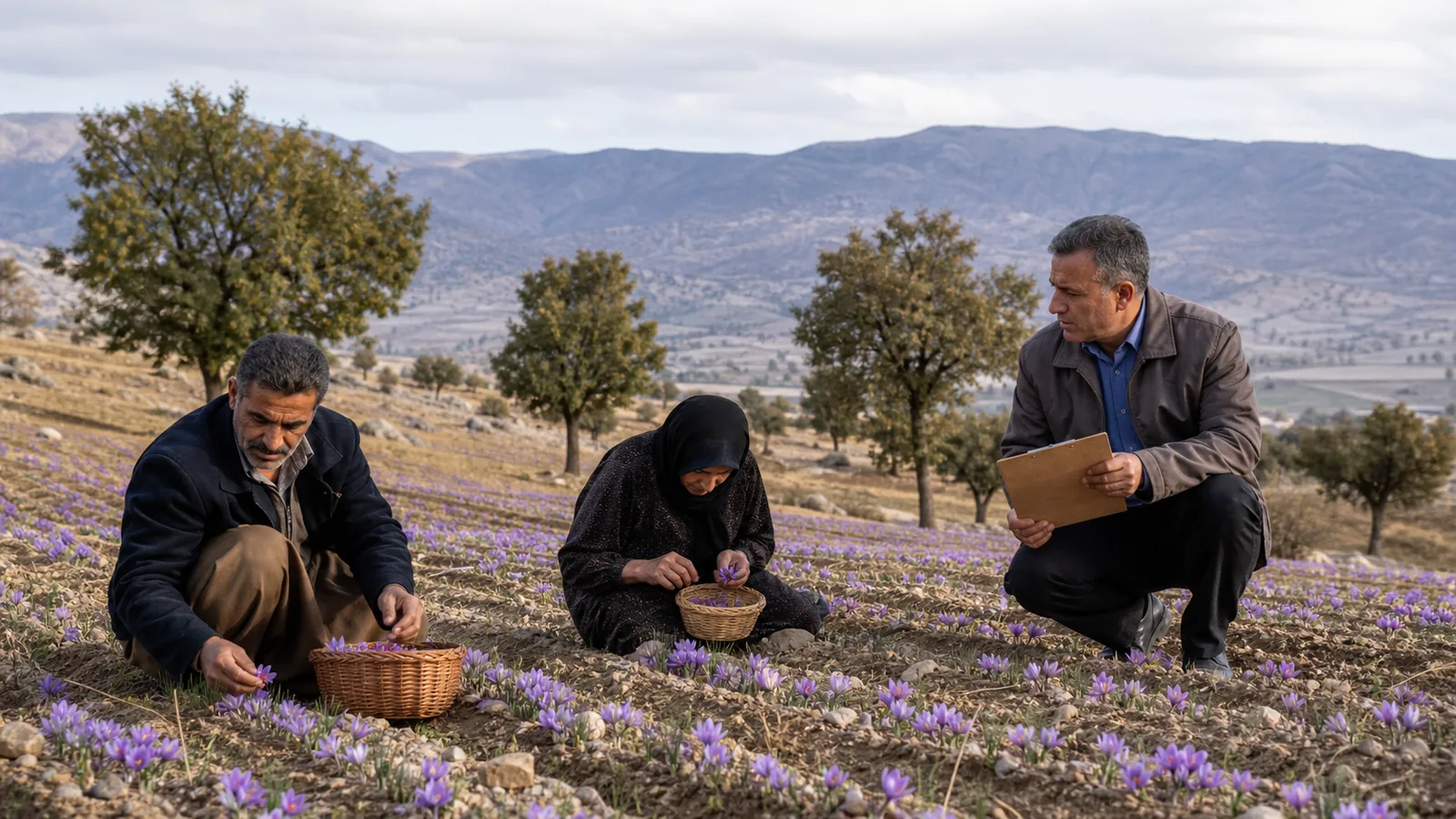
Ghasemi Nejad said farmers had begun collecting saffron flowers in the preceding days and predicted that the province’s farms would produce 36 kilograms that season.
The wording matters because no end-of-season total appears in the article. The 36 kg figure should remain a forecast unless it is matched with a later official harvest report.
Thirty-five hectares under cultivation
The area under saffron in Khuzestan had reached 35 hectares, according to the same account. Ghasemi Nejad linked that expansion to provincial support for developing medicinal plants.
He described a 4 percent increase in cultivated area compared with the previous year. The report did not publish the earlier hectare figure or explain whether all 35 hectares were mature, producing fields.
What the area and forecast imply
If the 36 kg forecast and 35-hectare area refer to the same producing scope, the simple average would be about one kilogram per hectare. That is a calculation from the two reported totals, not a field-measured yield supplied by the official.
Young saffron fields may produce differently from established ones, and the article gave no breakdown by field age, county, weather or management. A province-wide average cannot show how an individual farm performed.
The four Khuzestan counties named
- Izeh
- Baghmalek
- Behbahan
- Shushtar
Ghasemi Nejad said saffron cultivation and harvesting were taking place in all four counties. The report did not divide the 35 hectares or 36 kg forecast among them, so no county share can be inferred.
Why the Khuzestan context is important
Khuzestan includes markedly different local climates. Naming the counties keeps the report geographically precise: it was not a claim that saffron was being grown uniformly across the whole province.
The expansion was framed as part of medicinal-plant development. That describes an agricultural policy category; it does not make a health claim about the saffron harvested from these farms.
What the report confirms
The account confirms that saffron harvesting had started, cultivation covered 35 hectares and the area was reported to be 4 percent larger than the previous year. It also identifies the four counties participating in production.
It does not confirm that the final harvest reached 36 kg, nor does it provide county totals, crop grades, farm-level yields or the details of the support programme.
A dated snapshot of saffron farming in Khuzestan
This 2020 report captures a small but expanding provincial crop at the start of harvest. The 36 kg prediction, 35-hectare area and four named counties belong to that reporting period.
A current comparison would require newer official figures using the same scope. Until then, the article is best read as evidence of where cultivation had developed and what officials expected from that particular season.

![Exporting Saffron to Turkey + Price Guide [Complete 0 to 100]](https://img.rowhanisaffron.com/20260827003933/saffron-export-turkey-quality-inspection.webp)



