


A parliamentary statement reported monthly exports worth 60 million euros from a home-made saffron activity in Tabriz. The figure is striking, but the old report needs careful reading before it is treated as a verified trade total.
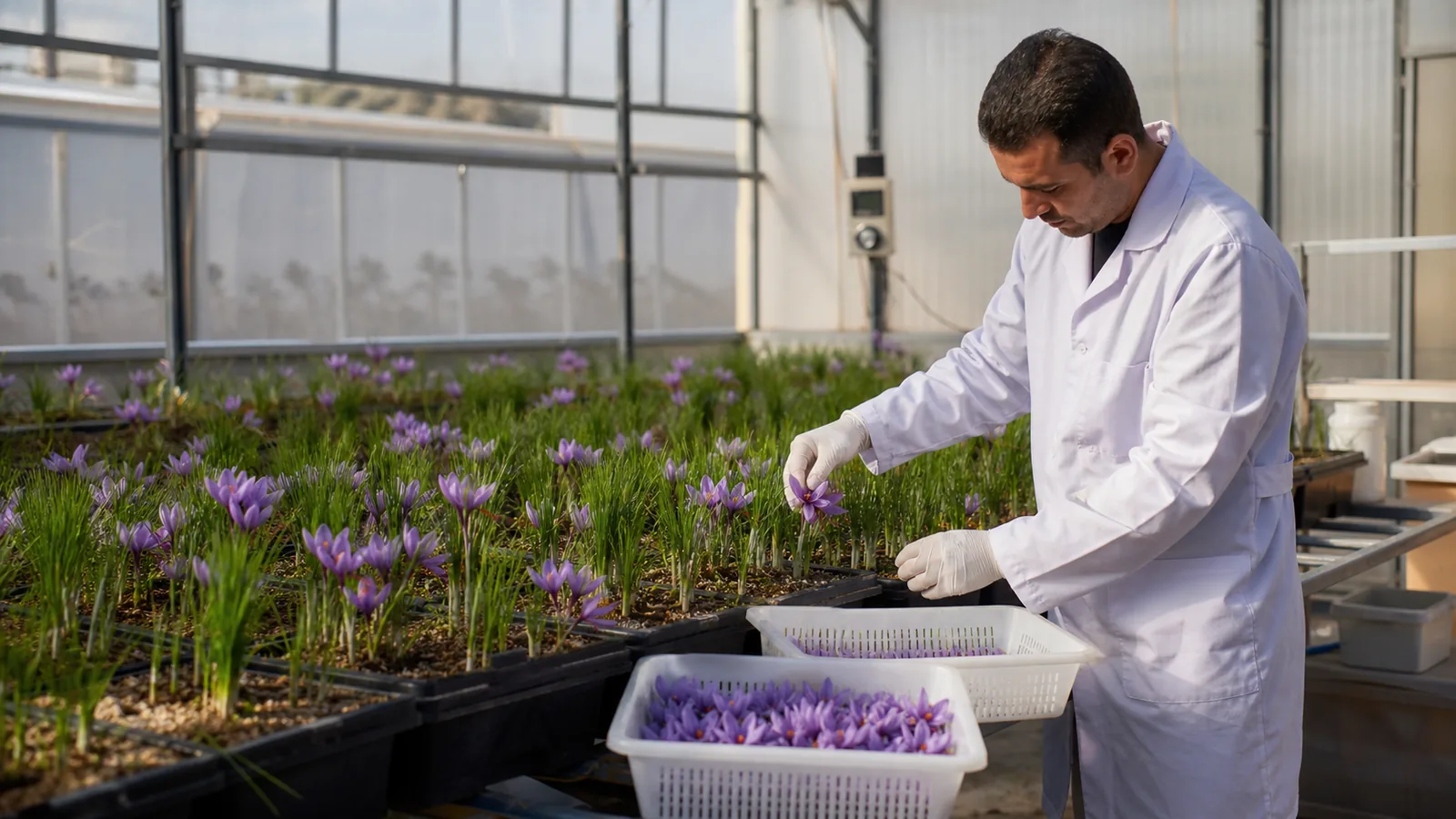
The statement was attributed to Shahaboddin Bimeghdar, then a representative for Tabriz, Osku and Azarshahr. He used the example while discussing agricultural entrepreneurship, support services and employment for educated young people. The original item did not include a date for the underlying sales, export weight, customs code, destination list or documentary source for the amount.
What the 60-million-euro statement actually covered
The archived wording connects the 60 million euros to an entrepreneur in Tabriz who cultivated saffron in pots and brought agricultural work into a home setting. It also describes the amount as a monthly home-made saffron export from Tabriz. Those two ideas are not quite the same: one refers to a particular enterprise, while the other sounds like a city-wide export total.
Without the original interview, company accounts or customs record, that ambiguity cannot be resolved responsibly. The number should therefore remain an attributed historical claim, not a current measure of Tabriz’s saffron trade. It also should not be converted into an estimate of kilograms sold because no product grade, unit price or exchange-rate date was supplied.
Who made the statement
Bimeghdar represented the Tabriz, Osku and Azarshahr constituency in Iran’s tenth parliament. English records use several spellings of his name, which explains the inconsistent forms in older translations. His comments were broader than saffron: he was arguing that rural services and modern production methods could help farmers turn agricultural work into a more reliable livelihood.
That context matters. The report was a political and economic-development statement, not a customs bulletin or audited export disclosure. It can document what was said at the time, but it does not by itself verify the commercial result.
What “home-made saffron” may mean
The phrase can be misleading in English. It may describe saffron grown on a small scale in pots or trays, but it can also refer to household work such as cleaning flowers, separating stigmas, drying, sorting or packing. Growing the crop and preparing the dried spice are different stages, with different equipment and quality risks.
Saffron comes from the dried stigmas of Crocus sativus. A pot of flowering corms can produce genuine saffron, yet a commercial crop still depends on suitable corms, temperature management, flowering conditions, careful picking and controlled drying. The word “home-made” does not establish grade, authenticity or export readiness.
Controlled and potted cultivation is technically possible
Research supports the underlying idea that saffron can be grown under controlled conditions. A published computer-controlled saffron production study describes trays in a greenhouse where temperature, light and irrigation were managed, along with systems for harvesting and stigma separation. That is a controlled production system, not evidence that any ordinary room or windowsill will deliver a profitable crop.
Corms must complete their biological cycle and form replacements for later seasons. Moisture, heat and crowding can affect both flowers and corm health. A grower also has to separate the red stigmas promptly and dry them consistently. A few flowering pots may demonstrate the method; an export business requires repeatable yield and quality across many batches.
An export claim needs a traceable production record
A sound trade record would connect the stated euro value to shipment dates, net saffron weight, product form, grade, buyer country and customs declarations. It would also distinguish bulk spice from retail packs. The old report supplied none of those details, so the 60-million-euro figure cannot be compared confidently with national export statistics or today’s prices.
Quality is equally important. A peer-reviewed review of saffron quality assessment explains how crocins, picrocrocin and safranal relate to colour, taste and aroma, and why analytical methods are used to assess commercial quality and authenticity. Attractive flowers or a successful indoor harvest do not replace those checks.
Farmers and exporters perform different jobs
Bimeghdar’s comments also pointed to a familiar gap in agricultural value chains: farmers concentrate on production, while services are needed to move a crop into the market. For saffron, those services may include corm advice, disease control, drying facilities, laboratory testing, grading, packaging, documentation, transport and access to buyers.
A producer can handle some of these steps, but an export claim implies more than cultivation. Even a home-based operation needs traceability and hygienic handling. If several households contribute to one shipment, a consolidator must keep batches identifiable rather than mixing material without records.
Why the report mentioned educated young people
The representative encouraged educated young people to work with greenhouses, hydroponics and newer agricultural technologies. His central point was that an enterprise need not rely only on a large conventional field or abundant irrigation water. A well-designed protected system can give a grower more control over the production environment.
Saffron should not be casually described as a hydroponic crop, however. Research systems vary: some use substrate-filled trays, controlled chambers or greenhouse conditions. The practical requirements depend on the method, and commercial success still rests on corm health, labour, energy costs, harvest timing and a genuine market.
Rural service centres were part of the proposal
The report called for service centres in districts and villages, using rural and nomadic employment-development facilities. Bimeghdar argued that officials and applicants were not sufficiently familiar with the relevant rules and that instructions had not been communicated clearly. He connected better local support with household production and the possibility of creating jobs for other people.
These were policy proposals rather than measured outcomes. The article did not name a programme, list approved loans or show how many businesses were created. Keeping that distinction prevents a statement of intent from being mistaken for proof that funding or employment followed.
How to read this Tabriz saffron report today
- Keep the date in mind: this is an archived account of a statement, not a current export update.
- Treat 60 million euros as attributed: the report provides no shipment documents that independently confirm the amount.
- Do not equate pots with easy production: controlled saffron cultivation is possible, but it requires managed conditions and healthy corms.
- Separate cultivation from export: drying, testing, packing, traceability and customs work determine whether saffron is ready for an overseas buyer.
- Ask for measurable evidence: weight, grade, destination, period and declared value are needed before trade figures can be compared.
The lasting value of the story is its picture of small-scale agricultural entrepreneurship in Tabriz. Its headline amount remains part of that historical record, while the practical lesson is more modest: technology and local services can widen the ways saffron is produced, but credible export success has to be supported by traceable quantities, tested quality and documented sales.

![Exporting Saffron to Turkey + Price Guide [Complete 0 to 100]](https://img.rowhanisaffron.com/20260827003933/saffron-export-turkey-quality-inspection.webp)



