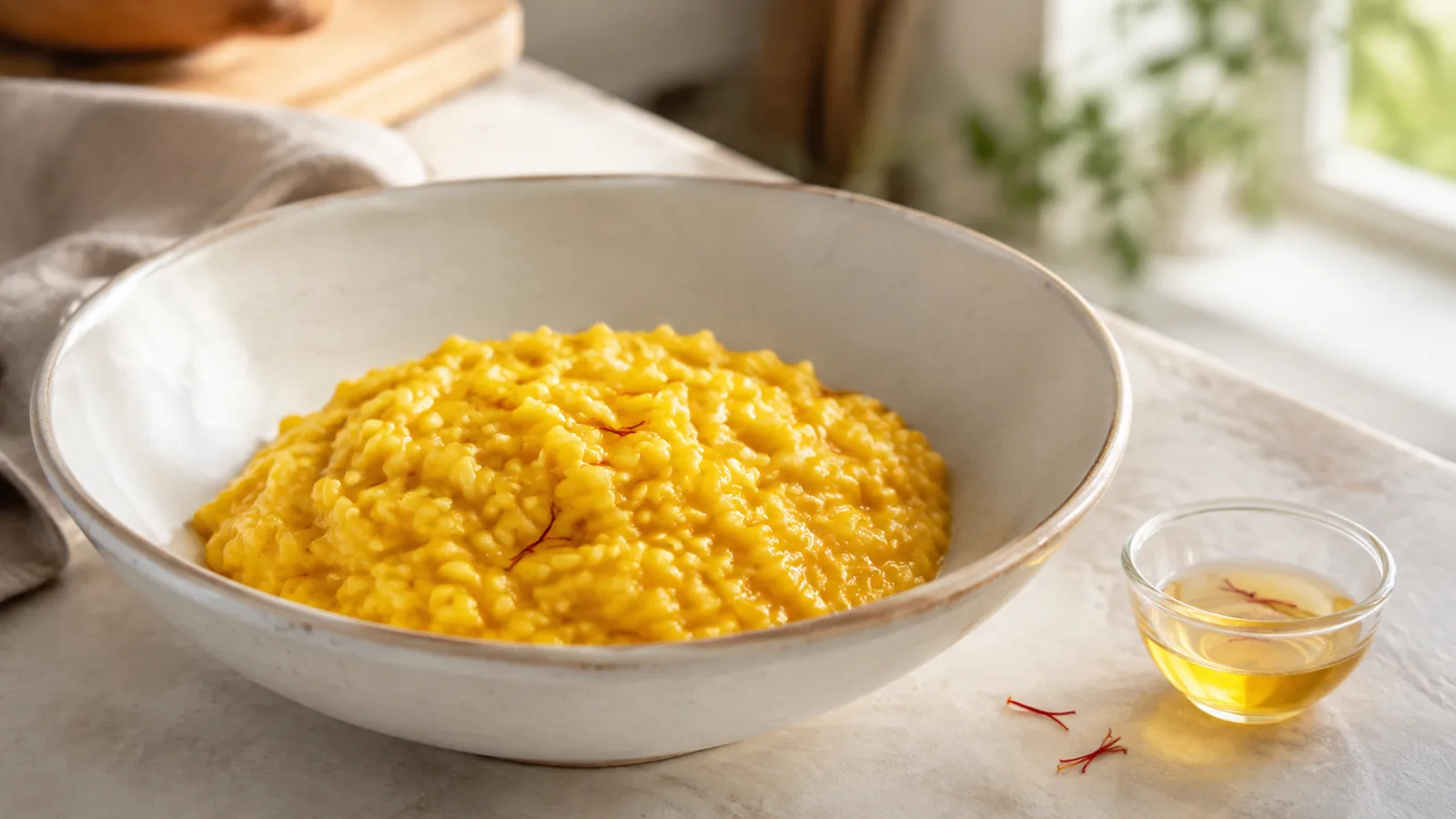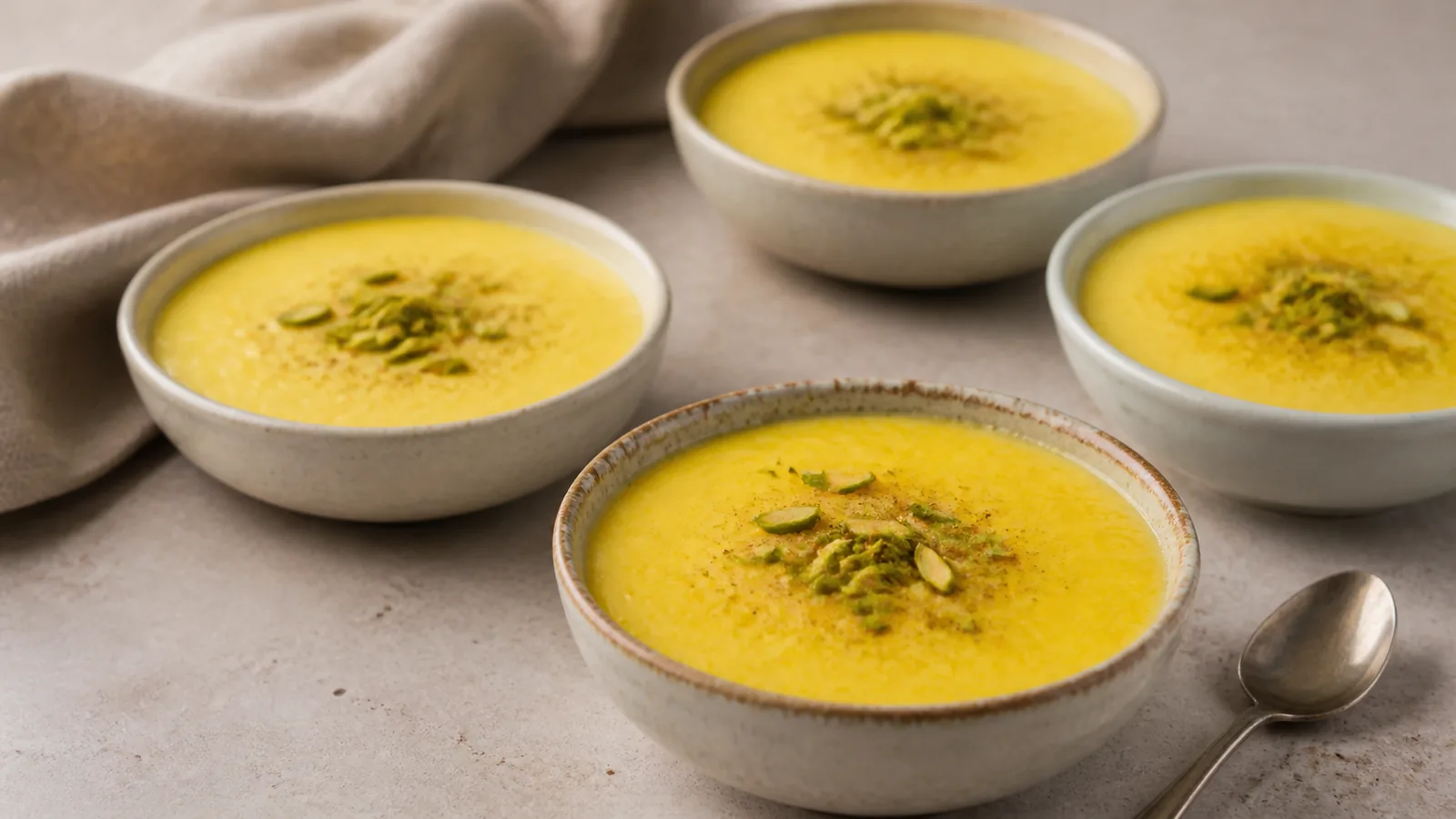
Mashkoofi is a smooth Persian milk pudding thickened with starch and scented with saffron, rose water and vanilla. It is associated particularly with Mazandaran and is sometimes described informally as Persian danet because of its chilled, spoonable texture. Despite the word “bake” in this page’s historical title, the dessert is cooked gently on the stove.
This recipe makes four small bowls. It sets softly rather than turning firm enough to slice.
Ingredients for mashkoofi
- 2 cups cold milk, 480ml
- 3 tablespoons cornflour or cornstarch
- 3 tablespoons sugar
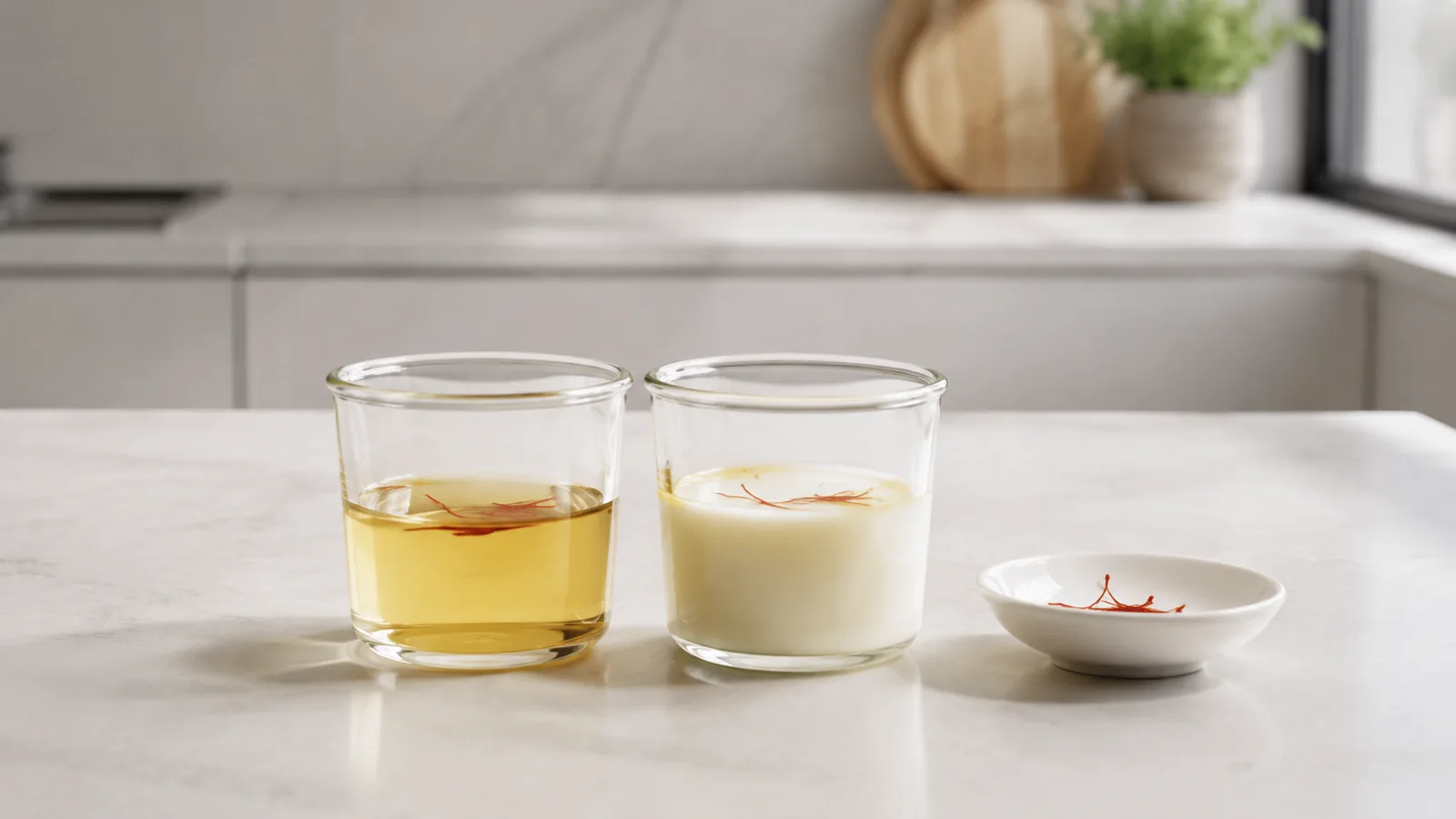
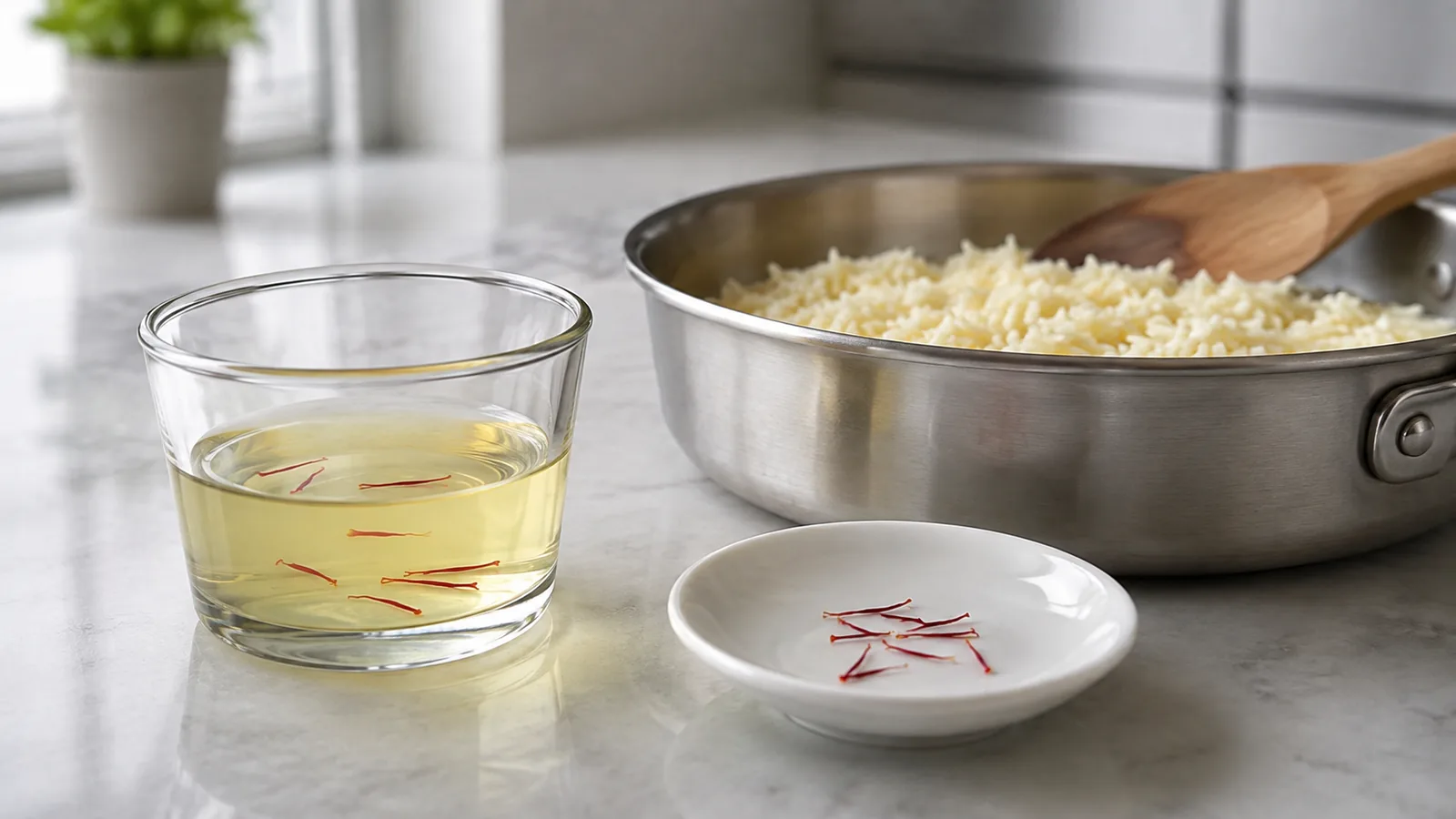
- 2 tablespoons concentrated brewed saffron
- 1 tablespoon unsalted butter
- 2 teaspoons rose water
- 1/4 teaspoon vanilla extract
For decorating, use a little slivered pistachio, ground cinnamon or fresh fruit. Coloured sugar sprinkles are optional, but keep them light so their sweetness and texture do not cover the saffron pudding.
Dissolve the starch while the milk is cold
Pour the cold milk into a medium saucepan. Add the starch and sugar, then whisk until the liquid is completely smooth. Check the bottom corners of the pan for any settled starch before turning on the heat.
This cold start is the simplest way to prevent lumps. Adding dry starch to warm milk makes its outside gel before the centre can disperse.
Cook slowly and keep stirring
Set the pan over low to medium-low heat. Stir continuously with a flexible spatula, sweeping the full base and sides. The mixture will first warm, then begin to coat the spatula.
When the milk is hot but not boiling, add the butter, vanilla, rose water and brewed saffron. Continue stirring until the colour is even and the pudding thickens. It should fall from the spatula in a broad ribbon and leave a line on the base of the pan for a second before closing.
Expect roughly 10–15 minutes on the heat, depending on the pan and stove. Avoid a hard boil, which can catch the milk on the bottom and dull the rose aroma.
Pour and chill the Persian danet
Remove the pan from the heat and divide the hot pudding among four clean dessert bowls. Tap each bowl gently on a folded towel to level the surface. If you dislike a skin, place reusable food wrap directly against the surface while it cools.
Let the bowls lose their steam at room temperature, then refrigerate for at least two hours. Add pistachio, cinnamon or fruit shortly before serving so the garnish stays fresh.
How to adjust the texture
If the finished mashkoofi is too loose in the pan, keep cooking and stirring for another minute or two. Starch needs enough heat to thicken fully. If it becomes too firm before pouring, whisk in cold milk one tablespoon at a time over low heat.
A grainy pudding usually comes from insufficient stirring or excessive heat. Small lumps can sometimes be smoothed with a vigorous whisk before the mixture becomes very thick; prevention is better once it starts to set.
Making masqati with water
The source recipe notes that replacing milk with water makes a dessert called masqati. The family resemblance is real—both are starch-thickened Persian sweets—but masqati recipes often use their own starch, sugar, fat and aromatic ratios. A straight one-for-one water substitution here will make a lighter, translucent pudding rather than the same creamy result.
If you make that variation, dissolve the starch in cold water exactly as described, keep the saffron and rose water, and judge the finish by texture rather than colour alone.
Two-colour and layered variations
For two colours, cook the plain base until nearly thick, divide it between two pans, then finish one half with saffron and the other with one teaspoon sifted cocoa. Cinnamon and cardamom can flavour a pale layer, but they do not need half a glass of extra water; that much liquid would weaken the set.
Pour the first layer and wait until its surface can support the next without mixing. Add the second while still warm. This produces a clean layered dessert without relying on packaged jelly.
Names and serving
The spellings mashkoofi, meshkofi and meskofi can refer to the same northern Iranian pudding. “Mashkov” and “dent saffron” in translated versions are usually attempts to describe that dish or compare it with a prepared dairy dessert, not separate cooking methods.
Serve the pudding cold, when the saffron and rose aroma is clear but the texture still yields easily to a spoon. Cover leftovers and refrigerate for up to three days.