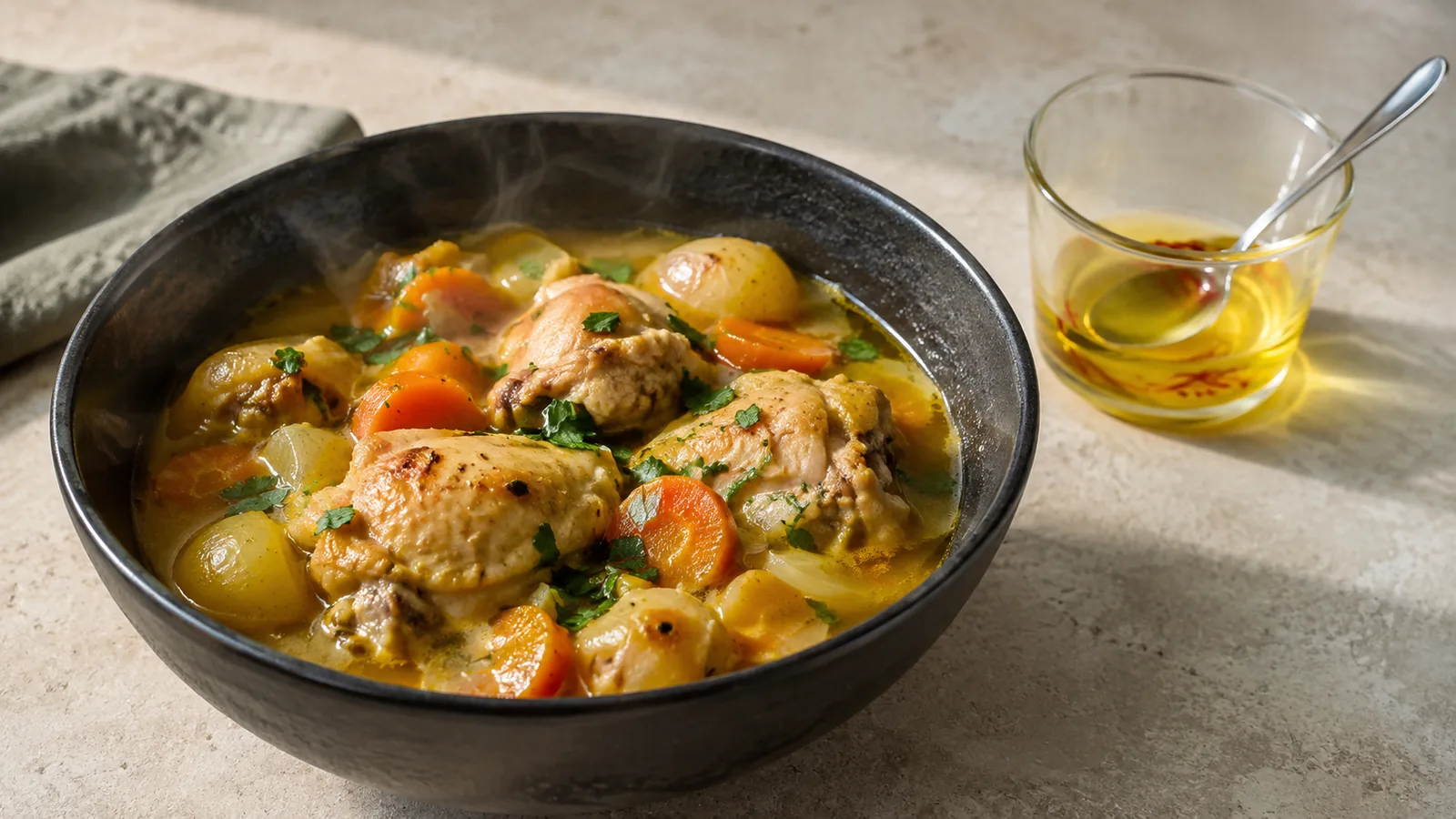
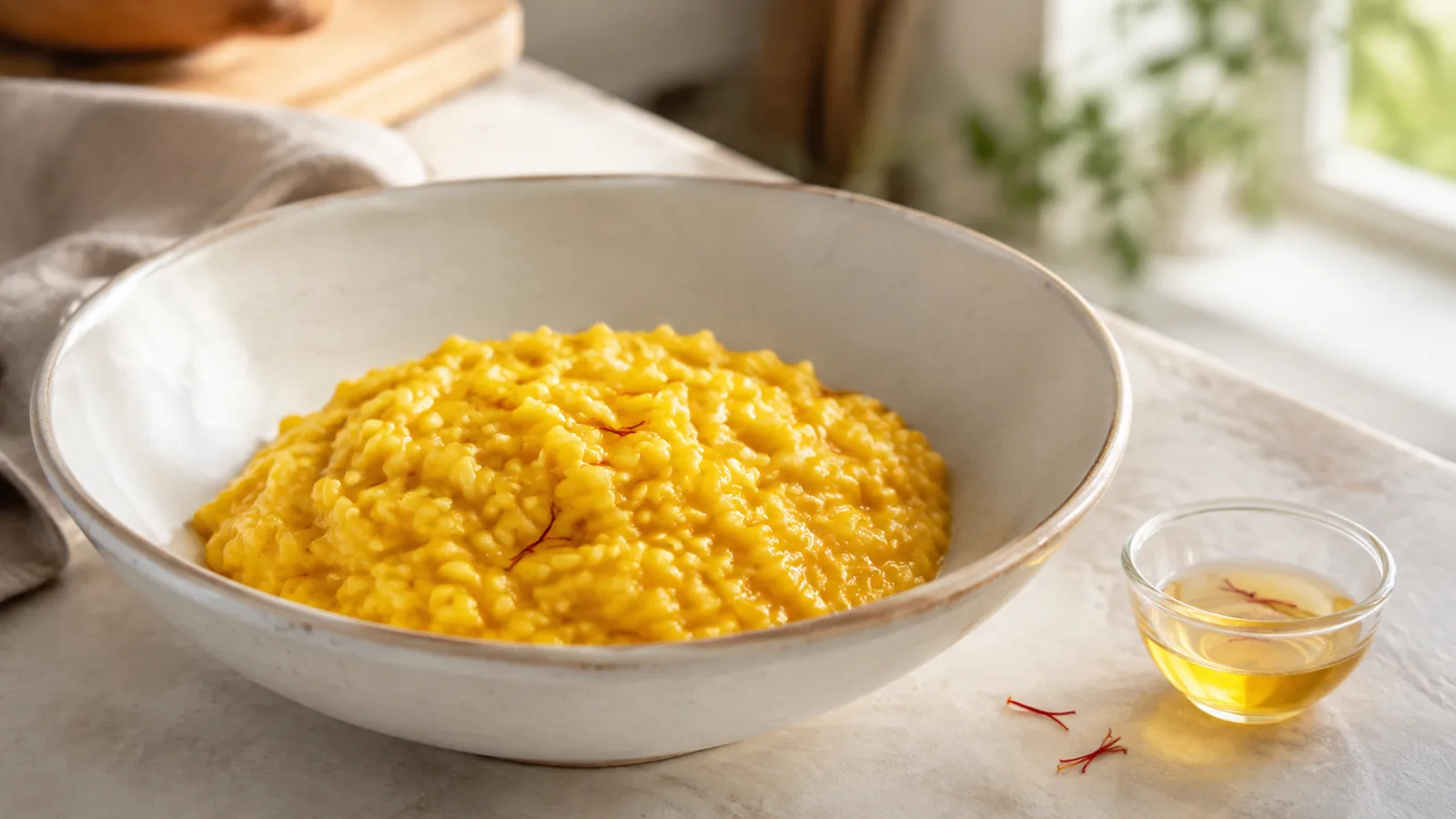
Yazd chickpea Ghimeh is a regional version of the familiar Iranian stew, made with soaked chickpeas instead of the yellow split peas used in many other recipes. Lamb, tomato, dried lime and saffron create the same sweet-sour depth, while the chickpeas give the sauce a rounder texture.
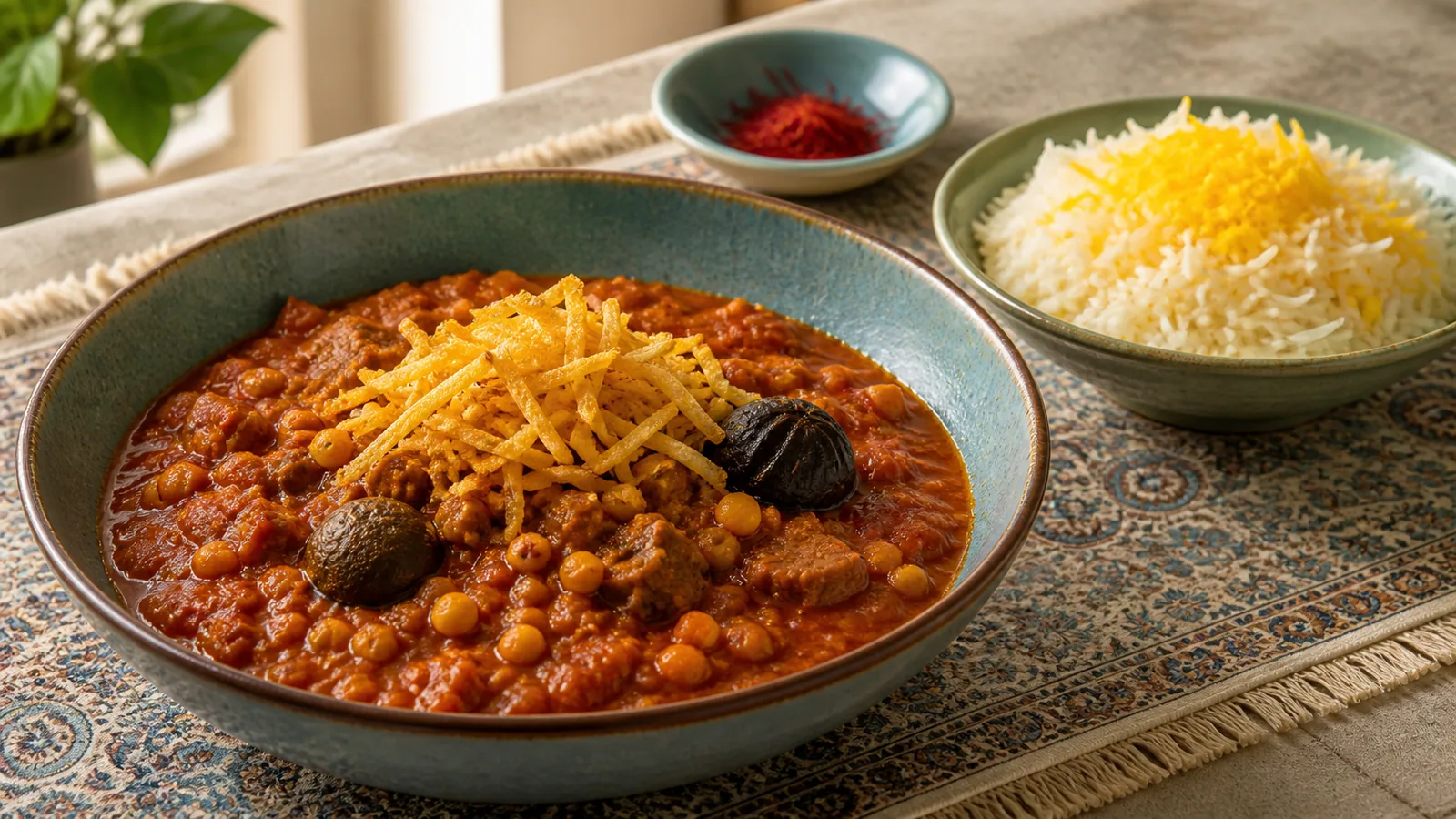
This Ghimeh stew needs time rather than difficult technique. Soak the chickpeas well, brown the lamb and tomato paste, then simmer gently until both are tender. Dried limes and brewed saffron join late enough to keep their character.
What is Yazd chickpea Ghimeh?
Ghimeh is often recognised by small pieces of meat, split legumes, tomato, dried lime and a topping of thin fried potatoes. In the Yazd version described here, whole chickpeas are soaked, peeled if desired and split into their two natural halves. This is what the old translation called “double coagulation”; it is simply peeled, split chickpea.
You can leave the chickpeas whole if you prefer, although split chickpeas cook more evenly into the stew. This recipe uses a generous 500 g, producing a thick, legume-forward dish suitable for a large table.
Ingredients
- 500 g dried chickpeas
- 600 g lamb, cut into small cubes
- 2 medium onions, finely chopped
- 5 dried Omani limes
- 2 to 3 tablespoons tomato paste
- 5 cups hot water, plus more if needed
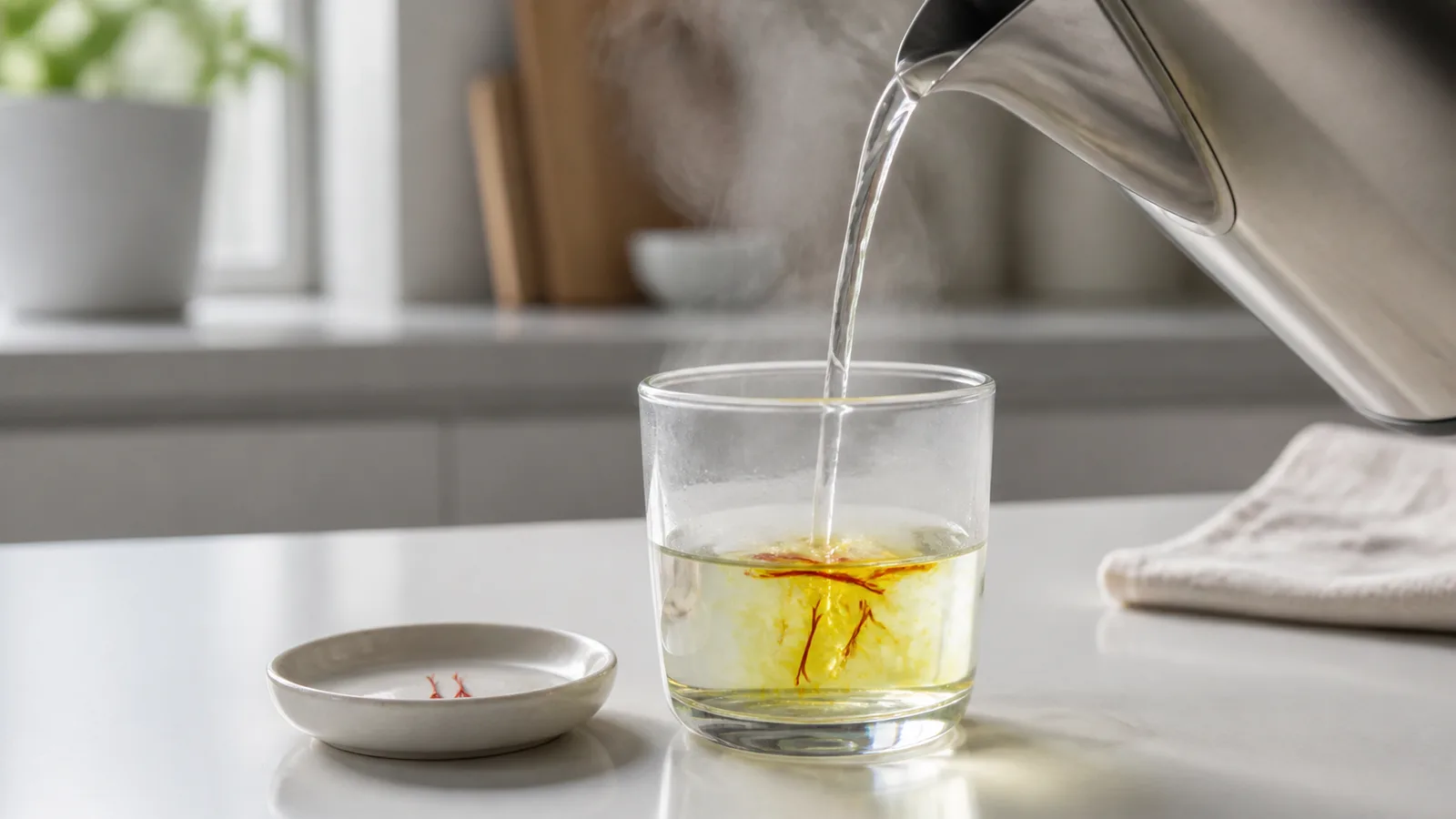
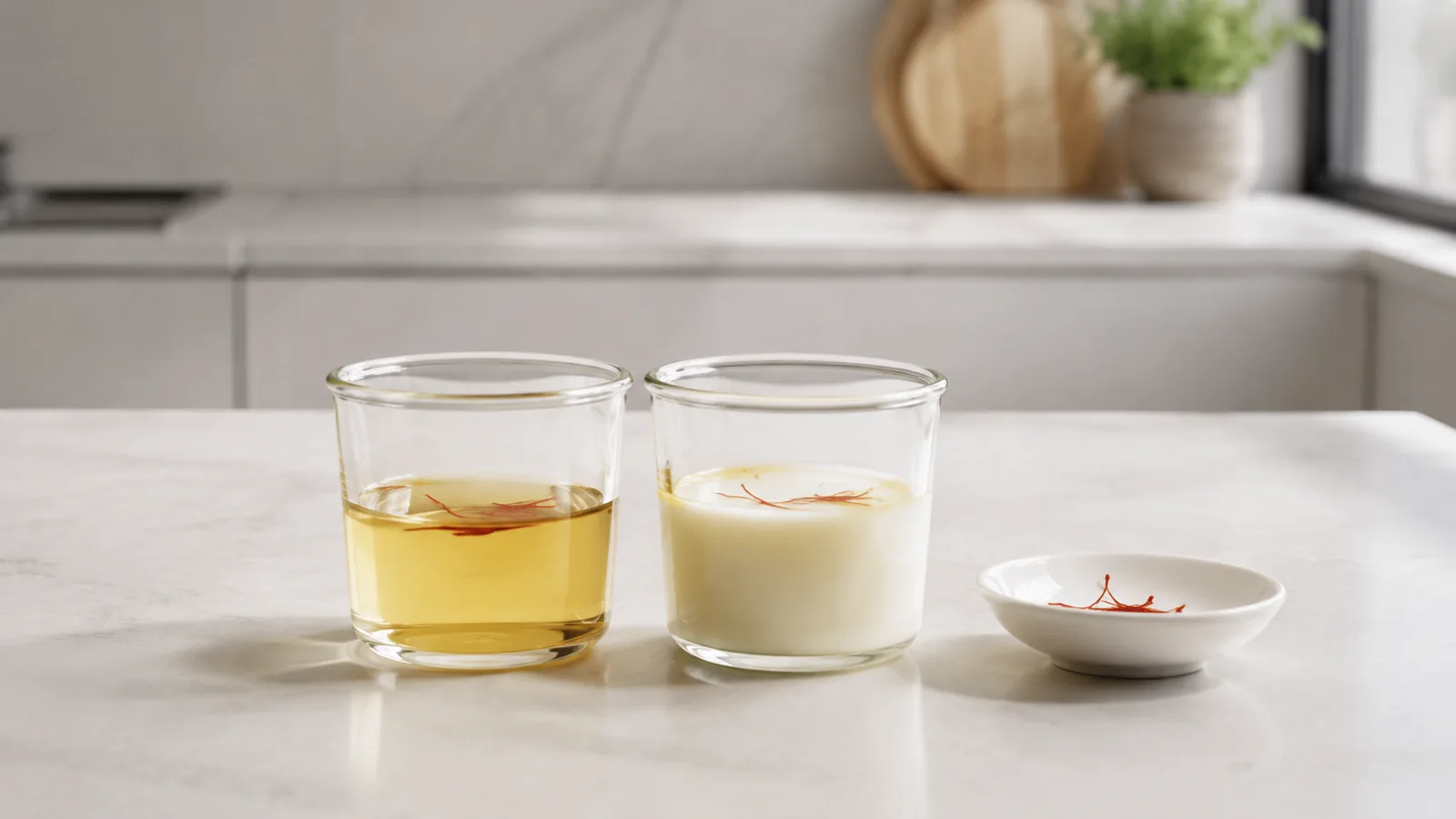
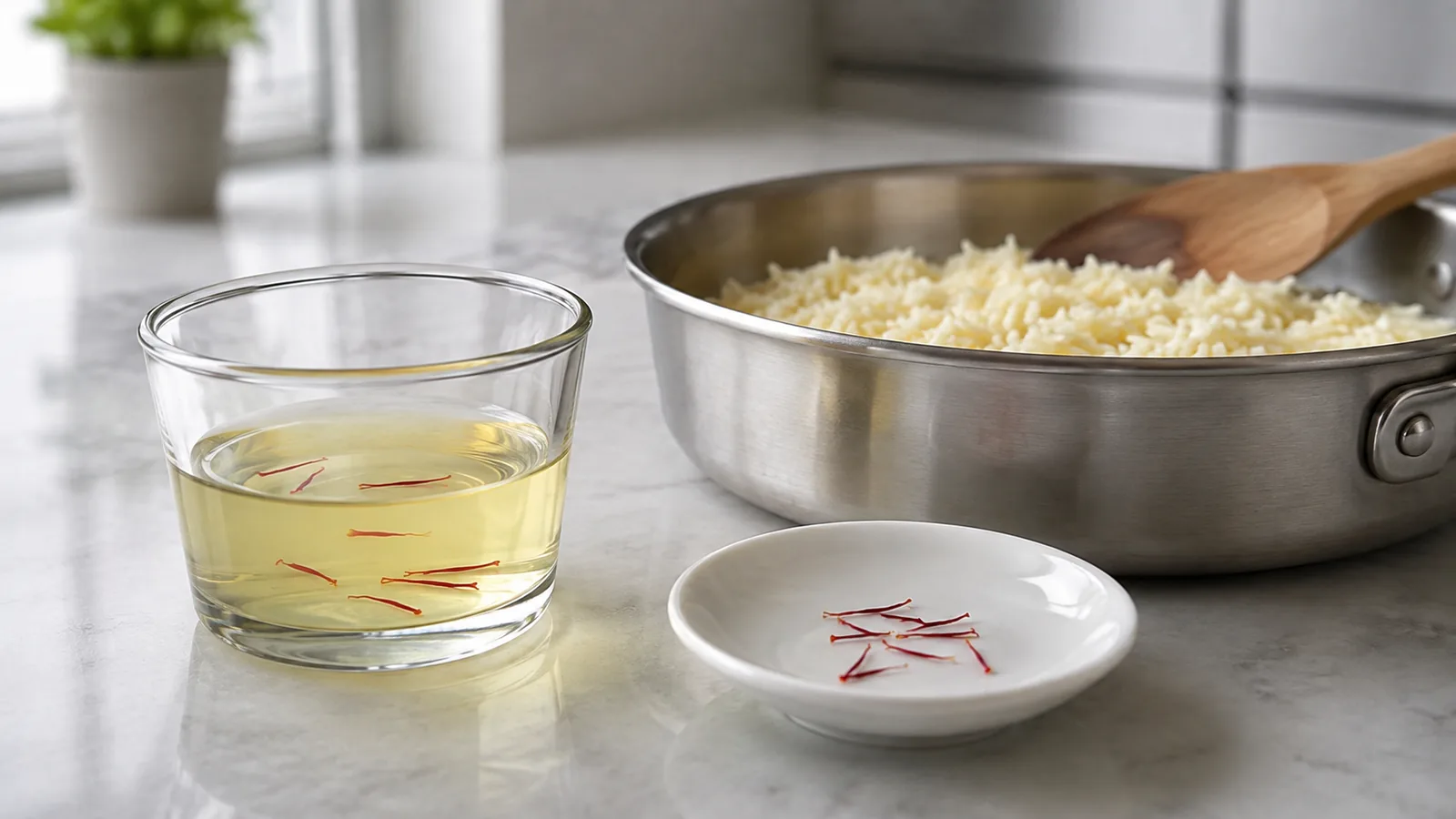
- 2 tablespoons brewed saffron, or to taste
- 1 teaspoon turmeric
- Salt and black pepper
- 2 to 3 tablespoons neutral oil
- Thin fried potatoes, for serving
- Plain or saffron basmati rice, for serving
Prepare the chickpeas and dried limes
Cover the chickpeas with plenty of cool water and soak for 24 hours, changing the water several times. Keep the bowl refrigerated if the kitchen is warm. Drain and rinse.
For the traditional split texture, rub away the loosened skins and separate each chickpea along its natural seam. This takes time, so it is optional. Do not substitute canned chickpeas at the beginning of the two-hour simmer; they are already cooked and would become mushy. If canned is all you have, add well-rinsed chickpeas much later and accept a different texture.
Pierce each dried lime a few times with a skewer or fork, then soak it in warm water for 1 to 2 hours. This softens the rind and removes some surface bitterness. Avoid large knife cuts that release all the seeds into the sauce.
How to cook Ghimeh stew
1. Cook the onion and brown the lamb
Heat the oil in a heavy pot over medium heat. Add the onions and cook until soft and lightly golden. Add the cubed lamb and brown it in batches if necessary. Crowding the pot makes the meat release water and steam instead of colour.
Stir in the turmeric and black pepper. Cook for 30 seconds, just until fragrant.
2. Fry the tomato paste
Push the meat and onion to one side. Add the tomato paste to the open area and fry it for 1 to 2 minutes, stirring, until it darkens slightly and loses its raw smell. Mix it through the lamb.
3. Simmer the chickpeas and meat
Add the drained chickpeas and five cups of hot water. Bring the pot to a boil, skim if needed, then lower the heat. Cover partly and simmer gently for about 90 minutes. Stir occasionally and add a little hot water if the chickpeas are exposed.
4. Add lime, saffron and salt
After roughly 90 minutes, add the soaked dried limes, brewed saffron and salt. Continue simmering for another 30 minutes, or until the lamb and chickpeas are tender and the sauce has thickened. Remove a lime if its flavour becomes strongly bitter.
Timing varies with chickpea age and whether they were split. Judge the Ghimeh by texture: the lamb should yield to a fork, the chickpeas should be creamy inside, and the sauce should sit around them rather than run like soup.
Fried potato topping
Cut potatoes into fine, even sticks and rinse away surface starch. Dry them thoroughly, then fry until crisp and golden. Salt them while hot. Add the fries only when the stew reaches the table so they remain crisp.
For a lighter method, toss the dry potato sticks with a little oil and bake or air-fry them, turning once. They will not be identical to traditional fries, but they still give the soft stew a useful contrast.
Seasoning options
Turmeric, pepper, dried lime and saffron are enough for a clear Ghimeh profile. A small cinnamon stick may be added during the simmer and removed before serving. Cardamom or ginger can be used sparingly, but too many sweet spices can hide the saffron and lime.
If the sauce tastes flat, adjust salt first, then acidity. If it is too sharp, remove the dried limes and allow the stew to settle for a few minutes. Avoid adding sugar automatically; well-fried onion and tomato already contribute sweetness.
Serving and storing
Spoon the Yazd chickpea Ghimeh into a warm serving bowl and cover the centre with crisp potatoes. Serve it with plain chelo or saffron rice. Pickles, raw onion or a simple herb plate work well alongside the rich lamb and legumes.
Cool leftovers promptly and refrigerate them in a covered container. Reheat the stew gently until steaming throughout, adding a splash of water if it has thickened. Prepare fresh potato sticks for the second serving rather than storing them in the sauce.
The finished stew should still read unmistakably as Ghimeh: tender meat, legumes, tomato, dried lime, saffron and crisp potatoes, with the chickpea preparation providing the particular Yazd character.