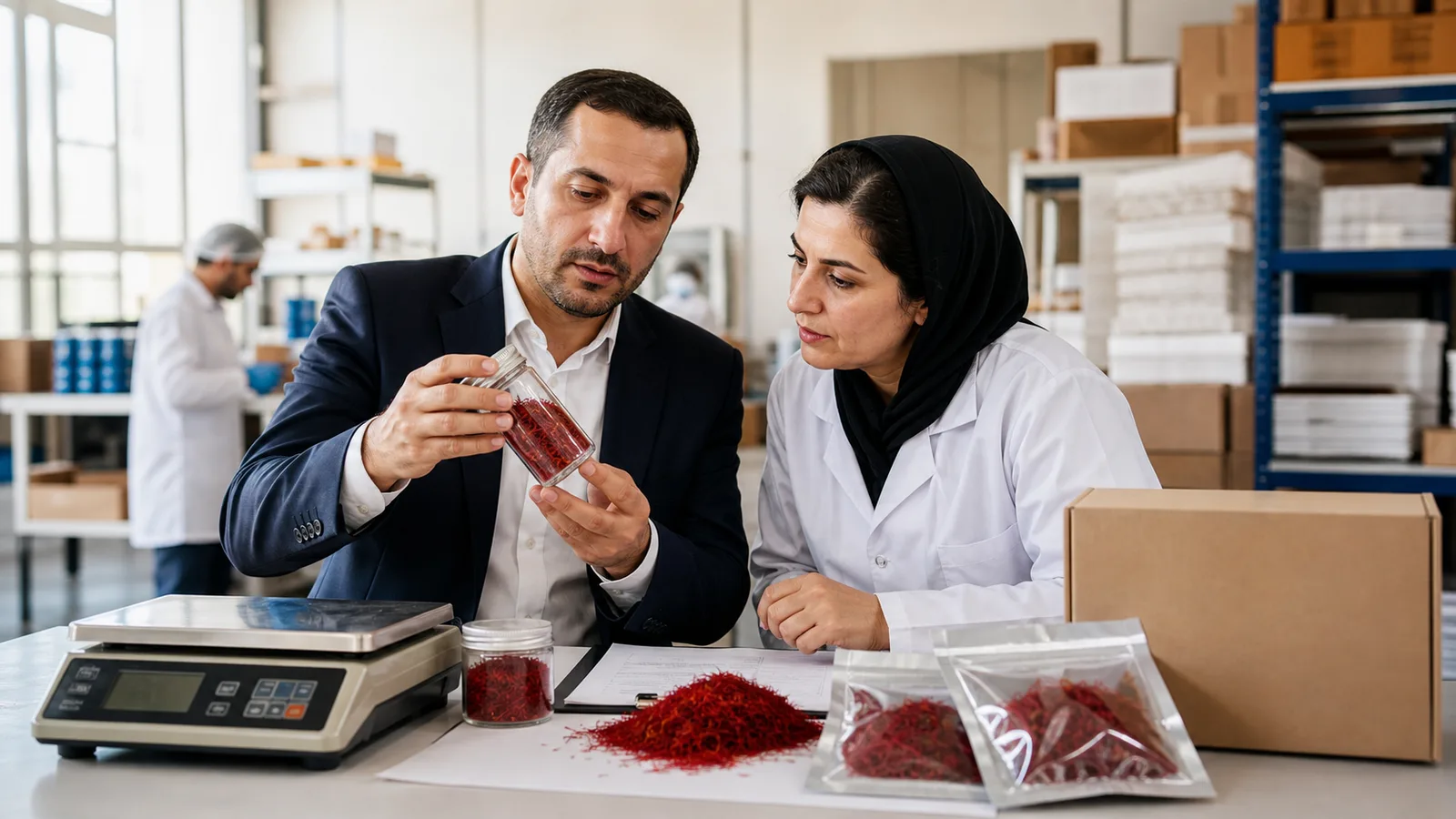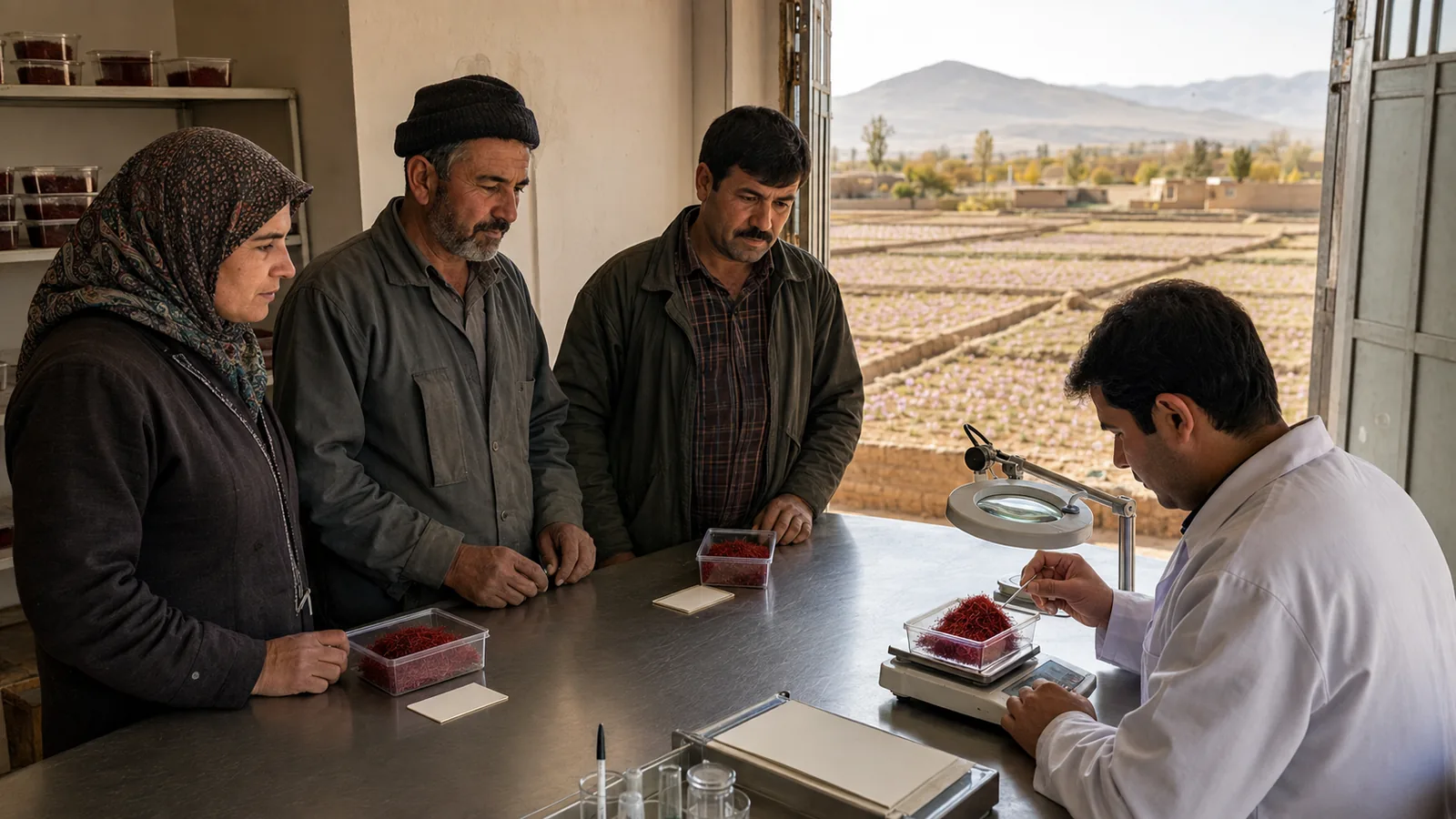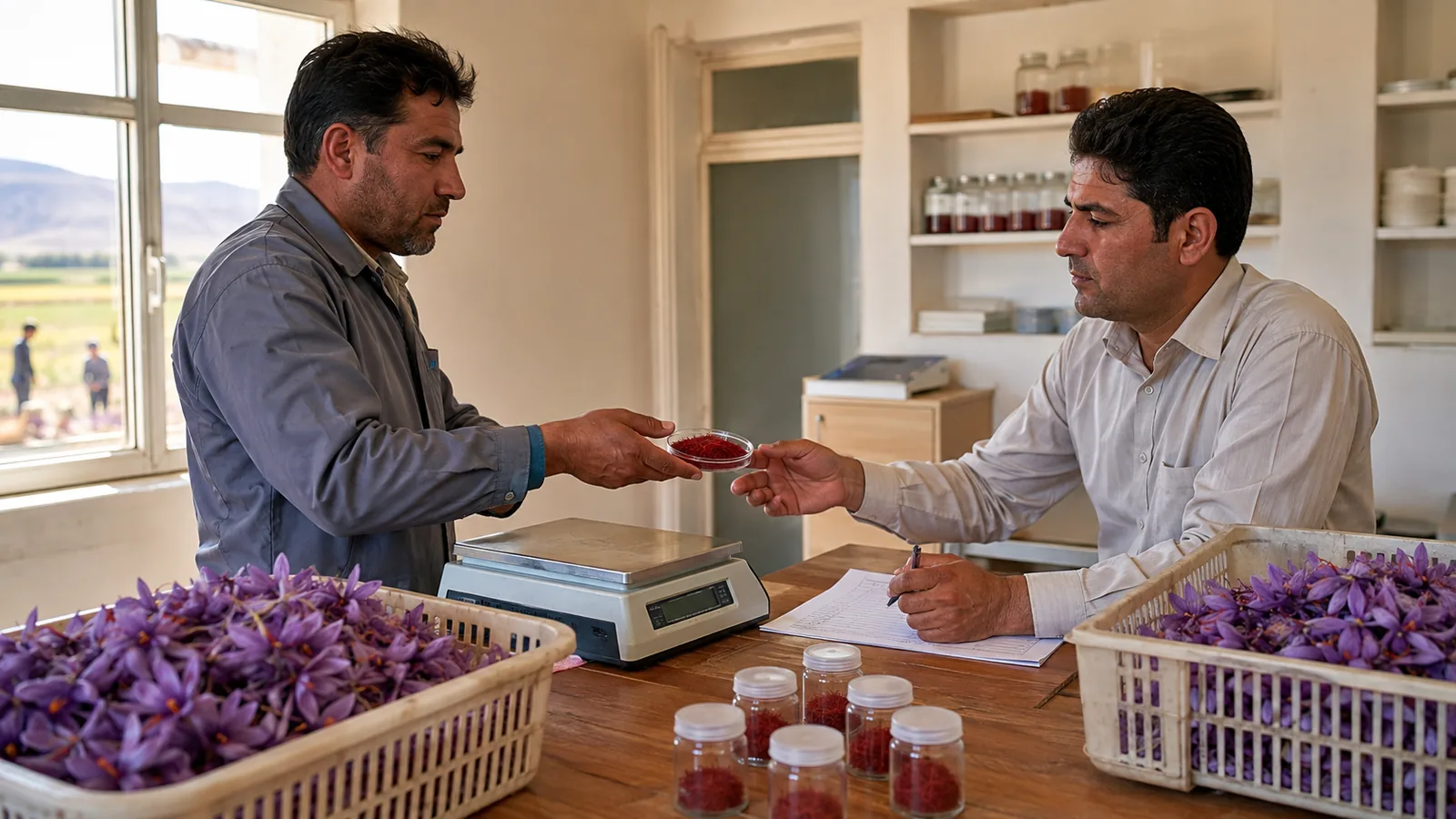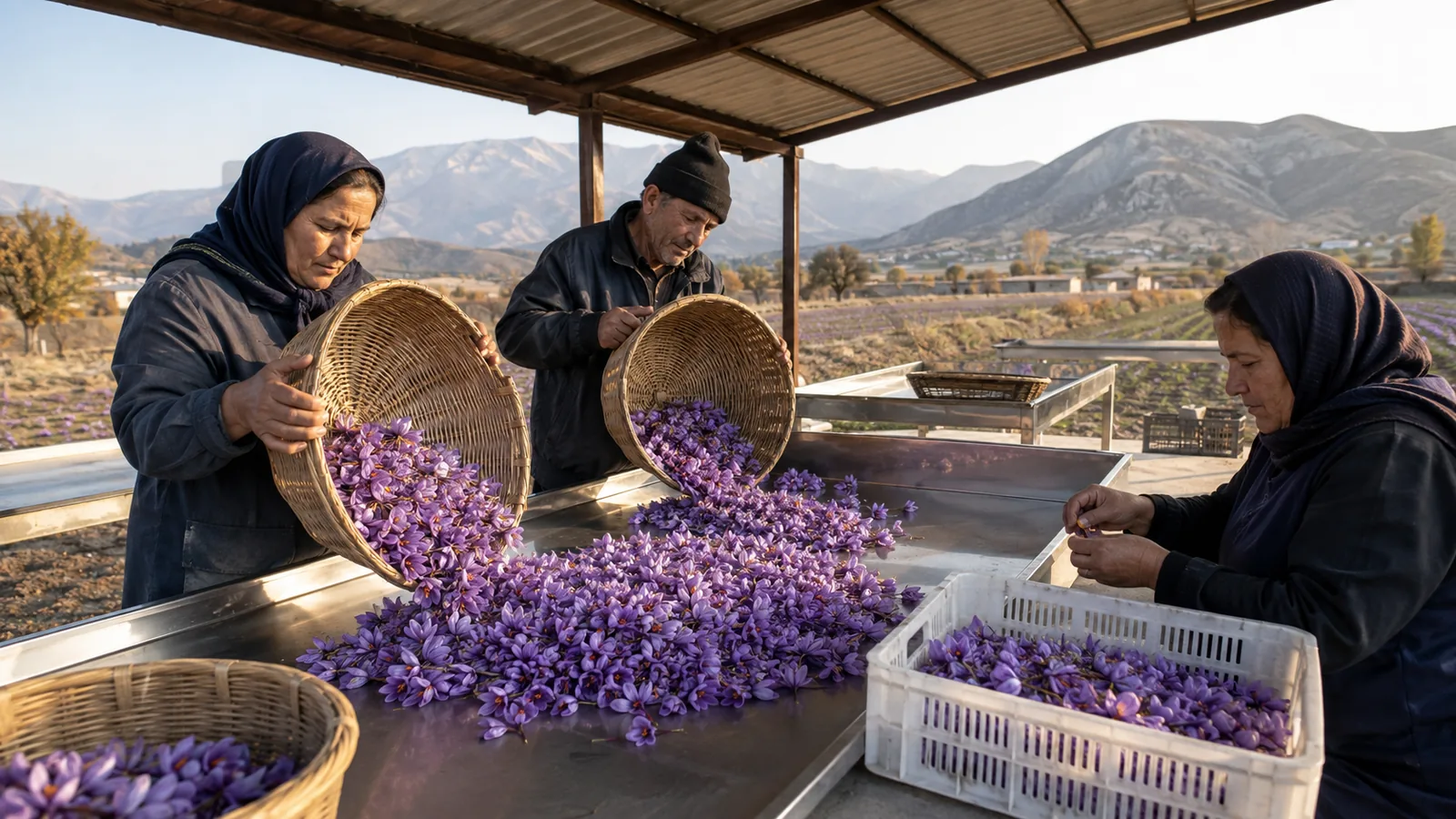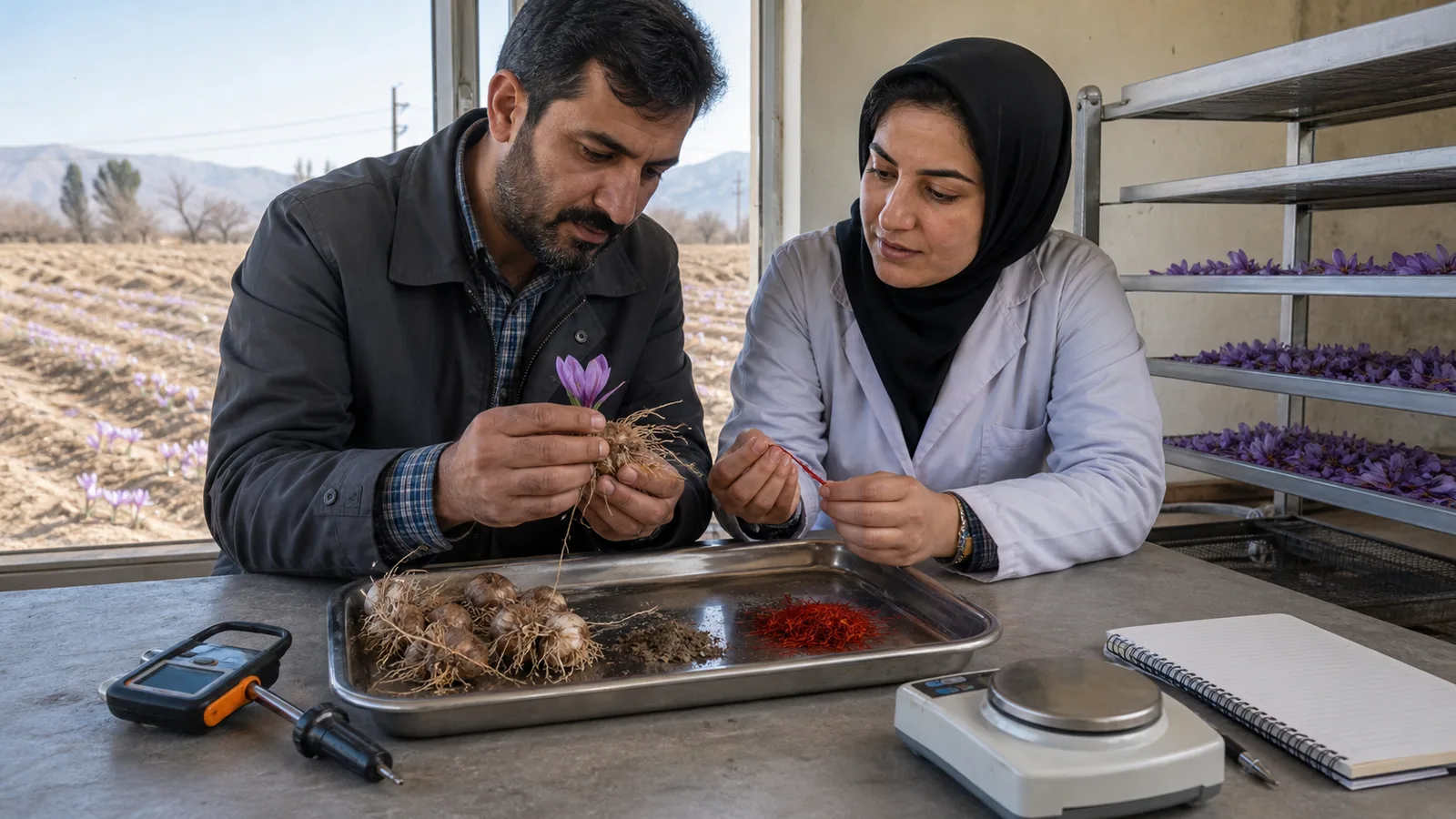


Education of saffron cultivation in Maragheh in Iran began with a three-day course on protected and greenhouse growing methods. The 2019 report described it as Maragheh’s first saffron greenhouse-cultivation course, aimed at agricultural graduates and people interested in controlled-environment production. It was training, not evidence that a commercial greenhouse crop had already succeeded.
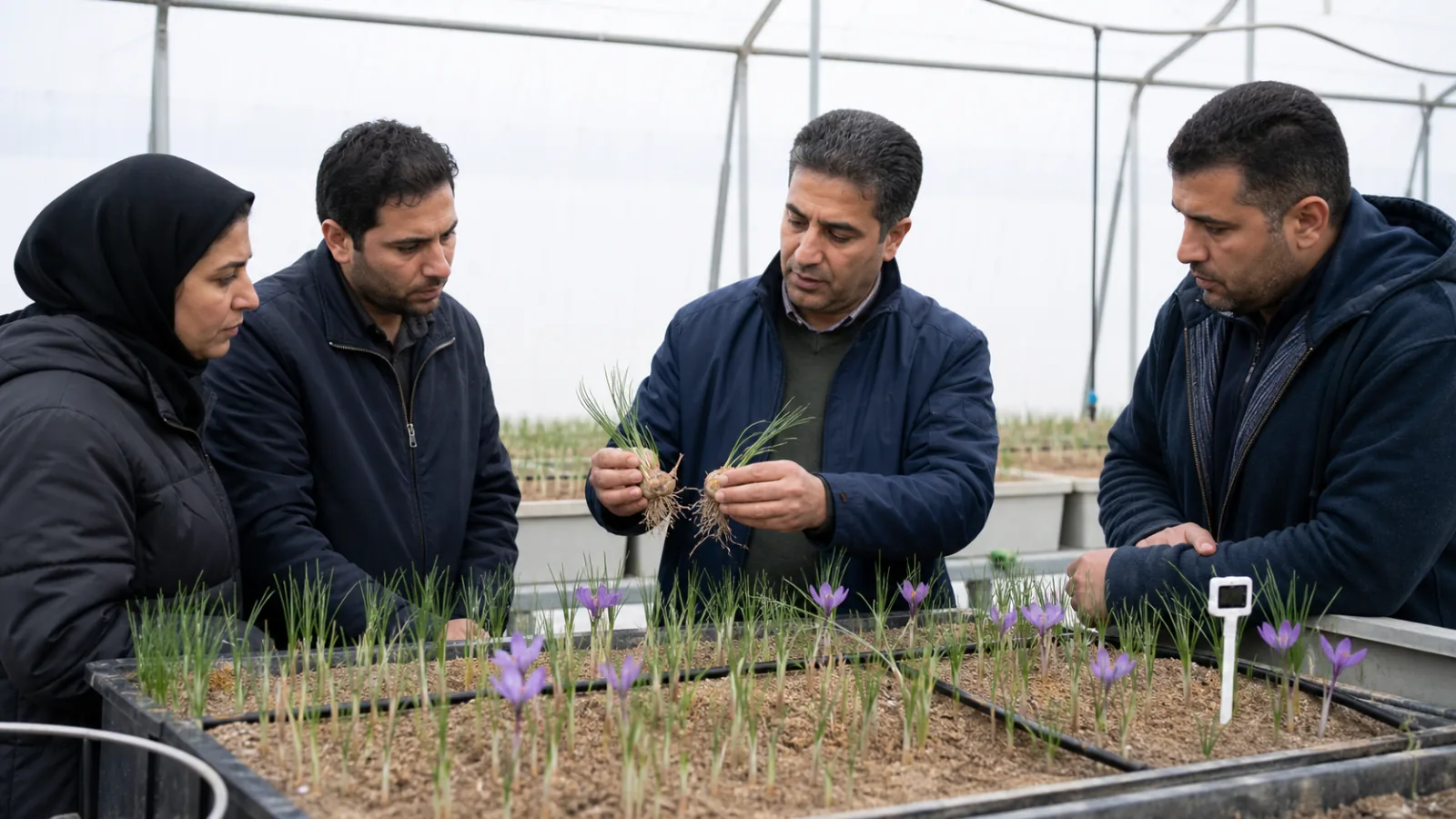
What the Maragheh saffron course covered
The report quoted an official named Pashaei, described in the English translation as responsible for “construction” in Maragheh. The organisation or exact title was not translated clearly, so it should not be expanded into a more specific role without the original source.
Pashaei said the course ran for three days. Agricultural graduates and people interested in greenhouse cultivation received instruction on greenhouse systems, preparation of the growing bed or medium, planting and saffron production.
Graduates were expected to receive a completion certificate. The report also said greenhouse and saffron-production facilities would be offered through projects described as part of the “resistance economy.” It did not publish eligibility rules, loan amounts, approval decisions or proof that every graduate later received support.
How many people attended?
The damaged English version says the training sought employment creation “with 80 companies.” The surrounding sentences describe people attending a course, so the original figure may refer to 80 participants, businesses or another group. Without the Persian source, it is safest to preserve the number and expose the ambiguity rather than choose one meaning.
The article therefore does not claim that 80 companies were established, that 80 people graduated or that 80 jobs were created.
Maragheh is in East Azerbaijan, not North Khorasan
Maragheh is in East Azerbaijan Province. The 2019 article placed the city in the south of that province and gave its population as about 263,000 at the time.
The occasional search phrase “Maragheh, North Khorasan” combines two different locations. North Khorasan is a separate province. This page concerns saffron Maragheh in Iran and should not be used as a source for North Khorasan agriculture.
For broader searches about Iran saffron production or saffron agriculture, this is a narrow local case: it documents a Maragheh training announcement, not national acreage, output or farming practice.
This was a course, not a saffron training institute
People may reach the page while looking for a saffron cultivation training programme or saffron training institute. The source describes Maragheh’s first course, held over three days. It does not identify a permanent institute, an accredited qualification or an ongoing current enrolment programme.
A completion certificate confirms participation under the course’s own rules. It does not by itself establish professional licensing, finance approval or the performance of a future crop.
What “greenhouse saffron” can mean
The phrase can describe several different systems. Some use protected soil or substrate for much of the plant cycle. Others control temperature around flowering and later return corms to a growing medium or field. A course should state exactly which system it teaches.
Saffron is a perennial corm crop. Producing flowers is only one part of the cycle. Leaves and roots support daughter-corm development after flowering, and those replacement corms affect the next season.
A peer-reviewed glasshouse soilless-cultivation study found that results depend on the system and noted that published evidence had been limited and sometimes contradictory. That is a reason to measure a Maragheh pilot, not to dismiss protected cultivation or declare it universally superior.
Greenhouse cultivation is not automatically the best method
The original report called greenhouse cultivation the best way to produce crops, especially saffron, because beds could be used efficiently and water consumption was low. That claim is too broad.
A protected system can offer tighter control of temperature, substrate, irrigation and sanitation. It also brings costs for structures, trays or beds, cooling or heating, labour, monitoring, corm handling and disease control. A field system has a different cost and risk profile.
The right comparison uses saleable dry saffron and healthy replacement corms over a complete cycle. Flowers per shelf or per square metre are not enough if the corms lose condition or require expensive recovery elsewhere.
Does greenhouse saffron use less water?
A well-managed protected system may deliver water precisely and reduce some losses, but “low water” needs a measured denominator. Water used inside the structure, water used after corm transfer, cleaning water and losses should be counted.
Energy and cooling matter too. A system that saves irrigation but uses substantial electricity is not fully described by water consumption alone. Maragheh’s climate, greenhouse design and operating season should be part of the calculation.
What participants should measure in a pilot
A practical training course should leave each participant with a trial protocol. At minimum, the record should include:
- corm source, lot, size, condition and storage history;
- substrate or soil, planting density and growing-container dimensions;
- temperature, humidity, light and irrigation through each stage;
- emergence, flowers per corm and dry stigma weight;
- corm rot, losses and sanitation actions;
- number, size and condition of daughter corms; and
- labour, energy, water and material costs for the complete cycle.
Without those records, a visually impressive flowering room can hide poor economics or weak planting material for the next season.
From flowers to a saleable saffron lot
Protected cultivation does not remove post-harvest responsibilities. Flowers still need prompt, clean handling. Stigmas need hygienic separation, consistent drying, lot identification and protection from moisture before packing.
ISO 21983:2019 gives current guidance for harvesting, flower transport, stigma separation, drying and storage before packing. ISO 3632-1:2025 specifies requirements for dried saffron in filament, cut-filament and powder forms.
Our saffron corm guide explains why planting material should be selected and recorded before a field or greenhouse trial begins.
How the employment claim should be tested
A training event can develop skills, but employment follows only if participants can finance an appropriate system, produce consistently and sell at a price that covers the full cycle.
A follow-up should report how many trainees completed the course, began pilots, continued through corm recovery and sold a tested lot. Jobs should be counted by sustained paid work, not certificates issued or corms placed on shelves.
Education of saffron cultivation in Maragheh in Iran was a useful early training announcement. Its strongest future version would compare protected and field systems with the same accounting for saffron yield, corm health, water, energy, labour and cost. That evidence would tell growers whether the method fits Maragheh, rather than asking a “best method” claim to do the work of a full production trial.