


“Each contract of saffron is 100 grams” refers to the contract size announced for Iran’s negin saffron option in 2019. One listed contract represented 100 g of the underlying saffron. That was a historical exchange specification, not a rule for every saffron sale, futures contract or option in every market.
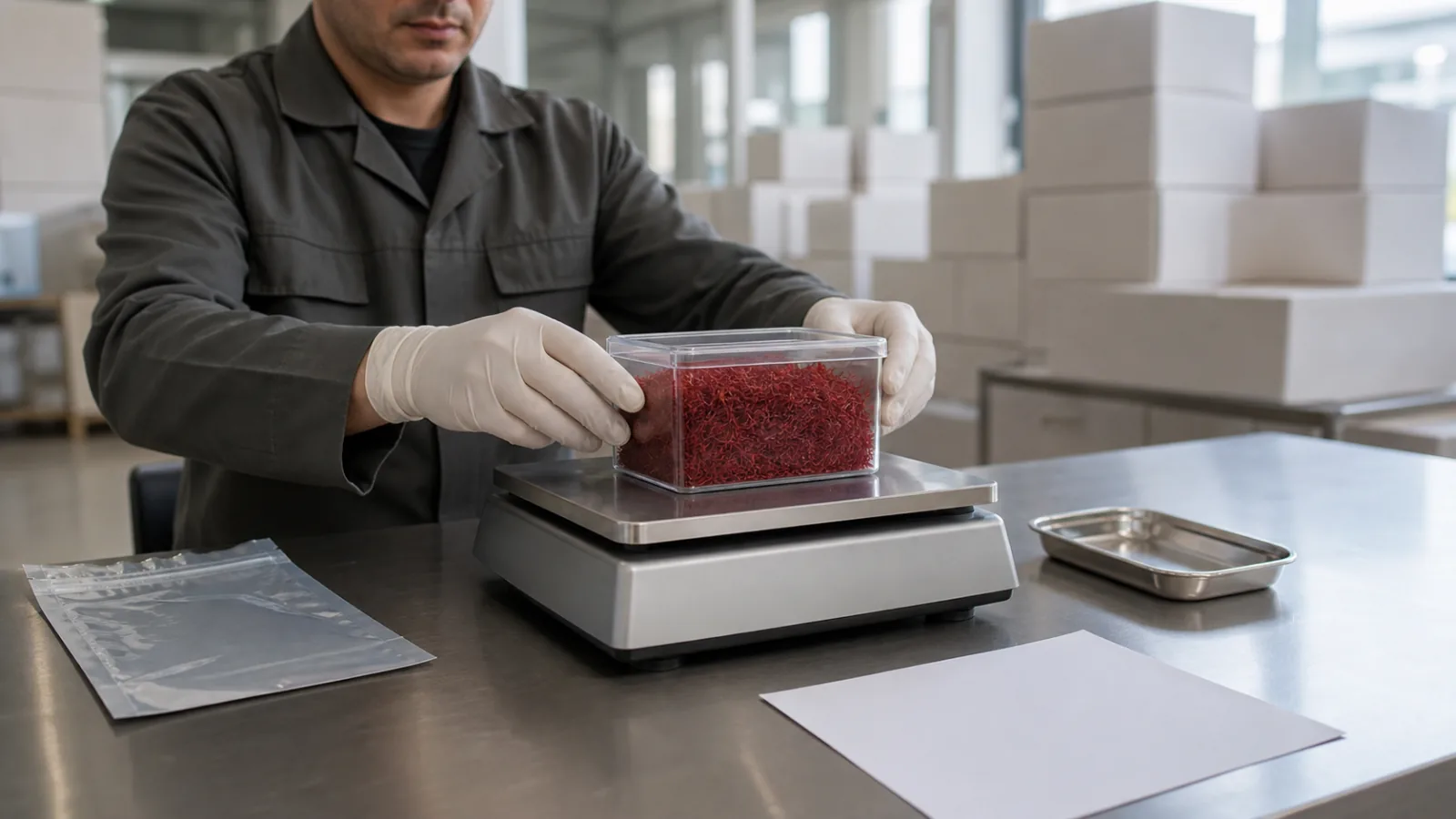
What a 100-gram saffron contract means
Contract size is the standardized quantity represented by one contract. If the quoted specification is 100 g, a position of one contract relates to 100 g and ten contracts relate to 1 kg of the underlying product. The financial value still depends on the exchange’s quote convention, strike price, premium and settlement rules.
The contract is a legal and financial unit, not necessarily a retail package. Eligible saffron may be held in an approved warehouse under a receipt system rather than placed in a new 100-gram jar for each trade. Traders need the governing specification to know how quantity, quality, delivery and settlement are handled.
Why the exchange chose a smaller size
Alireza Naserpour, identified in the original report as an Iran Mercantile Exchange market-development official, said the 100-gram size was intended to allow smaller participants to enter the market. A smaller contract reduces the value controlled by one unit compared with a one-kilogram contract, which can make position sizing more flexible.
Smaller does not mean low risk. A person can buy several contracts, the option premium can expire without value, and transaction costs can matter when a position is divided into many units. Sellers may carry different and potentially larger obligations. Access is useful only when participants also understand the contract.
The underlying product was negin saffron
The announcement tied the option to negin saffron. Negin is commonly used for lots with prominent red stigma sections, but a grade name alone is not enough for exchange delivery. A complete specification needs measurable limits, an agreed sampling and test method, approved storage and a process for dealing with a lot that fails inspection.
Important details include thread form, foreign matter, moisture, characteristic colour/aroma/flavour measurements, crop or intake date, net weight and lot identity. Without these controls, two sellers could call materially different products “negin,” weakening the usefulness of the quoted price.
Why a cash market came first
Naserpour said a strong cash market for the underlying saffron was needed before options could be launched. The report describes saffron futures entering the commodity exchange in June and giving market participants experience with derivative transactions before the option contract followed.
A physical or cash market shows what defined lots are changing hands for now. A futures market establishes standardized prices and obligations for a later delivery or settlement date. An option then gives its buyer a right under specified conditions while imposing a corresponding obligation on the seller if exercised or assigned.
The CFTC’s general futures-market education describes commodity futures as agreements covering a fixed price and amount for a future date, and commodity options as rights involving a specified futures contract. Iranian saffron contracts operate under their own exchange and legal rules, but the distinction between cash, futures and options is the same starting point.
How the 100-gram size affects hedging
A producer or trader seeking price protection needs the position to resemble the exposure being protected. Quantity is one part of that match. If a grower expects 6.4 kg of an eligible grade, 64 contracts of 100 g would match the weight arithmetically. The real hedge can still differ because harvest volume, quality, timing and local cash prices may not move exactly with the listed contract.
This difference is often called basis risk: the risk that the participant’s physical product and the exchange instrument do not change in value together. A small contract size allows finer adjustments, but it cannot remove crop uncertainty, grade mismatch or liquidity risk.
The contract was described as price-risk protection
Naserpour said the saffron option had strong economic logic because it could help cover price fluctuations for farmers. A suitable put option can create a potential price floor while leaving room to benefit from a higher physical price. That protection has a cost and depends on the terms of the listed product.
An option is not guaranteed crop insurance. It does not protect against poor yield, storage damage, a failed quality test or a mismatch between the crop and the contract. The buyer can lose the entire premium and transaction costs, and the seller accepts obligations that require separate risk controls.
The reported launch-period fee waiver
The old English text refers to “zero-coupon pay-off time,” another mistranslation. The parallel announcement said exchange transaction fees would not be collected during the early period while trading gained momentum. That is different from the option premium paid for contractual rights.
Our explanation of the saffron option transaction-fee waiver separates those payments and records what the 2019 report did—and did not—establish. The historical article did not reproduce the official fee circular or its duration, so no current fee assumption should be made from it.
Where commodity funds fit
Naserpour also hoped saffron commodity funds would enter the market and complete a chain of agricultural financial instruments. Such funds could add professional participation and hold a portfolio of assets permitted by their rules. The statement was a proposal or expectation, not proof that a named saffron fund had launched or delivered a return.
Fund involvement can improve activity only when valuation, custody, eligible assets, fees and liquidity are transparent. More financial products do not automatically send more value to growers; market access and the distribution of costs still matter.
What to check before relying on “100 grams”
Anyone reviewing a live contract should retrieve the current exchange document and confirm:
- the exact contract multiplier and quote unit;
- the underlying futures or physical instrument;
- the eligible saffron grade and test method;
- strike intervals, expiry and exercise style;
- premium payment and any margin requirements;
- transaction, clearing, warehouse and delivery fees;
- position limits and trading hours; and
- settlement, exercise and delivery procedures.
The 100-gram size made the 2019 announcement concrete and helped explain the exchange’s aim of wider participation. It is useful historical context. It should not be assumed to describe a current contract until the current specification confirms it.

![Exporting Saffron to Turkey + Price Guide [Complete 0 to 100]](https://img.rowhanisaffron.com/20260827003933/saffron-export-turkey-quality-inspection.webp)



