


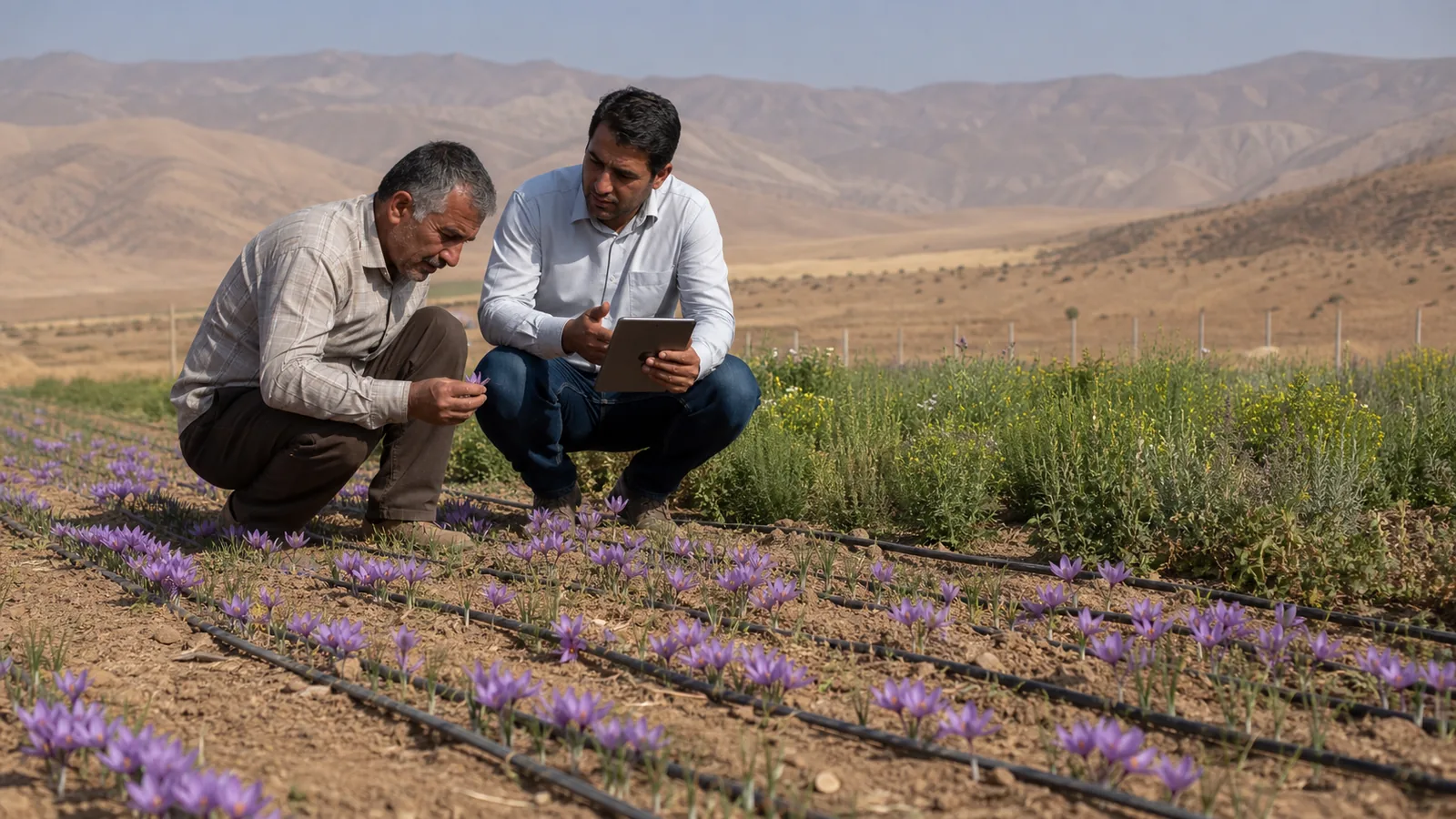
Development of cultivation medicinal plants and saffron Famenin Hamedan records a local plan to shift part of the area’s agriculture towards crops and activities considered better suited to limited water.
The April 2021 archive attributes the plan and crop figures to Amir Lahoutian, then identified as director of Jihad-e-Agriculture in Famenin, Hamedan province. Its production totals describe the reporting period, not current acreage or forecasts.
Why Famenin was looking at saffron and medicinal plants
Lahoutian said the local agricultural organisation wanted to expand medicinal plants and saffron cultivation in Famenin. The translated source contains a contradictory phrase about replacing “low-water” products with “water-based” products, but the surrounding examples clearly describe a move away from crops with heavier water demand towards lower-water alternatives.
He placed saffron within a broader adjustment rather than presenting it as the only answer. The activities named in his statement were medicinal-plant cultivation, saffron, ostrich breeding and greenhouse production.
The reduction in watermelon area
The strongest example of the change was watermelon. Lahoutian reported a harvest of 48,000 tonnes from 800 hectares in the city during the reporting year. He said the cultivated area had been reduced from 2,000 hectares in 2008–2009 to 800 hectares.
The original translation says the area “increased” from 2,000 to 800 hectares, which is mathematically impossible. This article corrects that wording to “reduced” while preserving both figures and the stated policy direction.
Rapeseed as a replacement crop
Lahoutian said rapeseed had replaced some watermelon cultivation. Famenin produced 1,000 tonnes in the period he described, representing 20% of Hamedan province’s output. He placed the city second in the province for this crop, after Nahavand.
These figures show how the agricultural strategy extended beyond saffron. The report was about changing the local crop mix under water pressure, with several possible products taking different roles.
Other Famenin crop figures in the report
The local update also recorded production and cultivated area for four other crop groups:
- Fodder crops: 12,000 tonnes from 300 hectares, described as 10% of provincial production and fifth place in the province.
- Sugar beet: 1,500 tonnes from 250 hectares, placing Famenin third in Hamedan province.
- Tomatoes: 7,000 tonnes from 400 hectares, also reported as third place in the province.
- Alfalfa: 60,000 tonnes from 5,000 hectares, said to account for 10% of provincial production.
Those numbers are retained exactly as reported. The article did not identify a statistical table, define whether every tonnage represented fresh weight, or explain the calculation behind the provincial shares. They should therefore be treated as Lahoutian’s historical summary rather than a reconciled current dataset.
Where saffron fits in the wider plan
The source did not provide a saffron area, production total or rollout timetable for Famenin. Its useful contribution is more precise: it documents saffron and medicinal plants among the alternatives being promoted while the city reduced watermelon acreage and developed other forms of agriculture.
That distinction avoids turning an announced direction into a completed result. A development policy can encourage saffron cultivation, but successful fields still depend on local soil, drainage, temperatures, healthy corms, labour and access to a suitable market.
Reading the Famenin report today
The place names, official, crop alternatives, watermelon-area comparison and every crop total have been preserved because they form the historical record and may answer location-specific searches for Famenin and Hamedan agriculture.
The article does not establish what Famenin grows now. Current farm planning requires recent local water, land and market information. This archive instead shows how the area’s agricultural leadership described its diversification priorities and production base in the report published in 2021.

![Exporting Saffron to Turkey + Price Guide [Complete 0 to 100]](https://img.rowhanisaffron.com/20260827003933/saffron-export-turkey-quality-inspection.webp)



