


“Destruction of Iranian saffron is the fourth national scourge” was the stark warning behind a 2021 report on how poor handling after harvest could damage a crop closely tied to Khorasan Razavi.
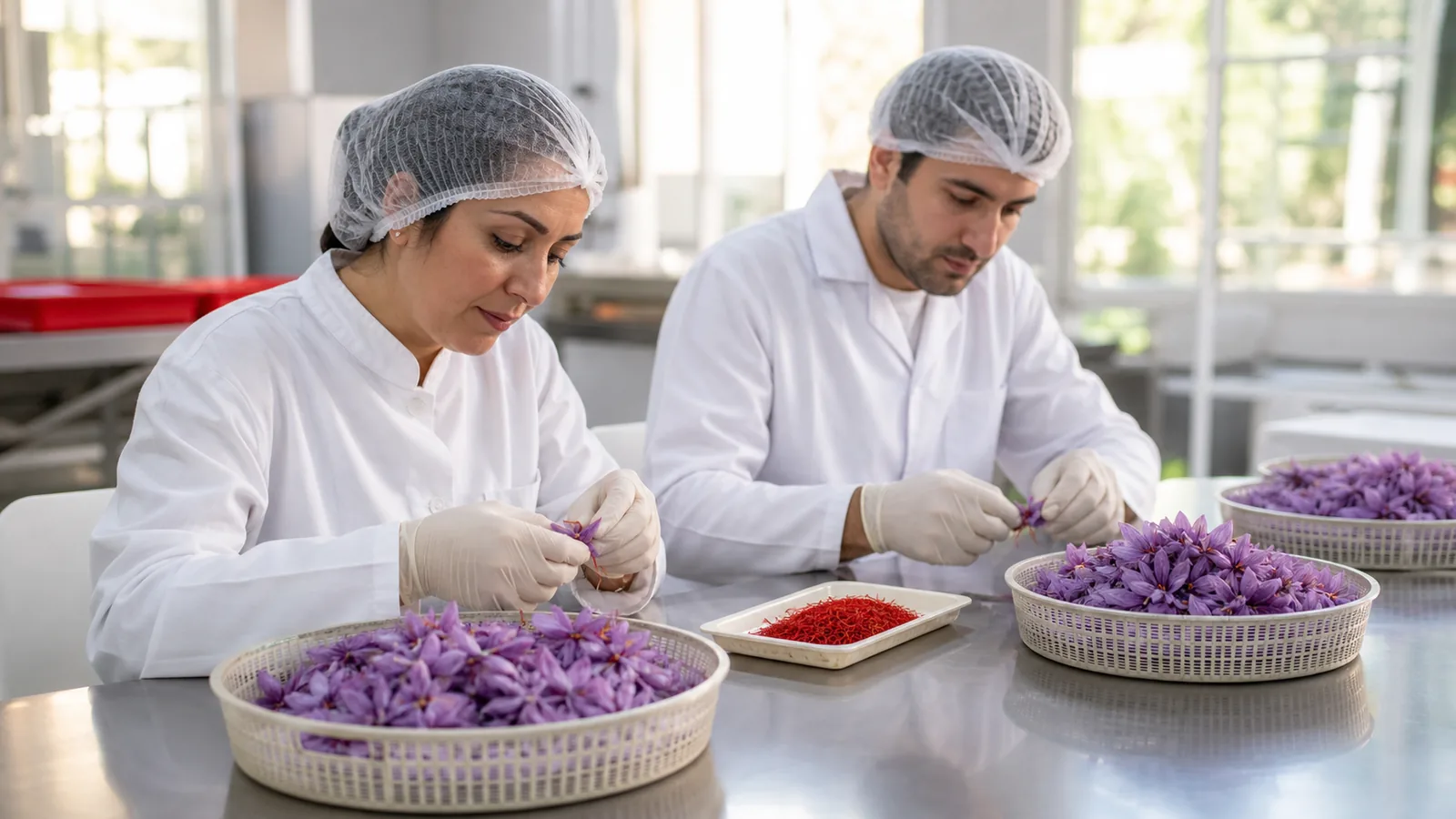
The warning came from Gholamreza Miri, then identified as president of the Khorasan Razavi Saffron Traders’ Union. He was not describing the disappearance of the saffron plant. His concern was that avoidable contamination, weak drying practices and unsuitable packaging could reduce Iranian saffron quality, cause consignments to be rejected and harm the reputation built around the product.
Why Iranian saffron quality was described as being at risk
The original account called saffron a strategic product for Khorasan Razavi and said Iran supplied 75% of global demand at the time. That percentage belongs to the historical report and should not be read as a current market-share estimate. The lasting point is simpler: when a crop supports growers, seasonal workers, processors and exporters, quality failures travel well beyond a single package.
Miri focused on the short, vulnerable period between picking the flower and sealing the dried threads. Saffron is handled repeatedly during that period, often by hand. A careless container, an unclean separation surface or uncontrolled drying can affect an otherwise sound harvest.
Careful collection starts on the farm
Miri advised flower pickers to use clean gloves and to place the flowers in baskets that would not crush them. He specifically warned against reusing chemical sacks and unsuitable disposable containers. Those materials may be dirty, may retain residues or may compress the flowers before the stigmas are separated.
A practical collection container should be clean, food-safe and easy to carry without compacting the flowers. The aim is not to keep the crop in a basket for long. It is to move freshly picked flowers to the separation area promptly and in good condition.
A clean separation area protects the whole lot
The report called for a dedicated flower-separation room that met local health requirements. Workers were expected to use gloves and hair coverings, while work surfaces and containers had to be kept clean. These details sound ordinary, but they matter because a foreign object found later can cast doubt on the hygiene of the entire lot.
Miri illustrated that risk with a severe example: he said a 100- or 200-kilogram consignment could be returned because a hair was found in it. This was his warning about buyer confidence, not a universal rule that every market applies in exactly the same way. Export specifications differ, so producers still need to follow the requirements of the buyer and destination country.
Drying is a quality step, not an afterthought
Fresh stigmas must be dried, but the way they are dried affects the finished spice. Miri recommended moving promptly from separation to controlled drying and warned that slow drying in the sun could weaken colouring power and increase exposure to contamination.
Modern research supports the broader concern. A peer-reviewed review of saffron drying and aroma development explains that drying conditions influence colour, flavour and aroma, while unsuitable storage can further change the product. It also makes clear that temperature, humidity, time and equipment interact. A grower should therefore use a validated process rather than copy a single temperature from a general article.
Packaging should protect dry saffron
After drying, the threads need clean packaging that protects them from moisture, light and outside odours. The original interview mentioned aluminium foil, metal, glass and plastic. Material alone is not enough: any container that touches the spice should be food-grade, dry, clean and capable of closing properly.
Packaging should also suit the buyer and intended shelf life. The same peer-reviewed review describes drying and storage as connected parts of saffron quality management. Good drying cannot compensate for a damp or poorly sealed package, and careful packing cannot rescue stigmas that were mishandled earlier.
A practical post-harvest sequence
- Collect gently: use clean gloves and food-safe baskets that do not crush the flowers.
- Move promptly: take flowers to a suitable separation area without unnecessary delay.
- Control hygiene: keep hands, hair, surfaces, tools and containers from contaminating the stigmas.
- Dry consistently: use a controlled method that has been validated for the equipment and required quality specification.
- Pack after drying: use clean, dry, food-grade containers that limit moisture, light and odour exposure.
- Check the lot: inspect the threads and packaging against the buyer’s specification before dispatch.
What the “fourth national scourge” warning meant
The phrase was deliberately dramatic. In context, it described a chain of preventable losses: poor handling could lower saffron quality; lower quality could lead to rejected shipments; repeated failures could weaken trust in Iranian saffron; and weaker demand could affect the people whose income depends on the crop.
The report’s most useful lesson is therefore operational. Protecting the product does not begin at the export desk. It begins with the first basket in the field and continues through separation, drying, packing and final inspection. Each step should leave the saffron cleaner, drier and better protected than it was before.
A historical warning with a current practical lesson
This article preserves Miri’s 2021 warning and the specific handling problems he raised. It does not present the old 75% market-share figure or the examples of rejected consignments as current statistics. Production volumes, trade rules and buyer specifications change.
What remains current is the need for disciplined post-harvest work. Iranian saffron quality depends not only on the flower grown in the field, but also on how carefully the stigmas are handled after the flower is picked.

![Exporting Saffron to Turkey + Price Guide [Complete 0 to 100]](https://img.rowhanisaffron.com/20260827003933/saffron-export-turkey-quality-inspection.webp)



