


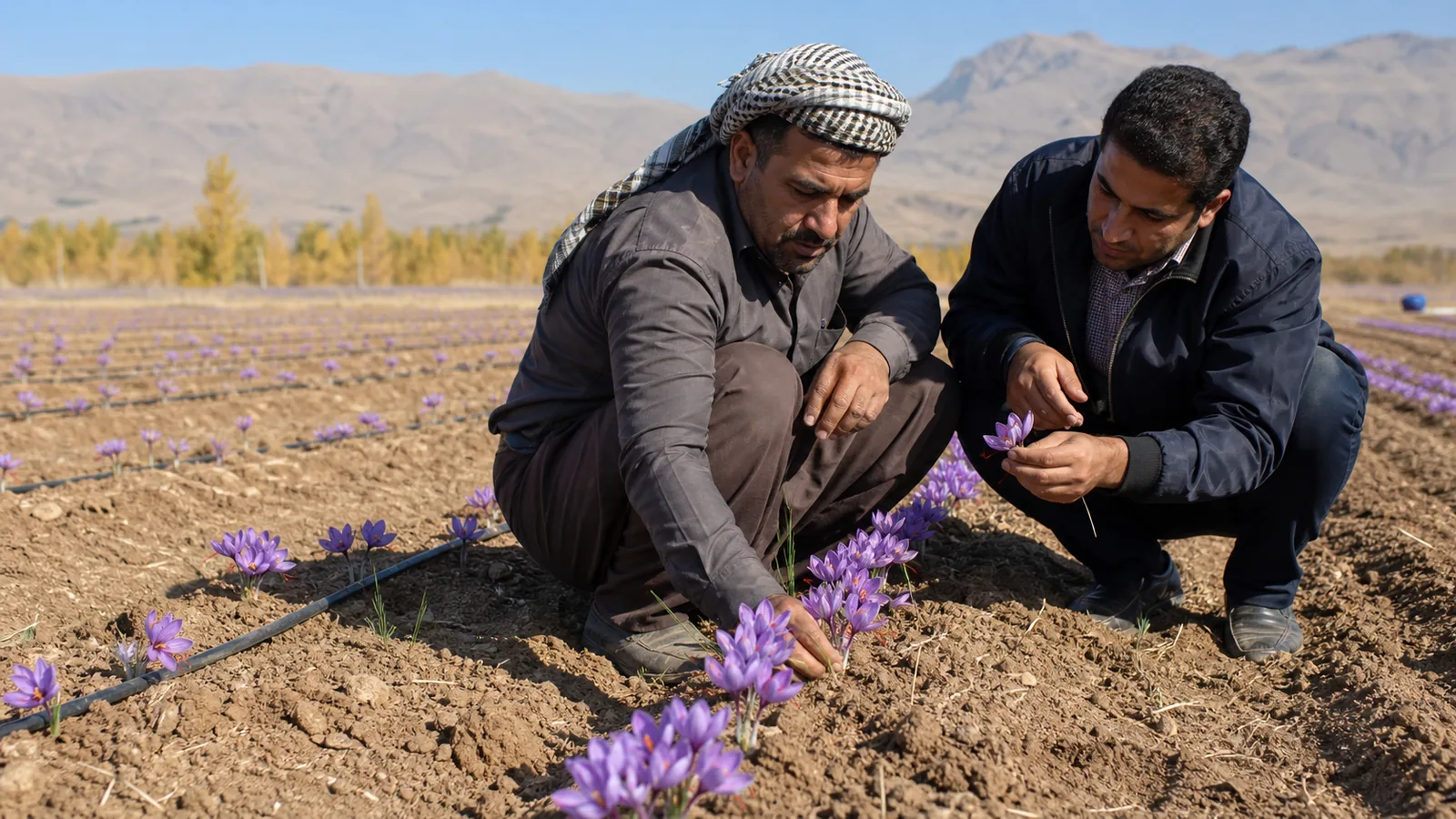
Cultivation of saffron in Markazi province in Iran is recommended records a local agricultural official’s case for a crop that uses relatively little water and could provide suitable income for growers.
Published on this site in April 2021, the report attributes its figures and recommendations to Mohammadi, the official responsible for agriculture and horticulture at Jihad Keshavarzi in Komijan. It is an archived account of local activity at that time, not a current planting plan or income guarantee.
Why saffron cultivation was recommended in Markazi province
Mohammadi described saffron as an advantageous crop for Markazi province for two connected reasons: its limited water requirement relative to many other crops and the income it could offer producers. Water scarcity was already shaping agricultural priorities in the area, so crops capable of producing value on a modest land area were receiving attention.
That recommendation was specific to the conditions described in Komijan. It did not mean that every plot in Markazi was automatically suitable or that returns were assured. Soil, climate, healthy corms, planting density, field preparation, labour, post-harvest handling and access to buyers all affect the result.
The saffron area and output reported in Komijan
According to Mohammadi, four hectares of productive saffron farms in the city produced 10 kilograms of saffron. He added that the area under cultivation had increased to 5.5 hectares in the reporting year.
Both numbers are preserved because they show the scale of the local programme at the time. The original article did not state whether the 10-kilogram total covered dried saffron from one harvest, how old the fields were, or how the expanded 5.5 hectares were divided between established and newly planted land. Those missing details make it unsafe to turn the figures into a general yield forecast.
Water pressure and greenhouse development
Saffron was one part of a broader water-management strategy. Mohammadi also identified greenhouse development as a priority for Jihad Keshavarzi in Komijan, with the aim of reducing water use and increasing production per unit of land.
The report said a 100-hectare greenhouse complex at Milajerd was being pursued. “Being pursued” describes a plan or project under consideration or development; it does not establish that the full 100 hectares had already been built or put into production when the statement was made.
Other horticultural work recorded in the report
Mohammadi’s update was not limited to saffron. It listed several other measures associated with agriculture and horticulture in the city:
- Production of 1.2 tonnes of Mohammadi rose flowers from more than 3.5 hectares of rose gardens.
- Inspection of farms and gardens covering 20,000 hectares.
- Improvement work on two hectares of local gardens during the previous year.
The translated source uses “Mohammadi flower” for the fragrant rose commonly discussed in Iranian agricultural reports. This article retains the reported name and quantities without expanding them into claims about profitability or processing volume.
Fertiliser distribution and supervised harvesting
The closing part of the report placed the horticultural figures beside wider farm operations. Mohammadi said 3,500 tonnes of chemical fertiliser had been distributed among agricultural operators. He also referred to supervision of harvesting by 50 combine harvesters across 18,000 hectares of farms in the city.
Those combine-harvester figures concern broader field agriculture, not saffron harvesting. Saffron flowers are picked by hand, so combining the two passages without that distinction would give a misleading picture of the crop. They remain in the article because they show the scale of the local authority’s overall agricultural responsibilities.
What this report can and cannot tell a grower
The archived figures explain why saffron cultivation in Markazi province attracted official interest: a dry region was looking for production that could use land and water more efficiently while supporting farm income. The 10-kilogram output, four hectares of productive fields and expansion to 5.5 hectares provide a useful historical snapshot of Komijan’s early scale.
They are not enough to decide whether a new field will succeed today. A grower still needs a current local assessment of water availability, soil drainage, temperature, corm health, labour and marketing conditions. Mohammadi’s recommendation should therefore be read in its original local and historical context, with the exact figures retained but no promise attached to them.

![Exporting Saffron to Turkey + Price Guide [Complete 0 to 100]](https://img.rowhanisaffron.com/20260827003933/saffron-export-turkey-quality-inspection.webp)



