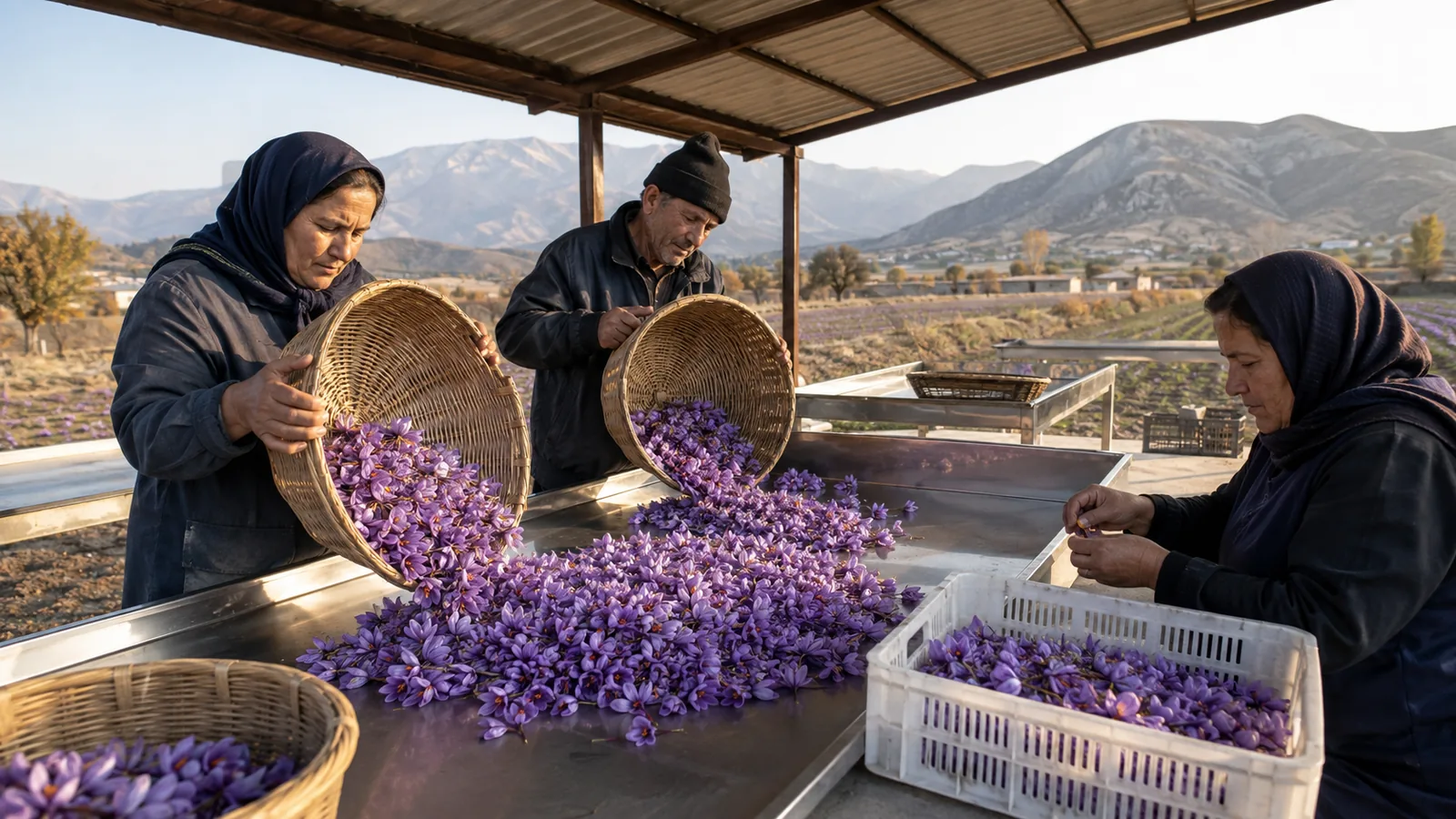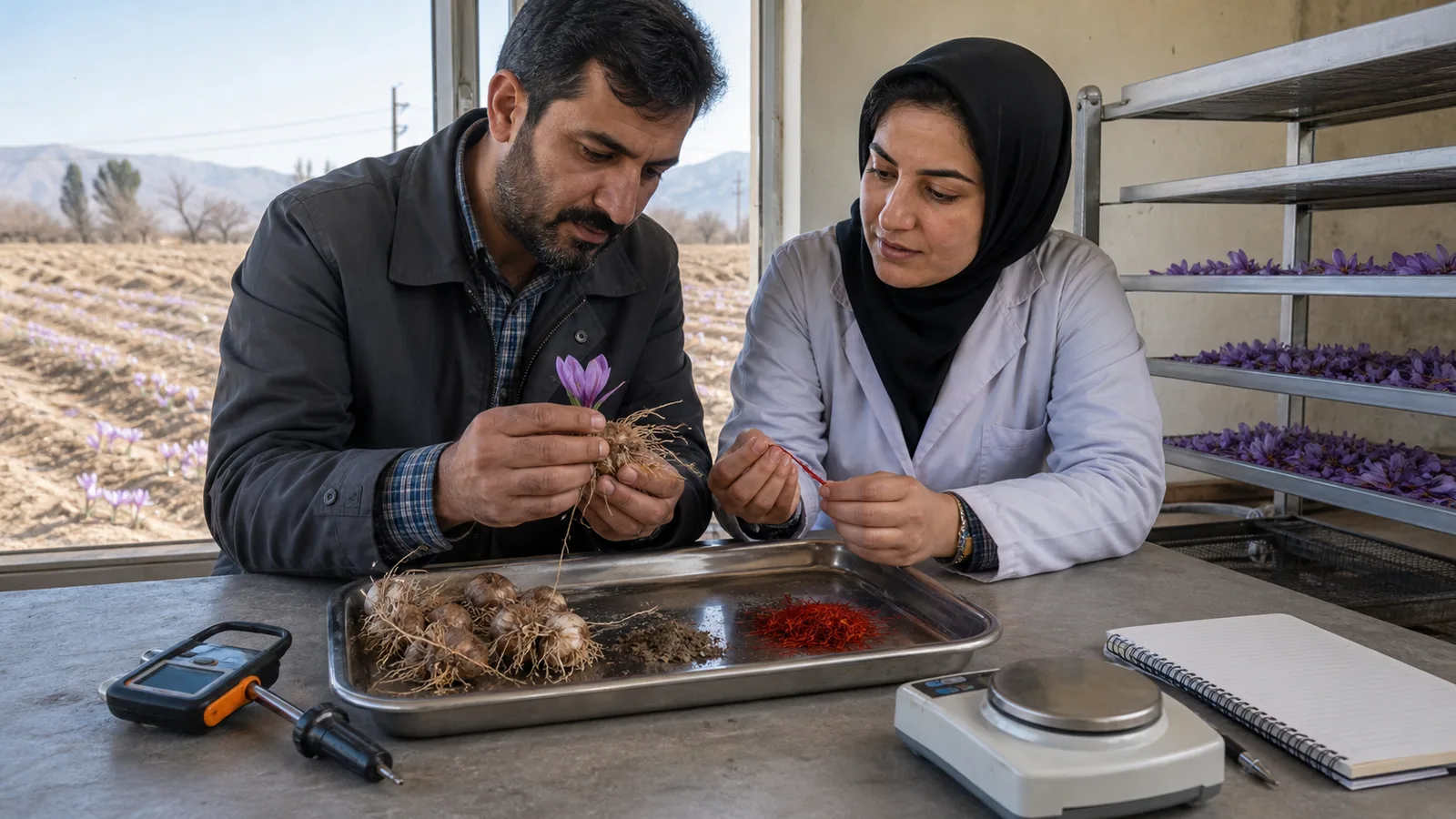


Beginning of harvesting of red gold from J & Wakhaq farms in Isfahan city was a short field report about the first saffron crop from a two-hectare development plot. “Red gold” meant dry saffron, while “J & Wakhaq” appears to be an inconsistent English rendering of the Jey and Qahab agricultural district in Isfahan.
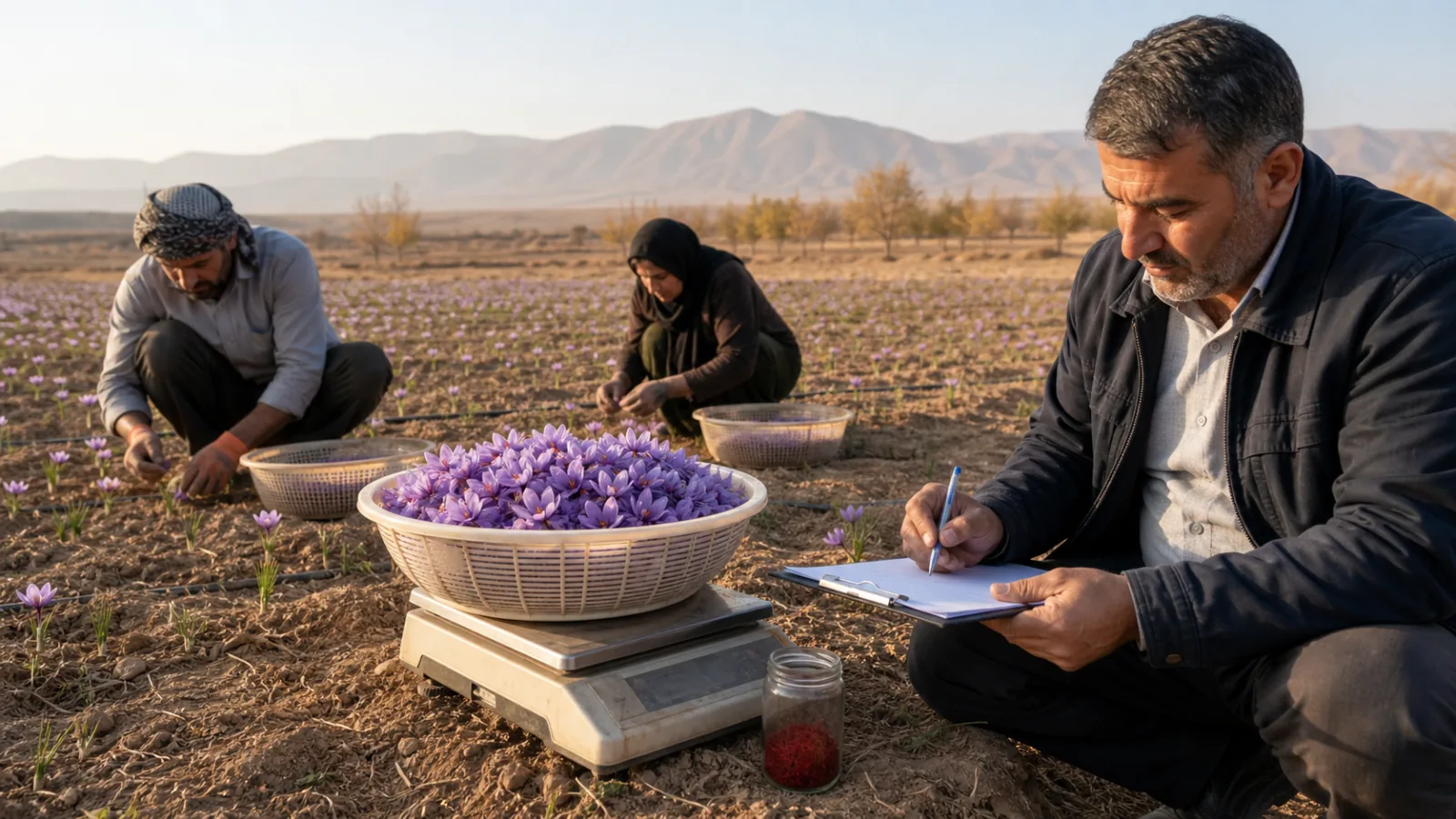
Tahereh Fatehi, identified in the report as an expert at the local Agricultural Jihad centre, connected the planting with a programme to develop non-oil export crops. She said the harvest had begun and expected production to increase in later seasons.
What was planted and where
The original account placed the new saffron area at two hectares. Its district and village names were translated several ways—Ji, Jey, Wakhaq, Waghagh, Qahab and Gurt—so the safest reading is to preserve the reported local relationship without pretending that one English spelling has been independently confirmed.
The closing sentence appears to say that the Jey and Qahab agricultural service area covered 92 villages and 4,710 agricultural operators, with Gurt among the places served. It does not say that all 92 villages were growing saffron, or that all 4,710 operators joined this project.
How to read the harvest figures
Fatehi gave two per-hectare figures: at least 700 kilograms of fresh saffron flowers and 10 kilograms of dry saffron. They are different products at different processing stages, not competing estimates.
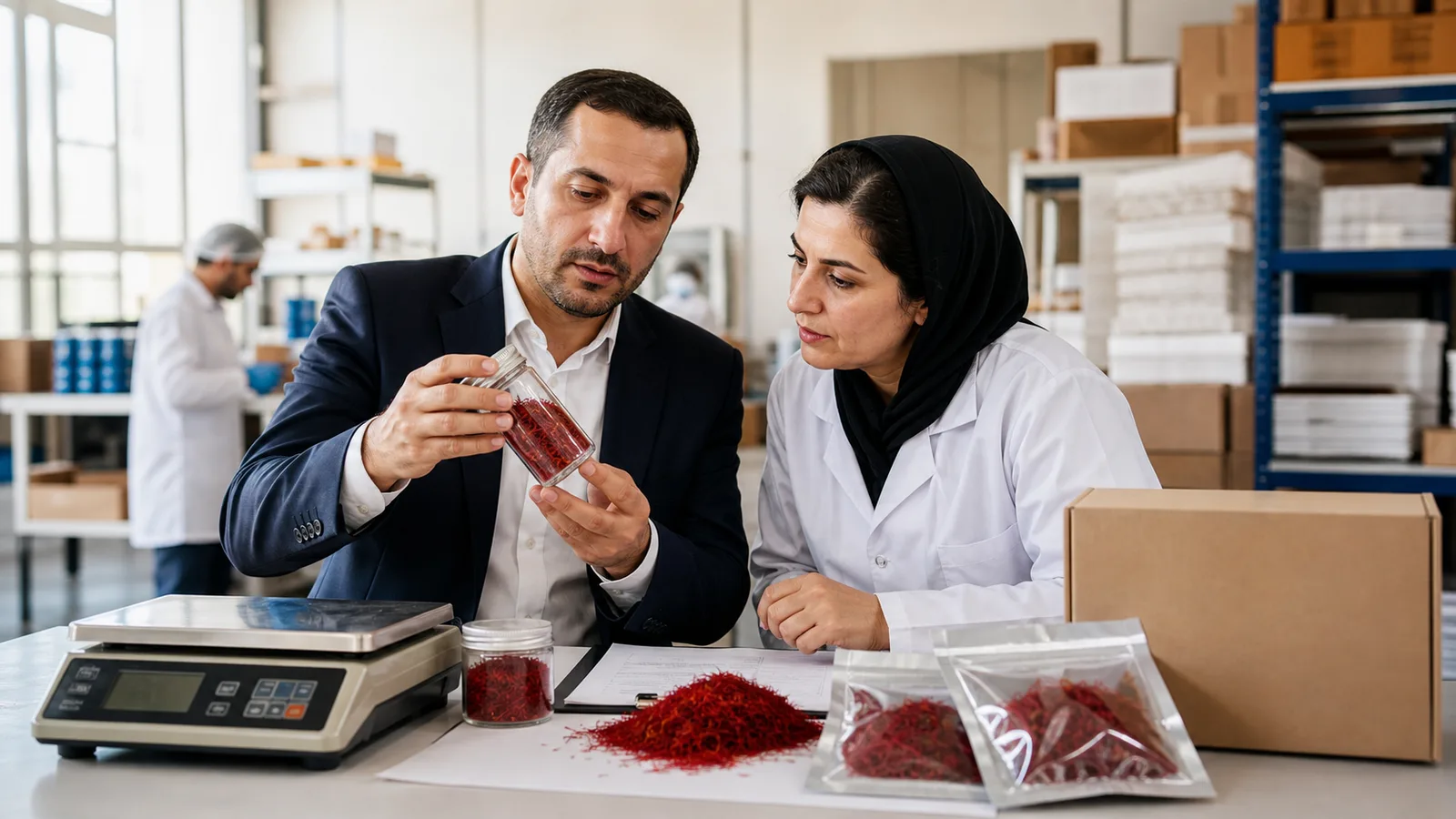
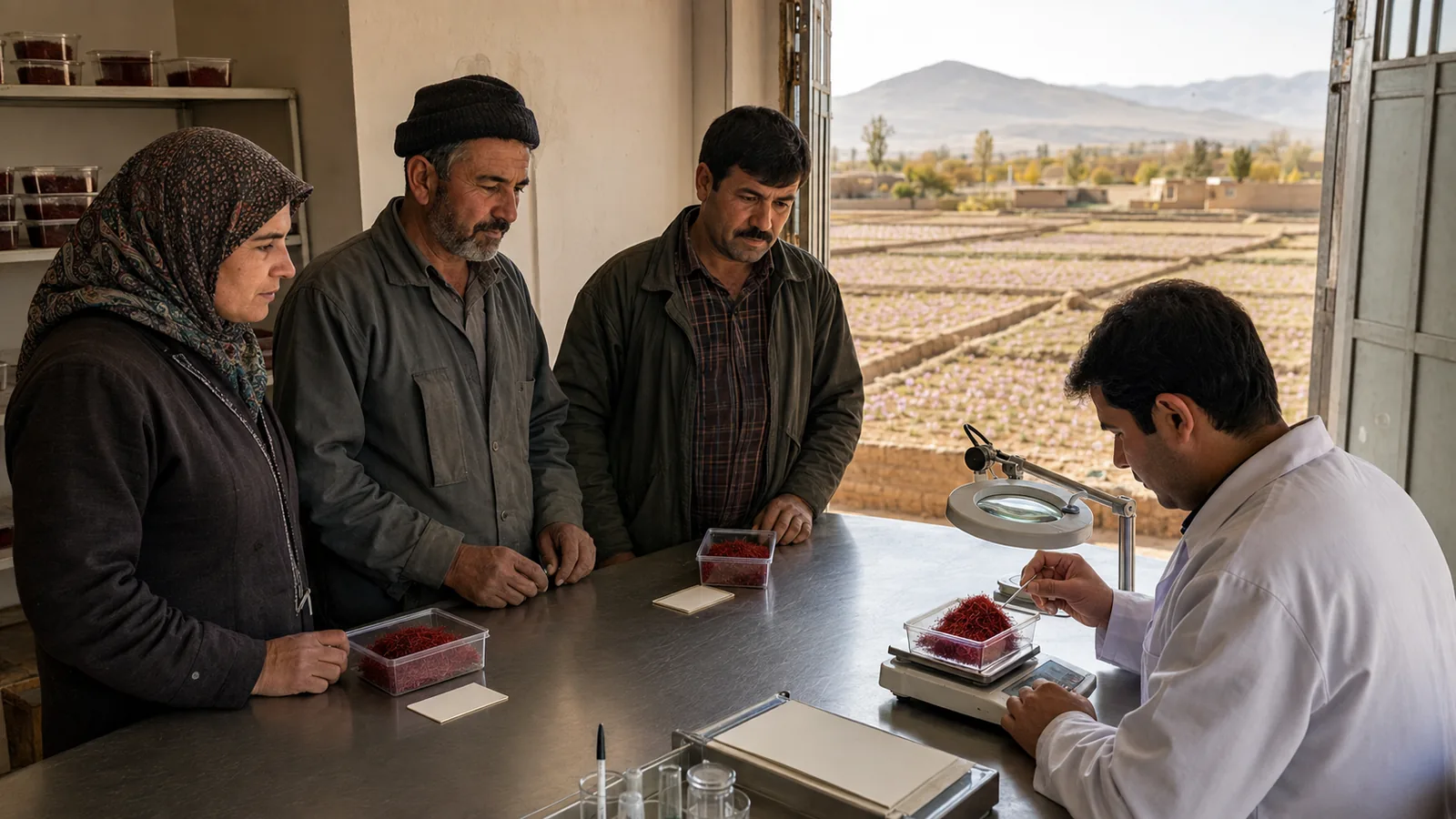
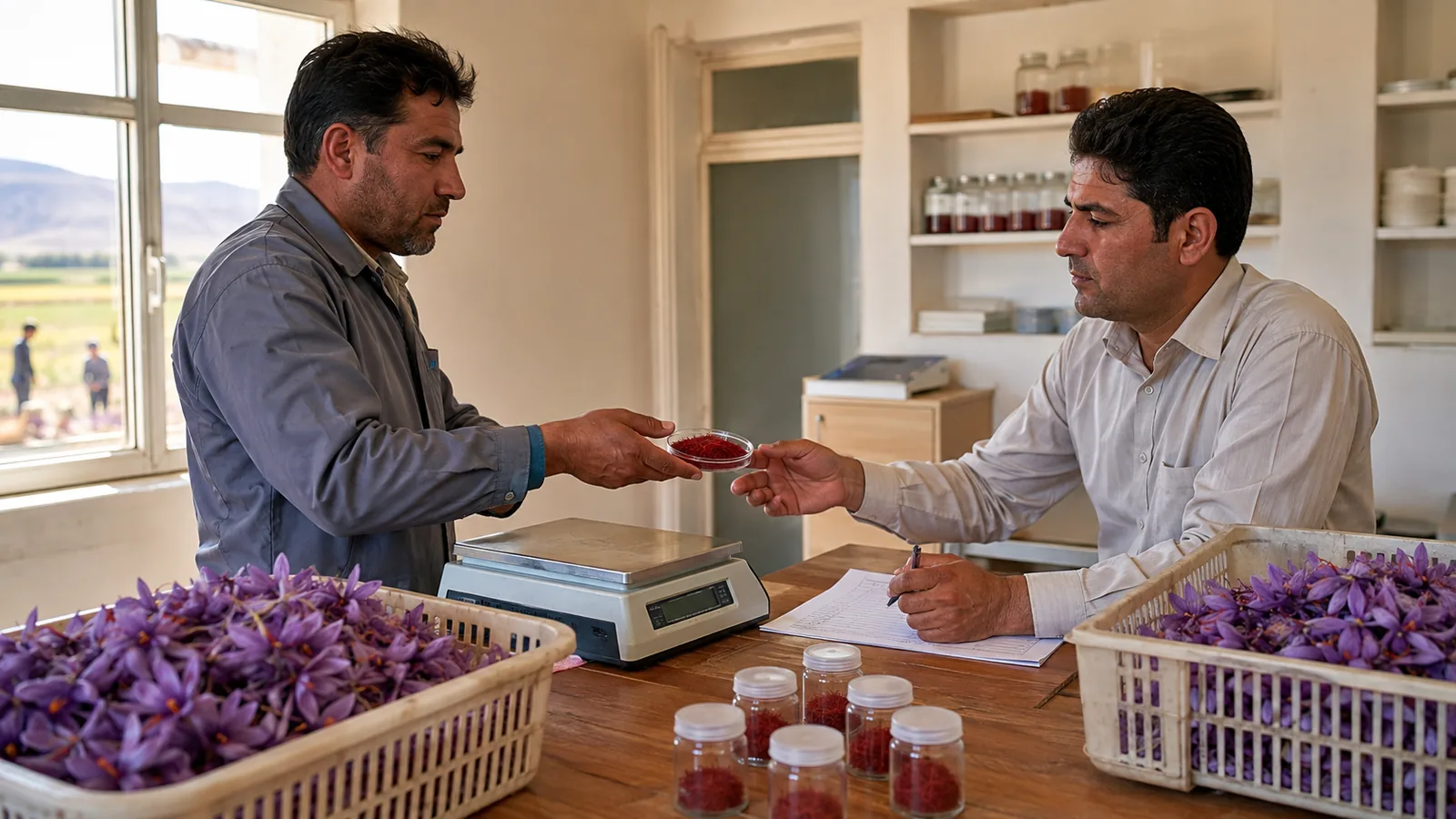
Fresh flowers contain petals, stamens and moisture as well as the red stigmas sold as spice. The dry figure therefore depends on how quickly flowers were separated, which stigma parts were retained, how the material was dried and how the final weight was measured. A transparent harvest record should identify the bearing area, flower weight, dry output, dates and moisture method.
The two-hectare area does not automatically prove a 20-kilogram crop. “Per hectare” may describe an expected or observed field performance, and newly established saffron does not produce the same result in every year. A final production total needs its own weighed record.
Why saffron was considered for the district
The report presented saffron as a high-value crop suited to a warm, dry setting and noted that one planting can be harvested over several years. It also described saffron as having a lower water requirement than some alternatives.
That comparison needs a boundary. Saffron still requires properly timed irrigation, and a crop described as relatively low-water can still be unsuitable where groundwater is overdrawn, salinity is high or drainage is poor. The relevant measure is water delivered per field and per kilogram of saleable dry saffron, not a label alone.
A later IANA report on saffron production in Isfahan described the province’s harvest moving from colder districts into temperate and warmer ones as the season progressed. It supports the broad regional context, but it does not verify this two-hectare plot’s result.
A multi-year crop still needs annual work
The old wording suggested that saffron is planted once and then needs little else. The useful point is that established corms can remain productive for several seasons. The field is not maintenance-free.
Growers still have to manage irrigation, weeds, rodents, corm health, soil compaction, nutrition and flowering labour. They also need to monitor stand density and declining yield so that the eventual lifting and renewal of corms can be planned.
Our practical guide to saffron cultivation explains the soil, corm, irrigation and harvest decisions behind that cycle.
Harvesting flowers is only the first step
A saffron harvest is unusually time-sensitive. Flowers are normally collected while cool, protected from crushing and taken quickly to a clean separation area. Stigmas then need controlled drying and protection from moisture, light and contamination.
Long shelf life applies only to well-dried saffron stored in suitable packaging. It is not a reason to delay handling fresh flowers. The original report called saffron a medicinal product, but this article does not treat the harvest as proof of a medical benefit.
What would show that the project succeeded
Fatehi predicted that future production would rise. Because the report did not include later results, that remains a forecast. A proper follow-up would compare the same fields over time and publish:
- bearing and newly planted hectares;
- fresh-flower and dry-saffron weights;
- water delivered, labour hours and drying capacity;
- quality-test results and rejected material;
- the price actually received and time taken to sell.
The two-hectare start was meaningful as a local trial, not as proof that every farm in the service area should convert. Its lasting value is the test it set up: whether suitable fields could turn limited water, careful seasonal labour and good post-harvest handling into consistently marketable saffron.