


The Khorasan saffron harvest described here was a seasonal forecast from an earlier reporting period, not a current production estimate. Officials expected about 170 tons of dried saffron from Khorasan Razavi after drought and unusually hot weather reduced the crop.
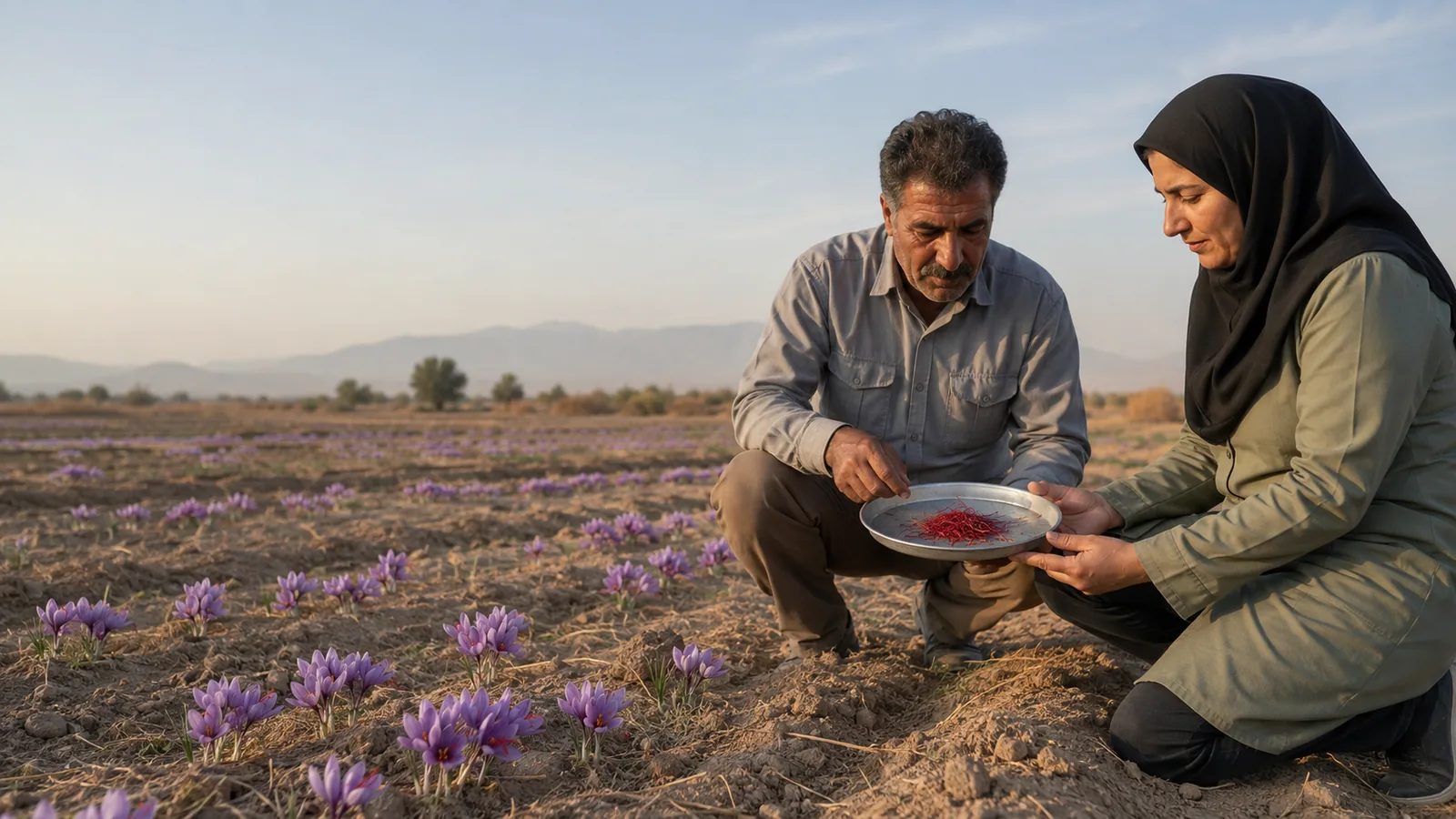
A forecast of 170 tons of dried saffron
According to the archived statement behind this report, Hossein Sabeghi, then director of horticulture at the Khorasan Razavi Agricultural Jihad Organization, expected the province to harvest 170 tons of dried saffron during that season. He described the figure as roughly 40% lower than the previous year’s crop.
The statement put the province’s saffron-growing area at about 44,800 hectares. These figures belong to the season covered by the original report and should not be read as today’s cultivated area or harvest forecast.
Why the harvest was expected to fall
Sabeghi attributed the expected decline to drought and hot weather. Saffron is suited to dry regions, but that does not make the crop immune to prolonged water stress or poorly timed heat. Conditions during corm development, irrigation and flowering can all affect how many flowers emerge and how much dried saffron a field ultimately produces.
The wider importance of water management in this region is well established. The Food and Agriculture Organization’s account of Gonabad’s qanat-based saffron system describes Khorasan Razavi as arid to semi-arid and explains how local farming depends on careful use of scarce water resources.
What the smaller crop meant for prices
The original report connected the anticipated production loss with a sharp rise in the market price. Sabeghi said saffron was trading at approximately 500,000 to 600,000 tomans per kilogram at the time, while an announced procurement price stood at 390,000 tomans per kilogram.
Those are historical prices quoted from the reporting period. They are useful for understanding the market reaction to that season’s expected shortage, but they are not a guide to the current saffron price.
Why the procurement centres bought no saffron
The provincial Rural Cooperative Organization had activated saffron purchasing centres. However, the report said the centres had not bought from farmers because the open-market price was already higher than the announced procurement price. In practical terms, growers had little reason to sell through the official channel when private buyers were offering more.
This detail matters because the absence of procurement purchases did not mean that the harvest had no buyers. It reflected the gap between two prices in a fast-moving market.
Saffron’s value to Khorasan communities
Sabeghi also emphasized saffron’s high added value and said the industry supported about 72,000 permanent jobs nationally at the time. The exact employment figure is another dated claim from the original statement, but the broader point remains relevant: saffron cultivation, flower picking, stigma separation, drying, grading, packaging and trade support a long chain of skilled and seasonal work.
That role is especially significant in water-scarce parts of Khorasan. A crop can be commercially valuable and comparatively adapted to a dry climate while still leaving farmers exposed to weather, yield and price risk.
Why expanding the planted area was not a simple answer
The official cautioned against treating more acreage as an automatic solution. If planting expands faster than demand, a later surplus can push prices down, as growers had experienced in previous years. More land also increases pressure on water, labour and post-harvest capacity.
A resilient saffron sector therefore depends on more than the number of hectares planted. Yield, product quality, efficient drying, reliable market access and responsible water management all influence what growers earn from a harvest.
How to read this Khorasan saffron harvest report
The headline preserves the forecast issued for that specific season: 170 tons of dried saffron and an expected 40% annual decline. The figures explain a historical moment when difficult weather tightened supply, market prices moved above the procurement price and official buying centres remained inactive.
For any purchase, investment or production decision, use current crop and market data rather than these archived numbers. Their value today is as a clear record of how weather, output, procurement policy and farmer livelihoods can interact during a Khorasan saffron harvest.

![Exporting Saffron to Turkey + Price Guide [Complete 0 to 100]](https://img.rowhanisaffron.com/20260827003933/saffron-export-turkey-quality-inspection.webp)



