Brewing saffron properly is simple: lightly crush a small pinch of threads, cover it with warm-to-hot water, and let it infuse for 10–20 minutes. The water helps release saffron’s golden colour, distinctive aroma and gently bitter flavour before you add it to a dish. A covered bowl and a little patience matter more than an elaborate trick.
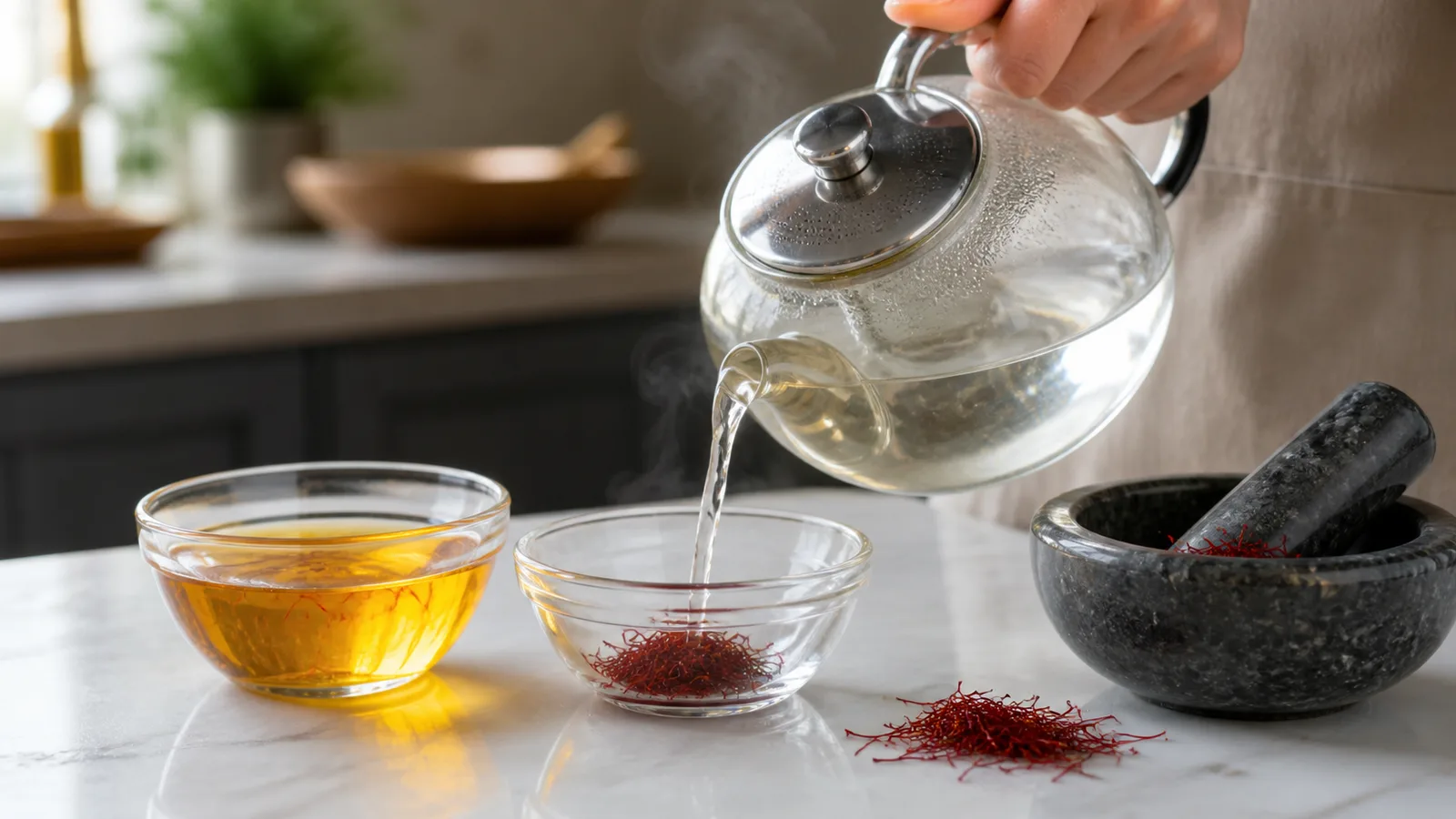
This technique is often called brewing, blooming or infusing saffron. It is useful for Persian rice, stews, sauces, desserts and drinks because it spreads a small amount of the spice evenly. It does not “activate” medicinal powers, and the most vibrant color is not the only sign of a good result.
How to brew saffron with hot water
1. Measure a modest amount
For a family-size rice dish or stew, begin with about 12–20 threads, roughly one small pinch. Recipes vary, and thread size is not standardized, so use this as a culinary starting point rather than a medical dose. You can make the next batch stronger if the aroma is too faint.
2. Crush the threads gently
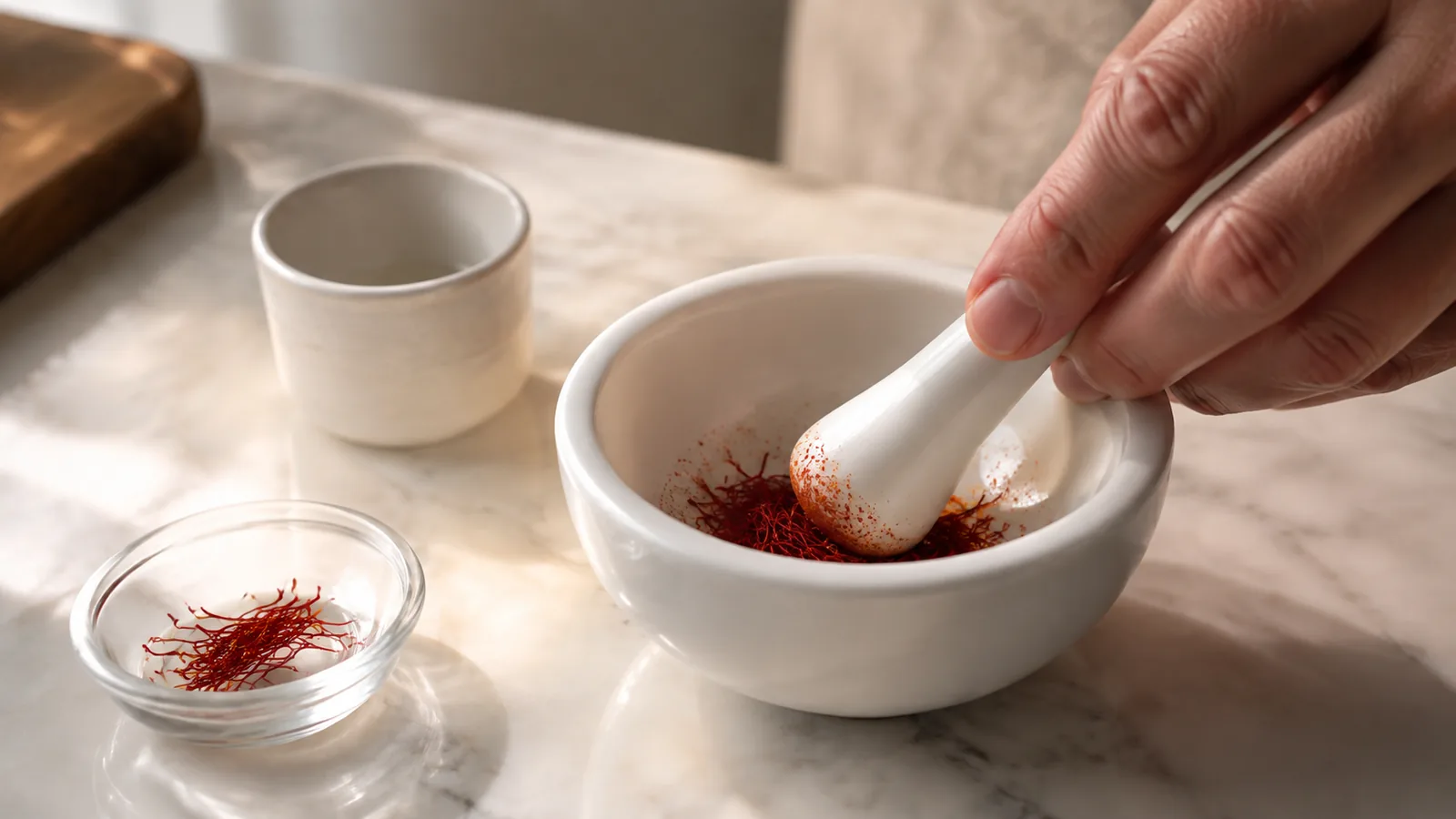
Put the saffron in a clean, dry mortar. Grind until the threads are broken into small pieces or a coarse powder. A tiny pinch of sugar or salt can give the pestle traction, but choose the one that suits the finished recipe. Grinding increases the surface area exposed to water; it should not turn into a contest to make the finest possible dust.
3. Add warm-to-hot water
Transfer the crushed saffron to a small heat-safe glass or ceramic bowl. Add 2–4 tablespoons of water at about 60–80°C (140–176°F). Water that has boiled and then rested briefly is practical at home. This amount is usually enough to distribute the infusion without watering down the dish.
4. Cover and infuse
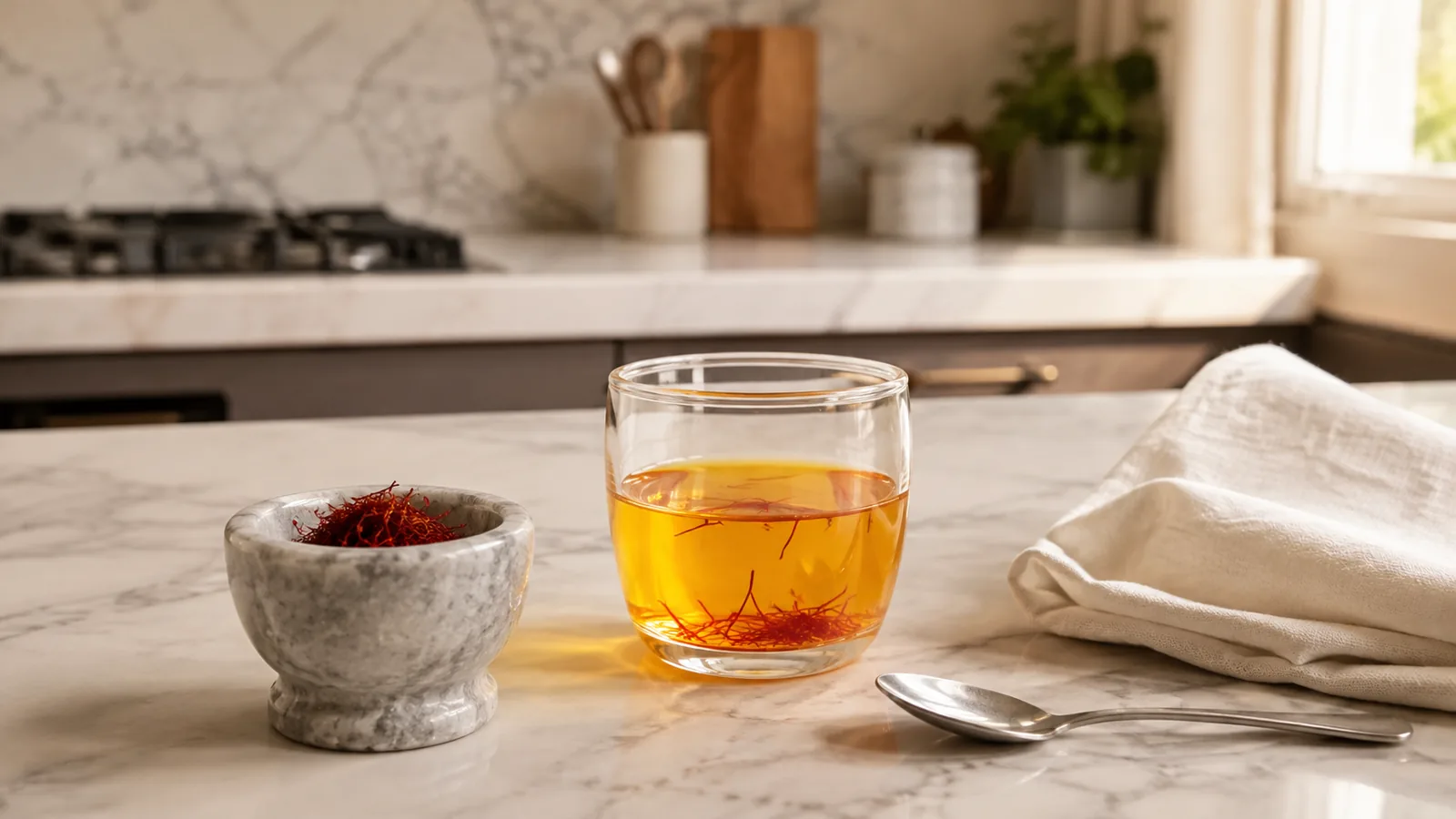
Cover the bowl and leave it for 10–20 minutes. Covering helps keep volatile aroma in the bowl. The liquid should become clear golden yellow to orange while the pieces of stigma remain visible. Stir the whole infusion—including the softened threads—into the recipe.
A 2024 laboratory study of saffron under simulated cooking conditions found that the compounds responsible for colour, taste and aroma moved differently depending on the liquid, temperature and time. Its strongest aqueous crocin result occurred at 60°C after 20 minutes; longer or hotter treatment could reduce some heat-sensitive compounds. That experiment supports a gentle infusion, although a home kitchen cannot reproduce laboratory measurements exactly.
Does boiling water ruin saffron?
Brief contact with very hot water does not instantly ruin saffron, and saffron is cooked successfully in many dishes. What is unnecessary is aggressively boiling a small infusion for a long time. Prolonged heat can flatten the aroma and alter colour compounds, while the threads may stick to the pan or become lost in a large volume of liquid.
If your kettle has no temperature control, boil fresh water and wait one or two minutes before pouring. Use a heat-safe container, cover it, and judge the finished infusion by aroma and a clear golden colour—not by whether the water was exactly one degree above or below a target.
Ice brewing saffron: what it can and cannot do
The ice method is popular in some kitchens. Place crushed saffron in a small covered bowl, add one or two clean ice cubes and let them melt slowly. The result can be attractive and aromatic, and the low temperature avoids prolonged heat. It is also much slower than warm-water brewing.
There is not good evidence that melting ice always produces a stronger aroma or “maximum extraction.” Temperature, time, water volume and the saffron itself all affect the result. For most cooking, the hot-water method is faster and more predictable. If using ice, keep the bowl clean, cover it, and refrigerate it if the room is warm or you will not use it promptly.
Should you toast saffron before brewing?
The former chef’s method in this article recommended toasting, grinding, then combining hot water and ice. Directly toasting the delicate dry threads can burn them in seconds and drive off aroma. It is not required for good brewing.
If a recipe calls for warming the threads, use the gentlest indirect heat: place them in a folded piece of baking paper or foil and warm briefly over a low pan, without browning. Let them cool before grinding. Do not pour ice into a hot glass vessel; rapid temperature change can crack unsuitable glass. A straightforward covered infusion is safer and easier.
How much water should you use?
Use only enough water to extract and distribute the saffron. Two to four tablespoons works for many rice or sauce recipes. A larger volume is appropriate when the infusion itself is the drink, as in this saffron herbal tea recipe.
If the infusion seems weak, the cause may be too few threads, stale saffron, a very short steep or too much water. Adding a huge amount of spice is rarely the best first response. Grind a measured pinch, reduce the liquid and allow enough covered time.
How saffron quality affects the brew
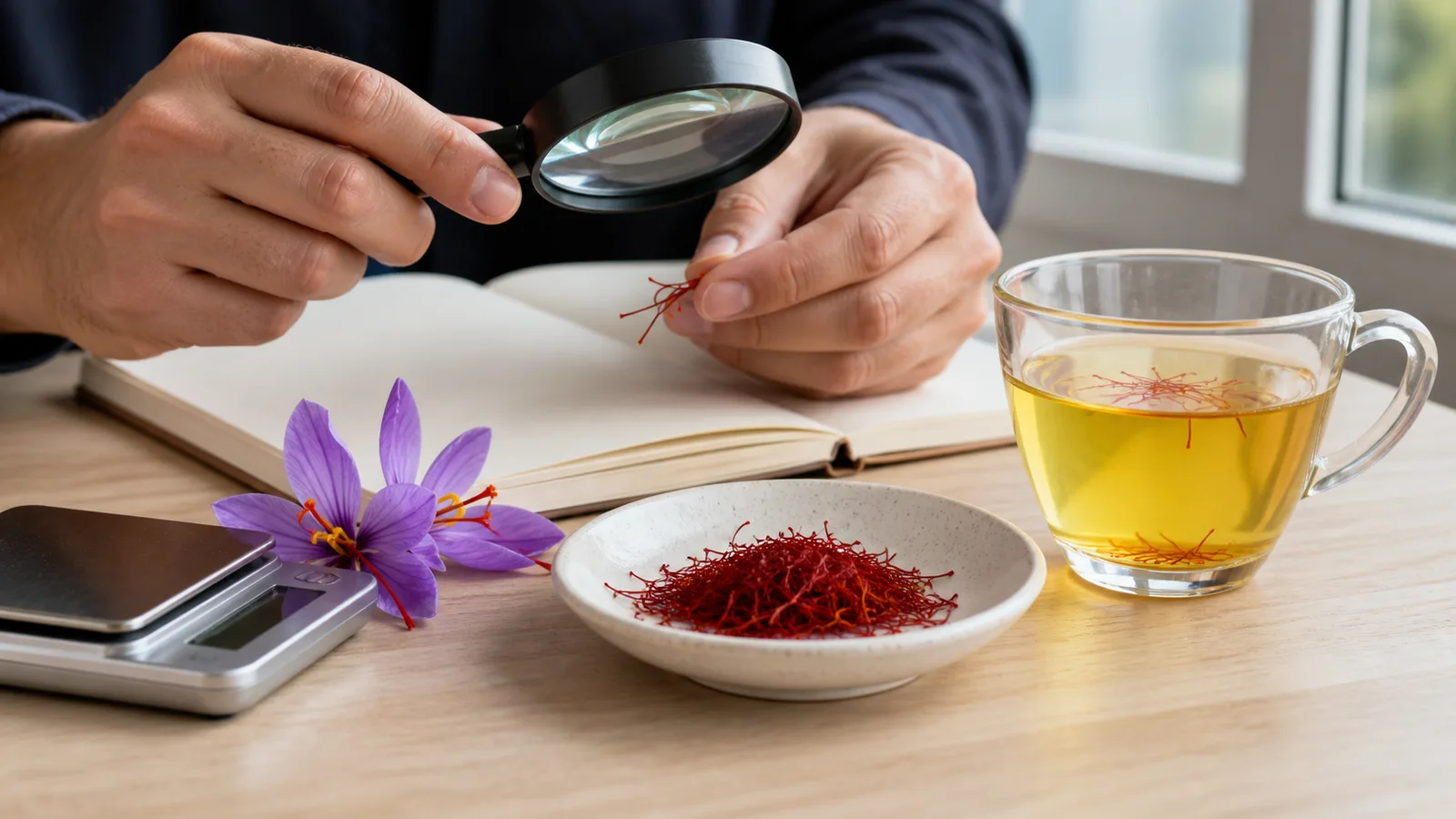
Good threads are dry, fragrant and predominantly deep red, often with slightly lighter flared tips. Some yellow or orange style material can occur naturally, but a high proportion generally gives lower colouring strength by weight. Colour alone cannot prove origin, grade or authenticity.
Choose whole threads from a traceable seller and compare aroma, packaging and batch information. Saffron sold only as an anonymous bright-red powder is harder to inspect. Persian saffron is highly regarded, but a country name by itself does not guarantee quality; cultivation, drying, storage and handling all affect the cup. Our guide to saffron cultivation explains how the spice reaches the drying stage.
When to add brewed saffron to a dish
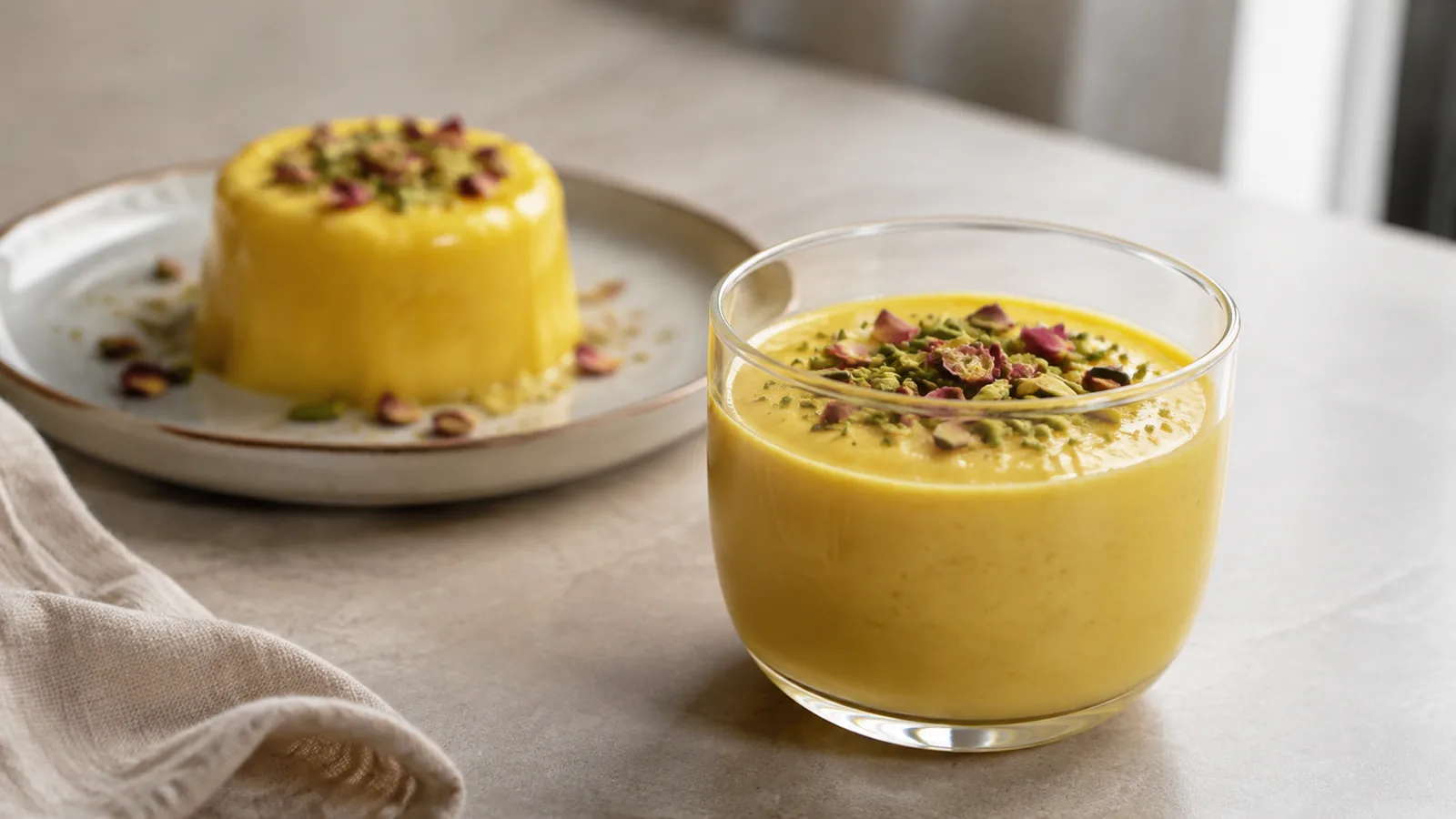
For rice, reserve part of the cooked rice, mix it with the infusion and use it as a golden top layer, or fold the liquid gently through the pot near the end. In a stew or sauce, add it late enough to retain aroma but with enough time for even distribution. In custards and desserts, include the infusion with the recipe’s liquid ingredients.
Fat can carry saffron’s aroma, while water is especially effective at releasing its colour. A recipe containing both can show the spice well. Avoid burying it beneath many aggressive seasonings; saffron works best when the surrounding flavours leave room for its floral, earthy and hay-like notes.
How to store brewed saffron
Fresh infusion gives the brightest aroma. If you make it ahead, cool it promptly, transfer it to a clean airtight container and refrigerate it. Using it within 24 hours is a good quality rule. Discard it if it develops an off smell, cloudiness unrelated to thread particles or signs of contamination.
Store the dry threads separately in an airtight container in a cool, dark, dry cupboard. Light, heat, air and moisture gradually weaken them. Do not return damp threads or a wet spoon to the storage jar.
Common brewing problems
The infusion is pale
Give it the full covered steep before adding more. Check that the threads were crushed and that the water is warm. Authentic saffron normally colours water gradually; instant fluorescent colour is not a goal.
The flavour is bitter or medicinal
You may have used too much saffron, too little food or water, or cooked the infusion for too long. Dilute it into the full recipe and reduce the amount next time.
The aroma disappears in the finished dish
The saffron may be old, it may have been boiled for too long, or stronger spices may be masking it. Keep the bowl covered, add the infusion later in cooking and store the dry threads more carefully.
Brewing improves distribution—not medical effectiveness
Saffron contains crocins, picrocrocin and safranal, compounds associated with its colour, taste and aroma. It has also been studied in standardized supplements for mood and other outcomes. A culinary infusion is not equivalent to those products, and brewing has not been shown to maximize medicinal benefits.
Claims that properly brewed saffron will improve mood, reduce anxiety or support overall health are too broad without product-specific clinical evidence. Describing saffron compounds as antioxidant in a laboratory does not show that a home infusion prevents disease. Enjoy the infusion for what it reliably does: extract the character of a precious spice and carry it evenly through the meal.
A dependable method to remember
For brewing saffron properly, crush a small measured pinch, add a few tablespoons of warm-to-hot water, cover for 10–20 minutes, and use the entire golden infusion. Ice brewing is an optional slow method, not a proven upgrade. Toasting is unnecessary and easy to overdo.
Good threads, moderate heat and careful timing will do more for flavour and aroma than complicated rituals. Once you know the basic method, adjust the quantity to the size and style of the dish rather than chasing the darkest possible colour.