


This article preserves a historical announcement about an Iranian saffron bazaar based on commodity deposit certificates. The surviving report said trading was due to start on February 24, but it does not clearly identify the year or confirm the later launch. It is not a current exchange notice.
The “saffron bazaar” in this 2017 archive was not a new row of retail shops. It was a planned market mechanism through the Iran Mercantile Exchange, often rendered awkwardly in the earlier translation as “Boreskala” or “Borzkala.” Farmers would deposit eligible saffron in an approved warehouse, obtain documentation for the stored crop and then sell the corresponding certificate through the market.
Hamid Soltani Nezhad, identified in the report as the head of the commodity exchange, said preparations were under way and transactions were expected to begin on February 24. Because the archived text does not provide a reliable year alongside that date, readers should treat it as the timetable announced at the time, not an upcoming deadline.
How the proposed saffron bazaar would work
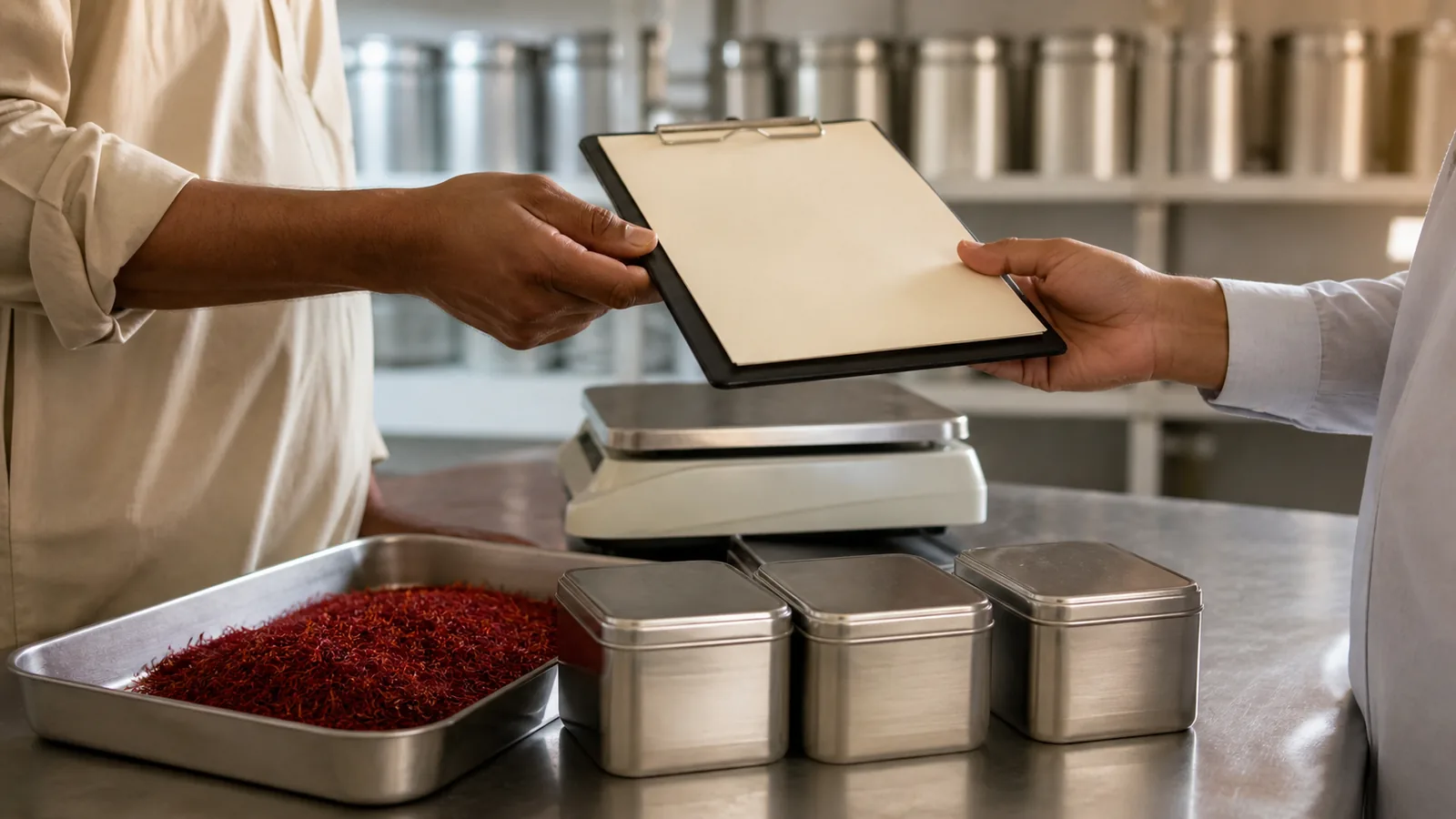
The report described a sequence involving a standard warehouse operated through the Rural Cooperative Organization and laboratory assessment in Mashhad:
- A grower or supplier would deliver saffron to the approved storage system.
- The lot would be checked so its quality could be classified against the scheme’s standard.
- The warehouse would record the accepted quantity and issue the relevant receipt or deposit certificate.
- The owner could offer that documented interest in the saffron through the commodity market.
- An eligible buyer could acquire the certificate under the exchange’s rules.
The original translation used “bill of lading,” “plaque” and “certificate of deposit” almost interchangeably. The important distinction is that the tradable document was meant to correspond to saffron physically held and recorded by the approved warehouse, rather than an unsupported claim about a crop stored elsewhere.
Why quality approval mattered
A warehouse market needs buyers to understand what a certificate represents. Weight alone is not enough for saffron. Purity, moisture, physical form and grade can affect the value of a lot. The 2017 announcement therefore gave the Rural Cooperative Organization a central role in warehouse activity and quality control, with laboratory work reported in Mashhad.
That structure was intended to make lots easier to compare and trade. It did not mean every farmer’s saffron would automatically qualify or receive the same price. Acceptance criteria, inspection results, storage charges and market demand would still matter.
Who the market was designed for
Soltani Nezhad said large producers and traders could buy saffron in this way. The Rural Cooperative Organization was expected to participate during the first stage, helping the domestic market become familiar with certificate-based transactions.
The plan also looked beyond Iran. The report said organisers eventually wanted deposit certificates to support sales connected with export markets. Domestic participants were to learn the system first, after which conditions for international use could be developed. That was an ambition in the announcement, not evidence that foreign trading was already operating.
What the proposal could offer growers
For an eligible grower, a warehouse receipt can separate the timing of storage from the timing of sale. Instead of moving the physical saffron for each transaction, ownership can be represented through the documented lot. The report also suggested that the certificate might support financing and that future contracts could allow forms of pre-sale.
Those possibilities do not guarantee liquidity, credit or a favourable price. They depend on the applicable exchange rules, participating institutions, buyer demand and the status of the certificate. Anyone considering a transaction today needs current documentation from the exchange and warehouse, not this historical announcement.
Part of a wider agricultural exchange programme
The interview also mentioned preparations for pistachio trading and possible exchange activity involving corn, oats and wheat. These details show that saffron was being considered within a broader effort to organise agricultural commodity markets.
The lasting value of the saffron bazaar proposal lies in its basic design: connect verified quality, secure storage and a tradable record. For growers, that can create another route to buyers. For the market, it can create clearer information about accepted lots. Whether a particular scheme delivered those benefits must be judged from its later rules and results, not from the launch announcement alone.
Original report: IRIB News and Iran Mercantile Exchange statements cited by the archived post.

![Exporting Saffron to Turkey + Price Guide [Complete 0 to 100]](https://img.rowhanisaffron.com/20260827003933/saffron-export-turkey-quality-inspection.webp)



