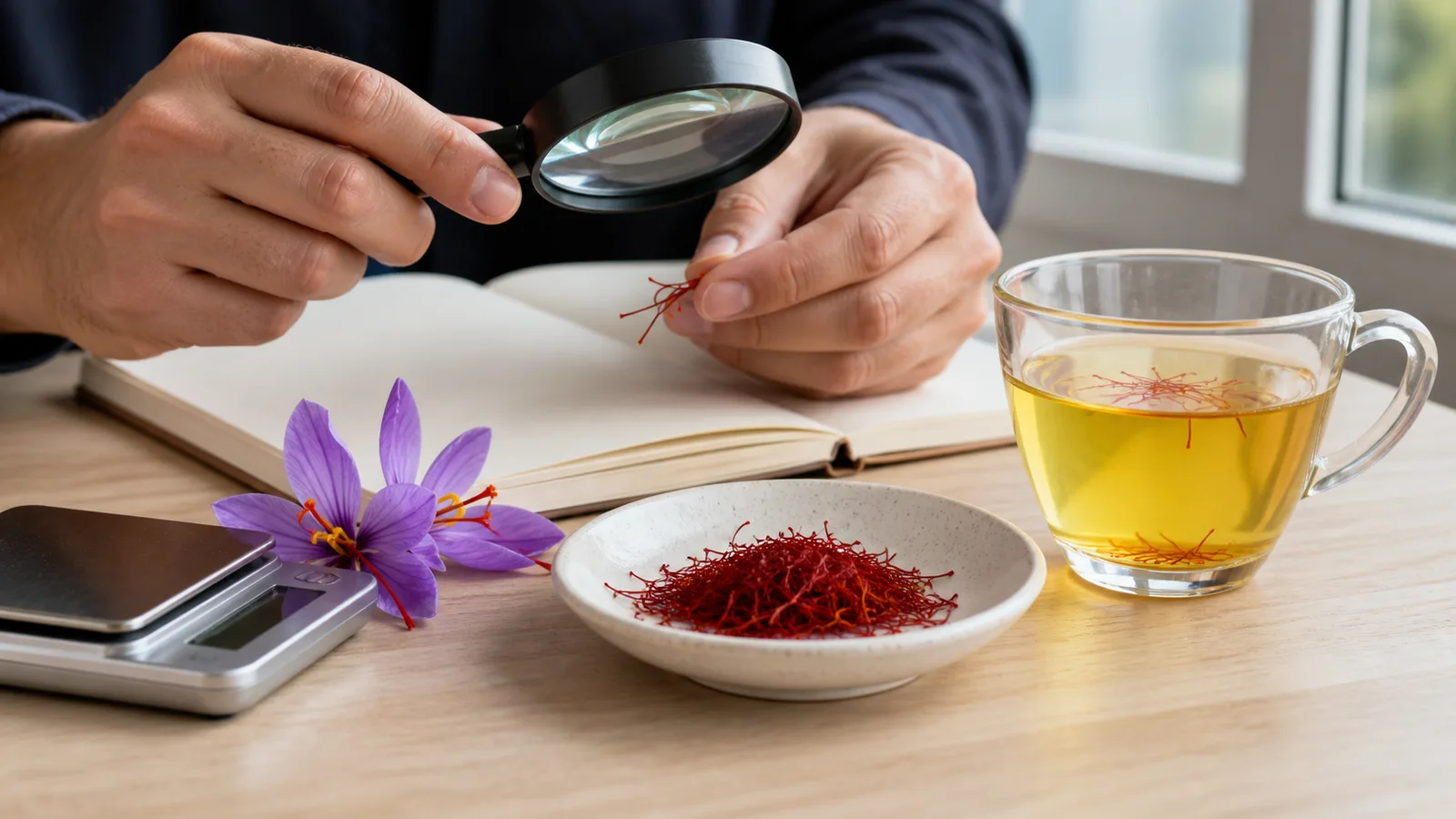
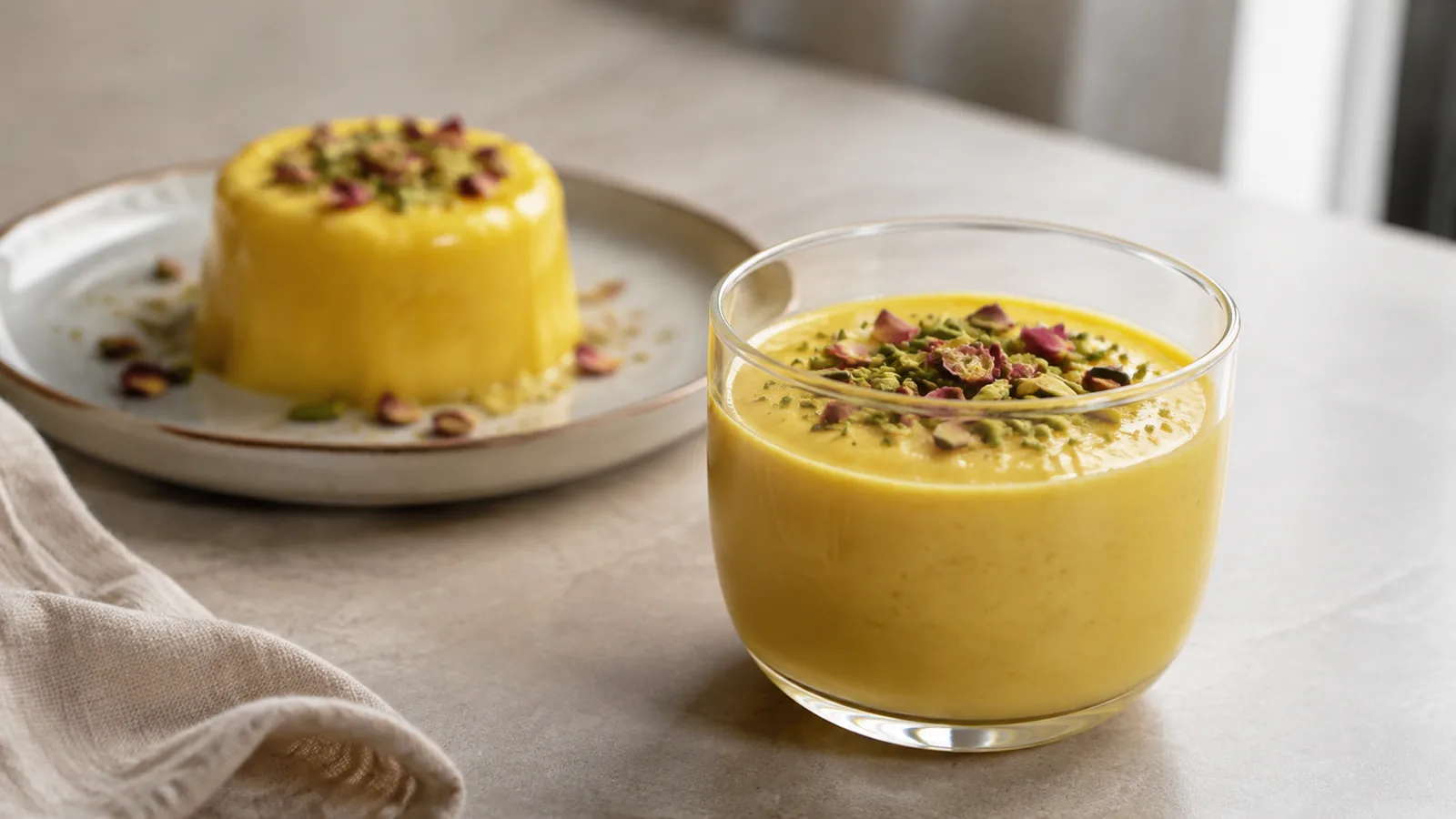
Honey and Saffron Mousse takes about 30 minutes of active work and makes four light, fragrant desserts. The mousse then needs at least 3 hours in the refrigerator, so prepare it earlier in the day rather than just before serving.
What gives this saffron mousse its texture?
Three elements work together: whipped cream provides richness, whipped egg whites make the mixture airy, and a small amount of gelatin helps it hold after chilling. Honey softens the sharp sweetness of plain sugar, while saffron supplies colour and aroma.
Because the eggs are not baked after folding, use pasteurised egg whites. Carton egg whites labelled suitable for whipping are convenient, although some brands take longer to reach firm peaks.
Ingredients for four servings
- 1 tablespoon powdered gelatin
- 4 tablespoons room-temperature water for the gelatin
- 2 pasteurised egg whites, about 60 g
- 1/2 cup caster sugar
- 1 cup cold whipping cream
- 1/2 teaspoon saffron threads
- 1 tablespoon mild floral honey
- 2 tablespoons hot water or 1 small ice cube for blooming the saffron
- Pinch of fine salt, optional
The old ingredient list included 1 cup of water, but only 4 tablespoons are needed to bloom this amount of gelatin. A full cup would leave the mousse loose and dilute its flavour. Water for the saffron is measured separately.
How to make honey and saffron mousse
1. Bloom and dissolve the gelatin
Sprinkle the gelatin evenly over 4 tablespoons of room-temperature water in a small heatproof bowl. Leave it untouched for 5 minutes so every granule hydrates. Set the bowl over a saucepan of barely simmering water and stir just until the gelatin becomes clear and fluid. Do not let it boil.
Remove the bowl from the steam and let it cool until barely warm. It must remain liquid, but very hot gelatin can deflate the cream later.
2. Prepare the saffron honey
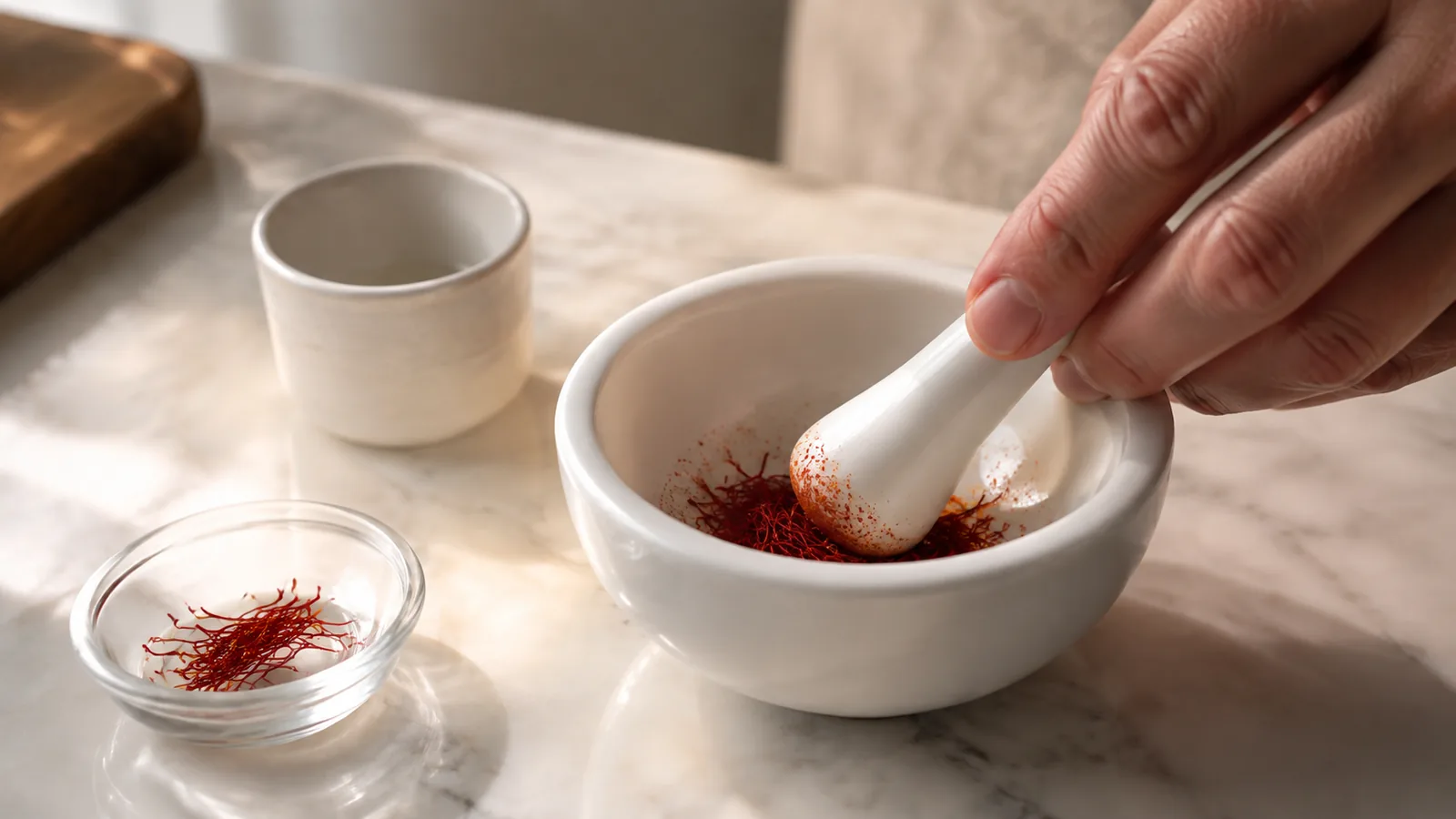
Grind the saffron threads and cover them with 2 tablespoons of hot water for 10 minutes. The original ice method also works: place one small ice cube over the ground saffron and let it melt completely.
Warm the honey only enough to make it fluid, then stir in the saffron infusion. This is the simple answer to how to make saffron honey for this mousse; it is a small flavouring mixture, not a shelf-stable saffron honey recipe for preserving.
3. Whip the cream
Pour the cold whipping cream into a chilled bowl. Beat at medium speed until it holds soft-to-medium peaks: when the whisk is lifted, the tip should bend rather than stand rigidly. Overwhipped cream turns grainy and is harder to fold.
If the kitchen is warm, place the mixing bowl over a larger bowl of ice. The earlier advice to partially freeze the cream can create icy patches, so thorough chilling is safer than freezing.
4. Whip the egg whites and sugar
Use a completely clean, grease-free bowl and beaters. Whisk the pasteurised egg whites with the optional pinch of salt until foamy. Add the sugar a spoonful at a time while beating. Continue for about 5–7 minutes, until the meringue is glossy and holds firm peaks.
Rub a little mixture between two fingers. It should feel mostly smooth rather than sandy. If the sugar is still coarse, keep beating for another minute.
5. Combine without losing the air
Stir the saffron-honey mixture into the barely warm gelatin. Whisk 2 tablespoons of whipped cream into it to lighten the consistency, then pour it in a thin stream over the remaining cream while folding gently.
Add one-third of the whipped egg whites and fold to loosen the base. Fold in the rest in two additions, turning the bowl as you bring the spatula through the centre and up the side. Stop when no obvious white streaks remain; relentless mixing removes the air you worked to create.
6. Portion and chill
Spoon the mousse into four glasses or small moulds. Smooth the top lightly and refrigerate for at least 3 hours. The 30-minute promise describes preparation time, not setting time.
If you plan to unmould the desserts, lightly oil flexible moulds before filling and chill for 4 hours. For glasses, no oil is needed.
How to tell when the mousse is ready
The surface should look set and spring back gently when touched. A spoonful should hold a soft shape, then melt on the tongue; it should not bounce like a firm jelly. If it remains loose after 3 hours, give it another hour before assuming the gelatin failed.
Saffron whipped cream variation
For a simpler egg-free dessert, make saffron whipped cream instead. Bloom 1/4 teaspoon saffron in 1 tablespoon hot water and cool completely. Whip 1 cup cream with 2 tablespoons icing sugar to soft peaks, then fold in the saffron and 1 teaspoon honey. This will be softer than mousse and should be served promptly; it does not need gelatin.
Serving ideas
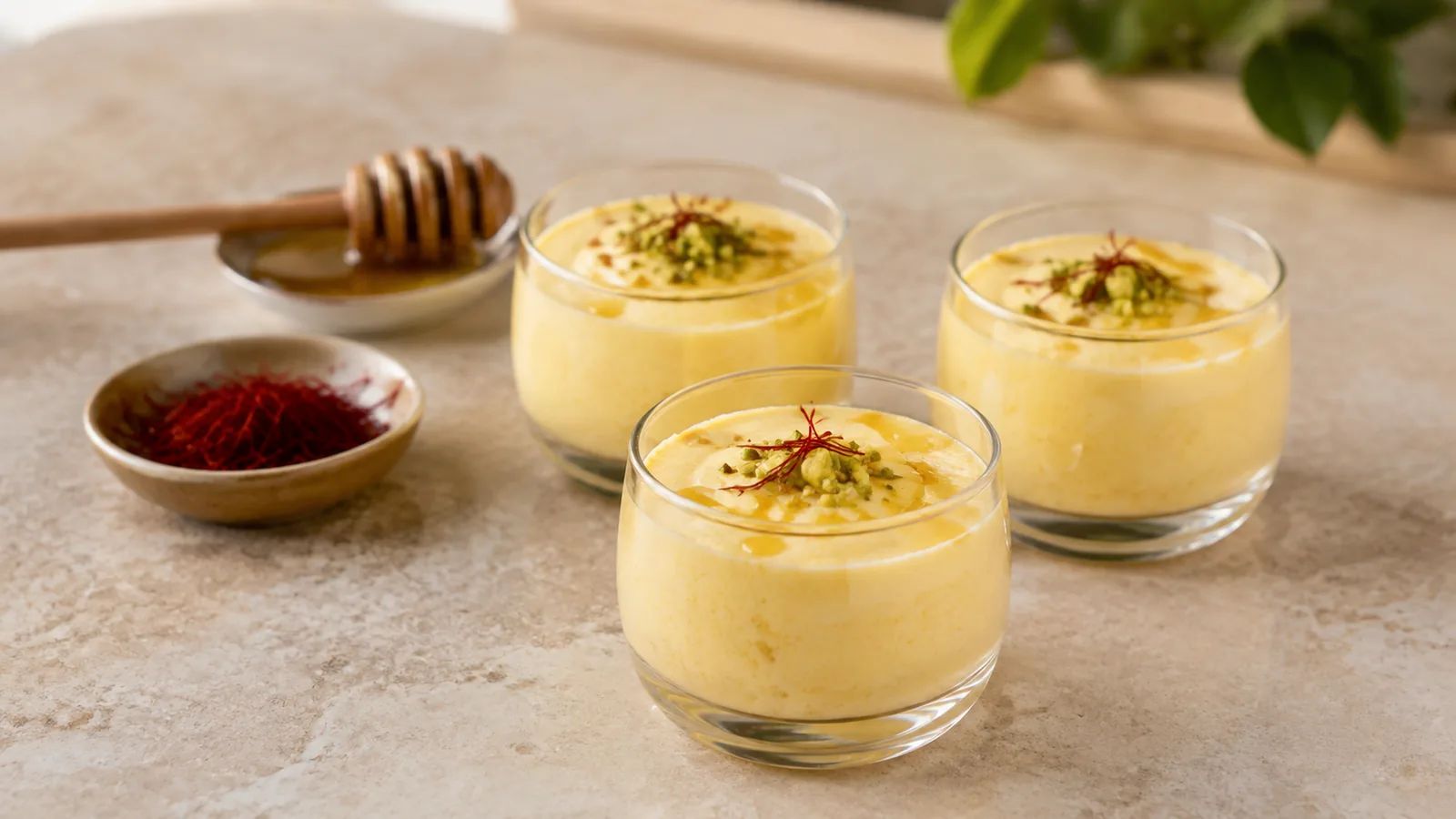
Top each glass with a few chopped pistachios, a restrained drizzle of honey or two saffron threads. Tart berries or orange segments cut through the richness. A small portion also works beside date cake; if you searched for date cake with saffron mousse, serve the mousse as a cool spoonful rather than spreading it between warm cake layers.
Avoid heavy garnishes that sink into the surface. The mousse is at its best when its airy texture and clean saffron aroma remain the focus.
Troubleshooting
- Grainy mousse: the cream was probably overwhipped or the gelatin began setting before it was folded in.
- Rubbery mousse: the gelatin was overmeasured. Level the tablespoon and do not pack it.
- Liquid at the bottom: the saffron water or gelatin mixture may have been too warm, or the mousse was not folded evenly.
- Weak saffron colour: grind and bloom the threads before use; do not compensate with a large quantity of dry saffron.
Storage
Cover the glasses and refrigerate for up to 2 days. Keep them cold until serving because the recipe contains cream and egg whites. Freezing is not recommended; thawed mousse can separate and lose its fine texture.