


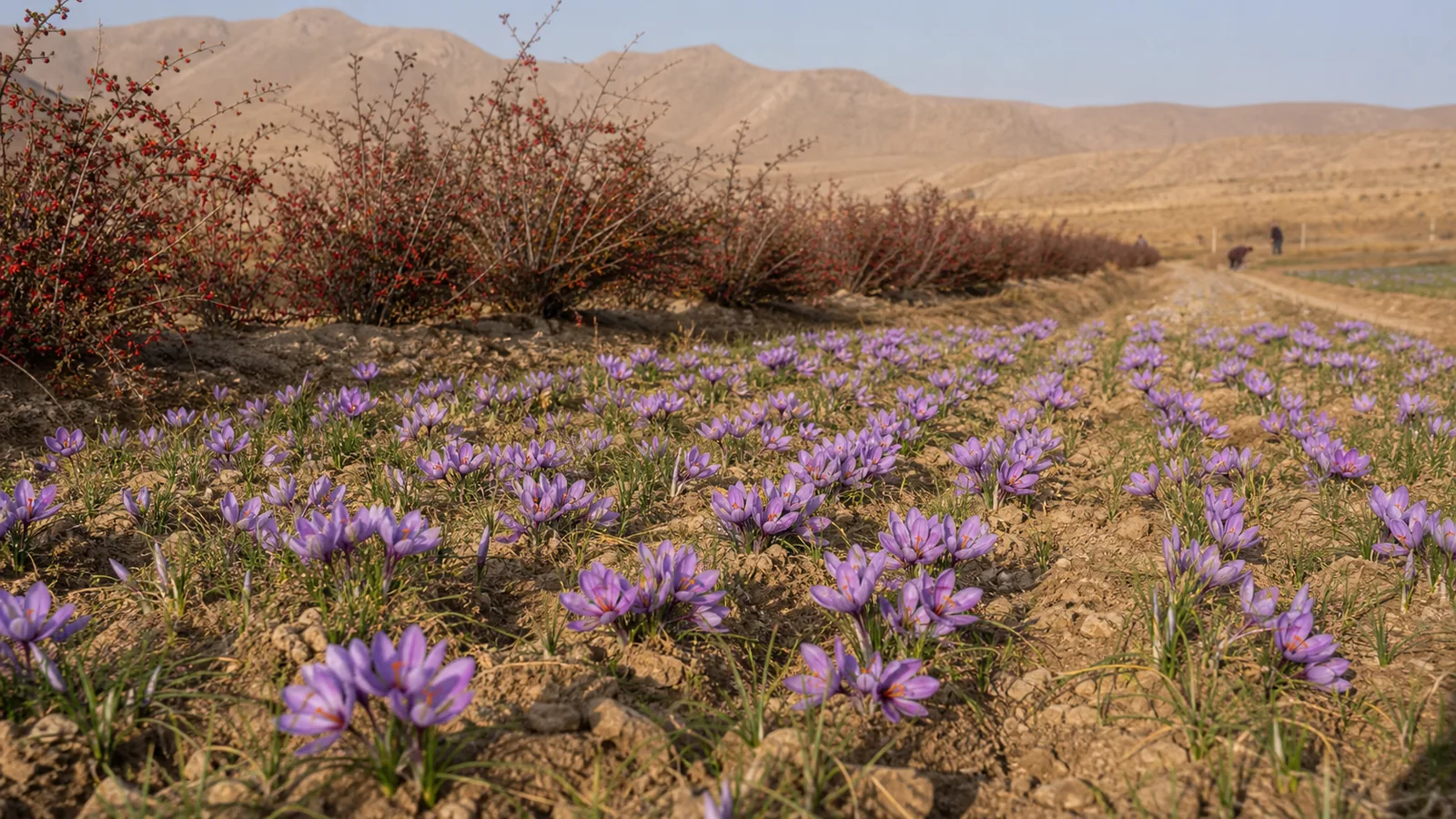
This article preserves a 2017 tourism report about the beautiful saffron fields of Qayenat, also written as Qaynat in the original title. Visitor numbers and the November 25 schedule belong to that report, not a current tour announcement.
In autumn, the landscape around Qayenat changes in two distinct ways. Purple saffron crocuses appear close to the ground, while barberry orchards carry clusters of bright red fruit. The combination was the focus of a local tourism initiative described by Qayenat’s cultural heritage department.
Abbasi, identified in the source as the department head, called saffron and barberry two strategic products of the county. He said their harvest season made the area especially attractive and announced that Qayenat would welcome domestic visitors from Tehran and a foreign group from Germany from November 25.
What the 2017 Qayenat tourism report recorded
The Young Journalists Club report cited by the original post counted 80 domestic tourists and eight visitors from Germany who had toured the saffron and barberry fields. It did not name the tour operator, give a complete itinerary or state whether the figures represented one group or a running total.
Those limits are worth keeping. The numbers show that agricultural tourism was already being promoted around the harvest, but they should not be used as current attendance data. The surviving English version also alternated among Qaynat, Qayyat and similar spellings; Qayenat is used here for clarity while the original title remains unchanged.
Why saffron fields attract visitors
A flowering saffron field looks unlike the finished spice. The crocuses sit low among narrow green leaves, and each flower contains only a small set of red stigmas. Visitors who know saffron only from a jar can finally see why harvesting and separation involve so much repeated handwork.
The scene is most active around the short flowering period. Flowers are gathered carefully, then moved for separation before they deteriorate. A responsible visit should let the farm continue that work. Paths, instructions from the host and limits on touching plants matter more than getting a dramatic photograph.
Barberry adds another side to the autumn landscape
The 2017 report paired saffron with barberry because both shaped Qayenat’s seasonal identity. Their colours are striking, but the connection goes beyond appearance. Each crop represents local knowledge about harvest timing, handling and sale.
A combined field visit can show how different the two harvests are. Saffron flowers are close to the soil and handled one by one; barberries grow on thorny shrubs and are gathered with a different set of techniques. Seeing both helps explain why a farming region cannot be understood through a single product photograph.
Planning a present-day visit
The old announcement is not enough to plan a trip now. Flowering dates move with weather and field conditions, access may be private, and hosts may need every available hour for the harvest. Before travelling, visitors should confirm:
- whether a farm or licensed local tour is currently accepting guests;
- the expected flowering and harvest dates for that season;
- where vehicles can stop without obstructing farm work;
- whether photography is permitted; and
- what clothing and footwear suit an early-morning field visit.
It is also sensible to ask what the fee includes and whether visitors will observe picking, separation or both. A genuine agricultural visit should respect the people working, the crop and the time-sensitive nature of harvest day.
More than a beautiful field
The appeal of the beautiful fields of saffron in Qaynat is immediate: violet flowers, red threads and autumn light. Their deeper value is educational. A visitor can connect the spice with its plant, learn why careful handling matters and understand how saffron and barberry contribute to the identity of Qayenat.
The 2017 visitor figures are now part of the archive, but the idea behind them remains useful. Agricultural tourism works best when it reveals real cultivation and harvest work, supports local hosts and leaves the field in the same condition in which it was found.
Original report: Young Journalists Club account cited by the archived post.

![Exporting Saffron to Turkey + Price Guide [Complete 0 to 100]](https://img.rowhanisaffron.com/20260827003933/saffron-export-turkey-quality-inspection.webp)



