


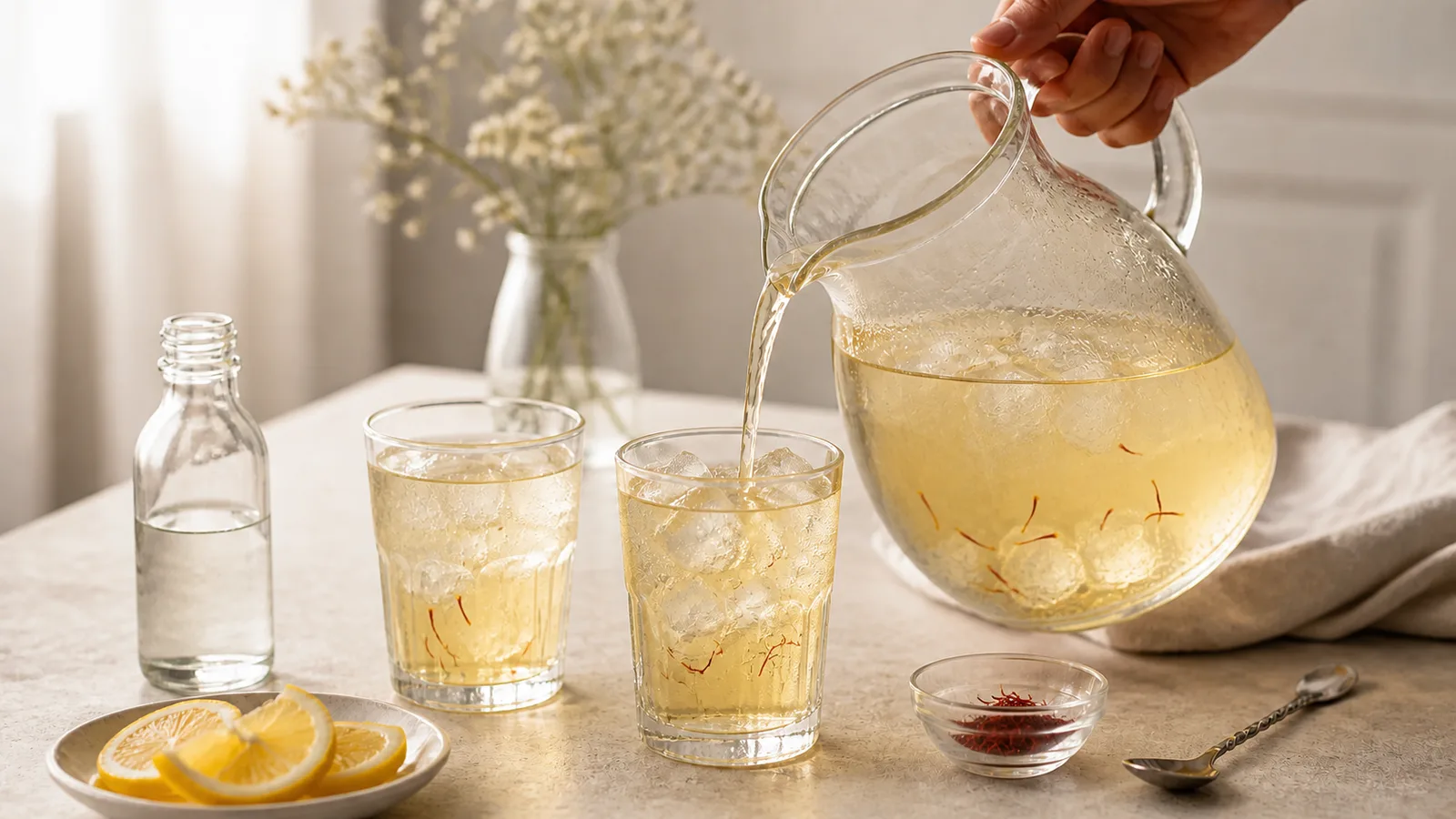
Traditional saffron syrup properties begin with the things you can experience directly: a golden colour, a honeyed-floral aroma, gentle bitterness from real saffron and a cooling drink when it is served over ice. Recipes vary across Iranian households. Some include lemon or lime, rose water, cardamom or basil seeds; others are simply a saffron infusion diluted with water and lightly sweetened.
Older descriptions often turn those culinary qualities into broad health promises. The original version of this article said saffron syrup could relieve insomnia caused by “brain stimuli,” ease digestion, numb pulmonary nerves to calm chronic-bronchitis cough and increase appetite until an underweight person reached an ideal weight. Modern clinical research does not support making those claims about a glass of syrup. A useful account has to separate a traditional drink from standardized saffron extracts used in trials.
What is traditional saffron syrup?
Iranian saffron syrup is better understood as a family of drinks than one fixed formula. The base is saffron steeped in a small amount of hot water until the liquid becomes aromatic and golden. It is then cooled, diluted and balanced with sweetness and acidity. Rose water may add a second floral note; lemon keeps the drink from tasting flat.
The word “syrup” can describe either the concentrated sweet base kept in a bottle or the finished diluted drink. That distinction matters when reading a recipe: drinking a concentrated sugar syrup by the glass is not the intention.
A simple saffron syrup recipe
This version makes about four modest glasses. Adjust the sweetness after dilution rather than beginning with a heavy syrup.
- about 12–15 saffron threads, lightly crushed;
- 60 ml hot water, below a hard boil;
- 700–800 ml cold water;
- 1–2 tablespoons sugar or honey, according to taste;
- 1 tablespoon fresh lemon juice;
- 1 teaspoon culinary rose water, optional;
- ice and thin lemon slices, optional.
- Put the lightly crushed saffron in a heatproof cup, add the hot water and cover it for 10–15 minutes.
- Stir the sweetener into the warm infusion until it dissolves.
- Add the cold water, lemon juice and rose water. Taste before adding more sweetener.
- Chill, stir again and pour over ice. Keep leftovers covered in the refrigerator and use them promptly.
Use genuine food-grade saffron and a clean container. More threads do not automatically make a better drink; too much can make it bitter and moves the recipe away from ordinary culinary use. For another unsweetened preparation, see our guide to making saffron tea.
Does saffron syrup help sleep?
There is early clinical evidence that certain saffron preparations may affect sleep quality. A 2023 systematic review found five randomized trials with 379 participants. The authors described the results as initial support and noted the need for better evidence. A separate 2022 meta-analysis also found promising results but called for further work on effectiveness and long-term safety.
Those studies did not test the traditional syrup above. They generally used measured doses of standardized saffron extract or supplements in defined groups for several weeks. A sweet culinary drink cannot be assumed to deliver the same compounds in the same amount, and it should not be presented as an insomnia treatment. Persistent sleep difficulty deserves medical assessment, especially when it affects daytime functioning.
What about digestion?
Saffron has a long history in food and traditional practice, and many people find a lightly flavoured drink pleasant after a meal. That experience is different from proving that syrup treats indigestion, reflux, ulcers or another digestive disorder. The original statement that saffron simply “makes digestion easy” did not name a study, dose or condition.
The drink’s other ingredients matter as well. Lemon may aggravate symptoms for some people with reflux, and a heavily sweetened version adds a considerable sugar load. If the purpose is refreshment, keep the sweetness moderate and treat any personal digestive comfort as an individual response, not a medical property.
Can saffron syrup calm a cough or bronchitis?
There is no sound basis here for the old claim that saffron “numbs the pulmonary nerves” and acts as a cough medicine for chronic bronchitis. The article cited no clinical trial, and the mechanism was mistranslated and unsupported. Saffron syrup should not be used in place of evaluation or prescribed care for chronic cough, bronchitis, shortness of breath, chest pain or coughing blood.
A cool or warm drink may feel soothing in the throat, just as other fluids can, but that does not mean it treats inflammation or infection in the lungs. Symptoms that persist or become severe need a qualified clinician rather than a stronger homemade preparation.
Does saffron increase appetite or cause weight gain?
The old post recommended saffron syrup to thin people and promised gradual progress toward an “ideal weight.” Research does not justify that promise. Small studies of saffron or crocin have reported different appetite-related outcomes in specific patient groups, and some have investigated reduced snacking rather than increased appetite.
For example, a 12-week randomized trial in overweight women with depression found that saffron capsules did not significantly change food craving compared with placebo. That population and capsule are not equivalent to an underweight person drinking syrup, but the result shows why a general appetite claim is unsafe.
A sugary drink supplies energy because of its added sugar, not because saffron has been proven to restore healthy weight. Unintentional weight loss, poor appetite or difficulty eating can have many causes and should be assessed rather than concealed with sweet drinks.
Who should be cautious?
Culinary amounts of saffron are not the same as concentrated extracts or large supplemental doses. Anyone who is pregnant, breastfeeding, preparing saffron for a child, taking medication, managing a medical condition or considering a supplement should ask a qualified healthcare professional about their circumstances. Stop using a product and seek help if it causes an allergic reaction or other concerning symptoms.
Also consider the ordinary nutrition of the recipe. People limiting added sugar can use less sweetener, make a smaller portion or drink an unsweetened infusion. Product purity matters: buy identifiable saffron threads from a traceable source rather than a brightly coloured powder of uncertain composition.
The most honest way to describe its properties
Traditional saffron syrup is a fragrant, colourful drink with cultural and culinary value. Research on standardized saffron extracts gives scientists reasons to continue studying sleep and other outcomes, but it does not transform this recipe into a treatment for insomnia, digestive disease, bronchitis or low weight.
Enjoy the drink for what the glass actually contains: saffron’s aroma and colour, water, acidity, optional floral notes and however much sweetener you choose. For a broader evidence review that keeps food use separate from medical claims, read our guide to saffron’s health benefits and limitations.
Evidence reviewed: PubMed PMID 37484523 (2023 systematic review of randomized sleep trials), PMID 35325766 (2022 sleep meta-analysis), PMID 33925432 and PMID 32056539 (individual sleep trials), and PMID 31602695 (food-craving trial). The Young Journalists Club/Zanjan report cited by the original post did not identify evidence for its syrup-specific medical claims.

![Exporting Saffron to Turkey + Price Guide [Complete 0 to 100]](https://img.rowhanisaffron.com/20260827003933/saffron-export-turkey-quality-inspection.webp)



