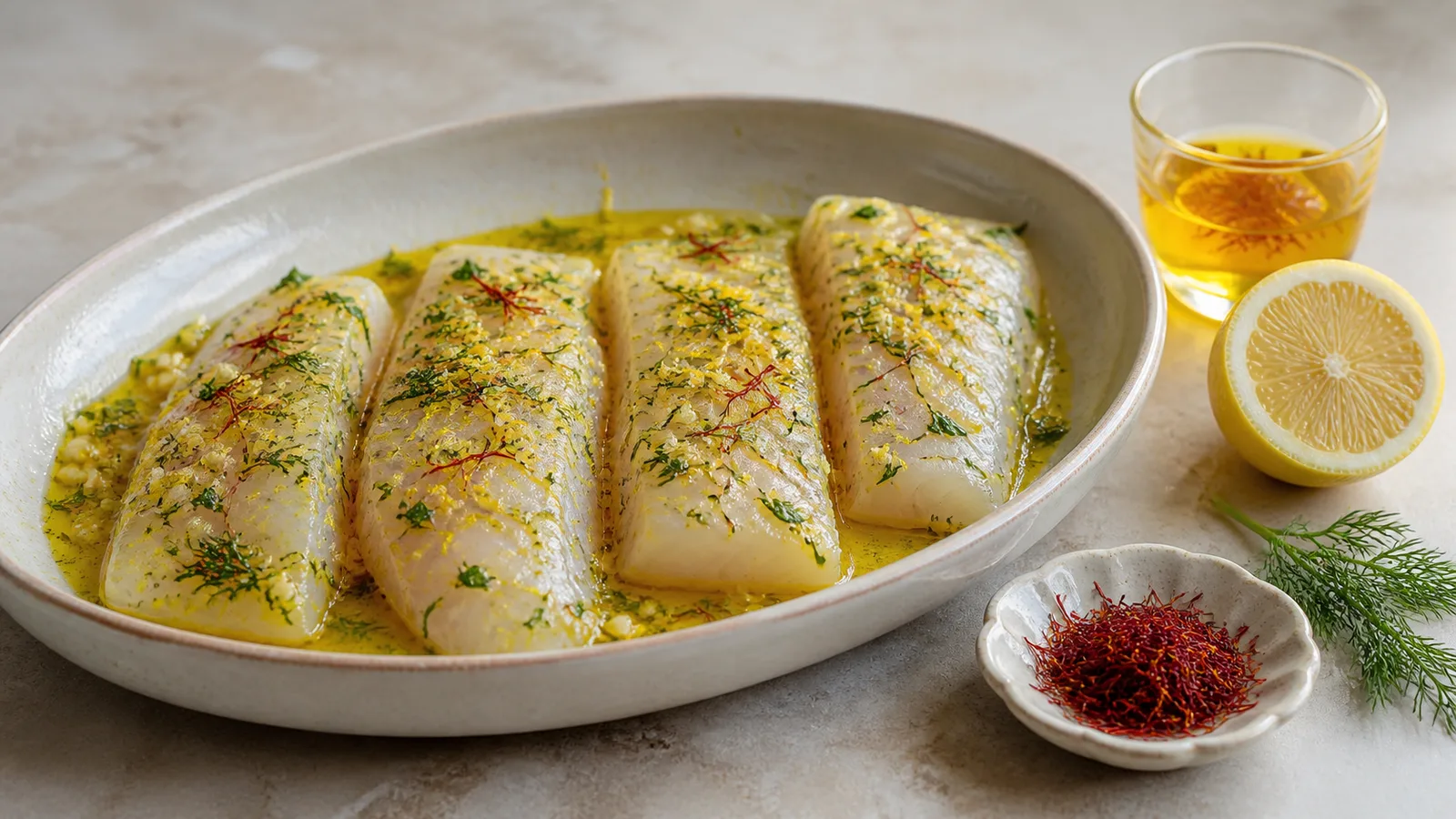
The best way to marinate fish with saffron is to bloom a small pinch of threads, mix the infusion with olive oil, lemon, garlic, and salt, then coat the fish for 20–30 minutes in the refrigerator. Fish absorbs flavor quickly. An overnight acidic marinade is unnecessary and can turn the surface soft or chalky.
This recipe works with firm white fish, salmon, trout, sea bass, cod, halibut, or similar fillets. The saffron marinade supports the seafood rather than hiding it, and the same fish suits grilling, baking, or frying.
Saffron is also used in tea, coffee, main dishes, appetizers, desserts, and sauces. Its value here is more specific: in Iranian cuisine it colors and perfumes seafood without requiring a heavy coating. Although saffron is also used for marinating meat, fish needs a much shorter time.
Saffron fish marinade ingredients
For four fillets, about 150–180 g (5–6 oz) each:
- 30–40 saffron threads, about 0.08–0.1 g
- 3 tablespoons (45 ml) warm water
- 2 tablespoons extra-virgin olive oil
- 1 tablespoon fresh lemon juice
- 1 teaspoon finely grated lemon zest
- 2 small garlic cloves, finely grated or crushed
- ¾ teaspoon fine sea salt
- ¼ teaspoon black pepper
- 1 tablespoon chopped coriander, parsley, or dill, optional
- ½ teaspoon dried thyme or a small pinch of za’atar, optional
Use either the fresh herb or the stronger dried seasoning for the first batch, not every option at once. Saffron is delicate; cumin, sumac, oregano, thyme, marjoram, sesame seeds, and coriander can all appear in za’atar blends, but a heavy spoonful will dominate the fish.
How to prepare the saffron
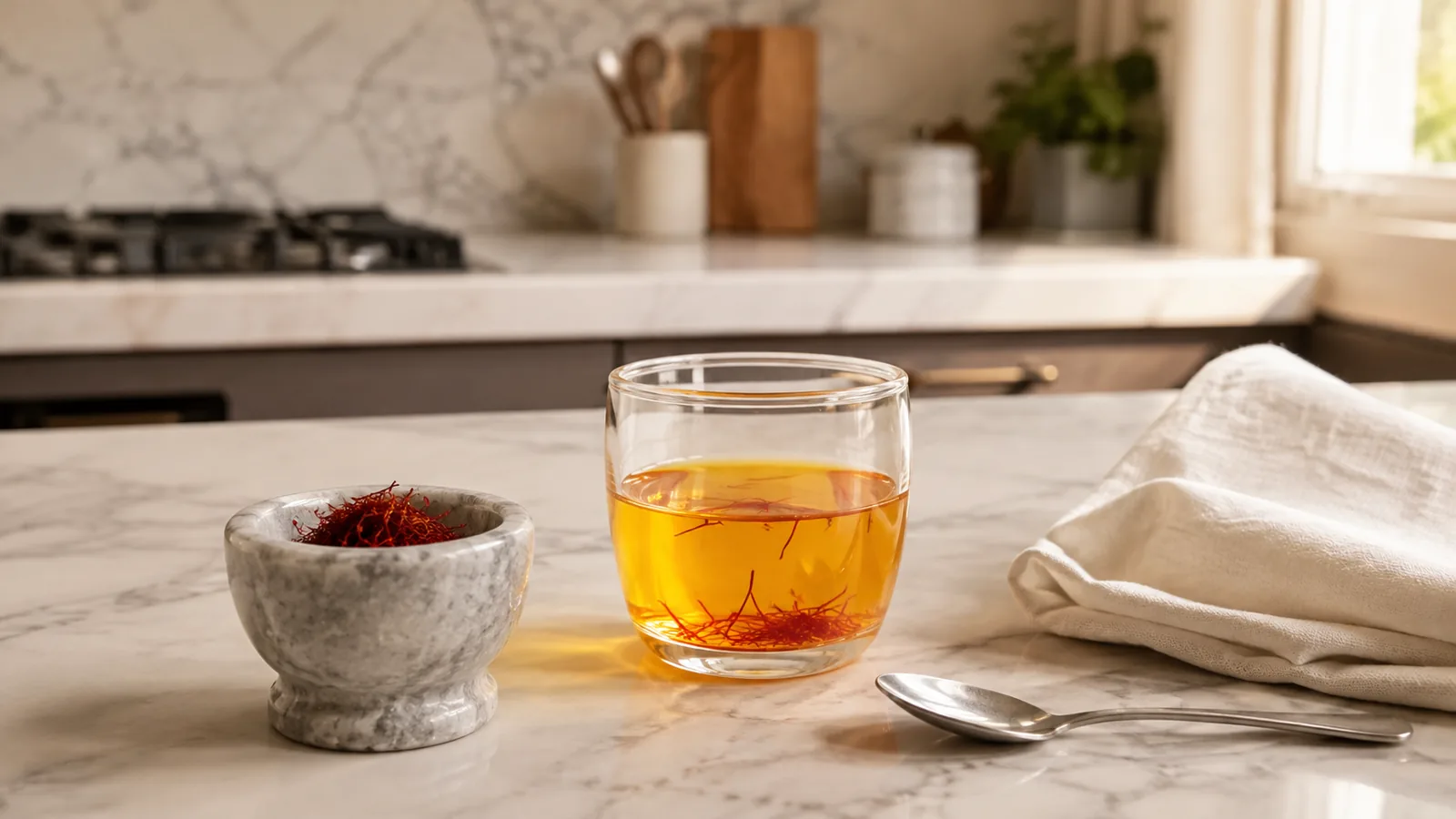
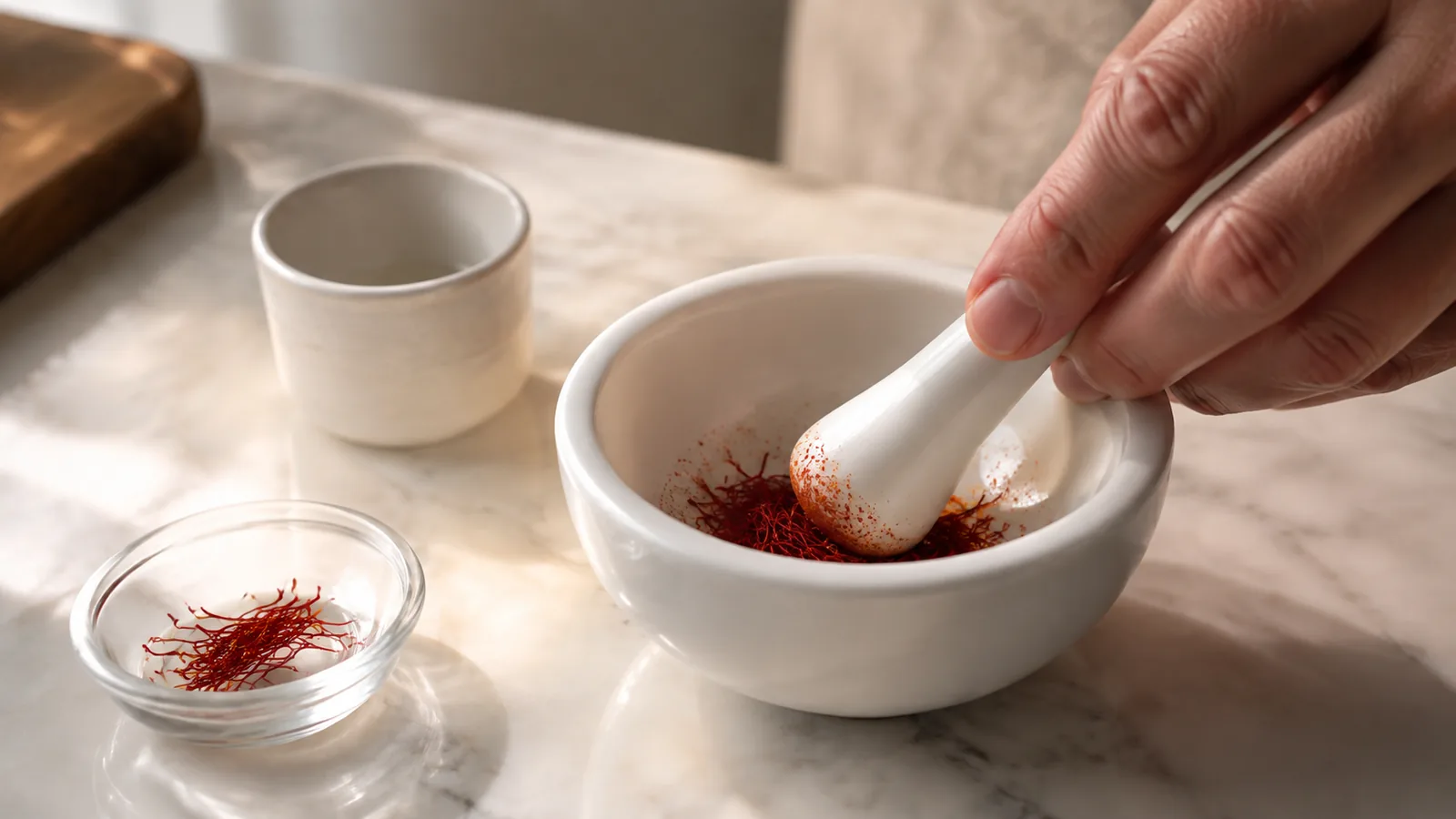
- Lightly crush the saffron threads in a small mortar.
- Put them in a glass or ceramic cup and add 3 tablespoons warm-to-hot water, roughly 60–80°C (140–176°F).
- Cover for 10–15 minutes, then stir.
Warm-water infusing is the quickest dependable method. It does not strip saffron of all its “properties”; it disperses the compounds responsible for color, taste, and aroma. Boiling the threads hard for a long time is unnecessary.
Can you bloom saffron over ice?
Yes. Place lightly crushed threads in a small glass or ceramic dish, cover with one or two ice cubes, and let them melt. The result can be vivid, but the method is slower and not automatically better than warm water. Metal is not forbidden, and plastic is not inherently destructive, although a clean nonreactive container that does not hold odors is preferable. Glass simply makes the color easier to see.
Should you roast saffron in foil?
The former roasting saffron method wrapped the threads in foil and heated them in a pan for 30 seconds. That adds a needless burn risk. Properly dried saffron already has an aroma developed during post-harvest processing. Bloom it gently instead of roasting it on the stove.
What about milk or sugar?
Warm milk works well for desserts and drinks, but water is better for this fish marinade because it mixes cleanly with lemon and oil. Grinding threads with a pinch of sugar can help separate them for a sweet recipe. Sugar and boiling water are not required for seafood.
How to marinate fish with saffron
- Pat the fish dry with clean paper towel. Remove pin bones if needed.
- Whisk the saffron infusion, olive oil, lemon juice and zest, crushed garlic, salt, pepper, and optional herb in a bowl.
- Reserve 1 tablespoon of clean marinade now if you want it for finishing. Keep that portion separate from the raw fish.
- Put the fillets in a shallow nonreactive dish or food-safe bag. Pour over the remaining marinade and turn each piece to coat it.
- Cover and refrigerate for 20–30 minutes. Very thick firm fillets can take up to 60 minutes; thin or delicate pieces need less.
- Remove the fish, let excess marinade drip away, and discard the liquid that touched the raw seafood.
Always marinate fish in the refrigerator, not on the counter. The USDA notes that fish absorbs marinades rapidly and advises only 2–4 hours even for catfish. This lemon-based recipe uses a shorter window because acid changes delicate proteins. The old advice to marinate fish the night before is not the best choice here.
Three ways to cook saffron-marinated fish
Grill
Heat a clean grill to medium-high and oil the grate. Grill firm fillets, skin-side down first when applicable, until they release easily. Turn once. Exact time depends on thickness; begin checking a typical fillet after 6–10 minutes total.
Bake
Heat the oven to 200°C (400°F). Arrange the fillets in a lightly oiled baking dish with space between them. Bake until the center reaches the safe temperature and the flesh is opaque, often 10–15 minutes for average fillets.
Pan-fry
Warm a thin layer of neutral oil in a heavy pan over medium-high heat. Wipe off loose garlic or herbs that could scorch, then cook the fish until browned and done, turning once. Flour is optional; if used, dust the fish after marinating rather than mixing flour into the liquid.
The FDA advises cooking most seafood to 145°F (63°C). Without a thermometer, fish should be opaque and separate easily with a fork, although a thermometer is the more dependable check. Keep raw and cooked utensils separate.
How saffron fits seafood
Saffron brings a dry floral aroma, gentle bitterness, and golden color. Lemon sharpens the profile, olive oil carries the aroma, garlic adds savoriness, and restrained herbs keep the result fresh. This makes saffron seafood feel complete without a heavy sauce.
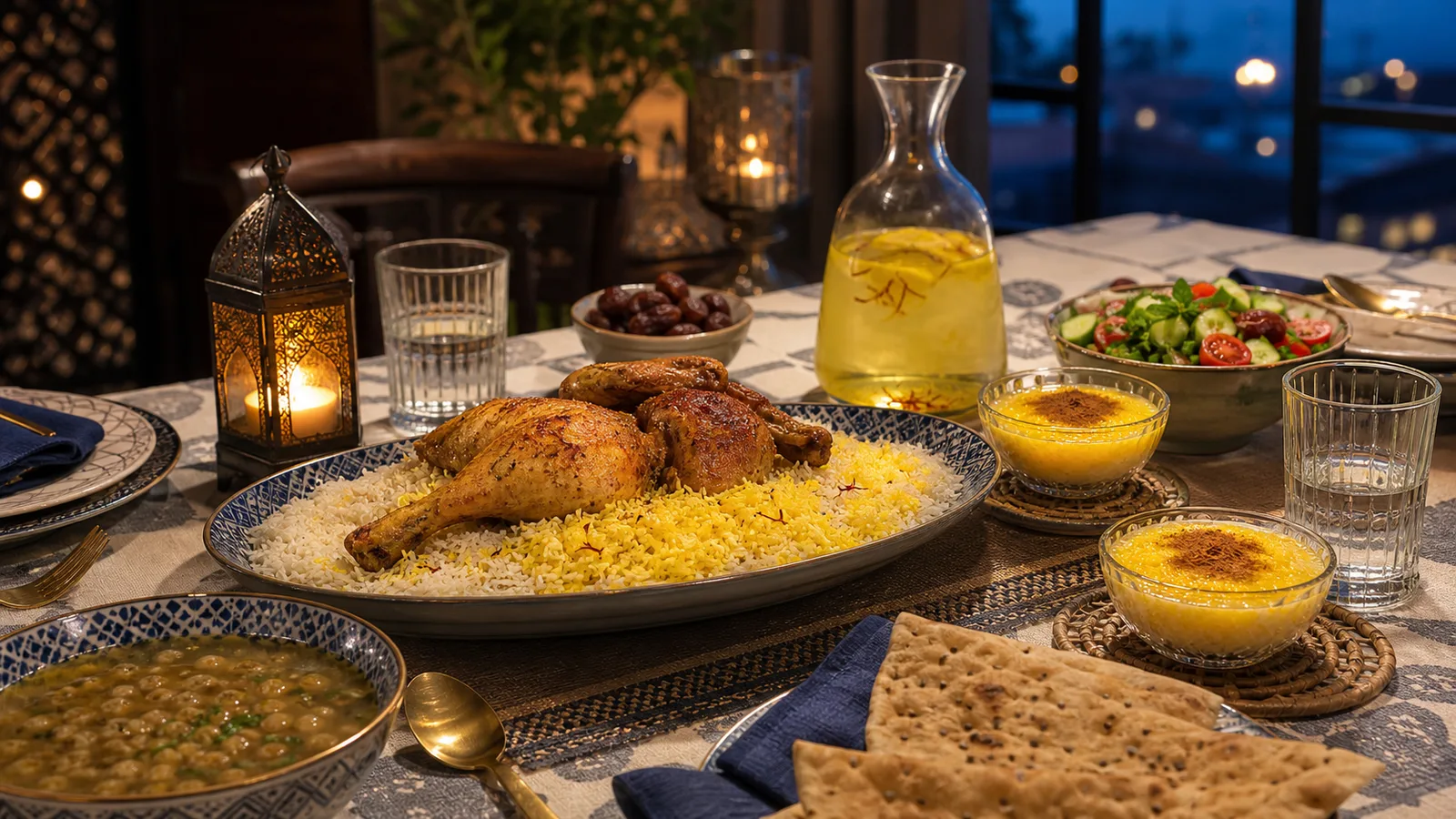
In Iranian cooking, the marinade works well with fish served beside Sabzi Polo. It can also season Stuffed Fish or Fish Khoresh, provided the filling or sauce does not bury the saffron.
The spice is used across Iranian, Indian, Mediterranean, and other cuisines. Calling it indispensable to every Chinese or international seafood tradition would be too broad. Use it where its character makes sense.
Choosing saffron for marinating fish
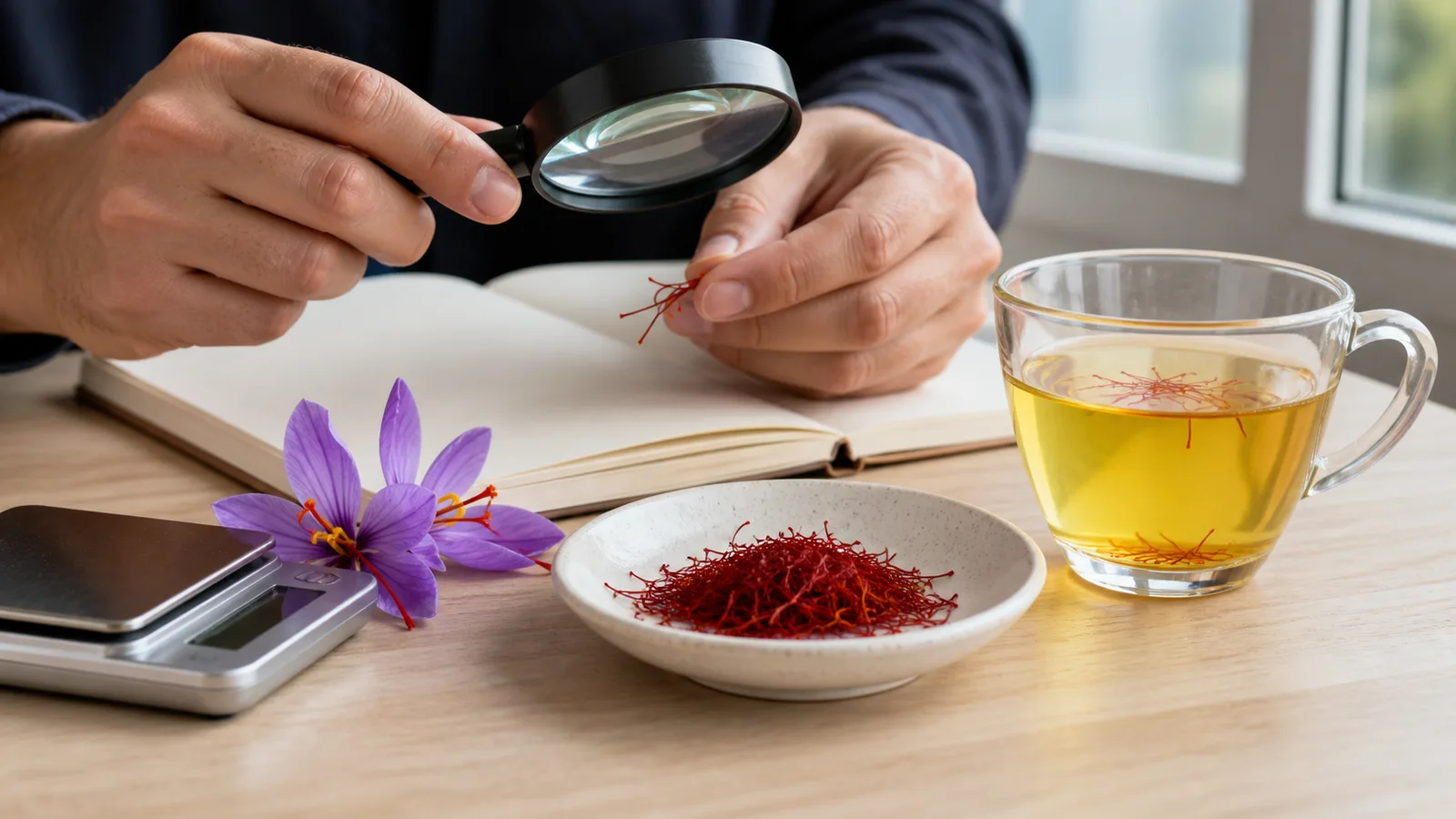
- Look at the threads. Good saffron is predominantly deep red. Natural variation exists; a perfectly uniform red or orange product is not the goal.
- Smell it. A fragrant aroma can suggest dried hay, honey, and flowers. No smell may indicate old or poorly stored material.
- Taste carefully. Genuine saffron is characteristically bitter. The former claim that a sweet taste proves authenticity is incorrect.
- Prefer visible threads. Powder is easier to adulterate with turmeric, paprika, other plant material, or non-food dye.
- Ask for evidence. A trustworthy supplier should be able to identify the origin and lot and explain any grade or ISO 3632 claim.
Store saffron airtight, cool, dry, and dark. Six months is not a universal expiry point, but aroma declines with poor storage. Buy an amount you can use while it remains fragrant.
Health claims and traditional “warm and cold” language
Saffron makes this marinade aromatic; it has not been shown to make a fish dinner treat blood circulation problems, anxiety, depression, skin problems, or cause weight loss. Studies of standardized saffron supplements do not transfer automatically to a few threads in a meal.
Traditional Persian food language may say saffron is warm in nature while fish is cold. That can explain the pairing as a cultural idea, but it is not a medical temperature balance and does not mean the combination prevents negative effects. Choose saffron because it tastes good with the fish.
Frequently asked questions
How can you tell if saffron is authentic?
No home water test proves authenticity. In cold water, real saffron usually releases yellow-gold color gradually while the threads remain red; some added dyes release color immediately. The old claim that genuine saffron quickly turns red water was backwards. Supplier traceability and appropriate laboratory testing are stronger evidence.
Is ground saffron or whole saffron better?
Whole saffron threads are easier to inspect. Buy threads and crush the measured amount just before blooming. Ground saffron can still be genuine, but it requires greater trust in the seller.
How long should fish marinate?
For this saffron, lemon, and garlic marinade, 20–30 refrigerated minutes suits most fillets. Thick firm fish can take up to an hour. Do not leave a delicate fillet in acidic marinade overnight.
Can the marinade become a sauce?
Reserve a clean portion before adding raw fish. Do not spoon contaminated marinade over cooked seafood. USDA guidance says used marinade must be boiled before reuse; reserving it in advance is simpler and protects the fresh saffron aroma.